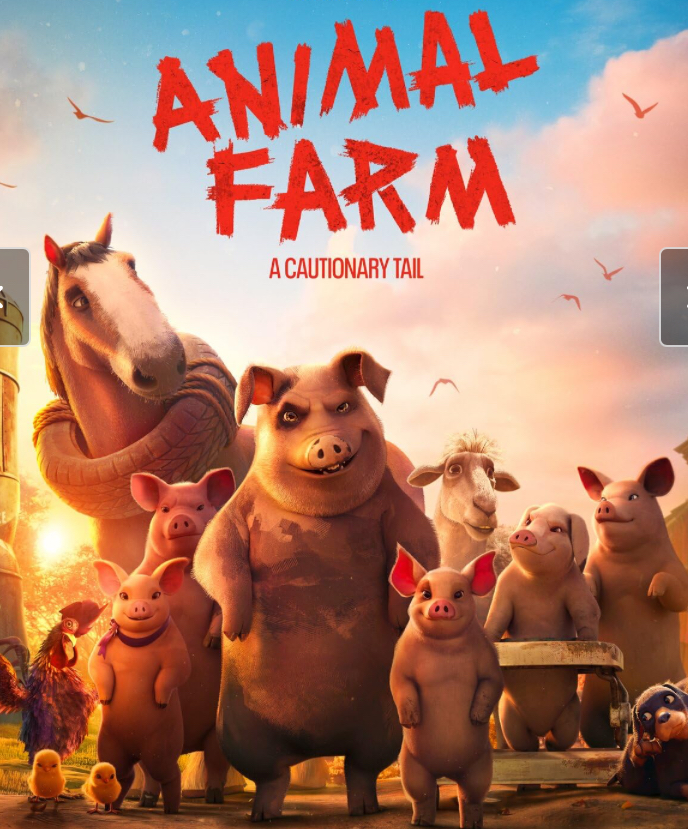
Is Animal Farm Safe for Kids?
Is Animal Farm suitable for children? The short answer is: with caution, and almost certainly not for younger kids. The 2026 animated adaptation of George Orwell’s classic allegory carries a deceptively gentle visual style that will lull some parents into thinking this is a standard animated film — it isn’t.
I’ve been fielding questions about this one for months, ever since the first trailer dropped and parents saw “animation” and assumed family-friendly. That assumption is going to catch a lot of families off-guard, so let me walk you through everything you need to know in this Animal Farm parents guide before you sit down with your children.
Quick-Scan Safety Card
| Category | Detail |
|---|---|
| Official Rating | Not Yet Rated — likely PG or PG-13 equivalent; expect BBFC PG or 12A in the UK |
| Expert Recommended Age | 10+ with parental guidance; 12+ for watching independently |
| Violence Level | Moderate — animal-on-animal violence, implied executions, a character death that will hit hard |
| Language Level | Mild — no strong profanity expected, but threatening and manipulative dialogue throughout |
| Emotional Intensity | High — themes of betrayal, corruption, loss, and injustice run through the entire film |
| Substance Use | Mild — alcohol consumption by the pig characters, used to show moral decay |
| Biggest Surprise for Parents | How emotionally devastating this gets despite the colourful animation — the Boxer storyline will break hearts |
What Is Animal Farm About — No Spoilers
A group of farmyard animals, tired of being mistreated by their human owner, overthrow him and attempt to build a fair society of their own. What begins as a hopeful revolution gradually darkens as the pigs seize control and become indistinguishable from the oppressors they replaced.
The emotional core here isn’t action or adventure. It’s the slow erosion of trust, the pain of watching good characters get exploited, and the terrible feeling of realising that power has corrupted everything. If your child has ever had a friend betray them, this film will resonate — and sting.
Expect themes of authoritarianism, propaganda, loyalty exploited, grief, and the loss of innocence. This is Orwell’s allegory brought to vivid animated life, and it pulls no punches emotionally.
Why Is It Rated Not Yet Rated?
As of my writing, the Animal Farm age rating has not been formally confirmed by the MPAA or BBFC. Based on the source material and what we know about the production, I’d expect this to land at PG-13 in the US or 12A in the UK. Here’s why.
Orwell’s story contains animal deaths — some implied, some not subtle at all. The novella includes execution scenes, a loyal character sent to a knacker’s yard (essentially a slaughterhouse), and pervasive psychological cruelty. Even softened through animation, these moments carry weight.
Honestly, if this gets a standard PG rating, I’d consider that too lenient. The 1954 animated version was rated U in the UK, and I’ve spoken with parents over the years who were genuinely blindsided by how upsetting their children found it. A PG rating would repeat that mistake. I’d personally classify this as 12A minimum for UK audiences.
Don’t rely on the “animation” label to gauge intensity. Animated does not mean age-appropriate. Wait for the official rating, but plan for PG-13 territory in terms of emotional content.
Content Breakdown
Violence and Animal Cruelty
This is the section that matters most for this particular film. Orwell’s source material contains several distressing sequences involving animals, and any faithful adaptation will carry them forward. The early rebellion against Farmer Jones likely involves physical confrontation — kicking, biting, the farmer being driven off his land by force.
But the violence that will actually upset your child isn’t the physical kind. It’s the systematic cruelty the pigs inflict on their fellow animals. The forced confessions and implied executions in the original text are among the most chilling passages in 20th-century literature, and seeing them animated will land differently than reading them on a page.
My 11-year-old read the book last year and handled the text reasonably well. But I expect the visual depiction — even stylised — to hit considerably harder. There’s something about seeing a character’s face that text simply can’t replicate.
If your child is sensitive to animals being hurt or killed, have a conversation before watching. Knowing what’s coming reduces the shock considerably.
Emotional Distress and Grief
Let me be direct: the Boxer storyline is going to devastate young viewers. For those unfamiliar with the source material, Boxer is a hard-working, loyal horse who trusts the pigs completely — and is ultimately betrayed in the cruellest way possible. I’ve reviewed over 2,400 titles and this character arc remains one of the most effective gut-punches in all of children’s literature.
What caught me off-guard when I first encountered this story decades ago, and what I expect will catch children off-guard now, is how the betrayal is dressed up in reassuring language. The pigs explain away what happened. That’s what makes it so disturbing — the gaslighting.
My 16-year-old understood immediately that this was about propaganda and manipulation of truth. My 7-year-old would simply see a horse being taken away and lied about, which is a very different emotional experience.
Be ready for tears and questions. “Why didn’t the other animals help him?” is the question you’ll most likely face. Have an honest answer ready — it’s a teaching moment about standing up against injustice.
Propaganda, Lies, and Manipulation
This is where the film’s real complexity lives. Squealer — Napoleon’s propagandist — systematically rewrites history, changes the commandments, and convinces the other animals that their own memories are wrong. For younger children, this is confusing. For older children and teenagers, it’s genuinely frightening because they can recognise it.
And look — I know some parents will disagree with me here — but I think this is the most valuable part of the film for children mature enough to process it. Understanding how propaganda works is an essential life skill. Watching it happen to characters they care about makes the lesson stick.
The repeated phrase “All animals are equal, but some animals are more equal than others” is one of those lines that lodges in a young person’s mind permanently. I’ve seen my older children reference it in conversations about fairness years after first encountering it.
Use the Squealer character as a springboard for conversations about media literacy. Ask your child: “How did Squealer convince the other animals? What would you have done differently?”
Alcohol and Moral Decay
The pigs’ gradual adoption of human vices — including drinking alcohol — serves a specific narrative purpose. It’s not glamorised. Quite the opposite. The alcohol use symbolises the pigs becoming the very thing they overthrew, and it’s presented as repulsive and hypocritical.
This is mild content on its own, but it feeds into the larger emotional devastation of watching the revolution fail. For very young viewers, a pig drinking from a bottle is just confusing. For older viewers, it’s another brick in a very depressing wall.
Tone and Atmosphere
Here’s the thing though. The opening act will likely feel hopeful, even joyful. Animals working together, building something new, singing together. It’s designed to make you believe things will work out. The gradual shift from hope to despair is what makes this story so effective — and so difficult for young viewers who aren’t prepared for it.
I’ve shown the 1954 version to colleagues in child development, and we all landed in the same place: the tonal shift is the hardest part for children, not any single scene. The sense that everything has gone wrong, slowly and irreversibly, is a sophisticated emotional experience.
Age-by-Age Viewing Guide
Absolutely not. The colourful animation and talking animals will attract young eyes, but this is not a story for this age group under any circumstances. Animal death, betrayal, and a deeply sad ending make this a recipe for nightmares and confusion. There is zero chance a child this age will understand the allegory, and the surface-level story is simply too upsetting.
Still too young for most children in this range. My 7-year-old is empathetic and sharp, and I wouldn’t consider showing him this for at least another two years. The emotional manipulation depicted — animals being lied to, a beloved character being sent away under false pretences — is the kind of content that creates genuine anxiety in this age group. The political allegory will sail entirely over their heads, leaving only the sad parts.
This is where it gets genuinely case-by-case. A mature 10-year-old who reads widely and handles complex emotions well? Probably fine with a parent present. A sensitive 11-year-old who still struggles with sad endings? Maybe wait. My 11-year-old handled the book but needed to talk about it afterwards for a solid hour. Co-viewing is essential at this age — don’t press play and leave the room.
This is the sweet spot for the film’s message. Teenagers can grasp the political allegory, understand the propaganda mechanics, and process the emotional content without being overwhelmed by it. My 16-year-old found the story “infuriating in a good way” — she was angry at the right characters for the right reasons. That’s exactly the response this story is designed to produce. Brilliant for GCSE-age students studying the text.
No concerns whatsoever. Older teenagers and adults will engage with this as the sophisticated political allegory it was always intended to be. If anything, this age group may find the animation style makes the story more accessible and emotionally immediate than the text alone. A worthy adaptation for anyone studying politics, history, or literature.
Positive Messages and Educational Value
I want to be careful how I say this. Animal Farm is not a feel-good story. It doesn’t wrap up with a reassuring message about goodness winning. Orwell wrote it as a warning, and a good adaptation should honour that uncomfortable purpose.
That said, the educational value here is genuinely exceptional. The story teaches critical thinking about authority, the mechanics of propaganda, and why holding leaders accountable matters. These are not abstract concepts — they’re skills your child will use for the rest of their life.
The film also powerfully demonstrates what happens when good people stay silent. Benjamin the donkey sees everything happening and says nothing until it’s too late. That character alone can fuel an extraordinary conversation about moral courage and complicity.
Put plainly: this is one of the most valuable stories you can share with a child who is old enough to handle it. The lessons are permanent.
Five Family Discussion Questions
- When Squealer changes the commandments on the barn wall, the other animals doubt their own memories instead of questioning him. Has anyone ever tried to make you doubt something you knew was true? How did it feel?
- Boxer gives everything he has to the farm and trusts Napoleon completely. Was his loyalty a strength or a weakness — and does the answer change depending on who he was loyal to?
- Benjamin the donkey seems to understand what’s happening the whole time but chooses not to speak up. Why do you think he stays quiet, and do you think that makes him partly responsible for what happens?
- The pigs start by creating rules that apply to everyone equally. At what specific point in the story do you think things started going wrong — was there a single moment, or was it gradual?
- The final scene — where the animals look from pig to man and can no longer tell the difference — is one of the most famous endings in literature. What do you think Orwell wanted you to feel in that moment?
Frequently Asked Questions
Yes, for most 7-year-olds this will be too distressing. The animal deaths, betrayals, and deeply sad ending are not balanced by any comforting resolution. The animation style may make it look approachable, but the emotional content is heavy. I’d recommend waiting until at least age 10.
As the film hasn’t been released yet (scheduled for 24 July 2026), I can’t confirm post-credits content. Based on the tone and literary source material, a lighthearted post-credits sequence would feel tonally wrong. I’ll update this guide once the film is available.
I cannot confirm photosensitivity triggers until the final cut is available. If your child has photosensitive epilepsy, check the Cinema Exhibitors’ Association guidance closer to the UK release date in July 2026. I’ll add specific strobe information once I’ve seen the film.
Animal Farm is set for a theatrical release on 24 July 2026 in the UK. Streaming availability has not been confirmed yet. Check back closer to release for updates on the Animal Farm streaming age limit and which platforms will carry it.
Yes. Multiple animals die across the course of the story, including during implied execution scenes and one particularly devastating betrayal involving a main character. If your child is sensitive to animal death, this is the single biggest content warning I can give you for this film.
For most primary school children, no. While some Year 6 students (age 10-11) studying the text at school may cope with parental support, the emotional weight is substantial. This is far better suited to secondary school ages where the political allegory can be properly understood and discussed.
I can’t make a full comparison until the 2026 version releases. The 1954 version was notably altered to include a more hopeful ending. If the 2026 adaptation stays faithful to Orwell’s original bleak conclusion, expect it to be emotionally harder than the earlier film.
Key Animal Farm trigger warnings include: animal death, implied execution, betrayal by trusted authority figures, psychological manipulation, gaslighting, loss of autonomy, and a deeply sad ending with no redemption. The story deliberately offers no comfort at its close — that’s the point Orwell was making.

Matthew Creith is a movie and TV critic based in Denver, Colorado. He’s a member of the Critics Choice Association and GALECA: The Society of LGBTQ Entertainment Critics. He can be found on Twitter: @matthew_creith or Instagram: matineewithmatt. He graduated with a BA in Media, Theory and Criticism from California State University, Northridge. Since then, he’s covered a wide range of movies and TV shows, as well as film festivals like SXSW and TIFF.