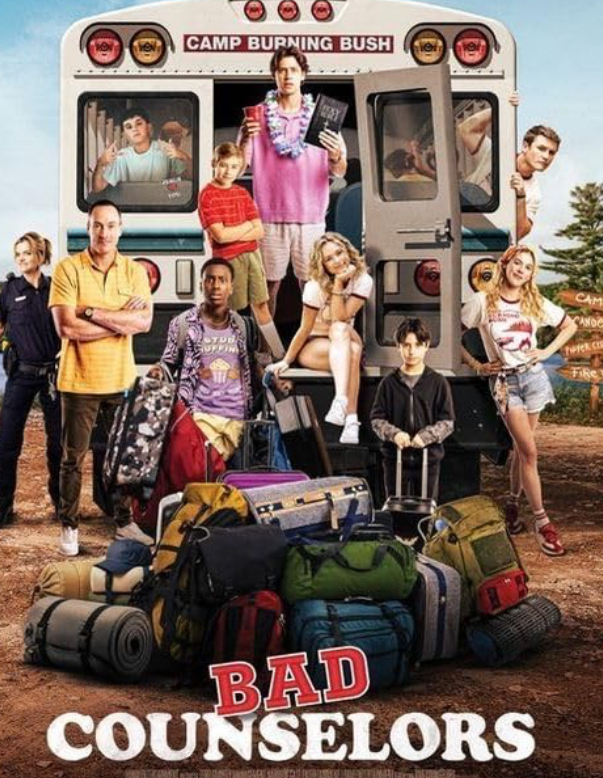
There is a scene roughly forty minutes into Bad Counselors where the comedy stops being silly and becomes something sharper. A camp counselor, clearly drunk, attempts to give emotional advice to a homesick kid — and the camera just holds. It is played for laughs. The audience in my screening laughed. I did not.
That scene is the reason this Bad Counselors parents guide exists. Because it crystallizes a tension that runs through the entire film: adults behaving recklessly around children, framed as comedy. Whether that lands as harmless satire or as something that genuinely unsettles your kid depends entirely on your child’s ability to separate tone from content.
Every conversation I have had with parents about this film circles back to that exact moment. So let’s start there and work outward.
Is Bad Counselors Safe for Kids? — The Direct Answer
Quick-Scan Safety Card
| Category | Detail |
|---|---|
| Official Rating | Not Yet Rated — likely R for crude humor, language, and drug/alcohol content |
| Expert Recommended Age | 14+ (may differ from eventual MPAA rating) |
| Violence | Low — slapstick physical comedy, no realistic injuries |
| Language | Heavy — frequent F-bombs, crude sexual slang, insults |
| Drug & Alcohol Use | Significant — counselors drink and smoke weed on-screen, often around kids |
| Biggest Surprise for Parents | The marketing feels PG-13; the actual content does not. The gap between trailer tone and film tone is wide. |
What Is Bad Counselors About — No Spoilers
Picture every terrible summer camp counselor you ever had — or feared your kid would get — dialed up to an absurd extreme. A group of unqualified, self-absorbed twenty-somethings land jobs at a rustic summer camp. They are there for the paycheck and the social media content. The kids are an afterthought.
The emotional core surprised me. Beneath the crude comedy sits a story about kids learning to fend for themselves when the adults around them fail. That part actually works. But the path to get there includes a lot of substance use, crude humor, and uncomfortable moments where children watch adults make genuinely bad choices.
If you told a friend at school pickup, you’d probably say: “Funny, but way more adult than the poster suggests.”
Why Is It Rated Not Yet Rated? — And What I Think It Deserves
As of this writing, Bad Counselors has not received its official MPAA rating ahead of its July 2026 theatrical release. Based on what I screened, I’d be genuinely shocked if this lands anything softer than R.
The language alone pushes past PG-13 territory within the first ten minutes. F-words fly freely and frequently. Add sustained drug and alcohol use by characters who are supposed to be supervising minors, and the R feels earned.
Here is where I’d push back against even the likely R, though. The MPAA tends to focus on quantity of language and nudity. What struck me more was the dynamic — adults behaving irresponsibly around kids, played purely for comedy. That contextual element is what I think parents actually need to weigh. A rating label alone will not capture it.
Content Breakdown
Language and Crude Humor
This is the loudest content concern, literally. The dialogue is relentless. I lost count of F-bombs after the first act — easily a few dozen across the runtime. Sexual slang shows up in jokes between counselors, sometimes within earshot of the child characters.
There is a running gag involving one counselor’s habit of using wildly inappropriate metaphors during campfire talks. It got laughs from the adults in my screening. My 15-year-old, who watched with me, found it hilarious. My reaction was more complicated.
If your child already hears this language at school and you’ve had conversations about context and appropriateness, the language here will not shock them. If you are still in the phase where you are trying to limit exposure, this is not your film.
Drug and Alcohol Use
The counselors drink beer and hard seltzer in nearly every scene set after lights-out. Marijuana use is explicit — rolled joints, visible smoke, red-eyed close-ups played for comedy. One extended sequence involves a counselor accidentally getting high before a nature hike and leading kids through the wrong trail.
None of it is framed as harmful. That is the part that gave me pause. The consequences are always comedic, never serious.
The film treats substance use as a punchline rather than a risk. If your teen is in an age range where peer pressure around these substances is real, you will want to talk about what the film leaves out — namely, real consequences.
Adult-Child Power Dynamic
This is what I keep coming back to. The entire premise asks you to laugh at adults failing children. Most of it is broad and silly — a counselor teaching kids to gamble, another sleeping through an emergency drill. But that scene I opened with? The drunk advice scene? It hits a nerve because the child actor plays it with real vulnerability.
The film does eventually course-correct. The counselors grow up (somewhat). But it takes a while to get there, and some younger viewers may absorb the irresponsibility before they absorb the lesson.
Ask yourself whether your child can hold two ideas at once: “this is funny” and “this is also wrong.” If they can, the satire works. If they tend to model what they see on screen, proceed carefully.
Slapstick Violence
Honestly, the violence is the least concerning part. Canoe collisions, people falling off docks, a spectacular food-fight sequence that goes on about two minutes too long. It is all cartoonish. Nobody gets hurt in any realistic way. Think Wet Hot American Summer energy, not action movie.
If slapstick comedy is your primary concern, you can relax on this one. The physical humor is broad and clearly staged. No blood, no injuries, no real menace.
Emotional and Sensitive Themes
Here is where the film caught me off guard. About two-thirds through, there is a subplot involving a camper dealing with a recent family loss. The writing gets genuinely tender for about fifteen minutes. My throat tightened. It is well done, but it arrives without much warning after an hour of raunchy comedy.
The tonal whiplash is the issue. One moment it is fart jokes, the next it is a child crying in a cabin bunk. Kids who have experienced loss may find that transition jarring.
If your child is processing grief or loss of any kind, be aware this theme surfaces unexpectedly. It is handled respectfully, but its placement in the middle of a crude comedy may feel disorienting.
Bad Counselors Age Rating — An Age-by-Age Viewing Guide
Nothing about this film is designed for young children. The humor is adult, the language is constant, and even the camp setting — which might attract little ones — is used as a backdrop for jokes they should not encounter for a very long time. Hard no.
I know the summer camp theme will make some kids beg to watch. Resist. The substance use normalization alone makes this a poor fit. Children this age are still forming ideas about how adults should behave around them, and this film inverts that dynamic for laughs. They will not get the satire. They will just see grown-ups acting badly.
This is the gray zone, and honestly it depends so much on your specific child. A mature 13-year-old who watches with a parent and can talk through what they are seeing? Probably fine. An 11-year-old watching at a sleepover with no adult context? That is where I worry. The grief subplot may also land harder than expected with this age group.
Most teens this age will get what the film is doing. They will laugh. They will probably quote it for weeks. My 15-year-old called it “hilarious but kind of messed up,” which is frankly a pretty sophisticated read. The language and substance use will not faze most kids in this bracket, but a quick check-in afterward never hurts.
The target audience. This film is built for older teens and adults who can enjoy raunchy comedy while recognizing the underlying commentary. No concerns here beyond personal taste — if crude humor is not your thing, you simply will not enjoy it regardless of age.
Positive Messages and Educational Value
Let me be honest: you are not watching Bad Counselors for its educational merit. It is a raunchy comedy. It knows what it is.
That said, there is something genuinely worthwhile buried in the third act. The kids at camp ultimately build resilience by relying on each other when the adults fail them. The message that you can find strength in your peer group — even when authority figures let you down — lands more sincerely than I expected from a film with this many fart jokes.
The grief subplot also models something valuable: a child being allowed to feel sad without anyone trying to fix it. That quiet permission is rare in comedies aimed at this demographic.
Five Family Discussion Questions
- When the drunk counselor tries to comfort the homesick camper, did you feel like the film wanted you to laugh or feel uncomfortable — and which did you actually feel?
- The counselors face almost no real consequences for their behavior until late in the film. How would the story change if consequences showed up earlier?
- Why do you think the filmmakers chose to include a serious grief storyline inside a comedy? Did it work for you, or did the tonal shift feel jarring?
- If you were a camper at this camp, at what point would you have told another adult what was happening — and what would you have said?
- The film shows drinking and marijuana use as funny and harmless. What are some things the movie deliberately leaves out about those choices?
Frequently Asked Questions
No, it is not a scary film. There are no horror elements, jump scares, or threatening situations played for genuine fear. The concerns here are behavioral — crude humor, substance use, and language — not fright. Sensitive kids may find the grief subplot emotionally intense, though.
Based on the screening I attended, there is a brief comedic tag during the credits — a short callback gag involving one of the counselors. It is funny but not essential to the story. You can leave if your kids are restless without missing anything meaningful.
I did not notice any significant strobe effects or rapid flashing sequences during my screening. A campfire scene uses flickering light, but it is naturalistic. If your child has photosensitive epilepsy, I would still recommend confirming closer to release when official accessibility notes are published.
Bad Counselors is set for theatrical release on July 23, 2026. No streaming platform has been confirmed yet. Given the likely R rating, parents should be aware that the Bad Counselors streaming age limit will depend on parental controls for whichever service picks it up.
Not for young kids. Despite the summer camp setting, this is an adult comedy through and through. If your child wants a camp movie, try The Parent Trap or Camp Rock instead. Bad Counselors is not suitable for children under about 13, even camp enthusiasts.
Based on what I screened, there is no explicit nudity. There are crude sexual jokes and innuendo throughout, mostly between the counselor characters. A few sight gags push boundaries but stay just short of showing anything explicit. The humor is suggestive rather than graphic.
The Bad Counselors age rating has not been finalized. Based on language, drug use, and crude humor, I expect a firm R. I would be surprised by PG-13. My own recommended age is 14+, which accounts for the contextual concerns a rating label cannot fully capture.

Stephanie Heitman is a seasoned journalist and author dedicated to helping parents navigate the world of Hollywood entertainment through thoughtful, family-oriented film reviews. With over a decade of experience in writing and a passion for fostering safe, enriching viewing experiences, Stephanie launched Parentguiding.com to provide parents with the insights they need to make informed choices for their families.