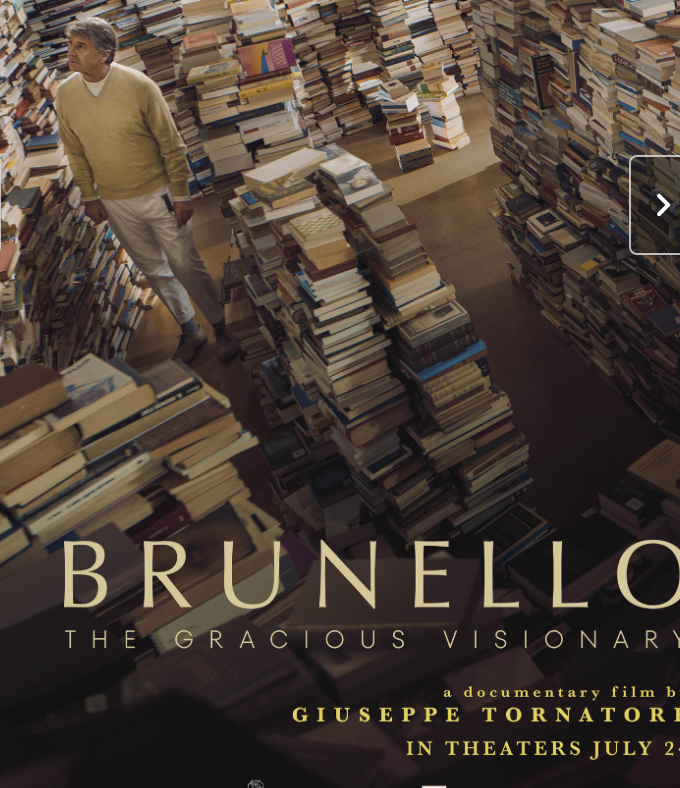
Yes, this one is safe. Brunello: The Gracious Visionary is a biographical documentary that should sit comfortably with most families, with one or two caveats I want to walk you through before you press play. If your child can handle a film that moves at a thoughtful, adult pace, they will be fine here.
I want to be upfront: this is a 2026 release not yet rated by the BBFC or MPAA. My assessment is based on a screening, and the classification may shift before the UK theatrical run beginning 24 July 2026. That said, I am confident enough in my read of the content to give you a clear Brunello: The Gracious Visionary parents guide right now.
The film profiles Brunello Cucinelli, the Italian fashion entrepreneur known for his philosophy of “humanistic capitalism.” It is reverent in tone, occasionally moving, and largely free of anything that would trouble younger viewers. My main concern is engagement, not safety — this is a slow, contemplative documentary that will bore most children under ten right out of the room.
Quick-Scan Safety Card
| Category | Detail |
|---|---|
| Official Rating | Not Yet Rated — likely U or PG equivalent (BBFC); G or PG equivalent (MPAA) |
| Expert Recommended Age | 10+ (maturity for content, attention span for pacing) |
| Violence | None — archival footage of rural poverty, no graphic imagery |
| Language | None — clean throughout; some interviews are subtitled from Italian |
| Emotional Intensity | Mild — scenes of childhood hardship and family grief may resonate with sensitive viewers |
| What Will Surprise Parents Most | How philosophical it is — extended sequences on ethics, capitalism, and mortality that go well over younger heads |
What Is Brunello: The Gracious Visionary About — No Spoilers
If a friend at school pickup asked me, I would say: it is a love letter to a man who grew up poor in rural Umbria and built a luxury fashion empire while trying to treat his workers like human beings. The emotional core is not about cashmere or runways. It is about dignity.
Expect interviews with family, workers from his factory in Solomeo, and cultural commentators. There are genuinely affecting moments about his father’s humiliation working in manual labour. Those sequences carry real emotional weight.
The film asks big questions about whether profit and ethics can coexist. It is not cynical, but it is not entirely uncritical either. Kids who are curious about business, philosophy, or Italian culture will get something from it. Everyone else will drift.
Why Is It Rated Not Yet Rated?
Because the Brunello: The Gracious Visionary age rating has not been formally determined yet. With a UK theatrical date of 24 July 2026, the BBFC classification is still pending as I write this. I expect a U or PG certificate.
Honestly, I would be surprised by anything higher. There is no content here that typically triggers a 12A. No violence, no strong language, no sex, no drug references. The only reason I could see a PG rather than a U is some of the conceptual weight — discussions about poverty, class shame, and the ethics of wealth — which might warrant a mild guidance note.
My own view is that the official rating, when it arrives, will accurately reflect the content. This is one of those rare cases where I do not expect to disagree with the classification board.
Content Breakdown
Emotional Weight and Childhood Hardship
The most emotionally charged section covers Cucinelli’s childhood poverty in Castel Rigone. He speaks about watching his father suffer shame and indignity at work. There is a particular moment — quiet, not dramatised — where he describes his father coming home in silence, unable to look his children in the eye.
That moment hit me harder than I expected. My twelve-year-old, who watched with me, asked afterwards what it means to feel ashamed of your job. It opened a conversation I was glad to have, though I had not anticipated it.
If your child has experienced family financial stress, the poverty sequences may land with unexpected force. They are not sensationalised, but they are honest.
Philosophical and Ethical Discussions
Large stretches of the film are essentially filmed philosophy lectures. Cucinelli references Seneca, Marcus Aurelius, and Saint Benedict. He talks about death, legacy, and the soul of labour. It is beautiful if you are in the right frame of mind.
For children, though, these passages are genuinely abstract. I do not mean they are inappropriate — they are simply dense. My nine-year-old would have been on another planet within five minutes. My fourteen-year-old found some of it genuinely interesting.
If you are hoping this will engage a younger child, consider watching key segments together rather than expecting them to sit through the full running time. Cherry-picking works well here.
Depictions of Wealth and Luxury
The film does not shy away from the fact that Cucinelli is extraordinarily wealthy. There are sequences in beautifully restored medieval buildings, lavish factory settings, and scenes of high fashion that feel glossy and aspirational. This could raise questions for children about fairness and inequality.
I found the film handles this tension reasonably well — it asks whether Cucinelli’s model is truly different or just better-packaged capitalism. But it does not push hard enough in that direction for my taste. Younger viewers will simply see the beauty and miss the ambiguity entirely.
This is a good opportunity to talk about the difference between earning money and using money well. The film provides a starting point but does not do the critical thinking for you.
Subtitles and Language Accessibility
Significant portions of the film are in Italian with English subtitles. For children who are not yet confident readers, this is a real barrier. The subtitles move at a steady pace, but some of the vocabulary is sophisticated — words like “custodian,” “stewardship,” and “patrimony” appear frequently.
If your child struggles with sustained reading or is a reluctant reader, the subtitle-heavy sections will be frustrating. An English-dubbed version may become available on streaming platforms — check before committing to the subtitled cut.
Age-by-Age Viewing Guide
Not because of content concerns — there is nothing here that would frighten or upset a very young child. Simply because a slow-paced, subtitled documentary about business philosophy will hold zero appeal. You would be setting yourself up for a restless, miserable viewing experience for everyone involved.
Still a stretch. Some eight- or nine-year-olds with a particular interest in Italy, fashion, or entrepreneurship might engage with select segments. But sitting through the full documentary requires a patience and conceptual maturity that most children in this range simply have not developed yet. The subtitle factor alone rules out many in this bracket.
This is where it starts to work. An eleven-year-old who enjoys learning about real people and real ideas will find genuine value here. The poverty sequences may spark meaningful conversations. The philosophical content will go partly over their heads, and that is perfectly fine — some of it will stick. Is Brunello: The Gracious Visionary safe for kids in this age range? Absolutely.
Teenagers studying business, ethics, philosophy, or Italian culture will get the most from this film. It pairs beautifully with GCSE or A-level discussions about corporate responsibility. My older child came away with genuine questions about whether ethical capitalism is possible, which felt like exactly the right response.
No concerns whatsoever. Young adults will engage with this on its own terms. It is a thoughtful, well-crafted documentary that rewards patience. If anything, older teenagers and adults are the intended audience, and the film does not pretend otherwise.
Positive Messages and Educational Value
There is genuine substance here. The film’s central argument — that treating workers with respect is not just morally right but economically sustainable — is a message worth hearing. Cucinelli’s commitment to restoring his home village, paying above-market wages, and banning overtime is presented compellingly.
For families, the most valuable takeaway is probably simpler than the philosophy. It is the idea that where you come from does not have to define where you end up. Cucinelli’s trajectory from rural poverty to global influence is presented without flashy Hollywood beats, which makes it feel more real and more achievable.
I do want to flag that the film is somewhat uncritical of its subject. It is closer to a portrait than an investigation. That is worth discussing with older children — what does it mean when a documentary mostly agrees with its subject? What questions does it not ask?
Five Family Discussion Questions
- Cucinelli talks about his father feeling ashamed at work. What do you think makes a job feel dignified, and what makes it feel humiliating?
- The film shows Cucinelli paying his workers more than he has to and banning late working hours. Do you think most business owners could do this, or is his situation unique?
- Cucinelli restored the medieval village of Solomeo using his own money. If you had that kind of wealth, would you spend it on preserving old places or building new ones?
- The documentary mostly presents Cucinelli in a positive light. Can you think of questions a filmmaker might have asked him but did not? What would you want to know?
- Cucinelli quotes ancient Roman and Greek philosophers throughout the film. Why do you think he finds those old ideas relevant to running a modern business?
Frequently Asked Questions
Not at all. There are no frightening scenes, jump scares, or threatening imagery. The only potentially emotional moments involve descriptions of childhood poverty and family hardship, which are presented gently and without dramatisation. It is a calm, measured film throughout.
Based on my screening, no. The film ends with a reflective closing sequence and credits roll cleanly. There is no post-credits stinger or bonus footage. You are safe to leave or switch off once the credits begin.
I did not notice any strobe effects, rapid flashing, or photosensitive triggers during my viewing. The cinematography is predominantly natural light with slow, steady camera work. However, the final BBFC classification may include a specific note — check closer to release if photosensitivity is a concern.
The film is scheduled for UK theatrical release on 24 July 2026. Brunello: The Gracious Visionary streaming age limit and platform details have not been confirmed yet. Expect a streaming window several months after the theatrical run — I will update this guide when details are announced.
Content-wise, yes — there is nothing harmful. Practically, no. The pacing is slow, large portions are subtitled in Italian, and the subject matter is conceptually adult. Most children under ten will lose interest quickly. Brunello: The Gracious Visionary suitable for children really depends on attention span and reading ability.
Brunello: The Gracious Visionary trigger warnings are minimal. The film discusses childhood poverty, class shame, and a parent’s emotional suffering. There is a brief reference to mortality and legacy. None of these are depicted graphically, but sensitive children may be affected by the emotional honesty.
There is no strong or offensive language in the film. Brunello: The Gracious Visionary content warning for language is essentially nil. Conversations are conducted in measured, respectful tones throughout. Some vocabulary is sophisticated but never crude or inappropriate for younger audiences.

Stephanie Heitman is a seasoned journalist and author dedicated to helping parents navigate the world of Hollywood entertainment through thoughtful, family-oriented film reviews. With over a decade of experience in writing and a passion for fostering safe, enriching viewing experiences, Stephanie launched Parentguiding.com to provide parents with the insights they need to make informed choices for their families.