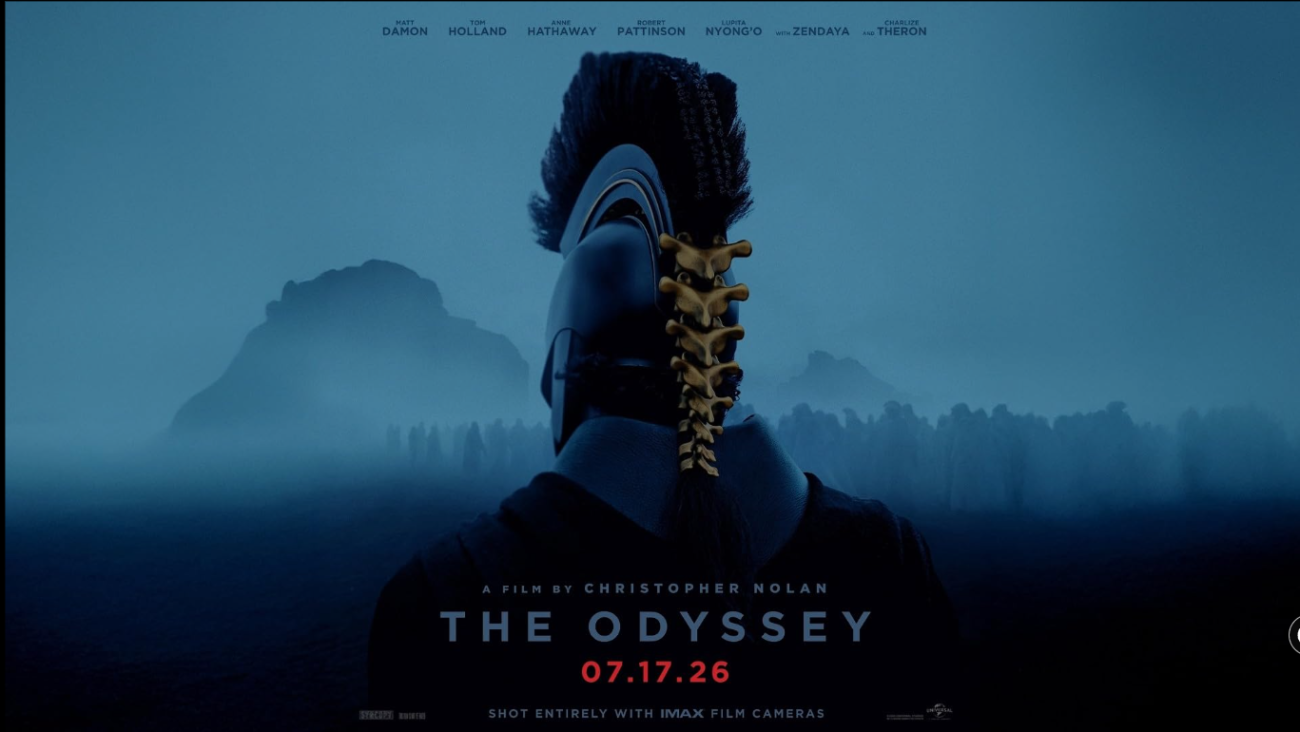
The Odyssey Parents Guide 2026: Is It Safe for Kids?
Is The Odyssey safe for kids? Based on what we know heading into its July 2026 release, this is an epic mythological adventure that skews older — I would place the comfortable starting age at 13, and with some caveats even then.
This The Odyssey parents guide will walk you through every content area that matters, age by age, so you can make a confident call before anyone sits down to watch.
With Caution. The Odyssey is based on one of history’s most violent and psychologically intense epic poems. Expect creature-based horror, prolonged peril, themes of death and despair, and some mythology-rooted content that younger children will find genuinely disturbing. Comfortable viewing starts at 13, older for sensitive kids.
Quick-Scan Safety Card
Not Yet Rated (NR) — theatrical release July 17, 2026; expect PG-13 or R based on source material
13+ (15+ for sensitive children)
Moderate to High — mythological combat, creature attacks, death of secondary characters
Likely mild to moderate — epic adventure films in this genre typically contain minimal strong profanity
High — Cyclops, Scylla, Charybdis, Sirens, and Underworld sequences expected
High — grief, prolonged separation, hopelessness, and characters facing death
The psychological darkness — this is not the lighthearted mythology adventure the trailer may suggest
| Category | Detail |
|---|---|
| Official Rating | Not Yet Rated (NR) — theatrical release July 17, 2026; expect PG-13 or R based on source material |
| Expert Recommended Age | 13+ (15+ for sensitive children) |
| Violence Level | Moderate to High — mythological combat, creature attacks, death of secondary characters |
| Language Level | Likely mild to moderate — epic adventure films in this genre typically contain minimal strong profanity |
| Creature/Horror Content | High — Cyclops, Scylla, Charybdis, Sirens, and Underworld sequences expected |
| Emotional Intensity | High — grief, prolonged separation, hopelessness, and characters facing death |
| What Will Surprise Parents Most | The psychological darkness — this is not the lighthearted mythology adventure the trailer may suggest |
What Is The Odyssey About? (No Spoilers)
At its core, this is a story about a man trying to get home — and everything the universe throws at him to stop that from happening. Based on Homer’s ancient Greek epic, it follows Odysseus across a decade of war’s aftermath, dangerous seas, and encounters with gods, monsters, and beings who want him dead or captive.
Emotionally, the film sits with abandonment and grief in a way that will hit harder than the creature sequences. A son grows up without his father. A wife waits alone. A man questions whether home is even worth surviving for.
These are not abstract feelings for children who’ve experienced family separation, loss, or instability. Parents should know that going in. The The Odyssey content warning that matters most isn’t the monsters — it’s the emotional weight underneath them.
Why Is The Odyssey Not Yet Rated — And What Rating Should Parents Expect?
As of this guide’s publication, The Odyssey age rating has not been officially assigned by the MPAA. The film releases theatrically on July 17, 2026, which means a rating is forthcoming. That said, we can make a well-grounded prediction.
Homer’s Odyssey contains cannibalism, seduction, graphic death, psychological manipulation, and visits to the land of the dead. A faithful adaptation of this material — even a carefully edited one — is almost certainly going to land at PG-13 at minimum. An R rating would not surprise me at all if the filmmakers leaned into the source’s darkness.
Here is the thing though: a PG-13 rating on a film like this can be deceptive. The MPAA rates for content thresholds, not emotional impact. A technically PG-13 film can still carry imagery that genuinely disturbs an 11-year-old. My honest assessment, before a final rating is confirmed, is that parents should treat this as R-adjacent until we know more.
Check back for an updated rating once the MPAA decision is released closer to the July 2026 theatrical date. This guide will reflect the official classification as soon as it’s confirmed. For now, use 13+ as your working baseline.
Content Breakdown
Violence and Combat
The Odyssey’s source material includes some of the most visceral violence in classical literature. Odysseus blinds the Cyclops. His men are eaten alive. The suitors are massacred at the poem’s end. How much of this lands on screen in graphic detail will depend heavily on the director’s choices — but parents should not assume it has been sanitized.
Epic mythological adaptations in recent years have trended toward committed, unflinching portrayals rather than watered-down versions. I’ve reviewed enough of these films to know that “based on Greek mythology” has essentially become a warning label in itself. Expect combat sequences that are prolonged, creature attacks that are meant to frighten, and at least some deaths that are shown rather than implied.
If your child is sensitive to sequences involving people being overpowered, trapped, or killed by larger creatures, this film will have multiple moments that trigger that distress. That includes the Cyclops encounter and anything set in the Underworld.
Creature and Horror Sequences
This is where I want to be direct with parents who might be on the fence about younger viewers. The monsters in The Odyssey are not background color — they are central, terrifying, and deliberately overwhelming. Scylla and Charybdis, the Sirens, Circe, Polyphemus the Cyclops — these are entities designed in the original text to induce dread. A well-made film adaptation will do the same on screen.
My 11-year-old has a solid tolerance for fantasy creatures. I still wouldn’t take her to this one without watching it myself first. That instinct is based on two-plus decades of reviewing content in this genre — the creatures here exist in a different register than, say, a Marvel villain.
Creature sequences will likely include darkness, loud audio design, and jump-scare adjacent moments. Children with sensory sensitivities or anxiety around being trapped or consumed should be considered carefully before watching.
Emotional Darkness and Psychological Themes
Honestly, this is the section I’d flag first for parents of emotionally sensitive children — above the violence, above the creatures. The Odyssey is, at its center, a story about a man who cannot get back to his family. His crew dies. He is held captive. He questions his own will to survive. These are not incidental plot points. They are the emotional architecture of the whole story.
For children who have experienced parental absence, family separation, grief, or trauma, these themes can land in unexpected places. I want to be careful how I say this — it doesn’t mean the film shouldn’t be seen, but it absolutely means it shouldn’t be seen without conversation.
If your child has any lived experience with a parent being absent, missing, or emotionally unavailable, the storyline following Odysseus’s son Telemachus — who grows up essentially fatherless — may resonate in a way that needs unpacking afterward.
Mythology, Religion, and the Supernatural
The Greek pantheon is present throughout — Zeus, Athena, Poseidon, Hermes, Circe, and others intervene directly in human lives. For most families this is simply mythology, the same material taught in school. Some religious households may have concerns about gods being portrayed as active, interventionist characters who command human fate.
The Underworld sequence — Odysseus visiting the realm of the dead — is worth a specific note. It involves communication with deceased characters, shades of the dead, and the concept of souls existing in a kind of perpetual half-life. For children already anxious about death, this sequence could be genuinely unsettling.
The supernatural content here is mythological rather than horror-genre, but the Underworld scenes blur that line. If your child has recently experienced the death of someone close, consider whether a sequence featuring the dead speaking to the living is something they’re ready to sit with.
Romantic and Sensual Content
The source material includes relationships with Circe and Calypso that are explicitly romantic and, in the original text, sexual. A modern film adaptation will almost certainly handle this with varying degrees of restraint. Based on comparable adaptations in this genre and budget range, I would anticipate suggestive rather than explicit content — nothing graphic, but enough to note for parents of younger teens.
Put plainly: this is not a category that should drive a viewing decision for most families, but parents of 11 and 12-year-olds should be aware the film will likely not skip these relationships entirely.
Age-by-Age Viewing Guide
Not Appropriate
Not a close call. The creature sequences alone would be overwhelming for this age group, and the emotional themes of abandonment and death would be incomprehensible at best and frightening at worst. This one isn’t for little ones under any circumstances.
Not Appropriate
Even mythology-loving kids in this age range should sit this one out. The violence is too sustained, the creatures are designed to genuinely frighten, and the psychological themes of prolonged separation and lost hope are not things children this age are equipped to process without real distress. Wait a few years.
With Caution
This age group is where it gets genuinely complicated. A confident, mythology-familiar 13-year-old is probably fine. An anxious or emotionally sensitive 11-year-old is a different conversation entirely. The creature content and the emotional weight are both significant. I’d say watch it yourself first, then decide based on what you know about your specific child — not their age alone.
With Caution
Most teenagers in this range are ready for what The Odyssey brings. The themes of identity, survival, and the cost of ambition are genuinely engaging at this age — my 16-year-old would find this more interesting than disturbing, I think. The caveat is the emotional content around family separation, which can still resonate unexpectedly depending on a teen’s personal history. Worth watching together if you can.
Appropriate
This is exactly the audience the film is made for. Older teens and adults will appreciate the epic scale, the moral complexity, and the emotional depth. No reservations for this age group — and it may well be one of the better discussion-starters you’ll find at the cinema this summer.
Positive Messages and Educational Value
And look — I know some parents will be surprised to hear this — The Odyssey carries real educational and emotional value alongside its darker content. The story has shaped Western literature for nearly three thousand years. Seeing it rendered on screen can be a genuine gateway to classical literature, history, and philosophy for teenagers.
The themes of perseverance, loyalty, and the human cost of pride are not abstract. Odysseus’s failures are as instructive as his successes. He is not a clean hero — he makes catastrophic decisions that cost people their lives, and the story doesn’t let him off the hook for that. That moral complexity is worth talking about.
Telemachus’s arc — a young person coming into their own identity while searching for a father — is something many teens will connect with even if their own circumstances are completely different. That connection point is worth exploring in conversation.
Five Family Discussion Questions
- Odysseus makes decisions throughout that get his crew members killed — does that make him a bad leader, a tragic one, or something else? Where’s the line between bold leadership and recklessness?
- Telemachus spends years not knowing whether his father is alive or dead. How do you think that kind of uncertainty changes a person — and how did the film show that in the way he carried himself?
- The gods in this story intervene constantly in human lives — helping some, punishing others. If you were living in this world, how would it feel to know that forces completely outside your control were deciding your fate?
- Penelope holds everything together for years while Odysseus is absent. Who do you think had the harder experience — the one on the adventure, or the one waiting at home?
- Odysseus is tempted multiple times to simply stay somewhere comfortable rather than keep fighting to get home. What do you think kept him going — and is there a point at which giving up would have been the more understandable choice?
Frequently Asked Questions
Yes, genuinely. The creature sequences — particularly anything involving the Cyclops or the Underworld — are designed to be frightening for adults, let alone young children. A 7-year-old would very likely find multiple scenes distressing. This is not the right film for that age group.
As of this writing, The Odyssey is Not Yet Rated ahead of its July 17, 2026 theatrical release. Based on the source material and genre expectations, a PG-13 or R rating is most likely. This guide will be updated once the official MPAA classification is confirmed.
No confirmed information is available on a post-credits scene ahead of the July 2026 release. Given that this appears to be a standalone epic rather than part of a franchise, a post-credits sequence seems unlikely — but check back after opening weekend for a confirmed answer.
Not confirmed ahead of release. Epic fantasy films with supernatural elements frequently include lightning, divine light, and rapid visual effects that can include strobe-like sequences. Photosensitive viewers should check the film’s accessibility notes at their cinema before attending, or wait for streaming where warnings are typically listed.
The Odyssey releases theatrically on July 17, 2026. A streaming release date has not been confirmed at the time of this guide. For a major theatrical release, expect a streaming window of approximately 45 to 90 days after the cinema debut. Check back for updates once the film is out.
Not directly. Percy Jackson is written and rated specifically for middle-grade audiences, with violence and themes calibrated accordingly. The Odyssey draws from the same mythology but in a far darker register. A child who loved Percy Jackson is probably two to three years away from being ready for this film.
Yes, and this is one of the more important content flags in this guide. The Underworld sequence involves the dead appearing and speaking. Multiple crew members die during the story. For children currently processing the loss of someone close, these scenes carry real emotional weight that goes beyond typical adventure-film stakes.
It depends significantly on the child. A mature, mythology-familiar 12-year-old who handles intense fantasy without distress may manage fine with a parent present. A younger or more sensitive 12-year-old is a different calculation. Watch the trailer with them and gauge their reaction — that tells you a lot before committing to the full film.

Matthew Creith is a movie and TV critic based in Denver, Colorado. He’s a member of the Critics Choice Association and GALECA: The Society of LGBTQ Entertainment Critics. He can be found on Twitter: @matthew_creith or Instagram: matineewithmatt. He graduated with a BA in Media, Theory and Criticism from California State University, Northridge. Since then, he’s covered a wide range of movies and TV shows, as well as film festivals like SXSW and TIFF.