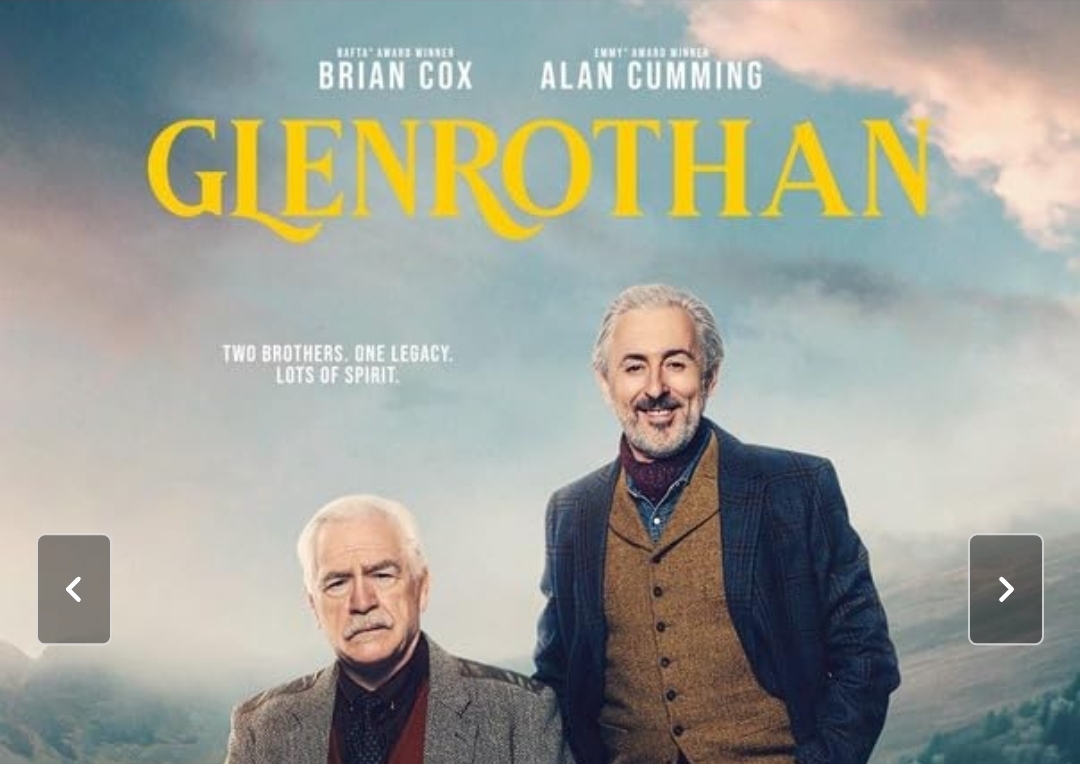
Three parents in our local community group messaged me within 48 hours of Glenrothan appearing on the radar — all of them asking roughly the same thing: the trailer looks like a warm family comedy, so why does something feel off about it? Having now sat through the full film, I can tell them — and you — exactly why that instinct is worth trusting. This Glenrothan parents guide will walk you through everything you need to decide whether this one belongs in your living room and who should actually be in the room when it plays.
The short version is this: Glenrothan is marketed with the kind of gentle, autumnal warmth that makes parents assume it is safe for the whole family. The reality is more complicated. There is genuine humour here, and real heart. But the dramatic underpinning carries emotional weight that younger children are not equipped to process, and a few scenes hit harder than the packaging prepares you for.
My verdict — watch it yourself first if your children are under thirteen. For teenagers, it is a genuinely worthwhile watch, and one that opens up real conversations.
Quick Answer — Is Glenrothan Safe for Kids?
With Caution. Glenrothan blends dry comedy with emotionally heavy dramatic themes — including grief, family fracture, and adult regret — that are likely to confuse or distress younger viewers. The film earns a confident 13+ recommendation. Older teenagers and adults will find it genuinely rewarding.
Quick-Scan Safety Card
Not Yet Rated — no MPAA or BBFC classification assigned at time of publication
13 and above — mature emotional content makes this unsuitable for younger children
Low — one brief physical confrontation; no weapons, no sustained threat
Moderate — scattered mild to moderate profanity; nothing extreme
High — grief, estrangement, and adult failure handled with realism that may distress sensitive viewers
Minimal — brief references to a past relationship; nothing visual or explicit
Mild — social drinking in a couple of scenes; not glamorised or central to the plot
The tonal whiplash — a scene that plays as comedy suddenly becomes an emotionally raw confrontation about loss and parental absence
| Category | Detail |
|---|---|
| Official Rating | Not Yet Rated — no MPAA or BBFC classification assigned at time of publication |
| Expert Recommended Age | 13 and above — mature emotional content makes this unsuitable for younger children |
| Violence | Low — one brief physical confrontation; no weapons, no sustained threat |
| Language | Moderate — scattered mild to moderate profanity; nothing extreme |
| Emotional Intensity | High — grief, estrangement, and adult failure handled with realism that may distress sensitive viewers |
| Sexual Content | Minimal — brief references to a past relationship; nothing visual or explicit |
| Substance Use | Mild — social drinking in a couple of scenes; not glamorised or central to the plot |
| What Will Surprise Parents Most | The tonal whiplash — a scene that plays as comedy suddenly becomes an emotionally raw confrontation about loss and parental absence |
What Is Glenrothan About?
Set in a small, quietly crumbling Scottish community, Glenrothan 2025 follows a family pulled back together by circumstances none of them would have chosen. On the surface it has the bones of a warm comedy — familiar faces, local colour, gentle absurdist humour. But underneath that sits something heavier.
The emotional core is about people who love each other badly. Parental absence, the long shadow of grief, and the way families perform togetherness while quietly falling apart — these are the real subjects. Parents searching for Glenrothan trigger warnings should know the film deals directly with loss, strained parent-child relationships, and the feeling of being left behind by someone you needed.
There is genuine warmth here too. But it earns its lighter moments by being honest about the darker ones first.
Why Is Glenrothan Not Yet Rated — And What Does That Actually Mean?
The Glenrothan age rating is currently listed as Not Yet Rated, which at time of writing reflects the film’s limited pre-release classification status rather than a deliberate decision to avoid the process. That absence of an official rating creates a genuine problem for parents making quick decisions.
Here is my honest read: if and when this film receives a formal classification, I would expect a PG-13 equivalent in the US or a 12A in the UK. The language and physical content would comfortably sit within those brackets. What those ratings often fail to capture, though, is emotional weight — and this film has plenty of it.
A PG-13 sticker on a box tells parents almost nothing about grief content, family estrangement, or the particular kind of scene where an adult breaks down in front of a child in a way that younger viewers find deeply unsettling. That is the gap this guide is designed to fill. Glenrothan parental guidance matters here precisely because the official system is not built to flag emotional complexity.
Content Breakdown
Emotional Intensity and Grief
This is where Glenrothan demands the most attention from parents. There is a scene roughly halfway through — I am not going to spoil its context — where a character speaks plainly about loss in a way that is written to land without melodrama. And it does land. Hard.
What caught me off guard was how little warning the film gives you. The scene begins as a slightly awkward comedic exchange between two family members. Within ninety seconds it becomes something else entirely — honest, quiet, and genuinely sad. My 16-year-old, who watched part of this with me, went very still at that moment. She did not need me to explain what she was watching. That reaction told me more about how teenagers will receive this film than any content checklist could.
Children under ten who have experienced the loss of a parent, grandparent, or close figure should be treated with extra care around this content. The film does not exploit grief — but it does not protect younger viewers from it either.
If your child has experienced bereavement recently, preview the second act before watching together. The grief content is handled with respect, but it is specific and realistic enough to surface strong feelings without much warning.
Family Fracture and Parental Absence
The film’s comedic framework is built on a family that has not functioned as a unit for years. That dynamic is played for laughs in places — and the humour lands well. But the dramatic version of that same dynamic is significantly less gentle.
There are exchanges between a parent and adult child that are written to sting. One argument in particular uses silence and physical distance more effectively than any shouted line could. I want to be careful how I describe this without spoiling it — but parents should know it depicts a child (now adult) confronting a parent about abandonment. The film treats this seriously. Children who carry their own feelings about absent or emotionally unavailable parents may find this unexpectedly activating.
This is not a criticism of the film. It is exactly the kind of content that makes Glenrothan worth discussing. But it needs flagging for Glenrothan parental guidance purposes because it does not appear in the marketing at all.
If your family has experienced separation, divorce, or an absent parent, the confrontation scenes in the second half of this film may prompt unexpected emotional responses from children of any age. Having a brief conversation before watching — rather than after — can help.
Language
The language in Glenrothan is honestly pretty mild given its dramatic ambitions. There is scattered profanity — a handful of moderate words used in moments of frustration — but nothing that felt gratuitous or that would push this into strong-language territory under most classification systems.
The Scottish setting and character voices bring a naturalness to the dialogue that makes even the stronger words feel contextually appropriate rather than inserted for effect. For most parents, language will be the least pressing concern in this film.
Violence
There is one brief physical confrontation — a shove rather than a fight — that resolves quickly and without injury. It carries emotional weight because of the relationship between the characters involved, but there is nothing here that would concern most parents from a violence standpoint. Glenrothan content warning for violence is genuinely low.
Tonal Whiplash — The Real Parenting Challenge
And look — I know some parents will read the above sections and think this all sounds manageable. The violence is low, the language is moderate, the sexual content is minimal. Here is the thing though: the real challenge with this film is its tonal unpredictability.
Glenrothan moves between warm comedy and emotional rawness without always signalling the transition. A scene that starts with dry humour about a family dinner can shift into something deeply serious within a few exchanges. For adults, that rhythm feels true to life. For children under twelve, it can be genuinely confusing and, in some cases, frightening — not because of anything scary, but because they cannot locate the emotional rules of what they are watching.
I have seen this response in children before and it is worth taking seriously. Confusion about tone is its own form of distress for younger viewers.
Watch the first twenty minutes with younger teenagers before deciding whether to continue together. The tone is established early. If they are tracking it comfortably, you are likely fine to continue. If they seem unsettled by the shifts, this one may be better revisited in a year or two.
Age-by-Age Viewing Guide
Not Appropriate
There is nothing in Glenrothan that is designed for very young children, and plenty that would confuse or distress them. The emotional register is entirely adult. Put plainly: this is not a film for under-fives in any context.
Not Appropriate
Children in this age group will struggle with both the tone and the content. Grief, parental failure, and adult emotional breakdown are handled realistically — not in the softened way children’s media typically handles these subjects. Even children who enjoy grown-up films will likely find parts of this confusing or upsetting. I would not show this to my 7-year-old, and I review films for a living.
With Caution
This is the age group where it genuinely depends on the specific child. A mature, emotionally grounded eleven or twelve year old who reads widely and handles complex stories well may be ready for this — with a parent present. A child who has recently experienced family disruption, loss, or parental absence probably is not. My 11-year-old is sharp and handles drama well, but I would not sit him in front of this without being in the room and ready to pause and talk.
Appropriate
This is where Glenrothan finds its most receptive audience among younger viewers. Teenagers in this bracket are generally equipped to hold the film’s tonal complexity, and many will find the parent-child conflict storyline genuinely affecting in a productive way. My 16-year-old engaged with it seriously. The conversations it sparked were worth more than the two hours of viewing time.
Appropriate
Older teenagers and adults are the intended audience for this film. The comedy hits, the drama earns its emotion, and the story’s central concerns — about family, loss, and what we owe each other — are handled with the kind of honesty that older viewers will recognise and appreciate. Recommended without reservation for this age group.
Positive Messages and Educational Value
Glenrothan is not a film that announces its values. It does not wrap its lessons in ribbon. But there is real substance here for families willing to engage with it rather than just watch it.
The film is quietly honest about the fact that adults make choices that hurt their children — and that acknowledgement matters. It does not excuse those choices, but it also does not reduce the adults who made them to villains. That ambiguity is rare and genuinely valuable for older teenagers trying to make sense of complicated family dynamics in their own lives.
There is also something to be said for the way Glenrothan handles community and belonging — the idea that a place can hold your history even when the people in it have let you down. For families with Scottish heritage or roots in small, close-knit communities, that dimension of the film will likely resonate strongly.
Educationally, this is not curriculum material. But as a catalyst for honest family conversation about grief, forgiveness, and the gap between who our parents are and who we needed them to be — it has genuine value.
Five Family Discussion Questions
- When the family sits together at the table and everyone is laughing but something is clearly wrong underneath — have you ever been in a situation where you were performing happiness for someone else? What did that feel like?
- The film suggests that coming back to a place you grew up can force you to confront things you have been avoiding. Do you think that is true — can a place make you feel things a person cannot?
- The confrontation scene between the parent and the adult child is written so that neither character is entirely wrong. Did you find yourself taking sides? Why?
- Glenrothan uses humour right up until the moment it does not — and then the shift is sudden. Did that tonal change feel honest to you, or did it feel manipulative? Is there a difference?
- By the end of the film, do you think the family has actually changed — or are they just better at being around each other? Is that enough?
Frequently Asked Questions
Not for younger children. The film’s emotional content — grief, parental absence, adult conflict — is handled realistically rather than gently. It is best suited to viewers aged 13 and above. Younger teenagers should watch with a parent present, particularly if they have experienced family disruption or bereavement.
Yes — not because of anything frightening in a traditional sense, but because the emotional content is too advanced and the tonal shifts too unpredictable. Scenes involving grief and adult breakdown would likely distress a child this age significantly. This one is firmly for older viewers.
Glenrothan is currently Not Yet Rated at time of publication. My expert recommendation is to treat it as a 13+ film. When an official rating is assigned, I would expect PG-13 in the US or a 12A equivalent in the UK — though neither classification would fully capture the film’s emotional intensity.
There is no post-credits scene in Glenrothan. The film ends conclusively. You are safe to leave when the credits roll — though given the subject matter, you may want a few quiet minutes before anyone reaches for the remote.
No strobe lighting or rapid flashing sequences were present in the version I viewed. The visual style is largely naturalistic. Parents of children with photosensitive epilepsy should have no specific concerns based on this film’s current cut.
Glenrothan’s streaming and theatrical distribution details had not been fully confirmed at time of writing. Check the film’s official channels or major streaming platforms for the most current availability. We will update this guide when a confirmed Glenrothan streaming age limit or platform classification is announced.
Yes — grief is a central thread of the film and it is handled with directness. Death is not shown on screen, but its aftermath is felt throughout. If your child has recently experienced loss, preview the second act first. The film treats the subject with honesty, not exploitation, but that honesty cuts deep.
For families with teenagers aged 13 and above, yes — and it is likely to generate one of the better post-film conversations you will have this year. For families with younger children, this is better saved for a parents-only watch or a supervised viewing with much older kids.

Matthew Creith is a movie and TV critic based in Denver, Colorado. He’s a member of the Critics Choice Association and GALECA: The Society of LGBTQ Entertainment Critics. He can be found on Twitter: @matthew_creith or Instagram: matineewithmatt. He graduated with a BA in Media, Theory and Criticism from California State University, Northridge. Since then, he’s covered a wide range of movies and TV shows, as well as film festivals like SXSW and TIFF.