Grief is not a territory you enter casually, and neither is the legacy of someone like Robert Redford. To invoke his name is to conjure not just a towering actor, director, and activist, but an entire ecosystem of cinema shaped by his belief in new voices Sundance alone altered the cultural weather. His influence stretches so far that it’s almost instinctive to flinch when someone reaches for the comparison.
And yet, watching See You When I See You, the tender, awkward, and quietly devastating new film directed by Jay Duplass, it’s difficult not to understand why the parallel to Redford’s Ordinary People keeps surfacing. Duplass himself has described the film as “like a funny Ordinary People,” which sounds glib until you actually sit with the movie and feel its emotional current. Then it starts to sound less like a quip and more like an unexpectedly accurate roadmap.
What’s striking is that the comparison doesn’t feel inflated. Duplass’ film is undeniably messy structurally, emotionally, tonally but it’s the kind of messiness that feels honest. The kind born from the fact that grief does not move in clean arcs, and healing doesn’t follow screenplay logic. Life, after loss, feels scrambled. This movie understands that in its bones.
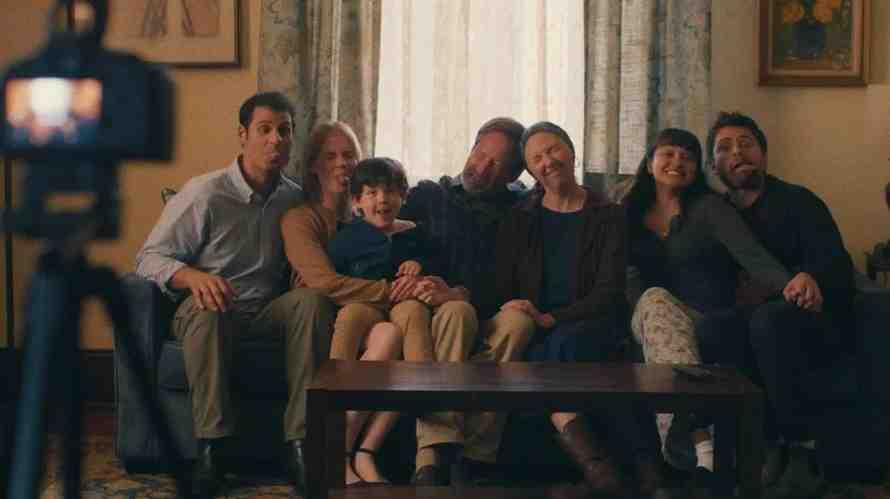
Like Redford’s film, See You When I See You is adapted from real emotional terrain. It’s based on the memoir and now the screenplay by stand-up comedian Adam Cayton-Holland. And like Ordinary People, it’s less interested in the event of death than in the wreckage left behind: the silences, the miscommunications, the private rituals of coping that don’t always look healthy from the outside.
Highly Recommended: Take Me Home (2025) Parents Guide
Both films circle similar questions with sincerity: What does mental health look like when everyone is hurting? How does a family function when its emotional center has collapsed? How do you rebuild a life when one person’s absence becomes the defining shape of every memory?
Duplass opens the film with an image that feels deceptively simple but emotionally loaded. We see a family photograph from childhood warm, unguarded, full of promise. A young girl leaps toward the water, suspended mid-air, just before the splash. It’s a moment frozen in amber, and you can feel the film quietly telling you: this is what will be lost.
The story then jumps forward to Aaron (Cooper Raiff), now grown, or at least technically an adult. Emotionally, he’s stuck somewhere far behind that title. His sister and closest friend, Leah (Kaitlyn Dever), is gone, and he is unraveling in slow, familiar ways. He drinks too much. He drifts. He avoids responsibility. He circles the people who care about him without quite letting them in.
He spends time with his other sister, Emily (Lucy Boynton), whose own grief manifests differently. He snaps at his parents (Hope Davis and David Duchovny), who are trying clumsily, painfully to keep the family from fracturing. He fixates on the girlfriend he ghosted, played with aching vulnerability by Ariela Barer. And beneath all of it, he returns again and again to memories of Leah, as though replaying them might keep her alive.
Those memories are where Duplass takes his boldest creative risks. In one of the film’s most unsettling and imaginative sequences, Aaron recalls a joyful night out at a bar with Leah only for the ceiling to suddenly tear open, a massive hole appearing above them. It recalls the surreal rupture of films like If I Had Legs I’d Kick You, but here the rupture is purely psychological. The world isn’t actually collapsing. It’s Aaron’s internal landscape that’s caving in.
Because he refuses therapy, because he refuses to process, these intrusive visions begin to multiply. They grow heavier. They start to feel less like memories and more like hauntings. You can see him edging toward a cliff, and the terrifying part is how recognizable that trajectory feels. His family sees the danger, but they don’t quite know how to reach him. That helplessness so familiar to anyone who’s loved someone in pain hangs over every interaction.
As the film unfolds, it becomes less a single character study and more a mosaic of coping mechanisms. Everyone is grieving, but no one is doing it the same way. Duplass keeps the camera close to Aaron, yet he allows space for the others to exist as fully human rather than as supporting functions. This is where the Ordinary People comparison really resonates. Like Redford, Duplass is less interested in melodrama than in the quiet, awkward rhythms of family life the things people say instead of what they mean, the jokes used as shields, the arguments that conceal deeper wounds.
Highly Recommended: The Moment (2026) Parents Guide
Interestingly, among the Sundance selections drawn from stand-up comedians’ personal stories, this one emerges as the more organically funny, the more emotionally grounded. The humor doesn’t feel imported; it feels like it grows out of the characters’ survival instincts.
Duplass has always had a gift for balancing discomfort and charm, and you can see echoes here of last year’s The Baltimorons, another film where humor and heartbreak coexist in uneasy, revealing proximity. In See You When I See You, scenes shift effortlessly from debates over whether or not to hold a funeral for Leah to petty family bickering used as emotional distraction. You might catch yourself laughing and then immediately wondering if you’re allowed to. That tension between laughter and sorrow isn’t a flaw. It’s the point.
Yes, parts of the film feel more obviously constructed than others. You can sometimes see the scaffolding. But the emotional core is so sincere, so deeply felt, that those imperfections become secondary. The collision between comedy and tragedy creates friction, but it’s a friction that feels true to life. Grief is not a solemn, uninterrupted experience. Sometimes the darkest days contain the dumbest jokes. Capturing that paradox without trivializing either side is incredibly difficult, and Duplass handles it with surprising tenderness.
Whether See You When I See You will one day be spoken of with the reverence afforded to Ordinary People is impossible to predict. Canonization is a slow, unpredictable process. But what the film clearly demonstrates is that Jay Duplass like Redford before him is still willing to take emotional and formal risks, still interested in messy humanity rather than neat conclusions. And in a landscape where so many films feel calculated to death, there’s something genuinely moving about seeing a director return with this much vulnerability, this much openness.
It’s hard not to feel grateful he did.
See You When I See You (2026) Parents Guide
Note: The film is not officially rated R by the Motion Picture Association (MPA). What follows is a content-sensitive guide for parents, grounded in the film’s tone and themes rather than a rigid label.
Violence & Intensity: There is no physical violence in the traditional sense no fights, no bloodshed but emotionally, this film can feel bruising. Much of the intensity comes from its unflinching portrayal of grief, depression, and psychological unraveling. Younger viewers, especially those unfamiliar with death or mental health struggles, may find the emotional atmosphere heavy and disorienting.
Language: Expect frequent use of strong profanity, including f-words and other adult expressions, especially in moments of frustration, grief, and family conflict. The tone isn’t aggressive for shock value; it reflects how people actually speak when they’re hurting.
Sexual Content / Nudity: There are references to relationships, intimacy, and emotional fallout from romantic decisions, but the film doesn’t linger on explicit sexual imagery. This is a film about love and loss, not sexuality, though mature themes in relationships are central.
Drugs, Alcohol & Smoking: Aaron frequently drinks, and the film makes clear that this is part of his unhealthy coping mechanism. This is important context for parents: the film shows substance use honestly, but also critically. There is minimal, if any, depiction of drug use, and smoking is not a dominant presence.
Age Recommendations: Because of its heavy emotional themes, strong language, and focus on grief, mental health, and substance use, this film is best suited for older teens (16+) and adults.
Highly Recommended: Chasing Summer (2026) Parents Guide

Stephanie Heitman is a seasoned journalist and author dedicated to helping parents navigate the world of Hollywood entertainment through thoughtful, family-oriented film reviews. With over a decade of experience in writing and a passion for fostering safe, enriching viewing experiences, Stephanie launched Parentguiding.com to provide parents with the insights they need to make informed choices for their families.