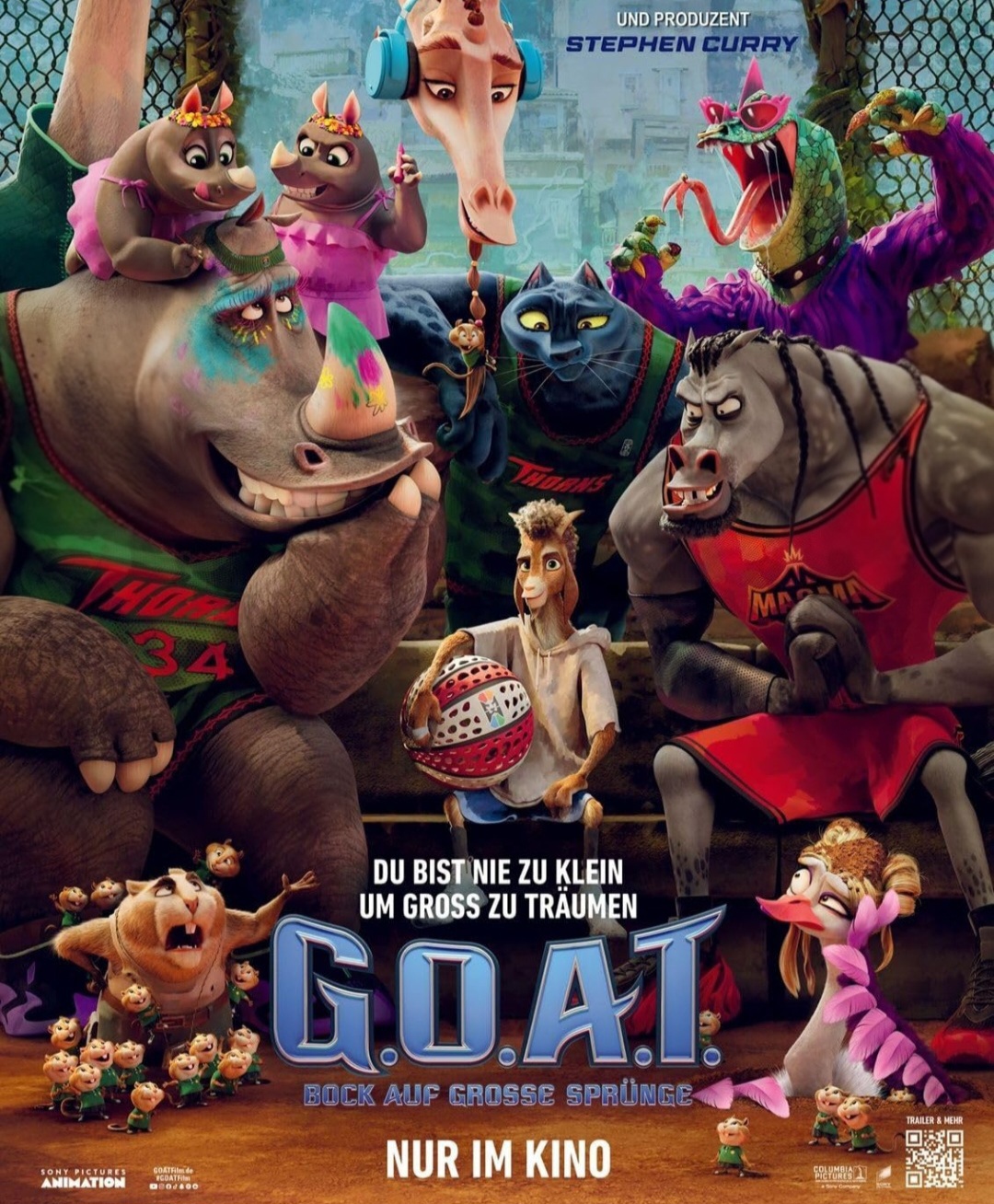
GOAT (2026) Parents Guide: Age Rating, Safety Breakdown, and Expert Verdict (2026)
Yes, GOAT (2026) is generally suitable for children aged 6 and up. While the movie is an uplifting underdog story with a “Spider-Verse” visual flair, parents should be wary of aggressive sports-related peril and a heavy reliance on potty humor that might skew a bit “gross-out” for sensitive younger viewers.
The Parental Dashboard
|
Critical Safety Category |
Rating / Level |
Expert Observation |
|---|---|---|
|
Official MPAA |
PG |
Rated for rude humor and brief mild language. |
|
Our Recommended Age |
6+ |
Best for elementary-aged kids who can handle fast-paced action. |
|
Emotional Intensity |
4/10 |
Low stakes, though “Roarball” matches are sensory-heavy. |
|
Positive Role Models |
4/5 Stars |
Strong themes of humility, perseverance, and teamwork. |
|
Language / Slang |
Medium |
Frequent use of “sucks,” “butt,” and “Oh, sheep!” |
The Plot through a Parent’s Lens
In the neon-soaked city of Vineland, GOAT (2026) follows Will (Caleb McLaughlin), a teenage Boer goat who dreams of playing “Roarball” a high-octane, full-contact version of basketball dominated by apex predators. Because he is small, the world tells him he doesn’t belong. When a viral video earns him a spot on the Vineland Thorns, he must earn the respect of his idol, the black panther Jett Fillmore (Gabrielle Union).
Beyond the flashy dunks and Pharrell-produced soundtrack, the film explores the weight of legacy and the pressure of viral fame. Will struggles with his identity as an “undersized” athlete, which serves as a powerful metaphor for kids who feel overlooked or “not enough” in their own social circles.
The story also touches on mentorship dynamics. Jett Fillmore isn’t just a hero; she’s a seasoned pro dealing with the fear of being replaced. This creates a “gray area” where kids see that even their idols have insecurities.
Detailed Safety Audit: The “Nitty-Gritty”
Violence, Peril, and “The Scare Factor”
The “Roarball” sequences are the primary source of intensity. While the animation style is stylized and “fur-focused,” the sport itself is full-contact and visceral. You will see large animals like rhinos and bears body-slamming smaller characters.
There are no depictions of blood or lasting injury, but the sensory load is high. Several scenes in the Lava Court feature strobe-like flashes and booming audio that could trigger children with sensory processing sensitivities.
Expert Tip: The first 15 minutes of the film are surprisingly dialogue-heavy as it establishes the rules of Roarball. If your child is prone to “the wiggles,” they may get restless before the first big action sequence.
Language, Dialogue, and Social Dynamics
The script leans into “edgy” kid humor. You will hear words like “suck,” “butt,” “gosh,” and “dang.” There is also a clever use of zoology-themed “near-swearing,” such as “Oh, sheep!” or using the word “cloaca” as a substitute for a profanity.
The social dynamics are generally positive, though there is some initial bullying from the rival character, Mane Attraction (Aaron Pierre). He uses his size and status to belittle Will, which provides a good opening to discuss peer pressure and online bullying (given the viral nature of their rivalry).
Romantic Themes & Suggestive Content
There is no traditional romance in GOAT. However, there is a recurring gag where male animals express over-the-top admiration for athletes. In one scene, a male voice is heard shouting “No, marry me!” to a star player.
You should also be aware of some “gross-out” gags. These include characters being sprayed with toilet water and a scene where farts are used as a tactical distraction. It’s harmless fun for most, but parents who prefer “high-brow” family media might find it a bit tedious.
Developmental Readiness by Age Bracket
Preschoolers (3-5)
Verdict: Not Recommended. The pacing is extremely fast, and the “Roarball” matches can be visually overwhelming. While the colors are bright, the complex plot about sports contracts and viral fame will likely fly over their heads. They may enjoy the animal designs but might find the 100-minute runtime difficult.
Elementary (6-9)
Verdict: The “Sweet Spot.”
This is the target demographic. Kids this age will resonate with Will’s desire to prove the “big kids” wrong. The humor is perfectly calibrated for this age group, and the moral lessons regarding hard work are clear and actionable.
Tweens & Teens (10+)
Verdict: Safe, but Mileage May Vary.
Older kids will appreciate the Spider-Verse-style animation and the soundtrack. The themes of “brand building” and “going viral” are highly relevant to Gen Alpha and Gen Z. However, some may find the “underdog” trope a bit predictable.
The “Hidden Gems”: Educational & Moral Lessons
Why spend the money on a theater ticket for this? The bottom line is that GOAT offers a rare, nuanced look at redemption. Will isn’t just a perfect hero; he makes mistakes when he gets his first taste of fame.
The film teaches that true greatness isn’t about individual stats it’s about how you lift up your team. This is a fantastic “teachable moment” for kids involved in youth sports or competitive hobbies.
Psychologist’s Note: Look out for the scene where Will returns to his mother’s diner. It’s the emotional anchor of the film and highlights the importance of staying rooted in one’s convictions despite external success.
Post-Movie “Car Talk” Starters
- Will was told he was “too small” for Roarball. Have you ever been told you couldn’t do something because of how you look?
- Why do you think Mane Attraction felt the need to be a bully even though he was already the MVP?
- Jett Fillmore was scared of losing her spot. Is it okay for even “heroes” to feel scared sometimes?
- If you went viral tomorrow, how would you use that fame to help your friends?
- Which teammate of Will’s do you think was the most important for the Thorns’ success?
Information Gain: The “Expert” Insider Info
The Potty Break Window: If you need to run out, the best time is roughly 45 minutes in, during the promotional video shoot at the diner. You won’t miss any major plot twists or action beats.
Sensory Warning: The final championship match features intense flickering lights and heavy bass. If your child has epilepsy, proceed with caution during the last 20 minutes.
The “15-Minute Rule”: The movie starts slow with a lot of world-building exposition. If your child isn’t hooked immediately, hang in there the energy shifts significantly once Will enters the Thorns’ training facility.

I am a journalist with 10+ years of experience, specializing in family-friendly film reviews.