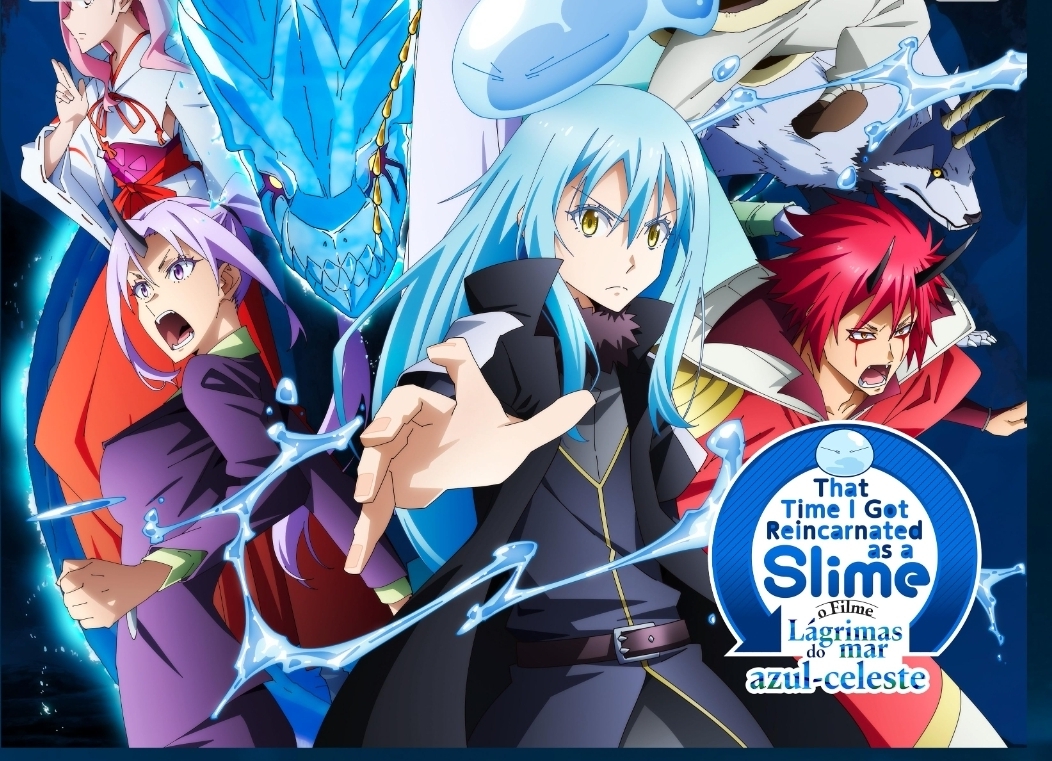
No — not for younger teens, and certainly not for children. That is my verdict on That Time I Got Reincarnated as a Slime the Movie: Tears of the Azure Sea, and I want to be specific about why before you scroll straight to the age guide. The TV-MA rating is earned here. This is not a case where the rating feels like overcaution.
I came into this one already familiar with the Tensura franchise. I have watched the series with my oldest, who is sixteen, and I expected this theatrical film to land somewhere around the same level as the later series arcs. It lands harder. There are sequences in this film that surprised even me, and I have been doing this work for fifteen years.
The That Time I Got Reincarnated as a Slime the Movie: Tears of the Azure Sea parents guide below is my full honest breakdown. I am not here to scare you off a film your teenager might genuinely love — I am here to make sure you know what is actually in it before they watch it alone at midnight.
With caution for 16 and 17-year-olds, and a firm no for anyone younger. This theatrical entry in the Tensura franchise carries its TV-MA rating through sustained combat violence, emotionally heavy loss sequences, and some mature thematic content that goes meaningfully beyond what the TV series prepared fans to expect.
Quick-Scan Safety Card
TV-MA — intended for mature audiences, not suitable under 17 without adult guidance
16 and above — the TV-MA is accurate and I would not push below that
High — extended battle sequences, on-screen character deaths, graphic magical destruction
Mild to moderate in the English dub — stronger in some subtitle translations
Very high — grief, loss, and sacrifice themes handled with real weight
Present — some scenes feature female characters in revealing depictions, consistent with the broader franchise
The emotional devastation in the third act — it is not action that earns the rating, it is the grief
Yes — multiple sequences contain rapid flashing lights and high-contrast magical effects
| Category | Detail |
|---|---|
| Official Rating | TV-MA — intended for mature audiences, not suitable under 17 without adult guidance |
| Expert Recommended Age | 16 and above — the TV-MA is accurate and I would not push below that |
| Violence Level | High — extended battle sequences, on-screen character deaths, graphic magical destruction |
| Language Level | Mild to moderate in the English dub — stronger in some subtitle translations |
| Emotional Intensity | Very high — grief, loss, and sacrifice themes handled with real weight |
| Fan Service | Present — some scenes feature female characters in revealing depictions, consistent with the broader franchise |
| What Parents Will Be Most Surprised By | The emotional devastation in the third act — it is not action that earns the rating, it is the grief |
| Photosensitivity Warning | Yes — multiple sequences contain rapid flashing lights and high-contrast magical effects |
What Is That Time I Got Reincarnated as a Slime the Movie: Tears of the Azure Sea About?
If you have not seen the series, the short version is this: a man reincarnated as a magical slime named Rimuru has built a nation of monsters and is now one of the most powerful beings in his fantasy world. This film takes that premise somewhere more emotionally exposed than the show typically goes.
The core emotional experience here is loss. Not dramatic action-loss where a side character falls heroically — the kind of loss that lingers, that changes the people left behind. There are sequences that deal with sacrifice, with grief that has no easy resolution, and with the cost of power.
For fans of the series it will feel like a reward. For parents unfamiliar with the franchise, picture an emotionally heavy animated film with high-stakes battle sequences and moments that would make some adults tear up. It is richer than typical isekai fare, but that depth comes with emotional weight worth knowing about.
Why Is It Rated TV-MA?
The TV-MA rating on That Time I Got Reincarnated as a Slime the Movie: Tears of the Azure Sea reflects a combination of factors rather than one single element. The violence is the most visible — there are battle sequences here that are more graphic than anything in the mainline series, including moments where characters are visibly destroyed or killed on screen.
But honestly? I think the rating is equally about emotional content. The third act in particular is brutal in a quiet, human way that I was not expecting from an isekai theatrical release. The franchise has always had emotional stakes, but this film raises them considerably.
My professional read is that the TV-MA rating is accurate and appropriate, not a case of overcaution. Some parents may feel that a dedicated fan of the series who is 14 or 15 should be fine. I understand that instinct, but I would push back on it. The emotional and thematic content here is genuinely more intense than the series, and age matters when processing grief narratives this heavy.
Content Breakdown
Violence and Battle Sequences
The action in this film is spectacular in the visual sense and intense in the content sense. There are at least four extended combat sequences, and the longest of them runs close to fifteen minutes. Characters are struck with enough force that the film does not shy away from depicting injury.
There is one sequence in the second act where a named character who fans of the series will recognize is overwhelmed in battle. The scene is not gory in a horror-film way, but it is prolonged and deliberately distressing. I felt it. I watched it twice to make sure I was reading it correctly, and the second viewing was harder than the first.
If your child is a fan of the series and accustomed to its combat, they will recognize the visual language here. But the stakes are higher and the consequences feel more permanent. That is a meaningful difference worth talking about before or after viewing.
Emotional Intensity and Grief Themes
This is the section I want parents to read most carefully, because it is what the rating does not communicate on its own. The film deals with loss, sacrifice, and grief in ways that are genuinely affecting for adults — and potentially destabilizing for younger or more sensitive viewers.
There is a sequence late in the film where Rimuru confronts the cost of the life he has chosen. It is handled with real craft, and I found myself with my notebook in my lap doing nothing because I was just watching. That is a compliment to the filmmakers, but it is also a signal to parents that this is not background-noise viewing.
My middle child, who is thirteen and a casual fan of the series, watched part of the film with me during my second screening. She was not distressed by the action. The grief subplot was a different story. She did not say anything, but I know her face, and that sequence landed somewhere uncomfortable for her.
Children and early teens who have experienced real loss — a family member, a pet, a significant bereavement — may find the third act unexpectedly difficult. This is not a caution against watching, but it is a strong reason to be present for it.
Fan Service and Mature Depictions
The Tensura franchise has always included some degree of fan service, and this film continues that pattern. There are several scenes where female characters are depicted in revealing ways that feel decorative rather than story-relevant. It is not the film’s defining characteristic, but it is present.
Nothing crosses into explicit territory. The depictions are consistent with what you find in the later arcs of the TV series. But parents who were not already familiar with the franchise may find it more prominent than expected for an animated theatrical release.
If fan service in anime is something you already monitor for your household, this film sits at a similar level to the mid-to-late series. Not the most prominent element, but not absent either.
Thematic Complexity and Power Ethics
One aspect of this film that I think gets underreported in content discussions is how seriously it engages with questions of power and responsibility. Rimuru’s position as a ruler of an entire nation is not treated lightly here. The film asks what it costs to hold that power, and who bears that cost.
For older teens and adults, this is genuinely compelling material. For younger viewers, it may read as confusing or emotionally abstract. The film expects you to already care about these characters, and it expects you to be old enough to sit with moral complexity without easy resolution.
The thematic depth here is actually an opportunity. If you watch this with a 16 or 17-year-old, the questions it raises about leadership, sacrifice, and the price of strength are worth a real conversation.
Age-by-Age Viewing Guide
Not Appropriate
There is nothing here for very young children, and several things that would genuinely frighten them. The combat sequences are loud, prolonged, and intense. The emotional content is far beyond what this age group can process. Keep this one entirely off the table for young children.
Not Appropriate
Even children who are fans of animated fantasy or lighter anime content are not ready for what this film does in its second and third acts. The grief sequences alone make this a firm no for this age group. The That Time I Got Reincarnated as a Slime the Movie: Tears of the Azure Sea age rating of TV-MA exists for real reasons, and this age group is exactly who it is protecting.
Not Appropriate
This is the age group where I most want to be direct, because I know many 11 to 13-year-olds are already fans of the Tensura series and will feel ready. They are not. The emotional weight of the third act in particular is designed for viewers with more life experience. The battle violence is also more graphic here than in the show. I would hold this age group back with confidence, not guilt.
With Caution
Honestly, this depends more on the individual than the age. A mature 15-year-old who has watched the full series and has some emotional resilience will likely handle this film fine. A 14-year-old who is emotionally sensitive, or who has experienced recent loss, may find the third act genuinely difficult. Watch with them if you can. The That Time I Got Reincarnated as a Slime the Movie: Tears of the Azure Sea parental guidance for this group is real caution, not a formality.
Appropriate
This is the intended audience, and it shows. The film rewards viewers who have the emotional maturity to sit with difficult feelings and the franchise familiarity to appreciate what the filmmakers are doing with these characters. Older teens and adults who enjoy animated fantasy will find this one of the more emotionally satisfying entries in the Tensura canon.
Positive Messages and Educational Value
I will be honest: this is not a film you put on for educational enrichment. But that does not mean it has nothing to offer. The film’s engagement with the ethics of power is genuinely substantive. Rimuru is not a simple hero, and the film does not let him be.
There are real questions here about what it means to lead, what you owe to the people who trust you, and whether good intentions are enough when the stakes are this high. For older teens, that is rich discussion territory. The broader world of anime storytelling often handles these themes with more complexity than Western animation, and this film is a good example of that.
The friendship and loyalty dynamics in the film are also genuinely moving. The relationships between Rimuru and the people he has built his nation with carry real emotional truth. Those are values worth naming out loud after the credits roll.
For families who want to explore how animated media handles grief and loss, the Common Sense Media framework for discussing difficult content in fiction is a useful companion resource, especially for the third act of this film.
Five Family Discussion Questions
- When Rimuru faces the cost of the choices he has made as a leader, does he respond the way you would expect him to? What does his reaction tell you about what he values most?
- The film asks whether having enormous power makes it easier or harder to protect the people you love. What do you think the film’s answer is — and do you agree with it?
- There is a moment in the second act where a character chooses to sacrifice something significant for someone else without being asked. What made that sacrifice feel earned rather than contrived?
- The grief sequences in the third act are handled quietly compared to the action sequences. Why do you think the filmmakers made that choice? Did it make those moments feel more or less powerful?
- Rimuru started this story as an ordinary person who had no power at all. Does the film suggest that power changed him, or that it revealed who he already was?
Frequently Asked Questions
No, not for children or younger teens. The TV-MA rating is accurate. The film contains sustained battle violence, on-screen character deaths, and emotionally heavy grief sequences that are genuinely intense. I would not recommend it for anyone under 16, and even then with parental awareness.
My recommended age is 16 and above. The official TV-MA rating aligns with that. Mature 15-year-olds who are already fans of the full series may be ready, but younger teens should wait regardless of their familiarity with the franchise.
Yes, stay through the credits. There is a post-credits sequence that will be meaningful to fans of the broader Tensura series. It does not contain any additional mature content, but it does set up future story directions and is worth watching.
Yes. Multiple sequences contain rapid flashing lights, high-contrast magical energy effects, and quick-cut editing during battle scenes. Anyone with photosensitive epilepsy or sensitivity to flashing visuals should be aware before viewing, particularly during the major combat sequences in acts two and three.
As of this writing, the film is a 2026 theatrical release. Streaming availability has not been officially confirmed, but given the franchise’s existing home on Crunchyroll, that platform is the most likely destination once the theatrical window closes. Check Crunchyroll and major VOD platforms for updates.
Practically speaking, yes. The film assumes deep familiarity with characters, relationships, and story arcs built over multiple seasons. Newcomers will find the emotional sequences hollow because the weight depends entirely on knowing these characters already. Start with the series if you have not seen it.
The That Time I Got Reincarnated as a Slime the Movie: Tears of the Azure Sea trigger warnings include: on-screen character death, prolonged grief and mourning sequences, battle violence with visible injury, sacrifice themes, and some fan service depictions of female characters. The grief content is the most significant for sensitive viewers.
I would say no, even for dedicated fans. The film is notably more intense than the TV series in both violence and emotional weight. The affection a 13-year-old has for these characters is exactly what makes the third act harder to handle, not easier. Wait until 15 or 16 at the earliest.

Stephanie Heitman is a seasoned journalist and author dedicated to helping parents navigate the world of Hollywood entertainment through thoughtful, family-oriented film reviews. With over a decade of experience in writing and a passion for fostering safe, enriching viewing experiences, Stephanie launched Parentguiding.com to provide parents with the insights they need to make informed choices for their families.