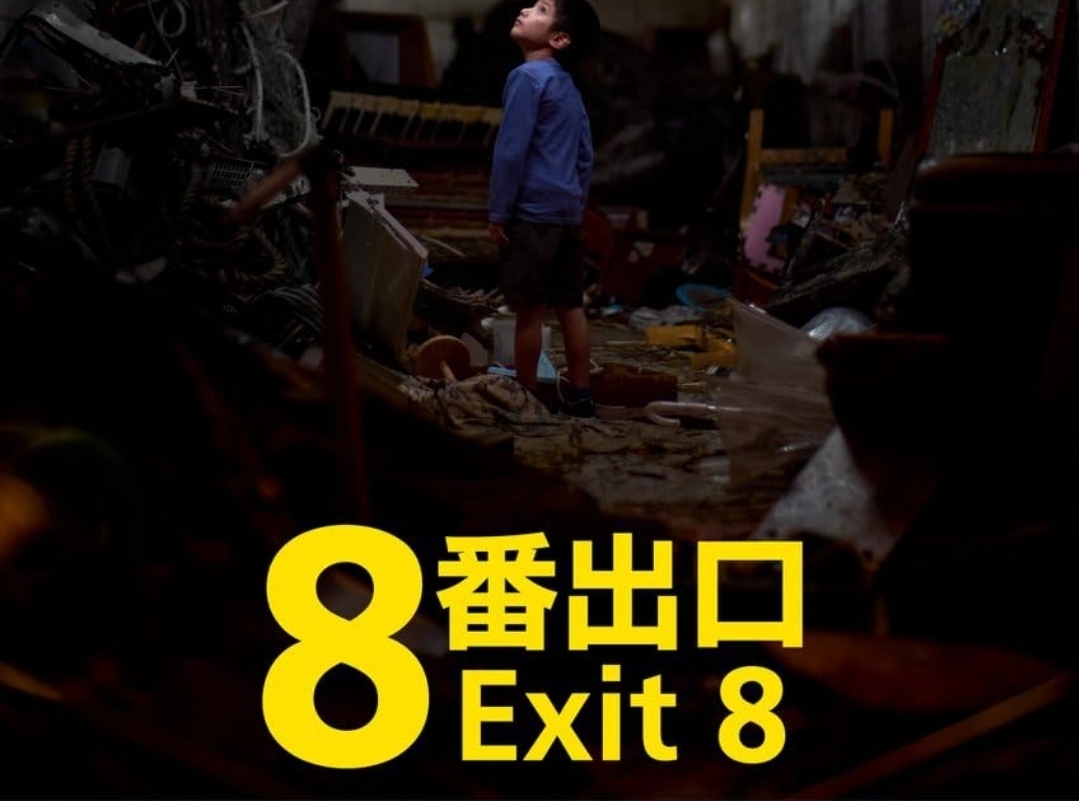
Exit 8 Parents Guide (2025): Is It Safe for Kids, What Age Is It For, and What Will Catch You Off Guard?
Three parents in my local community group messaged me the same question within a single weekend of Exit 8 releasing — and every one of them had already let their kids watch it before reaching out. That tells you something important right there. The Exit 8 parents guide you actually need is not the back-of-the-box summary. It is an honest look at what this film does to young viewers once the lights go down.
The PG label here does not lie, exactly. But it does understate. This is a horror film built almost entirely on psychological dread — the slow, creeping kind that does not announce itself with jump scares and then let you breathe. My honest assessment after watching it in full? It earns its rating on the letter of the law, but a sharp 10-year-old and a sensitive 10-year-old will have completely different experiences of this film. Age alone is not the right filter here.
With Caution. Exit 8 is rated PG but carries a sustained atmosphere of psychological horror that will genuinely unsettle sensitive children and some adults. The film is best suited to ages 11 and above, ideally with a parent present. Younger children should skip it regardless of the rating on the box.
Quick-Scan Safety Card
PG — Mild horror themes and some peril
11+ (with parental guidance below 14)
Low-to-moderate — no gore, but sustained threat and physical peril
Mild — occasional “damn,” “hell,” no strong profanity
High for genre — psychological dread, unsettling imagery, looping environments
None
Entrapment, disorientation, fear of being lost, characters behaving in disturbing ways
Claustrophobia, gaslighting-adjacent scenarios, identity loss, repetitive disorienting visuals
Yes — brief and unsettling, adds to the horror tone
Yes — flickering light sequences in multiple scenes
| Category | Detail |
|---|---|
| Official Rating | PG — Mild horror themes and some peril |
| Expert Recommended Age | 11+ (with parental guidance below 14) |
| Violence Level | Low-to-moderate — no gore, but sustained threat and physical peril |
| Language | Mild — occasional “damn,” “hell,” no strong profanity |
| Scary Content | High for genre — psychological dread, unsettling imagery, looping environments |
| Sexual Content | None |
| Themes Parents Will Find Hardest | Entrapment, disorientation, fear of being lost, characters behaving in disturbing ways |
| Trigger Warnings | Claustrophobia, gaslighting-adjacent scenarios, identity loss, repetitive disorienting visuals |
| Post-Credits Scene | Yes — brief and unsettling, adds to the horror tone |
| Strobe / Photosensitivity Risk | Yes — flickering light sequences in multiple scenes |
What Is Exit 8 About?
Exit 8 places its characters inside a seemingly endless underground transit system — a looping, liminal space where the same corridors repeat in subtly wrong ways. The horror comes not from monsters in the traditional sense, but from wrongness. Small details that shift. People who do not behave as people should. A creeping sense that reality has quietly come unstuck.
Emotionally, this film pulls hard at fears of being lost, being ignored, and not being believed. There is a strong thread of helplessness running through it — the feeling that no matter what the character does, escape stays just out of reach. Parents of children who experience anxiety around separation, getting lost, or being in unfamiliar environments should factor that in before pressing play.
There is no graphic violence and no sexual content. The weight of the film is entirely psychological, which in some ways makes it more intense, not less.
Why Is Exit 8 Rated PG?
The PG rating reflects the film’s lack of explicit violence, strong language, or adult content. On those metrics, the rating is accurate. What the PG label cannot communicate is the quality of the fear this film generates. The anxiety it produces is slow-building and persistent — it does not spike and release, it accumulates.
I have reviewed enough horror films to know the difference between a scare and a dread. Jump scares are forgotten by breakfast. Dread sticks. Exit 8 deals almost exclusively in dread. And here is the thing about the PG rating — it was assigned based on content categories, not emotional impact. Those are two very different measurements.
Put plainly: a PG horror film is not automatically a children’s horror film. The rating tells you what is absent. It does not tell you how the film will land on a nervous nine-year-old at 10pm. That is your job as the parent — and that is exactly why this Exit 8 parental guidance exists.
Content Breakdown
Psychological Horror and Dread
The film’s central device — a looping environment where subtle anomalies signal danger — is genuinely clever, and genuinely unsettling. There is a sequence in the middle act where a figure at the far end of a corridor simply stands and watches, unmoving, for what feels like an agonisingly long time. My 16-year-old, who watches horror regularly and is not easily rattled, physically leaned toward me during that scene. That is not nothing.
The horror here operates on the same frequency as separation anxiety and the fear of being in an unknown place without any control. For children who already carry those fears in daily life, this film will not feel like entertainment. It will feel like confirmation.
If your child has ever experienced significant anxiety around getting lost, being in unfamiliar spaces, or being separated from you in public — this film’s core premise will hit those nerves directly. That is not a dealbreaker, but it is worth knowing before you start watching together.
Disturbing Character Behaviour
Some of the most unsettling moments in Exit 8 do not involve supernatural threats at all. They involve people. Characters who behave in ways that are almost right — close enough to normal to be deeply wrong. A figure who speaks with a smile that does not reach their eyes. Background characters who move in ways that feel slightly off-tempo.
This is the part of the film that I genuinely did not expect to hit as hard as it did. Younger children may not consciously identify why these moments feel wrong, but they will feel wrong. That subcognitive unease is one of the more sophisticated horror tools in the film’s kit — and it is used well, which means it is also used effectively on viewers of all ages.
The film does not label who is threatening and who is safe. This deliberate ambiguity is part of the design. Children who need clear story signposting to feel secure — clear heroes, clear villains, clear outcomes — will find this film particularly unsettling.
Claustrophobia and the Feeling of Being Trapped
Exit 8 is set almost entirely in enclosed, artificially lit spaces. The cinematography leans into that confinement — low ceilings, long featureless corridors, no natural light, no visible exits. For children (and adults) who experience any degree of claustrophobia, the physical environment of this film is its own content warning, separate from anything that happens within it.
I want to be careful how I say this — the setting is not gratuitous. It is essential to the story the film is telling. But essential and comfortable are two different things. Watching this in a dark room at home may amplify the effect significantly compared to a lit cinema environment.
Consider watching Exit 8 with some ambient light in the room rather than in full darkness. The film’s tone does not require pitch-black viewing to land — and for younger or more sensitive viewers, a small amount of background light can reduce the cumulative anxiety the environment creates.
Exit 8 Trigger Warnings: Identity and Reality Distortion
There are sequences in the film where the main character begins to question their own perception of events. The storytelling does not offer the viewer reliable ground to stand on either — you are meant to share in the disorientation. For most older teens, that is a sophisticated and interesting narrative choice. For children under eleven, it is just genuinely frightening without the tools to process it.
These reality-distortion sequences are among the most effective parts of the film artistically. They are also among the most likely to stick with younger viewers in the form of recurring anxiety rather than exciting memory. One sequence in particular — where the protagonist sees themselves reflected behaving differently to how they are actually behaving — struck me as the single most psychologically complex moment in the film. Impressive filmmaking. Not for young kids.
If your child is currently in a period of high anxiety or is working through any identity-related questions, the sequences involving reality distortion and self-perception in Exit 8 may land harder than intended. This is one of those films where timing matters as much as age.
Violence and Peril
Violence in Exit 8 is present but not graphic. There are moments of physical threat and chase-style peril, and the stakes feel real even if the aftermath is not shown in explicit detail. No blood, no gore, no death depicted on screen in graphic terms. The tension during these sequences is high, though, and the pacing does not give young viewers much room to recover between them.
Honestly, the language is the least of any parent’s concerns here. The mild profanity is almost incidental compared to what the film does atmospherically.
The peril in this film is sustained rather than episodic. Unlike horror films that build to a scary moment and then offer release, Exit 8 maintains a near-constant low hum of tension. Sensitive children will feel that accumulation even in the quieter scenes.
Age-by-Age Viewing Guide
Not Appropriate
There is genuinely no version of this that works for under-fives. The atmosphere alone — featureless corridors, strange lighting, people who behave oddly — will be frightening without context. This is not a film that accidentally contains one scary scene. The whole film is the scary scene. Hard no.
Not Appropriate
I know some parents will push back on this because of the PG rating, and I understand why — PG is supposed to mean older children can handle it. But the type of fear in Exit 8 is specifically the type that children in this age range struggle to shake. Fears about being lost, being trapped, not being believed, not having control — these are live fears for most 6 to 10 year olds, not abstract ones. The film feeds them directly. Not recommended, even with a parent present.
With Caution
This is genuinely the trickiest group to call, and I will not pretend otherwise. A confident, horror-curious 13-year-old who already watches in the genre is a different viewer to a sensitive 11-year-old who has never seen a horror film. For those who fit the first description, Exit 8 is a smart, well-crafted entry point into psychological horror. For the second, it is too much. Know your child. Watch it together. Have the conversation after.
With Caution
Most teens in this range can handle Exit 8 comfortably from a content standpoint. The caveat is for teens who carry anxiety disorders, experience claustrophobia, or are going through a difficult period with identity or self-perception. The film’s themes will hit those pressure points deliberately. For everyone else in this age range, it is an intelligent, atmospheric horror film worth watching and discussing.
Appropriate
Appropriate across the board, with the standard caveat for adults with significant anxiety around entrapment or claustrophobia. Exit 8 is a well-made horror film with genuine craft behind it. Older teens and adults who appreciate psychological horror over jump-scare spectacle will find plenty to engage with — and the post-credits scene is worth staying for.
Positive Messages and Educational Value
I will be straightforward with you here: Exit 8 is not a film designed to deliver positive messages. It is designed to unsettle. And it does that well. Expecting educational value from this film the way you might from a Pixar drama is the wrong frame entirely.
That said, the film does raise something worth discussing. The protagonist’s persistence — the refusal to simply accept the situation as permanent — is genuinely admirable in a quiet way. It is not framed heroically or underlined with music. It is just there. And that makes it more interesting to talk about after the credits roll.
The film is also a surprisingly good springboard for conversations about trusting your instincts, about the difference between what is visible and what is real, and about how environments can affect our sense of safety. None of that is the point of the film — but it is available in the aftermath, if you want it.
Five Family Discussion Questions
- When the protagonist first notices something is wrong, they do not say anything out loud for a long time. Why do you think they hesitated — and have you ever been in a situation where you noticed something was off but did not speak up straight away?
- The film never fully explains the rules of the space the character is trapped in. Did not knowing the rules make the film scarier for you, or more frustrating? What does that tell you about how horror films work?
- There is a moment where the protagonist sees their own reflection behaving differently to how they are actually moving. If you saw something like that, who would you tell — and do you think they would believe you?
- Some of the scariest moments in this film involve people, not monsters. What is it about a person behaving wrongly that feels more frightening than something that is obviously not human?
- The character keeps moving forward even when it seems pointless. Is that bravery, stubbornness, or something else? Would you do the same in that situation, or would you stop?
Frequently Asked Questions
Yes, without question. The film’s psychological dread — looping corridors, characters behaving wrongly, a constant sense of being trapped — maps directly onto fears that are very real for most 7-year-olds. The PG rating does not account for this. Keep this one away from under-10s regardless of the official certificate.
The official Exit 8 age rating is PG. On a technical level that is accurate — there is no graphic violence, no sexual content, and language is mild. But the rating undersells the sustained psychological intensity. My expert recommendation is 11 minimum, with parental co-viewing up to age 13.
Yes. There is a brief scene after the credits begin that adds an additional layer of dread to the ending. It is short but purposeful. Whether it answers any questions or raises new ones will depend on how you interpreted the film’s conclusion. Worth staying for — but do not expect resolution.
Yes. There are multiple scenes with flickering artificial lighting, which is central to the film’s visual language. Viewers with photosensitive epilepsy or significant sensitivity to strobe effects should be aware before watching. This is a genuine Exit 8 content warning that is not prominently flagged on most platforms.
Exit 8 is available on major streaming platforms as of 2025. Platform-level age restrictions vary — most will display it as suitable for ages 7 and above based on the PG certificate, which is lower than my recommended viewing age of 11. Check your platform’s parental controls and set them accordingly rather than relying on default settings.
The key Exit 8 trigger warnings are: claustrophobia, fear of being lost or trapped, scenarios where a character is not believed, reality distortion and identity confusion, and disturbing human behaviour. There is no substance use, no sexual content, and no graphic gore. The harm potential here is psychological, not graphic.
I would exercise real caution here. The film’s core mechanics — repetition, disorientation, loss of control, being in an inescapable environment — are precisely the scenarios that activate anxiety in children who are already prone to it. This is not the right film for anxious children under 13, and even for older anxious teens it warrants a conversation before watching.
Exit 8 draws clear influence from the viral walking-simulator horror game of the same name, which is rated for older teens. Parents whose children know the game may expect a faithful adaptation — the film shares DNA but is its own thing. The game’s “spot the anomaly” mechanic translates effectively to screen, which means the film is similarly relentless in its tension.

Matthew Creith is a movie and TV critic based in Denver, Colorado. He’s a member of the Critics Choice Association and GALECA: The Society of LGBTQ Entertainment Critics. He can be found on Twitter: @matthew_creith or Instagram: matineewithmatt. He graduated with a BA in Media, Theory and Criticism from California State University, Northridge. Since then, he’s covered a wide range of movies and TV shows, as well as film festivals like SXSW and TIFF.