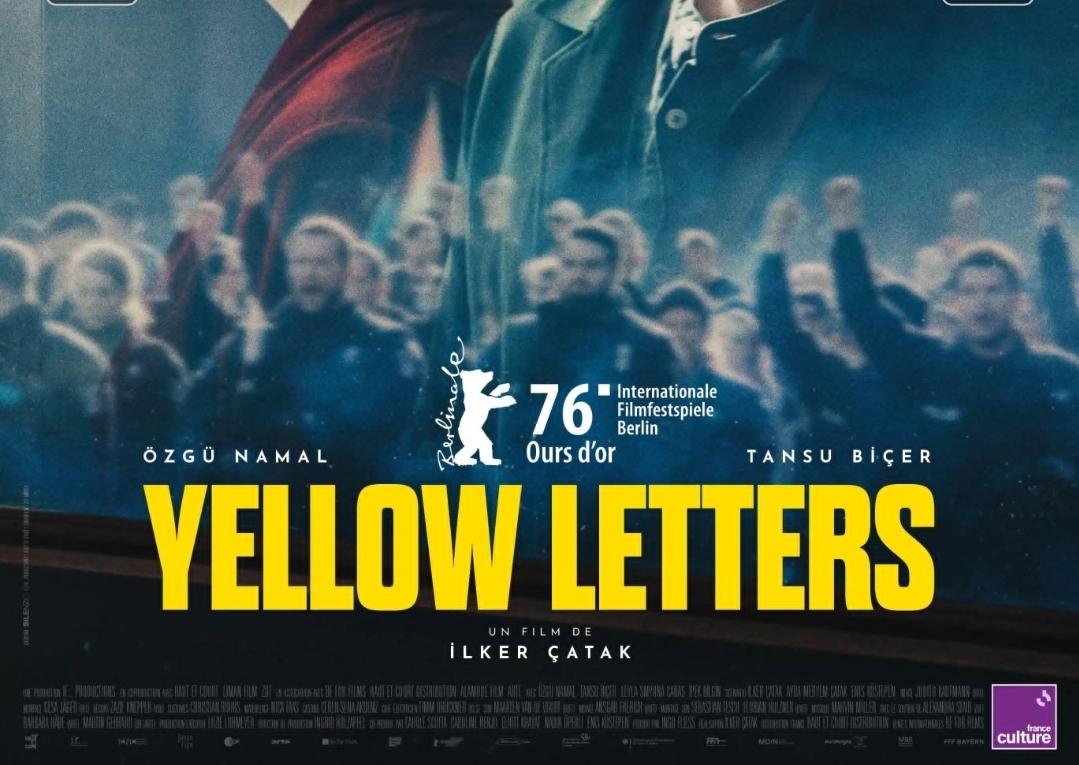
If your family was comfortable letting your teenagers sit through something like The Perks of Being a Wallflower, then Yellow Letters parents guide territory is roughly familiar. The emotional weight is comparable. The willingness to sit in grief and not resolve it quickly is very much the same. What shifts the needle here is that Yellow Letters handles some of its heavier content with less of a safety net than that film offered younger viewers.
Parents who have been asking me whether this one changes the equation from other quiet, letter-based dramas they have screened: it does, in a couple of specific ways. I want to walk you through exactly what those are before you make the call.
Quick Answer: Is Yellow Letters Safe for Kids?
With Caution. Yellow Letters is best suited to viewers 14 and older. The film handles grief, emotional withdrawal, and strained parent-child relationships with real honesty, and younger viewers are likely to find several sequences genuinely distressing without the emotional toolkit to process them independently.
Yellow Letters Age Rating and Safety Card
Not Yet Rated — classification pending at time of publication
14 and above — younger teens need parental co-viewing
Low — one confrontational scene involves physical aggression between adults
Moderate — scattered use of strong language, including one use of a more severe expletive during an emotional breakdown
High — prolonged grief sequences, a parent loss storyline, and depicted emotional neglect
Significant — depression and withdrawal depicted at length, treated seriously but without much resolution
The film’s refusal to offer comfort — the ending does not wrap things up, and that ambiguity can be genuinely hard for sensitive viewers of any age
| Category | Detail |
|---|---|
| Official Rating | Not Yet Rated — classification pending at time of publication |
| Expert Recommended Age | 14 and above — younger teens need parental co-viewing |
| Violence Level | Low — one confrontational scene involves physical aggression between adults |
| Language Level | Moderate — scattered strong language, including one more severe expletive during an emotional breakdown |
| Emotional Intensity | High — prolonged grief sequences, a parent loss storyline, and depicted emotional neglect |
| Mental Health Content | Significant — depression and withdrawal depicted at length, treated seriously but without much resolution |
| What Will Surprise Parents Most | The film’s refusal to offer comfort — the ambiguous ending can be genuinely hard for sensitive viewers of any age |
What Is Yellow Letters About?
Think of it as a story told through what people cannot say out loud. A teenager discovers a box of handwritten letters that belonged to a deceased parent, and what unfolds is less a plot and more an emotional excavation. There is no tidy mystery with a solution. The weight comes from watching someone grieve a person they never fully knew.
Emotionally, parents should prepare for extended sequences of quiet despair, fractured family communication, and the particular ache of feeling invisible inside your own home. There is a secondary character dealing with depression in a way the film does not sugarcoat. The relationship between the surviving parent and the child is strained in ways that will feel uncomfortably real to some families.
This is not a film that offers catharsis on a schedule. That is both its strength and its challenge for younger viewers.
Why Is Yellow Letters Not Yet Rated?
The film has not received its official classification at the time I am writing this, which puts parents in the frustrating position of making a call without the usual shorthand. Based on what I screened, I would expect this to land at a PG-13 in the United States, possibly edging toward an R depending on how classifiers weigh the mental health content and one particular scene involving implied self-harm that is handled carefully but is absolutely present.
I want to be direct about that last point. The Yellow Letters content warning that matters most here is not the language or the single moment of adult physical aggression. It is the extended, unflinching look at a character who has stopped functioning. That is the content a PG-13 badge will not adequately communicate to parents, in my experience.
If the film lands at PG-13, I would still hold my 14-plus recommendation. The rating will tell you about language and mild violence. It will not tell you how heavy this film sits in the room after the credits roll.
Content Breakdown
Grief and Parent Loss
The film’s central emotional engine is the loss of a parent, and it does not handle this gently. There is a sequence roughly forty minutes in where the teenage lead reads one of the letters alone at a kitchen table, and the camera simply stays with her face for what feels like an uncomfortably long time. No score. No cut away. Just grief, sitting there.
I found it genuinely affecting. My concern as a parent is that it offers no exit ramp for younger viewers who are not ready to sit in that feeling.
If your child has experienced a significant loss, particularly a parental loss, this film will almost certainly resurface those feelings. That can be a productive experience with the right conversation around it. Know your child before you decide.
Mental Health Depictions
A secondary character, the surviving parent, is depicted in what is clearly a depressive episode for a substantial portion of the film. This means days of not getting out of bed, an inability to respond to the child’s emotional needs, and one scene where the child makes dinner and eats alone while the parent remains in a darkened bedroom. It is handled with real compassion. It is also, honestly, hard to watch.
The implied self-harm moment I mentioned earlier is brief and never graphic, but it is there. Older teens who have personal experience with these issues may find the portrayal validating. Younger or more sensitive viewers may find it destabilising without the context to hold it properly.
The Yellow Letters trigger warnings that matter most here are grief, parental depression, emotional neglect, and a brief implication of self-harm. If any of these are live issues in your family right now, read the room carefully before deciding on a family screening.
Language and Adult Conflict
The language is moderate and mostly tied to moments of high emotional stress. There is one scene where two adults argue over the deceased parent’s belongings, and one of them uses a strong expletive that lands with real force precisely because the rest of the film is so restrained. It earns its place. It is still worth knowing about if you have ears in the room that you prefer to protect.
The physical altercation in the same scene amounts to one adult grabbing another by the arm and a brief shove. Nobody is hurt. But the aggression feels real in context.
The conflict scene arrives without much warning. It is over quickly, but the emotional fallout from it carries through the next twenty minutes of the film. Worth a heads up if you are watching with someone who startles at sudden adult confrontation.
The Letters Themselves
What makes Yellow Letters unusual is that several of the letters are read aloud in full, and their content addresses adult relationship struggles, regret, and a parent’s private feelings about their own failures. This means children watching will hear a deceased adult’s unfiltered inner world, including doubts about parenting, marital unhappiness, and personal shame.
I found this to be the most quietly complex element of the film. It raises real questions about what children are entitled to know about their parents’ private lives, and the film is smart enough not to answer them.
The letter readings are where the deepest conversation material lives. They are also the sequences most likely to prompt unexpected emotional reactions in teens who are already processing complicated feelings about a parent or family situation.
Age-by-Age Viewing Guide for Yellow Letters
Not Appropriate
This is not a film that registers as a film for children this young. The pacing is slow and quiet, the emotional content is entirely adult in register, and there is nothing here designed with small viewers in mind. The grief sequences alone would be confusing and distressing for this age group without any framework to understand them.
Not Appropriate
The depiction of a parent who cannot get out of bed or respond to their child’s needs is the kind of image that plants itself in a child this age and does not leave easily. I would not show this to a child under eleven under any circumstances, regardless of how mature they seem for their age. The emotional stakes are simply too adult.
Not Appropriate
This is where I know some parents will push back, and I want to be honest: there is a version of this age group for whom this film could be a meaningful experience. But the implied self-harm content and the extended depiction of parental depression push me into a firm not-yet for this bracket without significant adult co-viewing and a very intentional conversation before and after.
With Caution
This is the sweet spot for this film, with caveats. Teenagers in this range are often navigating their own complicated feelings about parents as full human beings with private lives and failures, which is exactly what the letter readings address. The film can spark genuinely important conversations. The caution is for teens currently in crisis or dealing with active family instability — this is a heavy watch and timing matters.
Appropriate
Older teens and adults will get the most from Yellow Letters. The film rewards emotional patience and a willingness to sit with ambiguity rather than wait for resolution. By seventeen, most viewers have the life experience to hold what this film asks of them, even if it is not an easy watch. Suitable as a family screening for mature households, with conversation built in afterward.
Positive Messages and Educational Value
I am not going to manufacture a list of uplifting takeaways for this one. Yellow Letters is not that kind of film, and pretending otherwise would not serve you well as a parent trying to make a real decision.
What it does offer, genuinely, is a portrait of grief that validates the messy, non-linear reality of losing someone. For teenagers who have felt pressure to grieve on a schedule or in the right way, there is something quietly affirming about watching a film that says: it does not look like this for everyone, and that is real.
The film also opens a door to conversations about what parents owe their children in terms of emotional presence, what children can and cannot access about a parent’s inner life, and how families carry secrets across generations. These are not light conversations. They are worth having.
If your teenager has recently lost someone, or is watching a parent struggle with depression, this film could be a way in. It would need to be handled carefully and with intent. That is different from saying it should not be watched at all.
Five Family Discussion Questions for Yellow Letters
- When the letters are read aloud, some of them reveal things about the deceased parent that are painful and private. Do you think the teenager had a right to read them? Does knowing the truth about someone always help, or can it sometimes make things harder?
- The surviving parent spends long stretches of the film unable to function. How did watching that make you feel, and do you think the film treats that character fairly?
- The film ends without resolving the tension between the two main characters. Did that feel honest to you, or did it feel like the film was refusing to do its job? What do you think happens next for them?
- One of the letters describes the parent’s private doubts about their own choices as a parent. If you found letters like that about someone in your family, would you want to read them? Why or why not?
- The teenager in this film carries a lot of emotional weight without anyone around to help carry it with her. What do you think she needed most, and was there anyone in the film who tried to give her that?
Frequently Asked Questions
No. The film contains an extended depiction of parental depression, a grief storyline without resolution, and a brief implication of self-harm. These are not elements a child under thirteen has the emotional framework to process without significant adult support. I would hold this firmly at 14 and above.
Not in the traditional jump-scare sense. The fear here is emotional rather than physical. Sensitive children and teens are likely to find the scenes of parental depression and prolonged silence more distressing than anything overtly scary. The tone is heavy, sustained, and does not offer much relief.
Based on the version I screened, there is no post-credits scene. The film ends cleanly and without additional footage. That said, if you are watching a final release version, it is always worth staying through just in case a distributor added something at the last stage.
No strobing or rapid flashing effects appeared in the version I screened. The cinematography is deliberately slow and static. This should not present a concern for photosensitive viewers, though checking distributor-specific accessibility information before your screening is always a sensible step.
Streaming and theatrical distribution details for Yellow Letters 2026 had not been fully confirmed at the time of writing. Streaming platform age restrictions will depend on the final classification. Check the distributor’s official channels for the most current release information as it becomes available.
There is a brief implied moment rather than an explicit depiction. It is not graphic and it is not lingered on, but it is present and clearly intentional. Parents of teens with personal experience of self-harm should be aware of it. The film treats the subject with care rather than sensationalism.
Yes, and honestly this is the content warning I would flag first for most families. The depiction is realistic, sustained, and not softened for the audience. Children who live with or have lived with a depressed parent will almost certainly recognise something in these scenes, which can be validating or painful depending on where they are right now.

Stephanie Heitman is a seasoned journalist and author dedicated to helping parents navigate the world of Hollywood entertainment through thoughtful, family-oriented film reviews. With over a decade of experience in writing and a passion for fostering safe, enriching viewing experiences, Stephanie launched Parentguiding.com to provide parents with the insights they need to make informed choices for their families.