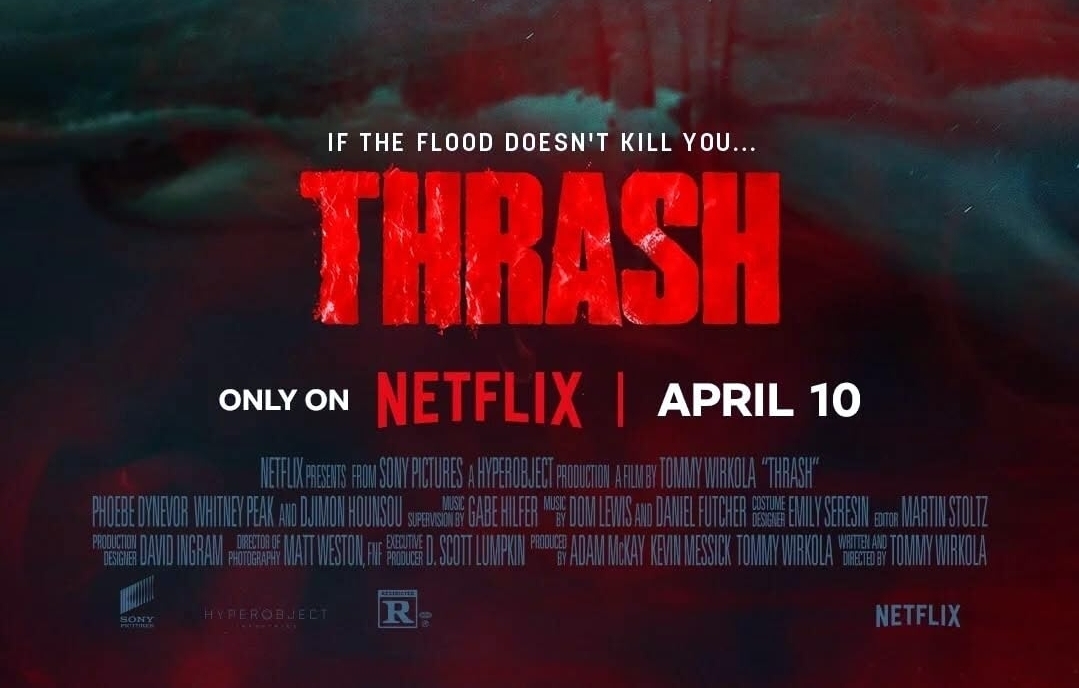
Thrash Parents Guide: What You Need to Know Before Letting Your Teen Watch
I went into Thrash with my notebook and a fair amount of curiosity. Horror is a genre I take seriously as a reviewer precisely because it is the one genre where the gap between what a trailer shows you and what a film actually delivers tends to be the widest. By the time the credits rolled, I had three pages of notes and a pretty firm opinion.
This is not a film for younger audiences. Not even close. And the Thrash parents guide below will walk you through exactly why I landed there.
No. Thrash is a brutal, relentless horror film that earns every inch of its R rating and then some. The violence is graphic and sustained, the psychological terror is genuinely distressing for adults let alone children, and several sequences are intense enough that I would hesitate to recommend it to sensitive viewers under 17 regardless of their horror experience.
Quick-Scan Safety Card
| Category | Detail |
|---|---|
| Official Rating | R — for strong graphic violence, disturbing content, language, and brief drug use |
| Expert Recommended Age | 17 and up — and even then, know your audience |
| Violence Level | Severe — graphic bodily harm, prolonged attack sequences, and at least two scenes of visceral on-screen gore |
| Language Level | Heavy — frequent use of f-words, s-words, and one slur used in a confrontational context |
| Frightening Content | Extreme — sustained dread, jump scares layered with psychological horror, and imagery designed to linger |
| Drug and Alcohol Use | Brief — characters use substances in two scenes, shown without glamorisation but also without consequence framing |
| What Will Surprise Parents Most | The psychological manipulation sequences — more disturbing than the gore and feel designed to linger for days |
| Strobe / Photosensitivity Risk | Yes — at least three sequences with rapid strobe-style lighting effects |
What Is Thrash About?
Without getting into spoiler territory, Thrash follows a group of young adults who find themselves hunted in an environment that should feel familiar but increasingly does not. The horror is not simply about a physical threat. It is about the erosion of trust, the terror of not knowing who around you is safe.
Emotionally, the film sits in a space of sustained paranoia and dread. There are moments of genuine grief tucked inside the survival sequences that caught me off guard. Parents should know that themes of betrayal, isolation, and psychological manipulation run through the entire film, not just the scary set pieces.
If another parent asked me at school pickup how to describe it, I would say: imagine a film where the monster is only half the problem, and the other half is watching characters lose their grip on reality.
Why Is Thrash Rated R?
The R rating is accurate. I would actually argue it sits at the harder end of R, close to the territory where you start wondering why it did not get an NC-17 conversation.
The rating is driven primarily by the violence. Two sequences in the second act involve injuries shown in extended, unflinching detail. The camera does not cut away the way most mainstream horror does. There is also language throughout that is frequent and sometimes cruel in context, not just casual.
What the official rating does not fully capture is the psychological toll. The MPAA focuses on content categories, but the relentless dread built into Thrash is its own kind of intensity. An R for violence understates the experience of watching this film. Parents of anxious teens especially need to know that.
Violence and Gore
Let me be specific, because vague descriptions do not help anyone. There is a sequence roughly forty minutes in where a character sustains injuries across several continuous minutes of screen time. The filmmakers clearly wanted you to feel every second of it. I found it effective as filmmaking and genuinely hard to watch as a human being.
A later scene in the third act involves gore that is brief but extremely graphic. My professional read is that these moments were deliberate artistic choices, not gratuitous filler. That does not make them appropriate for younger viewers. It just means the film knows what it is doing.
If your teenager has expressed interest in Thrash because of its genre reputation, be honest with them about the specific violence before they sit down to watch it. Knowing what is coming is not the same as spoiling a film, and it genuinely reduces the distress response in younger or more sensitive viewers.
Psychological Horror and Disturbing Imagery
This is where Thrash most surprised me, and I say that as someone who has screened a lot of horror over the years. The psychological sequences hit differently than the gore. There is a recurring visual motif involving distorted faces that I will not describe in detail, but it is the kind of imagery that sits with you after the film ends.
From a media psychology standpoint, prolonged exposure to this kind of imagery can be genuinely unsettling for developing adolescent brains. That is not alarmism. That is just how horror that is well-crafted actually works on the nervous system.
The film also features a scene where a character is systematically gaslighted and manipulated by someone they trusted. That scene is quieter than the violent ones and considerably more upsetting.
The psychological manipulation content in Thrash is the element most worth a pre-watch conversation with older teens. It depicts tactics that real abusers and manipulative people use, and while the film does not endorse them, it also does not editorially frame them with clear condemnation. That ambiguity is worth discussing.
Language
Heavy throughout. The f-word appears frequently, and several exchanges are written to be verbally aggressive in ways that go beyond casual strong language. There is one scene where a slur is used in a confrontation. The film does not present that moment as acceptable behaviour, but it is there, and some families will want to know that before watching.
If language is a firm boundary in your household, Thrash will cross it repeatedly. This is not a film where the strong language is incidental.
Drug and Alcohol Use
Two brief scenes show characters using substances. Neither scene glamorises the use, but neither does the narrative specifically frame consequences either. It is background rather than the focus, but it is present.
Age-by-Age Viewing Guide
Absolutely not. There is nothing in Thrash that belongs anywhere near a young child. The imagery alone would be genuinely frightening to small children, and the tonal dread of the film is relentless in a way that cannot simply be fast-forwarded past.
Still a clear no. Children in this age group are at a developmental stage where horror imagery involving bodily harm and psychological manipulation can be particularly sticky, meaning it does not just frighten them in the moment but resurfaces in sleep and play for weeks. Thrash is not built for this age group in any configuration.
Even horror-confident preteens should sit this one out. At this age, the psychological manipulation themes in particular can be absorbed in ways that are not healthy, especially for kids still building their understanding of what trust and safe relationships look like. I have a twelve-year-old who considers herself a seasoned horror fan. Thrash is not for her yet.
This is where it gets genuinely complicated. Some 15 and 16-year-olds with real horror literacy and emotional resilience could handle Thrash, particularly with a parent watching alongside them. But I would not make that call without knowing the specific teenager. The psychological content and sustained graphic violence are real considerations, not minor footnotes. This is not a film for a sleepover group of 14-year-olds watching unsupervised.
For older teens who enjoy serious horror, Thrash is a well-made, genuinely effective film. At 17 and above, the themes of paranoia, trust, and psychological pressure are things young adults can engage with meaningfully. The violence and imagery are still intense, so viewers who are sensitive to graphic horror should go in knowing what they are choosing.
Positive Messages and Educational Value
I want to be honest here rather than manufacture positives that are not really there. Thrash is not designed to leave you feeling good or informed. It is designed to unsettle you.
That said, for older viewers, there are real discussion opportunities buried in the film. The portrayal of manipulation and the way characters respond to betrayal raises genuine questions about trust, loyalty, and how we decide who deserves our faith. Those conversations have real value.
The film also, perhaps unintentionally, models what it looks like to remain functional under extreme psychological pressure, which for some teens can actually be a useful entry point for conversations about stress responses and self-regulation. You have to look for it, but it is there.
Five Family Discussion Questions
- When the character realizes they have been misled by someone they trusted completely, how did that moment feel different from the physical horror sequences? What does that tell us about the kinds of fear that actually stay with us?
- The film shows characters making decisions under extreme pressure that they probably would not make under normal circumstances. Do you think the film judges those decisions, or does it ask us to understand them?
- There is a point in Thrash where the group splinters and the survival instinct overrides loyalty. Where do you think the line is between protecting yourself and abandoning someone who needs you?
- The gaslighting scene in the second act is quieter than everything around it. Why do you think that scene landed harder than some of the more explicitly violent moments?
- Horror often uses extreme scenarios to talk about real fears people carry in ordinary life. What ordinary fear do you think Thrash is actually about underneath all the surface-level horror?
Frequently Asked Questions
My professional recommendation is 17 and above. The film is rated R and the content, particularly the sustained graphic violence and psychological horror sequences, makes it genuinely unsuitable for younger teens regardless of their general horror tolerance. Some mature 15 or 16-year-olds could watch it with a parent present, but that requires knowing your specific child well.
For most 14-year-olds, yes. The frightening content here goes beyond jump scares into sustained psychological dread and graphic imagery that is designed to stick with you. If your 14-year-old is sensitive to horror or anxiety-prone, this is a firm no. Even confident horror fans in this age group should probably wait a couple of years.
Yes, there is a brief scene after the credits begin that adds a final unsettling note to the story. It is short but meaningful if you followed the film's central mystery. Worth staying for if you can handle sitting with the film's tension a little longer. It does not set up a sequel so much as it deepens the unease of what you just watched.
Yes, and this is a real concern. There are at least three sequences in Thrash that use rapid strobe-style lighting effects. Anyone with photosensitive epilepsy or sensitivity to flashing lights should be warned before watching. The sequences are not brief flickers, they are extended enough to pose a genuine risk. Check with your neurologist if there is any doubt.
Thrash is a 2026 release and streaming availability will depend on your region and platform deals finalised after theatrical release. Most major streaming platforms enforce R-rating content restrictions that require account holders to be 17 or older, or to enable parental controls. Check your platform's settings to ensure younger users in your household cannot access it independently.
There is no direct on-screen harm to animals. Regarding younger characters, the film's central cast are adults, but there is an implied backstory involving a child that is referenced rather than shown. For viewers who find that type of implication distressing, it is worth knowing it is present even without explicit depiction.
Considerably more graphic than average R-rated horror. Think closer to the harder end of the spectrum rather than mainstream studio horror. The camera lingers on injuries in ways that most R-rated films do not, and two specific sequences are extended enough that even seasoned horror viewers may find them difficult. This is not background violence. It is front and center.

Stephanie Heitman is a seasoned journalist and author dedicated to helping parents navigate the world of Hollywood entertainment through thoughtful, family-oriented film reviews. With over a decade of experience in writing and a passion for fostering safe, enriching viewing experiences, Stephanie launched Parentguiding.com to provide parents with the insights they need to make informed choices for their families.