The Testament of Ann Lee Parents Guide: Is It Kid-Friendly?
With Caution, The Testament of Ann Lee is not ideal for young children due to intense religious themes, depictions of persecution, and emotionally heavy scenes involving death, trauma, and psychological distress.
Quick-Scan Safety Card
| Category | Rating | Details |
|---|---|---|
| MPA Rating | PG-13 | Rated PG-13 for thematic material, brief violence, and some disturbing images |
| Target Age | 13+ | Best for mature teens able to process complex religious history |
| Violence | Moderate | Persecution |
| Sex/Nudity | Low | Thematic |
| Language | Low | Mild profanity |
| Positive Role Models | 4/5 | Conviction |
What Is The Testament of Ann Lee About? (No Spoilers)
The Testament of Ann Lee is a historical drama centered on Ann Lee, the 18th-century religious leader who founded the Shaker movement. The film traces her journey from personal tragedy to spiritual leadership, highlighting themes of faith under persecution, female authority in patriarchal systems, and radical pacifism.
Emotionally, this is a film about suffering and conviction. Parents should be aware of references to child loss, imprisonment, religious extremism, and scenes depicting social ostracism. Ann’s spiritual visions may be unsettling for younger viewers, particularly those sensitive to intense religious imagery.
Rather than focusing on spectacle, the film leans into psychological endurance and moral resolve. Teens interested in history, theology, or women’s rights movements may find it compelling, but the heavy tone requires emotional maturity.
Why Is The Testament of Ann Lee Rated PG-13?
The MPA rated the film PG-13 for thematic material, brief violence, and disturbing images.
This rating aligns with what appears on screen. The violence is not graphic but includes scenes of mob aggression, physical restraint, and moments where characters are forcibly imprisoned. Injuries are implied rather than shown in detail.
The “disturbing images” likely refer to Ann Lee’s spiritual visions, which include stylized depictions of suffering and apocalyptic symbolism. These moments are intense but brief.
By today’s standards, the PG-13 rating feels appropriate. The film’s true weight lies in its emotional gravity rather than physical violence. Parents should focus more on thematic maturity than surface-level content when deciding if it’s safe for kids.
The Nitty Gritty: Detailed Content Breakdown
Violence & Gore
Violence in The Testament of Ann Lee is moderate and contextual.
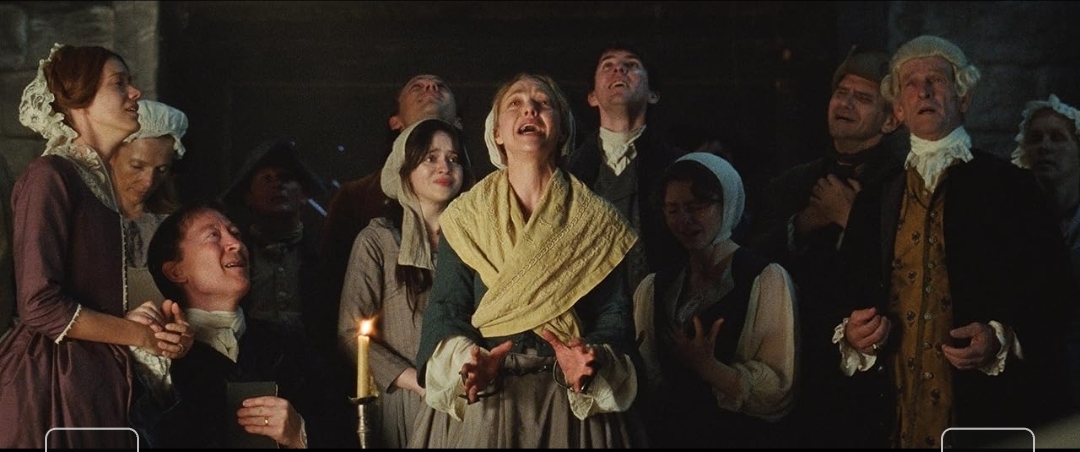
Several scenes depict angry townspeople confronting religious followers, including shoving, restraining, and striking. In one particularly tense moment, Ann is forcibly detained and held in a small jail cell. Bruising and minor injuries are implied, though the camera avoids graphic close-ups.
There is also a scene showing the aftermath of harsh treatment, with characters visibly distressed and physically weakened.
No gore is shown. However, the emotional intensity of persecution scenes may feel frightening for sensitive viewers.
Scare factor: Low for teens, moderate for younger children due to intensity rather than horror elements.
Profanity & Language
Language is mild and infrequent.
There are occasional uses of:
- “Damn”
- “Hell”
- Mild religious exclamations
No F-words or sexually explicit language appear. However, some dialogue includes harsh condemnations framed within religious conflict, which may sound emotionally aggressive.
Overall, language is not a primary concern for most families.
Sexual Content & Nudity
Sexual content is thematic but restrained.
The film addresses Ann Lee’s belief in celibacy and references her troubled marriage. There are non-explicit references to marital relations and childbirth within a historical context.
One emotionally heavy sequence references the death of children in infancy. No sexualized nudity or explicit intimacy appears on screen.
Parents should be prepared for conversations about marriage, religious beliefs about sexuality, and grief.
Substance Use
Substance use is minimal and historically contextual.
Background characters are shown drinking alcohol in tavern settings. There is no depiction of drug use.
Alcohol is portrayed as culturally normal for the era rather than glamorized.
Age-by-Age Viewing Guide
Toddlers & Preschoolers (0–5)
Not appropriate.
The dark tone, emotional intensity, and lack of child-centered storytelling make this inaccessible and potentially distressing for young children.
Elementary (6–10)
Proceed with caution (10+ only).
Children in this age group may struggle with the heavy themes of death and imprisonment. Spiritual visions could be confusing or frightening without context.
The scare factor is not horror-based but emotional. Sensitive children may feel unsettled by scenes of group hostility.
Tweens & Teens (11–15)
Appropriate for mature teens (13+ recommended).
Teens studying American religious history or women’s leadership movements may benefit from the film’s themes of conviction and resilience.
However, the portrayal of persecution and rigid ideology may require parental guidance and post-viewing discussion.
If your teen is drawn to historical dramas like Little Women or biographical faith-based films, this may resonate. For lighter options, explore Best Family Movies of 2026
Positive Messages & Educational Value
Despite its somber tone, The Testament of Ann Lee offers meaningful takeaways:
- Nonviolence: The Shaker commitment to pacifism is central.
- Gender equality: A woman leading a religious movement challenges 18th-century norms.
- Community living: The film highlights cooperation and shared labor.
- Moral conviction: Standing firm under pressure is portrayed as courageous.
Educationally, the film opens doors to discussions about:
- Early American religious movements
- The concept of utopian societies
- Freedom of belief and persecution
- The role of women in spiritual leadership
For teens learning U.S. history, this film provides human context often missing from textbooks.
5 Discussion Questions for Families
- Why do you think Ann Lee was willing to endure imprisonment for her beliefs?
- How does the film portray the difference between faith and extremism?
- What challenges did women face in leadership roles during this time period?
- How did grief shape Ann’s spiritual journey?
- Do you think the community’s strict rules helped or harmed its members?
Common Questions About The Testament of Ann Lee
Is The Testament of Ann Lee too scary for 12-year-olds?
For many 12-year-olds, the film isn’t scary in a horror sense, but its emotional intensity and persecution scenes may feel overwhelming without parental context.
Does the movie have a post-credits scene?
No. The story concludes definitively, and there is no additional scene after the credits roll.
Are there any strobe light warnings in The Testament of Ann Lee?
There are brief stylized vision sequences with flickering candlelight effects, but no intense strobe lighting typical of seizure-trigger warnings.
Final Verdict for Parents
The Testament of Ann Lee is a thoughtful, historically grounded drama that prioritizes emotional depth over spectacle. It is not designed for young children, but mature teens can gain meaningful insight from it.
If you’re evaluating whether it’s safe for kids, consider your child’s tolerance for heavy themes rather than surface-level content. The film contains valuable lessons about resilience, faith, and leadership but it demands maturity.
As always, previewing first is wise. For families seeking lighter historical storytelling, visit Best Family Movies of 2026
When used intentionally, this film can spark powerful family conversations about belief, courage, and the cost of conviction.

Stephanie Heitman is a seasoned journalist and author dedicated to helping parents navigate the world of Hollywood entertainment through thoughtful, family-oriented film reviews. With over a decade of experience in writing and a passion for fostering safe, enriching viewing experiences, Stephanie launched Parentguiding.com to provide parents with the insights they need to make informed choices for their families.