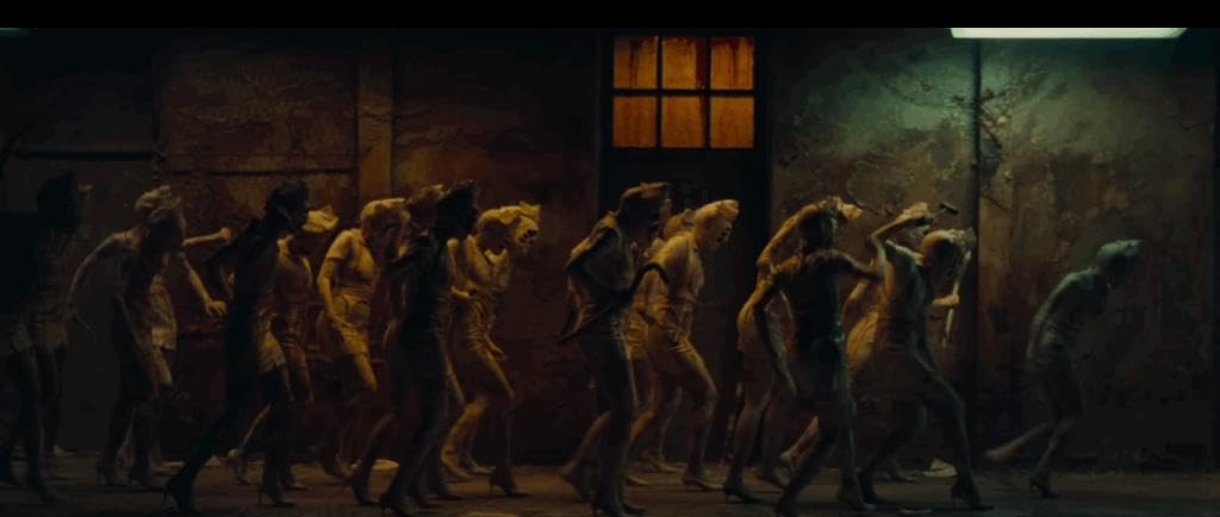
Is it safe for kids?
Not for most. This is a hard R-rated psychological horror experience with disturbing imagery and heavy themes.
Is it worth the watch?
For longtime fans of the Silent Hill franchise? Absolutely. For casual horror viewers? It depends on your tolerance for slow-burn dread and brutal visuals.
Official Age Rating:
R Expected for strong violence, disturbing images, brief sexuality, and language.
If you’re searching for a straight answer: Return to Silent Hill is stylish, moody, and sometimes brilliant but it’s not family movie night material.
5 Hidden Details You Missed in Return to Silent Hill
Before we get into the deeper analysis, let’s talk about the stuff even hardcore fans might have overlooked. I saw this in a packed theater on opening weekend. The guy next to me gasped at one of these details. My teenage nephew? He completely missed it.
Here are the five subtle touches that elevate the film beyond standard horror fare.
1. The Fog Changes Color Based on James’ Mental State
Most viewers notice the fog. It’s Silent Hill, after all. But watch closely. In moments when James is spiraling into guilt, the fog takes on a slightly warmer gray tone. During scenes of confusion or denial, it skews colder and almost blue.
It’s subtle. Blink and you’ll miss it. But the cinematography uses environmental lighting to mirror his psychological decline.
That’s not random. That’s intentional visual storytelling.
2. The Hospital Room Numbers Match Key Dates
There’s a blink-and-you’ll-miss-it shot of hospital room 312 a direct callback to the original Silent Hill 2 game. That number isn’t nostalgia bait. It’s the emotional core of James’ trauma.
Later, a crumbling street sign reads 9/14 the date eagle-eyed fans will recognize as tied to Mary’s final letter timeline.
The movie rewards obsessive fans without alienating newcomers. Smart move.
3. Pyramid Head Isn’t Just a Monster He’s Framed as Judgment
This is where things get interesting.
Pyramid Head doesn’t just attack. He observes. There’s a moment where he stands motionless in the background while James breaks down. No violence. Just presence.
The camera lingers. And in that stillness, you realize: he isn’t hunting James. He’s judging him.
The framing reinforces this. Pyramid Head is often centered, towering, shot from low angles like a twisted executioner deity.
4. The Mirror Motif Is Everywhere
Mirrors appear constantly. Shattered mirrors. Fogged mirrors. Reflections in puddles.
There’s a particularly haunting scene where James looks into a cracked bathroom mirror. His face splits into fragments. That’s not subtle symbolism. It’s a direct visual representation of fractured identity.
Even the town itself acts like a mirror reflecting internal guilt outward.
5. The Music Quietly References Akira Yamaoka’s Original Score
Composer callbacks are delicate territory. Go too heavy and it feels cheap. Go too light and fans feel robbed.
Return to Silent Hill threads the needle.
Listen carefully during the lakeside scene. A faint, slowed-down piano motif mirrors the original Theme of Laura. It’s almost subconscious. But it hits longtime fans right in the chest.
I felt it. So did the crowd. You could hear the shift in the room.
Deep-Dive Plot Summary Act-by-Act
This isn’t just about what happens. It’s about how it feels.
Act I: The Letter and the Return
James Sunderland receives a letter from Mary. His wife. Dead for years.
“I’m waiting for you.
It’s classic Silent Hill. And yes, the movie leans into the nostalgia but it doesn’t feel lazy.
James arrives in the town, swallowed by fog. The pacing here is deliberate. Some might say slow. I say necessary. The town needs to breathe.
We follow James through empty streets, rusted playgrounds, and abandoned storefronts. There’s an early scene in a diner where the camera slowly rotates around him while he sits alone. No music. Just ambient hum.
You feel the isolation.
Then come the first creatures jerky, unnatural movements. Not over-CGI’d. Thank goodness.
Act II: Descent into the Otherworld
The shift to the Otherworld is brutal.
Metal grates. Peeling flesh textures. Sirens that shake the theater seats.
James encounters Maria a woman who looks eerily like Mary but acts completely different. Flirtatious. Playful. Alive.
Here’s where the emotional core tightens.
James clings to Maria as a second chance. But the film repeatedly kills her off sometimes violently, sometimes quietly. Each death chips away at him.
There’s a harrowing hospital sequence where the camera stays close to James’ face as he listens to something unseen drag across tile floors. We never fully see the creature. Smart restraint.
This act is about guilt pressing in.
Act III: Revelation and Reckoning
The truth arrives like a gut punch.
James didn’t lose Mary to illness. He ended her suffering himself.
The reveal is handled with restraint. No flashy montage. Just a videotape scene grainy, flickering, almost too intimate.
In the theater, you could hear people stop breathing.
Pyramid Head’s role becomes clear: punishment. Manifested guilt.
The final confrontation isn’t a fight in the traditional sense. It’s surrender.
James either accepts the truth or refuses it. And depending on interpretation, the ending leaves room for ambiguity.
Ending Explained: The Final Twist and What it Means for the Sequel
Let’s talk about that final scene.
James stands by the lake. The fog is lighter now. Not gone but thinner.
Maria appears behind him. Alive. Smiling.
Here’s the twist: the film never confirms whether she’s real, a manifestation, or the beginning of another cycle.
When she coughs a subtle echo of Mary’s illness it’s chilling.
Is James repeating his mistake? Has he learned nothing?
The brilliance lies in the ambiguity.
There are three possible interpretations:
1. The Loop Theory
James is trapped in a psychological purgatory. Silent Hill resets him until he truly accepts responsibility.
2. The “Denial” Ending
He chooses Maria over the truth. The cycle of guilt continues.
3. The “Redemption” Hint
Some viewers argue the thinning fog signals acceptance. That Maria’s cough is just trauma echoing, not prophecy.
The sequel setup is clear: if Maria survives outside Silent Hill, the horror follows them home.
That final wide shot of the lake? It lingers just long enough to suggest the town isn’t done.
And neither is James.
The Parents Guide Breakdown
If you’re here for the Return to Silent Hill Age Rating breakdown, here’s what you need to know.
| Category | What Parents Should Know | Intensity 1-10 |
|---|---|---|
| Violence | Graphic monster violence, disturbing imagery, implied mercy killing, blood sprays, body horror elements | 9/10 |
| Language | Moderate strong language including several F-words | 6/10 |
| Sexual Content | Brief nudity from creature designs; sensual behavior from Maria | 5/10 |
| Positive Messages | Themes of accountability, confronting guilt, consequences of denial | 7/10 |
Screen Safety for Kids
This is not suitable for children under 16. Even mature teens may struggle with the psychological heaviness.
If your teen is sensitive to:
- Hospital imagery
- Terminal illness themes
- Body horror
- Loud jump scares
- this might be too intense.
Screen Safety Tips & Parental Controls on Streaming Platform
If Return to Silent Hill becomes available on Streaming Platform, here’s how to manage viewing safely:
Enable Parental Controls:
- Go to Account Settings
- Select Parental Controls
- Set profile restrictions to R or below
- Add a PIN to prevent changes
Geo-Locked Content?
Sometimes horror titles appear in different regions first. If you’re considering accessing it abroad:
- Research the Best VPN for Streaming Platform
- Choose one with strong privacy standards
- Set region carefully
- Always check platform terms of service
Home Theater Setup for Horror
If you’re watching at home:
- Lower brightness slightly to reduce eye strain
- Use surround sound carefully this movie is loud
- Consider subtitles some whispers are easy to miss
- Cast & Performance Analysis
Jeremy Irvine as James
He carries the film. And that’s not easy.
James isn’t charismatic. He’s withdrawn, confused, occasionally frustrating. Irvine leans into that. His performance is internal. Subtle eye twitches. Tight jaw. Heavy breathing.
Sometimes he’s almost too muted but that may be the point.
The Actress Playing Maria
She steals scenes.
There’s a volatility to her performance sweet one second, cutting the next. The duality between Mary and Maria is where the film shines emotionally.
Cinematography & CGI
The fog effects are excellent.
The creature design? Mostly practical. Thank you.
There are a few CGI-heavy transitions into the Otherworld that look slightly artificial. Not terrible. Just noticeable.
The production design deserves praise. Rust textures feel tangible. Walls sweat. Floors look damp. It’s immersive.
How It Compares to Similar Horror Films
If you liked this, here’s how it stacks up:
1. The Babadook
Both explore grief through horror metaphor.
The Babadook is more intimate and less visually grotesque.
Return to Silent Hill is louder and more visually aggressive.
Winner for emotional subtlety: The Babadook.
2. Hereditary
Both deal with trauma and inevitability.
But Hereditary is more relentless.
Return to Silent Hill gives you breathing room between shocks.
If you found Hereditary overwhelming, this may feel more manageable.
3. The Original Silent Hill 2006
The original film focused more on cult mythology.
This new installment is character-driven. Smaller scope. More psychological.
Frankly? It’s better paced.
FAQ People Also Ask
1. Is Return to Silent Hill connected to the 2006 movie?
Not directly. It adapts Silent Hill 2 more faithfully and stands on its own.
2. Why is Pyramid Head in Return to Silent Hill?
He represents James’ guilt and need for punishment not random fan service.
3. Is Return to Silent Hill too scary for teens?
For most under 16? Yes. The psychological weight alone is intense.
4. Does the movie follow the game exactly?
Mostly but with cinematic adjustments for pacing and clarity.
5. Will there be a sequel?
The ending strongly suggests it. Especially if Maria’s survival is canon moving forward.
Final Thoughts
Here’s the thing.
Return to Silent Hill isn’t popcorn horror. It’s moody. It’s patient. It asks you to sit in discomfort.
Some viewers will call it slow. Others will call it haunting.
I walked out unsettled but impressed.
As a Return to Silent Hill Review & Parents Guide, the bottom line is this:
- Not for kids.
- Strong for fans.
- Thoughtful in ways most horror sequels aren’t.
Just don’t expect easy answers.
Silent Hill never gives those.

I am a journalist with 10+ years of experience, specializing in family-friendly film reviews.