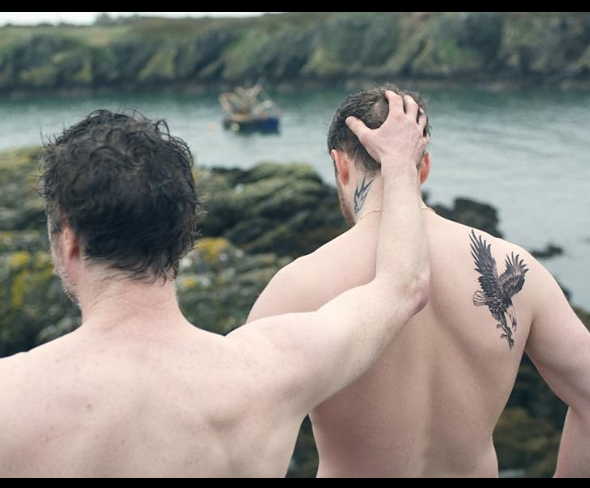
If your family sat through The Light Between Oceans and handled its emotionally heavy atmosphere, On the Sea sits in very similar territory — except the grief here is quieter, more drawn out, and in some ways harder for younger viewers to process because nobody is explaining it out loud. Think of it as a coastal drama that leans closer to Aftersun than to anything resembling adventure or action. That single comparison should tell parents exactly what kind of film they’re considering.
This On the Sea parents guide is here because a drama without explosions or jump scares can still catch families off guard. Emotional weight is harder to screen for than a violent set piece. So let’s break it down properly.
Is On the Sea Safe for Kids? The Direct Answer
Quick-Scan Safety Card
| Category | Detail |
|---|---|
| Official Rating | Not Yet Rated — likely headed for 12A (UK) or PG-13 (US) based on tone and content |
| Expert Recommended Age | 12+ (some mature 10-year-olds may cope with parental discussion) |
| Violence Level | Minimal — one brief moment of physical confrontation, no weapons |
| Language Level | Mild to moderate — occasional strong language including a few uses of “shit” and one probable “f**k” |
| Emotional Intensity | High — sustained grief, parental conflict, and scenes of quiet despair throughout |
| What Parents Will Be Most Surprised By | How long the sadness lingers — this isn’t a tearjerker with catharsis, it’s a film that sits in discomfort |
What Is On the Sea About — No Spoilers
Picture a family returning to a coastal location that holds enormous significance — and enormous pain. Nobody wants to be there, but nobody can say that out loud. The sea itself becomes this ever-present backdrop to conversations that keep circling the real subject without quite landing on it.
The emotional experience here is one of sustained tension between people who love each other but can’t connect. If I were describing it at the school gate, I’d say: “It’s beautiful to look at and genuinely hard to sit through.” The film earns its sadness, but it doesn’t rush to comfort you afterwards. Children who’ve experienced family loss or separation may feel this one more sharply than others.
Why Is It Rated Not Yet Rated?
As of this writing, On the Sea has not yet received its official BBFC or MPAA classification. Based on the content and tone, I’d expect a 12A in the UK and a PG-13 in the US. Here’s my honest assessment of why — and where I think the official rating might miss the point.
Rating boards are very good at counting swear words and cataloguing violent acts. They are less equipped to rate sustained emotional heaviness. A film can technically contain only mild language and no blood and still be profoundly difficult for an 11-year-old to process. That’s the territory we’re in.
If and when this gets a 12A, I won’t disagree with the classification exactly. But I will say this: the rating won’t communicate the emotional stamina required. A parent reading “mild language, infrequent strong language, moderate threat” on the BBFC card will not understand what their child is actually about to sit through.
Content Breakdown
Emotional Intensity and Grief
This is the big one. The film centres on unresolved grief, and it doesn’t resolve it neatly by the credits. There’s a sequence roughly midway through where a character sits alone on a beach at dusk, and the camera holds on their face for what felt like two full minutes. No dialogue. No music. Just the sea and this person’s quiet devastation.
I found it incredibly effective. My 14-year-old, who watched a screener with me, described it as “uncomfortable in a way that makes you think.” My 11-year-old would have been bored, then confused, then possibly unsettled. Know your child.
If your child has recently experienced a bereavement or family separation, preview this one alone first. The grief in this film is not dramatic or cathartic — it’s raw and quiet, which can be harder for children to process than a louder expression of loss.
Family Conflict and Raised Voices
There are at least three scenes where family members argue with real intensity. No physical violence (beyond one brief shove that’s immediately regretted), but the kind of bitter, close-range arguments that children who’ve witnessed parental conflict will recognise in their bones.
One exchange between what appears to be a parent and adult child landed particularly hard. The words weren’t extreme — no one says anything monstrous — but the tone was absolutely cutting. For children from stable homes, this may feel like dramatic fiction. For others, it may feel too familiar.
The arguments here are the realistic, messy kind rather than the theatrical kind. If your child is sensitive to shouting between adults — even when it’s clearly acting — this is worth knowing about in advance.
Language
The language is relatively restrained for an adult drama. I counted a handful of uses of “shit” and “bloody,” one likely use of the f-word (partially obscured by ambient sound, which was either a clever directorial choice or will become one depending on the final cut). No slurs.
Honestly, the language is the least of my concerns with this film. If your 12-year-old can handle hearing “shit” in context — and let’s be real, they’re hearing worse on the school bus — the language alone shouldn’t drive your decision.
Language here is standard for a British drama aimed at adults. It’s infrequent and contextual. Not the thing that will bother your child. The silences between the words carry more weight.
Mild Peril and the Sea
The ocean is used as a source of ambient tension throughout. There’s one scene involving rough water that feels genuinely nerve-wracking — less “action sequence” and more “will this character actually do something dangerous.” The ambiguity is the point, but it may unsettle younger viewers who read the scene literally.
No drowning occurs on screen. But the threat of it hangs over certain scenes in a way I found quite deftly handled as an adult and can imagine being confusing for a child who doesn’t yet understand narrative subtext.
If your child has any anxiety around water or the sea, be aware that the ocean here is used as an ongoing emotional and physical threat. Nothing graphic happens, but the atmosphere is deliberately tense.
On the Sea Age Rating: Age-by-Age Viewing Guide
Not a chance. This is a slow, quiet, dialogue-heavy adult drama with nothing to engage a young child and several elements — sustained sadness, raised voices, an ominous ocean — that could confuse or upset them. There’s no scenario where this works for this age group.
Still too young. The pacing alone will lose most primary school children within twenty minutes. Beyond boredom, the emotional content requires a level of maturity and life context that most under-10s simply don’t have. A child this age won’t understand why everyone is so sad, and the film won’t explain it to them on their level.
This is where it gets genuinely parent-dependent. A mature, emotionally curious 12 or 13-year-old — especially one who enjoys thoughtful stories — could find real meaning here. An 11-year-old who hasn’t experienced significant loss might struggle with the film’s refusal to provide easy answers. Watch it first if you can, or plan to watch together and talk afterwards.
Teenagers with patience for slow drama will get the most from this. The family dynamics on screen feel real enough to prompt genuine reflection. My own teenager found it affecting in ways she didn’t entirely expect. At this age, the film becomes a genuinely valuable conversation starter about how families handle grief differently.
No concerns. This is adult filmmaking made for adults. Older teens and young adults with an interest in drama or character-driven stories will likely appreciate it fully. The emotional content is heavy but handled with care and artistic intent.
Positive Messages and Educational Value
I’ll be straight with you: this isn’t a film that teaches lessons in a tidy, packaged way. It doesn’t have a moral. What it does have is an unflinching look at how grief operates inside a family — how people who love each other can become strangers to each other when they’re all hurting.
That’s valuable, but only if you talk about it afterwards. The film on its own may leave a teenager feeling heavy and a bit lost. The film plus a conversation? That’s where the real worth lives. Families who’ve navigated loss together may find it opens doors to things that needed saying.
There’s also something quietly powerful about the way the film treats its coastal setting as both beautiful and indifferent. It’s a good prompt for talking about how places hold memories differently for different people.
Five Family Discussion Questions
- Why do you think the family returned to the coast even though it was clearly painful for all of them? Was it the right decision?
- During the long beach scene with no dialogue, what do you think that character was feeling? How could you tell without words?
- When the argument erupted over something seemingly small, what was really being fought about underneath the surface?
- Do you think the sea in the film represented something beyond just water? What might it have stood for at different points in the story?
- The ending doesn’t wrap things up neatly. Do you think the family will be okay? What makes you feel that way — or not?
Frequently Asked Questions
It’s not scary in a traditional sense — no monsters, no jump scares. But the sustained emotional weight and ominous use of the sea create an atmosphere that most 10-year-olds will find either boring or quietly unsettling. I’d wait a couple of years.
Based on the screener cut available for preview, there is no post-credits scene. The film ends on a deliberate, ambiguous note and the credits roll cleanly. You’re safe to leave when they start.
No significant strobe effects or rapid flashing sequences were present in the version I screened. The cinematography favours natural light and long, steady shots. Photosensitive viewers should feel comfortable, though always confirm with final theatrical release notes.
On the Sea is set for theatrical release on 24 July 2026 in the UK. Streaming details and the On the Sea streaming age limit have not been confirmed yet. I’ll update this guide once a platform and home release date are announced.
No drowning occurs on screen. The sea is used as an ongoing source of tension and emotional symbolism, and there is one scene with rough water that feels ambiguously threatening. But no character drowns or is shown being submerged.
Honestly, this one depends entirely on your child. The film handles grief realistically and without resolution, which can be healing for some older children and retraumatising for others. If your child is actively processing a loss, preview it alone first.
The On the Sea age rating hasn’t been confirmed, but based on content I’d expect a 12A from the BBFC and PG-13 from the MPAA. Mild language, emotional intensity, and brief threat are the main classification factors. Nothing here points to a 15 rating.

Stephanie Heitman is a seasoned journalist and author dedicated to helping parents navigate the world of Hollywood entertainment through thoughtful, family-oriented film reviews. With over a decade of experience in writing and a passion for fostering safe, enriching viewing experiences, Stephanie launched Parentguiding.com to provide parents with the insights they need to make informed choices for their families.