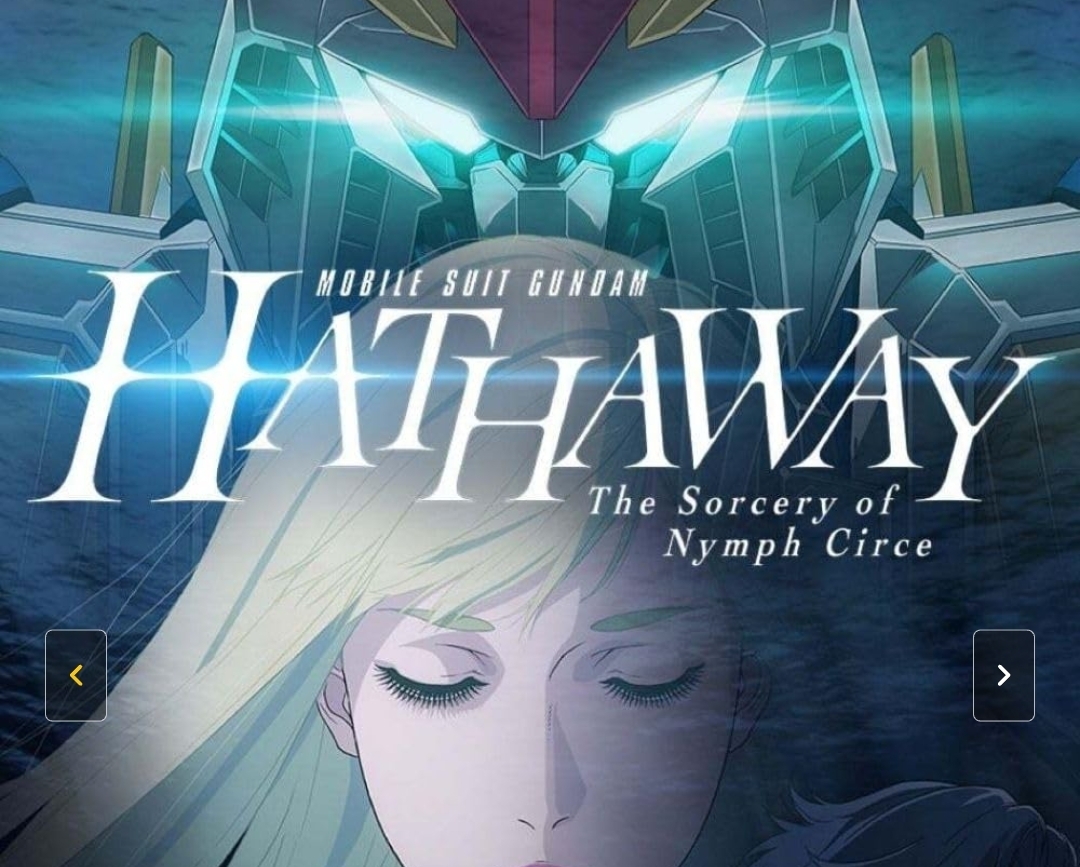
Is Mobile Suit Gundam Hathaway safe for kids? The short answer is: not for younger children, and even for teens it warrants a conversation beforehand. This is a war story with real moral weight, and it does not soften either its action or its politics for the sake of a wider audience.
With Caution. Mobile Suit Gundam Hathaway is best suited for ages 14 and up. It carries sustained mecha combat, morally grey protagonists, and a story where the line between terrorism and resistance is deliberately blurred. Younger viewers will likely find it confusing at best, and disturbing at worst.
Quick-Scan Safety Card
Not Yet Rated (US) — based on source material and franchise pattern, likely equivalent to PG-13 or soft R
14 and above
High — large-scale mecha warfare, civilian casualties implied, sustained battle sequences
Mild to moderate in subtitles; dub version varies by localization choices
Political violence, terrorism framed as resistance, moral ambiguity, grief, sacrifice
Mild — emotional intimacy, no explicit scenes
The film presents a terrorist organization sympathetically — parents should expect this to prompt real questions
Possible — bright energy weapon flashes during battle scenes
| Category | Detail |
|---|---|
| Official Rating | Not Yet Rated (US) — based on franchise history, likely equivalent to PG-13 or soft R |
| Expert Recommended Age | 14 and above |
| Violence | High — large-scale mecha warfare, civilian casualties implied, sustained battle sequences |
| Language | Mild to moderate in subtitles; dub localization varies |
| Themes | Political violence, terrorism framed as resistance, moral ambiguity, grief, sacrifice |
| Romantic Content | Mild — emotional intimacy, no explicit scenes expected |
| Biggest Parental Surprise | The film presents a terrorist organization sympathetically — parents should expect this to prompt real questions |
| Photosensitivity Risk | Possible — bright energy weapon flashes during battle scenes |
What Is Mobile Suit Gundam Hathaway About?
Set decades after the original Gundam conflicts, this film follows Hathaway Noa — a young man who has become the leader of an anti-Federation terrorist cell called Mafty. He believes the Earth Federation is exploiting humanity, and he is willing to use violence to stop it.
What makes this harder for younger viewers is not the action. It is the emotional complexity. Hathaway is not a clean hero. He carries guilt, idealism, and a willingness to cause harm in the name of a cause he believes is just.
Parents searching for Mobile Suit Gundam Hathaway trigger warnings should know: grief, moral compromise, and the psychological cost of political violence sit at the center of this story. That is what the film is actually about.
Why Is It Not Yet Rated?
As of publication, the MPAA has not issued a final rating for the US theatrical release scheduled for May 2026. Based on the previous film in this trilogy — which screened with content consistent with a PG-13 — and the known content of the source novel, I would expect a PG-13 or a soft R depending on how the localized cut handles battle intensity.
Here is the thing though. Even a PG-13 label would not fully prepare parents for what this film is actually doing thematically. The violence is not gratuitous, but it is purposeful and consequence-heavy. That distinction matters more than a letter rating.
I have said this before about franchise anime films: the rating tells you about content volume, not content weight. A film can earn PG-13 through restraint in blood and language while still delivering ideas that a 13-year-old is genuinely not equipped to process. This is one of those films.
Violence and Combat
The mecha combat in this film is spectacular in the technical sense — and sustained in a way that younger viewers may find overwhelming. We are not talking about cartoon punches. Giant machines tear through city infrastructure. People are shown dying as collateral damage of battles fought between ideological factions.
What caught me off guard, even knowing the Gundam franchise well, is how grounded the violence feels. This is not the stylized action of a superhero film. The consequences accumulate across scenes rather than resetting between them.
If your child has anxiety around war imagery or large-scale destruction — even animated — this film is likely too intense regardless of age. The battle sequences are long and do not pull back from showing structural collapse and civilian panic.
The Terrorism Question
This is the section I want every parent to read carefully before deciding. Hathaway Noa leads a terrorist organization. The film does not present this as simple villainy. It frames his cause as morally defensible, even as it shows the real cost of his methods.
That is sophisticated storytelling. It is also genuinely challenging content for teenagers who are still building their ethical frameworks. The film essentially asks: when is political violence justified? It does not answer cleanly.
My 16-year-old has grown up with Gundam and she still found this iteration more unsettling than she expected — not because it was scary, but because she found herself sympathizing with Hathaway even when she did not want to. That told me everything about how this material lands emotionally.
This film is an opportunity for genuine conversation about political ethics, not a reason to avoid it entirely — but that conversation needs to happen. Watch it together if your teenager is on the younger end of the 14-plus range.
Emotional Themes: Grief and Sacrifice
Beneath the mecha action is a story about a person who has lost something foundational and is trying to rebuild meaning through a cause. Hathaway’s grief is quiet but present throughout. The film does not dramatize breakdown — it shows a man running from his own interior life.
For teens who have experienced loss, this may land harder than expected. It is not exploitative, but it is honest. I want to be careful how I say this — the emotional content here is actually more likely to affect sensitive viewers than the combat sequences are.
If your teenager has recently experienced a significant loss or is navigating depression or disillusionment, be present for this one. The emotional undercurrent is real, and it deserves acknowledgment after the credits roll.
Romantic Content
There is a romantic thread involving Hathaway and a woman named Gigi Andalucia. Based on the source material and the previous theatrical film, expect emotional intimacy and close physical proximity rather than explicit content. Nothing here rises to a level that would concern most parents of teenagers.
Honestly, the romantic subplot is the least challenging element of this film for most families. It is actually one of the warmer parts of an otherwise heavy story.
Age-by-Age Viewing Guide
Not Appropriate
There is nothing here for this age group. The animation style may attract small children who associate animated content with child-friendly content — do not be caught off guard. The battle sequences and the emotional heaviness of the story are completely unsuitable for young children.
Not Appropriate
Even children who love robot shows and action animation should skip this one for now. The politics are inaccessible, the moral complexity will be confusing rather than enriching, and the sustained combat could genuinely upset children in this range. There are better entry points into the Gundam universe for this age group.
Not Appropriate
I know this will frustrate some parents of Gundam fans in this age range. But the terrorism-as-resistance framing is not something I am comfortable recommending for this group without significant parental context — more context than most family viewing situations naturally allow. The combat intensity is also a genuine concern. Wait a couple of years.
With Caution
This is the range where the film starts to work as intended — but only with the right approach. Teens in this group who already have some Gundam context will get more from it. Watch together, or at least be available afterward. The political and ethical questions the film raises are genuinely valuable for this age, but they need a framework.
Appropriate
This is the audience the film is built for. Older teens and adults will find a layered, ambitious story that respects their intelligence. The moral questions it raises about power, resistance, and the cost of conviction are handled with more care than most live-action films manage. Recommended with no reservations at this age.
Positive Messages and What Families Can Take From It
Put plainly: the film is not trying to teach children lessons. It is trying to challenge adults. That said, for the right age group there is real value here.
The film takes seriously the idea that good intentions do not automatically justify harmful actions. That is a genuinely important idea, and it is presented without simplification. Families who watch this together with teenagers have a rare opportunity to discuss political ethics in concrete, story-grounded terms rather than abstract ones.
It also models the kind of moral seriousness that good science fiction has always been capable of. If your teenager comes away from this asking harder questions about power and accountability, the film has done its job.
Five Family Discussion Questions
- Hathaway believes his cause is just, but his methods cause real harm to ordinary people. Is there a point where a good goal stops justifying the means used to reach it?
- The film shows the Federation as corrupt and exploitative. Does that change how you feel about the people fighting against it, even if those people are using violence?
- Hathaway hides who he really is from people around him throughout the story. What does carrying a secret like that do to a person over time?
- At several points, civilians are caught in the crossfire of battles between powerful factions. Who do you think bears responsibility for that harm — the people fighting, the system that created the conflict, or both?
- Gigi seems to see through Hathaway in ways other characters do not. Why do you think she makes the choices she makes when she could expose him?
Frequently Asked Questions
Yes, without question. The large-scale battle sequences, implied civilian casualties, and heavy emotional themes make this genuinely inappropriate for young children. The animated format does not soften the intensity here. Keep this one off the family movie night list for under-tens entirely.
As of early 2026, an official MPAA rating has not been confirmed. Based on the franchise’s theatrical history and the known content of this chapter, a PG-13 or soft R is the most likely outcome. My own professional recommendation is 14 and above regardless of what the official label lands on.
The previous theatrical chapters in this trilogy did not include traditional post-credits sequences. Based on that pattern, it is unlikely — but worth staying seated for a minute or two just in case the final installment makes a different choice. We will update this guide once confirmed screenings are reported.
Mecha anime films in this franchise regularly feature bright energy weapon discharges and rapid light flashes during combat sequences. If your child or family member has photosensitive epilepsy or migraine sensitivity triggered by flashing lights, treat this as a likely risk and consult your physician before attending a theatrical screening.
The first two chapters of the Hathaway trilogy were available on Netflix in the US. The 2026 theatrical release will likely follow a similar streaming window, with Netflix being the most probable home based on existing licensing. Check the official Sunrise and Netflix announcements for confirmed dates after the theatrical run.
Some prior context genuinely helps. The film assumes familiarity with the broader Universal Century timeline, and key emotional beats land harder if you know Hathaway’s backstory from earlier entries. New viewers will follow the surface story but may miss layers that make it worthwhile. The first Hathaway theatrical film is the minimum suggested viewing.
For older teenagers — say 15 and up — this storyline is actually one of the film’s genuine strengths as a conversation starter. It does not glamorize violence, but it does present a morally sympathetic terrorist, which requires context and discussion. Younger teens should watch with a parent who is ready to talk it through afterward.
For families who already enjoy anime together, our guide to anime content for families covers other titles in this space. If you are navigating the broader Gundam universe with a teenager, the Mobile Suit Gundam: The Witch From Mercury parents guide is worth reading alongside this one.
For additional context on anime ratings and what they mean for US families, Common Sense Media’s anime section and the MPAA’s official rating explanations are reliable reference points.

Matthew Creith is a movie and TV critic based in Denver, Colorado. He’s a member of the Critics Choice Association and GALECA: The Society of LGBTQ Entertainment Critics. He can be found on Twitter: @matthew_creith or Instagram: matineewithmatt. He graduated with a BA in Media, Theory and Criticism from California State University, Northridge. Since then, he’s covered a wide range of movies and TV shows, as well as film festivals like SXSW and TIFF.