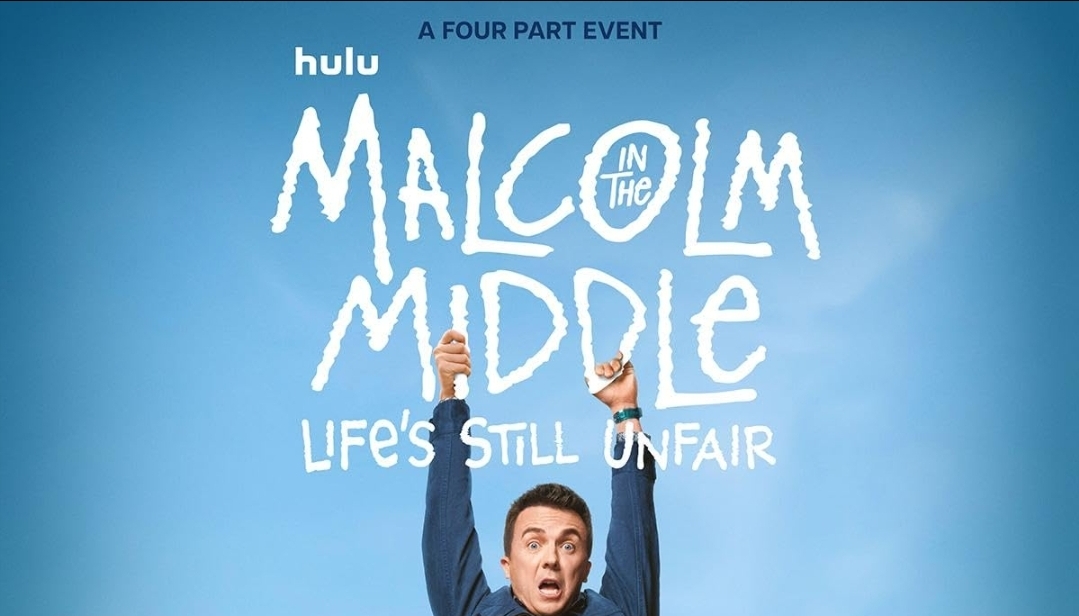
Malcolm in the Middle: Life’s Still Unfair — Complete Parents Guide (2026)
If you were comfortable letting your teenager watch the original Malcolm in the Middle series back in the day — or let them catch it on streaming recently — this 2026 revival film sits noticeably higher on the content scale. Same chaotic Wilkerson family energy. Different emotional weight.
Parents who grew up with the show tend to assume this will land exactly where they remember it. That assumption is worth examining before you hit play together. The original series was a PG-ish, frequently edgy sitcom that punched at authority figures and celebrated loveable dysfunction. Malcolm in the Middle: Life’s Still Unfair carries all of that DNA — but the Wilkerson kids are adults now, and the material has aged with them.
This Malcolm in the Middle: Life’s Still Unfair parents guide is going to give you what you actually need: what’s in it, who it’s genuinely right for, and where it earns the caution flag.
Quick Answer
With Caution. Malcolm in the Middle: Life’s Still Unfair is best suited to ages 13 and up. The comedy is sharp and often genuinely funny, but adult relationship conflict, strong language, and a handful of emotionally heavy sequences make this a thoughtful watch rather than a casual family film night for younger children.
Quick-Scan Safety Card
Not Yet Rated — adult comedy-drama content expected
13+ (mature 12s with parental co-viewing)
Low — comedic physical gags, one heated confrontation with minor property damage
Moderate-to-strong — includes “hell,” “damn,” “crap,” “bastard,” and at least one clear “s**t”
Mild — adult relationship references, suggestive humour, no nudity
Moderate-high — grief, parental disappointment, and estrangement handled without much softening
The emotional rawness of the parent-child reunion sequences — far heavier than the marketing suggests
Brief — social alcohol use at one family gathering, no focus or glamourisation
| Category | Detail |
|---|---|
| Official Rating | Not Yet Rated — adult comedy-drama content expected |
| Expert Recommended Age | 13+ (mature 12s with parental co-viewing) |
| Violence Level | Low — comedic physical gags, one heated confrontation with minor property damage |
| Language Level | Moderate-to-strong — includes “hell,” “damn,” “crap,” “bastard,” and at least one clear “s**t” |
| Sexual Content | Mild — adult relationship references, suggestive humour, no nudity |
| Emotional Intensity | Moderate-high — grief, parental disappointment, and estrangement handled without much softening |
| What Will Surprise Parents Most | The emotional rawness of the parent-child reunion sequences — far heavier than the marketing suggests |
| Substance Use | Brief — social alcohol use at one family gathering, no focus or glamourisation |
What Is Malcolm in the Middle: Life’s Still Unfair About?
The Wilkerson kids are grown up and scattered. Malcolm has chased the ambitions that were always expected of him. Reese, Dewey, and Hal have taken paths that are messier, funnier, and occasionally heartbreaking. Then something pulls them all back home.
At its core, this is a film about what happens when the chaos of childhood becomes the unresolved emotional baggage of adulthood. Parents dealing with their own aging. Adult children reckoning with who they actually became versus who they were supposed to be. It is funny — genuinely, frequently funny — but the emotional undertow is real and fairly persistent.
Specific emotional themes parents should be aware of: adult estrangement, parental expectation and disappointment, grief adjacent to loss of a parent figure, identity pressure, and sibling resentment that finally gets spoken out loud.
Why Is It Not Yet Rated — And Is That Accurate?
As of publication, Malcolm in the Middle: Life’s Still Unfair has not received an official MPAA rating. Based on my assessment of the content, I would place this solidly at PG-13 if it were rated today.
The language tips it past PG. The emotional content — while not graphic — is far more sustained and heavy than anything in the original series. There is nothing here that approaches an R rating in terms of explicit content. But the “Not Yet Rated” status absolutely should not be read as “probably fine.”
Honestly, the absence of a rating is the one thing most likely to catch parents off guard with this one. A PG-13 label would at least prompt a conversation. Without it, families might assume this is as breezy as the old show and sit down with younger kids unprepared for where it goes emotionally.
Do not let the “Not Yet Rated” status be a green light. Based on content, treat this as a PG-13 and plan accordingly before deciding who watches it with you.
Language and Tone
The original show always pushed language to the edge of what broadcast television allowed, and this film doesn’t pretend otherwise. The Wilkerson family communicates in a particular register — loud, sharp, and occasionally profane — and that hasn’t changed.
What has changed is that the language now sits in adult mouths making adult arguments. “Bastard” gets used in a genuinely cutting emotional exchange, not just as a comedic throwaway. That context matters. A word lands differently when it is part of a real fight between siblings than when Reese is being Reese in a kitchen scene.
If language is a firm line in your household, this one will cross it at least twice in ways that feel intentional rather than incidental. Worth a heads-up before younger teens watch.
Emotional Intensity — The Part That Caught Me Off Guard
I want to be careful how I say this — because the film is genuinely funny across much of its runtime. But there are two sequences here that hit harder than anything in the original series ever attempted.
The first is a scene between Hal and Malcolm that essentially functions as a belated parenting reckoning. No shouting. Quiet, uncomfortable, and very well performed. It is the kind of scene that will land completely differently depending on your child’s relationship with their own parents at the time they watch it.
My 16-year-old watched that scene next to me and went very quiet. That told me everything about how teenagers with any complicated parental feelings will receive it.
The second is a grief-adjacent sequence involving Lois that I will not detail here for spoiler reasons — but parents of children who have experienced family loss should know it exists and be prepared for it.
If your child has recently experienced a loss or is in a difficult patch with a parent, those two sequences are worth knowing about in advance. They are handled with care — but they are real.
Comedy and Chaos — What Still Works
And look — I know some parents will read the above and assume this is a grim watch. It is not. The Wilkerson chaos is alive, frequently absurd, and often hilarious in the way only this family can be. Reese’s scenes in particular deliver exactly what fans of the original want.
The physical comedy is well-constructed and genuinely age-neutral. Younger viewers in the room will laugh at the right moments. The film earns its comedy through character — not cruelty — which is the original show’s best quality carried forward.
Adult Relationships and Suggestive Content
There are adult relationship references throughout — mainly jokes about marriage, intimacy, and the general exhaustion of being a Wilkerson adult. Nothing is explicit. Nothing lingers. Hal and Lois remain the comedically overaffectionate couple they always were, and one or two jokes in that area will fly straight over younger heads.
Teenagers will catch every single one of those jokes. That is worth factoring in depending on where your specific child is in those conversations at home.
Age-by-Age Viewing Guide
Not Appropriate
Nothing about this film is designed for or appropriate for young children. The emotional register, the adult language, and the pacing of a feature-length film built around grown-up dysfunction means there is nothing here for this age group. This one is simply not for them.
Not Appropriate
Kids this age will recognise that something funny is happening — the physical comedy will get laughs. But the emotional underpinning of the film, the adult language used in real arguments, and the grief-adjacent sequence make this the wrong choice for this age group. The original series is a better fit for curious 9 and 10-year-olds.
With Caution
Honestly this one depends so much on your specific child. Mature 12 and 13-year-olds who already watch the original series with you and handle emotionally complex storytelling well could manage this with a parent present. But I would not send an 11-year-old in alone. The emotional intensity in two key scenes, and the language during confrontations, is more than this age bracket should process unsupported.
With Caution
This is the sweet spot for the film — teenagers who grew up with reruns of the original will absolutely connect with it, and the emotional themes around identity, expectation, and family pressure are genuinely relevant to this age group. The caution flag here is about emotional readiness rather than explicit content. The Hal and Malcolm scene in particular will hit differently for any teenager navigating a complicated parental relationship.
Appropriate
Fully appropriate for older teenagers and adults. My 18-year-old watched the whole thing and found it more affecting than expected — which is probably the best compliment this film can receive. At this age, the emotional themes are genuinely relevant and the comedy lands on its own terms. A solid, occasionally moving watch.
Positive Messages and Educational Value
The film is more generous with its characters than it might initially appear. There is a genuine argument being made here about the cost of unspoken family expectations — and about how love inside a chaotic family is still real love, even when it is expressed badly.
Put plainly: it is not an educational film. No parent should sit down expecting curriculum content. But the conversation opportunities it opens are real. How do families who communicate badly still love each other? What do you owe your parents when you are an adult? What do parents owe their kids after the fact?
Those questions land honestly here without being gift-wrapped. For the right age group, that is actually more valuable than a tidy lesson.
Five Family Discussion Questions
- When Hal and Malcolm finally have their quiet conversation, neither of them says sorry directly — do you think they needed to? What does that scene tell us about how some families handle apologies?
- Reese has clearly not become what anyone expected — including himself. Do you think he seems happy? What does the film seem to think happiness actually looks like for him?
- The film suggests that Malcolm’s intelligence may have actually made some parts of his life harder. Do you agree with that idea? Have you ever felt like being good at something came with a cost?
- Lois holds a lot of the family’s emotional weight in a way that mostly goes unacknowledged by the other characters. Did that bother you watching it — or does it feel true to how some families work?
- At what point in the film did it stop being a comedy for you and start feeling like something else? Was there a specific moment — and what caused that shift?
Frequently Asked Questions
For younger children, no. For teenagers 13 and up, it depends on emotional maturity. The comedy is accessible, but the emotional intensity in several scenes and the moderate-to-strong language make this a guided watch for under-13s rather than an open free-for-all.
It is currently Not Yet Rated. Based on the content — language, emotional intensity, adult relationship references, and one grief-adjacent sequence — it would comfortably land at PG-13 if officially rated. Do not treat the absence of a rating as clearance for young viewers.
Not scary in the traditional sense — no jump scares, monsters, or threat-based tension. But the emotional confrontations and the grief-adjacent sequence could be unsettling for sensitive younger children. A 7-year-old really has no business watching this one. The original series is a much better fit for that age.
Yes. Parental disappointment and estrangement handled directly, a grief-adjacent sequence involving a parent figure, adult sibling conflict with raised voices and strong language, and themes around identity pressure and unmet expectations. None of it is exploitative, but it is real and sustained enough to be meaningful.
Yes — there is a short post-credits scene that functions as a comedic button on the film’s ending. It is brief, character-based, and entirely in keeping with the show’s original spirit. Worth staying for, especially for fans of the series. No significant content concerns in the scene itself.
No sequences stood out to me as containing rapid strobing or flashing light effects that would present a photosensitivity risk. The visual style is consistent with the original series — handheld, naturalistic, brightly lit. If your child has diagnosed photosensitive epilepsy, standard precautions apply but no specific flagged sequences.
Distribution details are still being confirmed as of publication. Given the likely PG-13 equivalent content, most streaming platforms would apply a teen-tier content filter. Check back as release details firm up. Parental controls set to 13+ should capture this appropriately once it lands on a platform.
Genuinely, yes. The film is clearly made with affection for the source material, and watching these characters as adults carries an unexpected emotional charge. Adults who grew up with the show will find it funny, occasionally moving, and more honest about family dysfunction than they might expect going in.
There is a grief-adjacent sequence involving a parent figure that is handled with weight and without comedic deflection. It is not graphic or prolonged, but it is real. Children who have recently lost a family member, or who are anxious about parental loss, may find that particular sequence difficult. It is worth being aware of before watching together.

Matthew Creith is a movie and TV critic based in Denver, Colorado. He’s a member of the Critics Choice Association and GALECA: The Society of LGBTQ Entertainment Critics. He can be found on Twitter: @matthew_creith or Instagram: matineewithmatt. He graduated with a BA in Media, Theory and Criticism from California State University, Northridge. Since then, he’s covered a wide range of movies and TV shows, as well as film festivals like SXSW and TIFF.