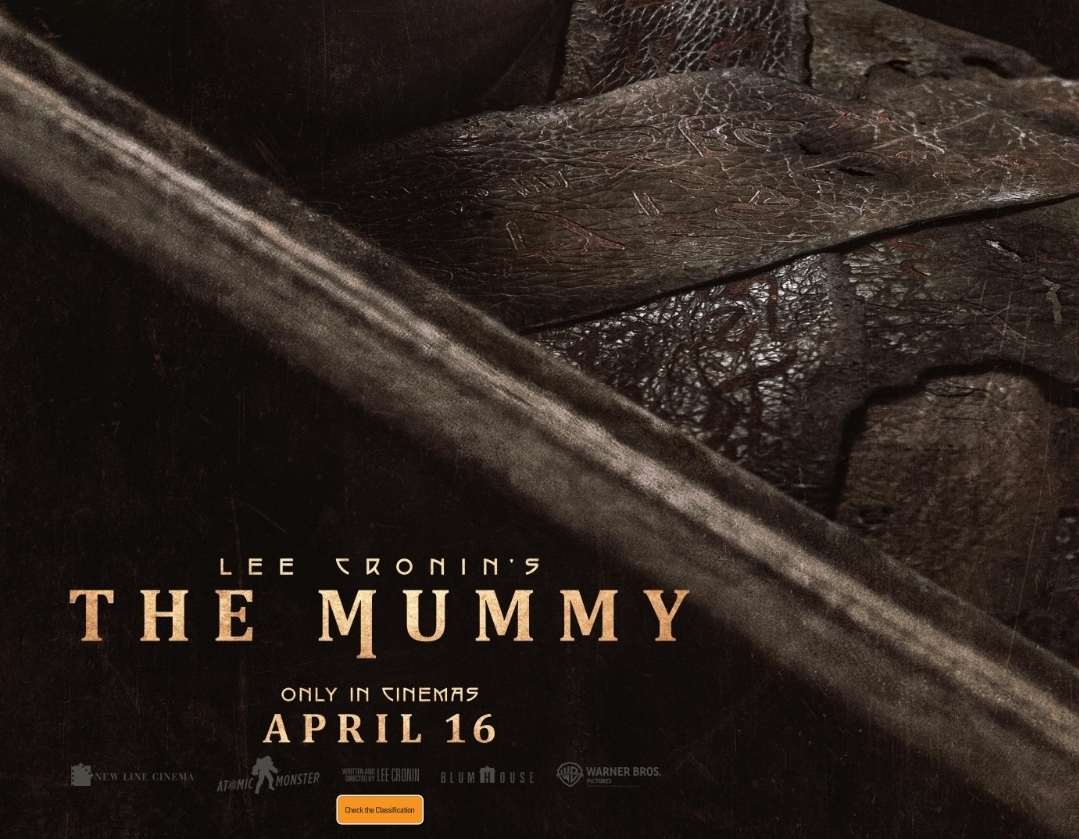
Lee Cronin’s The Mummy Parents Guide: What Families Need to Know Before Watching
The trailer for Lee Cronin’s The Mummy gives away almost nothing about what actually happens to children in this story. That gap between marketing and reality is one of the first things parents should know going in.
Having sat through this film twice — once alone for review purposes and once with my 18-year-old, who wanted to see it and is old enough to make that call — I can tell you that Lee Cronin’s The Mummy parents guide is one I felt compelled to write quickly. Parents are searching for answers, and the official R rating does not come close to telling the whole story.
Put plainly: this is not a film for anyone under 17, and for many 17-year-olds, it will still be a lot. Cronin, who directed Evil Dead Rise, has not softened his instincts here. If anything, he has sharpened them.
No. Lee Cronin’s The Mummy is not safe for children or younger teens. The film carries an R rating for sustained graphic horror violence, body horror sequences, and deeply disturbing imagery that goes well beyond a typical monster film. The appropriate viewing age is 17 and above, and even then, parental awareness is strongly advised.
Quick-Scan Safety Card
R — for graphic horror violence, disturbing imagery, and some language
17+ (and with awareness of body horror sensitivity)
Severe — sustained body horror, graphic creature attacks, gore
Moderate — several uses of strong language including f-words
Extreme — prolonged, relentless horror; multiple jump scares and dread sequences
Very High — transformation sequences, decay imagery, disturbing physical distortion
Minor — brief social drinking in early scenes
The degree of body horror targeting human characters — including scenes that echo themes of possession and bodily loss of control
Yes — one mid-credits scene; unsettling rather than action-based
| Category | Detail |
|---|---|
| Official Rating | R — for graphic horror violence, disturbing imagery, and some language |
| Expert Recommended Age | 17+ (and with awareness of body horror sensitivity) |
| Violence | Severe — sustained body horror, graphic creature attacks, gore |
| Language | Moderate — several uses of strong language including f-words |
| Frightening Sequences | Extreme — prolonged, relentless horror; multiple jump scares and dread sequences |
| Body Horror | Very High — transformation sequences, decay imagery, disturbing physical distortion |
| Substance Use | Minor — brief social drinking in early scenes |
| What Parents Will Be Most Surprised By | The degree of body horror targeting human characters — including scenes that echo themes of possession and bodily loss of control |
| Post-Credits Scene | Yes — one mid-credits scene; unsettling rather than action-based |
What Is Lee Cronin’s The Mummy About?
Without giving away specific plot beats, this is a horror film built around dread, ancient evil, and the terror of losing control over your own body. The emotional core is fear — not adventure, not wonder, not the pulpy fun of earlier Mummy films.
Parents searching for Lee Cronin’s The Mummy trigger warnings should know the film leans hard into claustrophobia, bodily invasion, death of supporting characters, and grief used as a plot mechanism. There is also a thread of psychological horror around identity and memory that lands more unsettlingly than the physical scares.
This is not a monster movie with a winking sense of humor. Cronin treats the material with real weight, and that seriousness makes it more disturbing, not less.
Why Is It Rated R?
The MPAA rating cites graphic horror violence, disturbing imagery, and some language. That is accurate as far as it goes. But here is the thing — the R rating feels like it describes the floor of what this film contains, not the ceiling.
The body horror sequences in the second and third acts go beyond what I would call standard R-rated horror. Transformation imagery, decay rendered in close detail, and extended sequences of human figures in states of physical distress all accumulate in a way that feels closer to the upper register of the rating. I have reviewed dozens of R-rated horror films for this site, and this one sits firmly in the more intense half of that category.
The language count is genuinely moderate, and there is no sexual content of note. If the film were being assessed purely on language and sexual content, it might scrape a PG-13. But violence and imagery are doing serious work here, and the rating reflects that correctly, even if it undersells the intensity.
The R rating is earned and then some. Do not let the legacy of lighter Mummy films create a false baseline expectation. Lee Cronin’s The Mummy is firmly in the territory of serious adult horror.
Content Breakdown
Violence and Gore
The violence is the central content concern here. Creature attack sequences are prolonged and graphically rendered. There is visible gore — not gratuitous in a torture-porn sense, but sustained and detailed enough that it will be upsetting for many adult viewers, let alone younger ones.
One sequence in the second act — involving a character’s physical transformation that happens in full frame, without cutaway — is genuinely one of the harder things I have watched while doing this job. I want to be careful how I say this, because I do not want to sensationalize it. But parents researching Lee Cronin’s The Mummy content warning deserve to know it is there and to know it lingers.
The film also includes multiple deaths of named characters, some depicted with close attention to suffering rather than quick cuts.
If your teen is sensitive to body horror or transformation imagery specifically, this film will be very difficult. That sensitivity is worth factoring in separately from general horror tolerance.
Body Horror and Psychological Fear
This is where Cronin is most clearly working in his own register. The horror of bodies changing, decaying, or being controlled against a character’s will is a persistent visual and emotional motif. It is not incidental to the story — it is the story.
Honestly, the psychological dimension of this is what stayed with me longest after the credits rolled. The feeling of something ancient and external taking residence in a human being is handled with real craft, and that craft makes it more distressing. Jump scares are the least of your worries. The dread that builds between them is the real challenge.
My 18-year-old described it afterward as “the kind of horror that makes you feel weird the next morning.” That is a fair summary from someone who watches a lot of horror and is not easily rattled.
Teens who experience anxiety around themes of control, illness, or bodily autonomy may find this film particularly distressing. It is worth a conversation before watching, not just after.
Frightening Sequences and Jump Scares
There are multiple well-constructed jump scares, but the more effective and more frequent technique is sustained dread. Cronin builds sequences that last two to three minutes of escalating tension before any release, and those sequences are relentless in the third act.
Parents asking whether Lee Cronin’s The Mummy is suitable for children should know that the frightening content is not front-loaded — it deepens significantly as the film progresses, so the first thirty minutes are not a reliable gauge of the full experience.
The film’s horror escalates hard in the final forty minutes. Even viewers who felt comfortable in the first act should be prepared for a significant step-up in intensity by the end.
Themes of Death and Grief
Grief is not handled gently here. A central character’s loss is used as an entry point for the horror, and the film does not offer resolution or comfort around that loss. Death is presented as final, arbitrary, and sometimes grotesque.
For children who have experienced bereavement, or who carry anxiety around death, these threads will be genuinely difficult to process. This is not a film where loss leads somewhere meaningful. It leads somewhere darker.
If your family has recently experienced a bereavement, or if your child carries active anxiety around death, this is a film to approach with real care — regardless of age.
Language
Language is a secondary concern compared to everything else in this film. There are multiple uses of strong language, including the f-word, used in moments of fear or crisis rather than gratuitously. Nothing in the language track would surprise a 16-year-old who watches mainstream cable drama.
Age-by-Age Viewing Guide
Not Appropriate
There is no version of this conversation where a child under five should be anywhere near this film. The imagery alone — even a brief accidental viewing — could be distressing enough to affect sleep and create lasting fear associations. Keep this one completely out of reach.
Not Appropriate
Absolutely not. The body horror, the death of characters depicted in distress, and the sustained dread sequences make this entirely wrong for this age group. Even horror-curious kids in this range — and I have an 11-year-old who lobbies hard for age-inappropriate content — need firm guidance away from this one.
Not Appropriate
Middle schoolers who think they are ready for this because they have seen other horror films are not ready for this. The specific type of horror here — body transformation, loss of self, prolonged physical suffering — is developmentally more challenging for this age than straightforward monster or slasher content. Not appropriate.
Not Appropriate
And look — I know some parents will disagree with me here, especially parents of horror-literate 15 and 16-year-olds. But the body horror intensity and psychological weight of this film push it firmly outside what I would recommend for this age group. A mature 16-year-old who genuinely understands what they are signing up for is the only possible exception, and only with a parent present.
With Caution
Seventeen and above is where this becomes a genuine option, and even then, “with caution” is the right call rather than a green light. Older teens and adults who enjoy serious horror and who know their own tolerance for body horror and psychological dread will find this a well-crafted, genuinely frightening film. Just go in knowing what it is.
Positive Messages and Educational Value
I want to be honest with you: this film is not built around positive messaging. It is built around fear, and it delivers fear with real skill. Manufacturing a list of uplifting takeaways would be doing you a disservice.
What the film does offer, for older viewers willing to unpack it afterward, is material for serious conversation. The horror of losing control over your own body and identity touches on real human anxieties around illness, autonomy, and mortality. Those are not comfortable topics, but they are legitimate ones.
For families with older teens who watch horror together and talk about it afterward, there is discussion value here. For families looking for affirming themes or role models, this is not the film.
Five Family Discussion Questions
- When the central character first begins to realize something is happening to them that they cannot control, they choose to hide it rather than ask for help. Why do you think they made that choice, and what might have changed if they had been honest earlier?
- The film uses grief as the crack through which the horror enters. Do you think grief makes people more vulnerable to bad decisions in real life? Where have you seen that play out?
- There is a moment late in the second act where a character has a clear opportunity to save themselves but chooses to stay for someone else. Did that feel like bravery or a mistake to you — and does your answer change depending on whether they survive?
- Horror films like this one rely on us being afraid of losing control over our bodies. What does that fear tell us about what we value most about being ourselves?
- Lee Cronin deliberately refuses to give the audience much relief or humor — the tone is relentless from the midpoint onward. Did that choice make the film more effective as horror, or did it become exhausting? What does your answer say about what you want from this genre?
Frequently Asked Questions
No. This is an R-rated horror film with sustained graphic violence, intense body horror, and deeply disturbing imagery. It is not appropriate for children or younger teens. The recommended viewing age is 17 and above, and even mature teens should go in with a clear sense of what the film contains.
Yes, significantly. The body horror sequences, prolonged dread, and graphic creature violence make this extremely inappropriate for that age group. Even horror-curious preteens who have watched milder scary films are not prepared for the specific type of intensity Cronin deploys here. This is firmly adult horror.
The official age rating is R. In practical terms, this means under-17s require accompanying parent or guardian in US theaters. My expert recommendation pushes this to 17-plus regardless of accompaniment, based on the body horror intensity and psychological weight of the content, which exceeds typical R-rated horror.
Yes. There is one mid-credits scene. It is brief, unsettling in tone rather than action-driven, and clearly sets up future story possibilities. It does not resolve anything from the main film. Sit through the mid-credits sequence, but you do not need to wait for the very end of the full credits roll.
Yes. The film contains flashing light sequences and rapid visual cuts during several horror set-pieces, particularly in the third act. Viewers with photosensitive epilepsy or sensitivity to strobe-style effects should be aware before watching. Check with your specific venue or streaming platform for their official photosensitivity advisory.
Lee Cronin’s The Mummy is a 2026 theatrical release. Streaming availability will vary by region and platform following the theatrical window. Most major streaming services apply age-gating to R-rated content, typically requiring parental PIN entry for viewers under 17 or 18 depending on the platform’s settings.
There is almost no comparison. The 1999 Brendan Fraser version is a PG-13 adventure film. The 2017 Tom Cruise version is similarly mainstream. Lee Cronin’s take is a full horror film in the tradition of Evil Dead Rise — serious, relentless, and graphically disturbing. Do not use the franchise name as your guide here.
Yes, and it is severe. Body horror — transformation sequences, decay imagery, and disturbing physical distortion of human characters — is central to the film’s identity, not incidental to it. This is Lee Cronin’s signature as a filmmaker, and parents should treat this as a primary content concern, not a secondary one.

Matthew Creith is a movie and TV critic based in Denver, Colorado. He’s a member of the Critics Choice Association and GALECA: The Society of LGBTQ Entertainment Critics. He can be found on Twitter: @matthew_creith or Instagram: matineewithmatt. He graduated with a BA in Media, Theory and Criticism from California State University, Northridge. Since then, he’s covered a wide range of movies and TV shows, as well as film festivals like SXSW and TIFF.