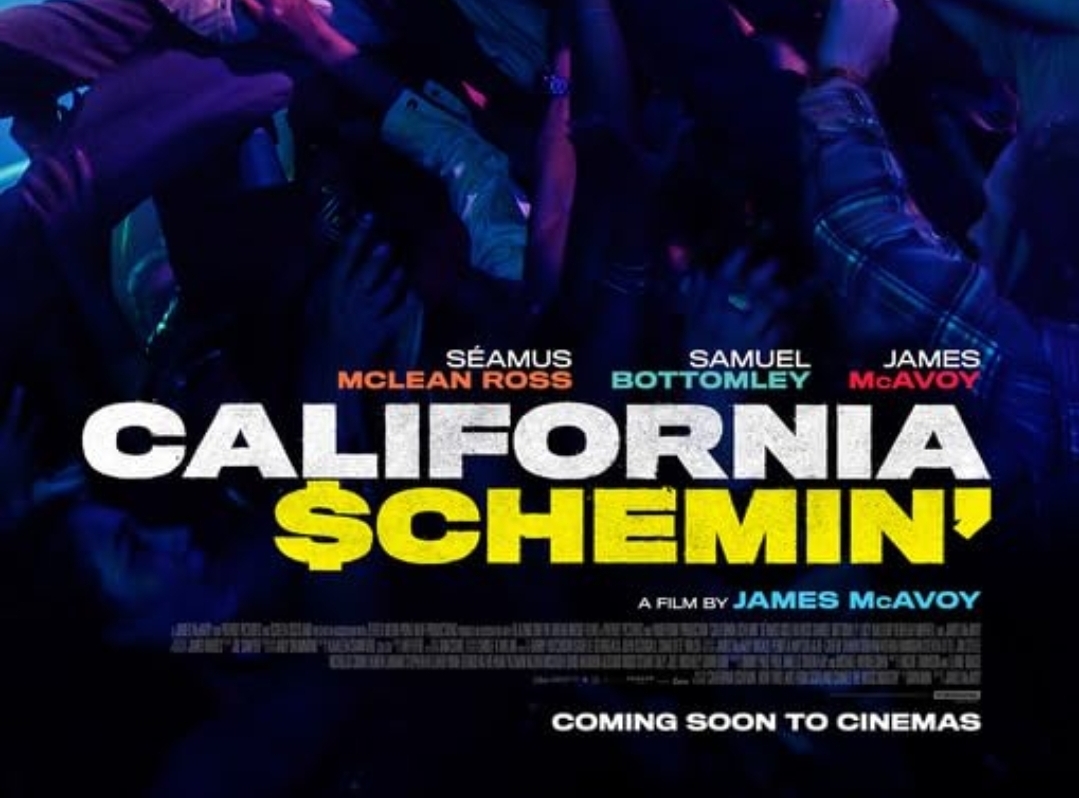
California Schemin' Parents Guide 2026 – What Parents Need to Know
There's a specific kind of unease you feel when a film earns its edge quietly — not through explosions or jump scares, but through the slow accumulation of choices characters make that they cannot take back. That's the feeling California Schemin' left me with, and it's the feeling I want to prepare you for before you decide who in your house watches this.
About forty minutes in, I paused the screen. Not because something shocking happened. Because something almost did — and the tension the film builds around that near-moment is, honestly, more affecting than if it had just shown the thing outright. That kind of restrained-but-relentless storytelling is impressive filmmaking. It is also the reason this California Schemin' parents guide exists.
The official California Schemin' age rating is still pending as of this writing — the film hasn't cleared MPAA classification yet. Based on what I watched, that rating conversation is going to be an interesting one.
With Caution. California Schemin' (2026) is best suited for viewers 14 and older. The film's layered moral pressure, recurring deception themes, and several sequences of psychological intensity make it genuinely unsuitable for younger children — even with a parent present. Teens who can hold moral ambiguity without guidance are the target audience here.
Quick-Scan Safety Card
| Category | Detail |
|---|---|
| Official Rating | Not Yet Rated — MPAA classification pending at time of publication |
| Expert Recommended Age | 14+ (my assessment — may differ from eventual official rating) |
| Violence | Moderate — threat-based and psychological rather than graphic; one scene of physical confrontation |
| Language | Moderate — includes several uses of "damn," "hell," and at least one stronger expletive in a high-tension scene |
| Deception & Manipulation | Heavy — the film's central engine is a long con; characters routinely lie to people who trust them |
| Substance Use | Social drinking shown; alcohol used as social lubricant in scheming scenes |
| Sexual Content | Mild — suggestive dialogue; no nudity; one scene with implied intimacy |
| What Will Surprise Parents Most | How effectively the film makes morally compromised behavior feel sympathetic — and even fun |
What Is California Schemin' About?
Without giving anything away: this is a film about people who decide the rules don't apply to them, and the cost of living inside that belief. At its core, it's about loyalty tested by self-interest, and about how far ambition can take someone before it starts taking from them.
Parents should know this film centers on themes of betrayal, financial manipulation, and identity-bending deception. Characters present false versions of themselves to get what they want — and the film doesn't always punish them for it immediately, which is where the real emotional complexity lives.
There are undertones of class anxiety and moral compromise that emotionally sensitive viewers will feel acutely. No jump scares. No gore. The tension is almost entirely relational — which, depending on your child, can land harder than anything visual.
Why Is California Schemin' Not Yet Rated?
The film hasn't completed the MPAA ratings process as of publication. That happens — especially with 2026 releases still in post-production or limited early distribution. It doesn't mean the content is more extreme than rated films; it just means we're working without the official label.
Based on what I watched, I'd expect a PG-13 landing when the rating comes through. The language sits right at that threshold, the violence never crosses into R territory, and the sexual content is more suggested than shown. But here's the thing — a PG-13 classification would not fully capture what emotionally younger teens will encounter here.
The manipulation at the center of this film is sophisticated enough that I'd genuinely argue it earns more caution than a PG-13 badge implies. Ratings measure content categories. They don't measure moral complexity. And California Schemin' has that in abundance.
Content Breakdown
Deception and Moral Manipulation
This is the film's beating heart, and it deserves its own section. The characters in California Schemin' lie strategically, persistently, and often successfully — and the screenplay frames much of this as clever rather than wrong. That framing is intentional. It's also something parents need to walk into with their eyes open.
There's a mid-film sequence where a character delivers a completely fabricated story to someone who genuinely trusts them. The performance is compelling. The audience is meant to root for it to work. I noticed my instinct was to lean forward — and then I caught myself, because what I was rooting for was a lie.
That's good filmmaking. It's also worth a conversation with any viewer under 16 who might absorb the framing uncritically.
The con-artist framing makes deceit feel exciting rather than harmful. Consider pausing after key scheming scenes to ask your teen what they think of the character's choices — not to lecture, but to surface what they're actually feeling about it.
Psychological Tension and Threat
The violence in this film is largely implied or threatened rather than depicted. One physical confrontation in the third act is brief but abrupt — the kind that catches you off guard precisely because the film has been so controlled up to that point. It's not gratuitous. It does land with force.
More notable is the sustained low-level dread the film builds through its second half. Characters are in danger of exposure, and the film milks that anxiety skillfully. For some teens, that kind of suspense is exactly what they signed up for. For others — including more anxious viewers — it's genuinely stressful in ways that don't fully release by the credits.
I've seen this kind of tension in films rated PG-13 and R alike. The level here sits comfortably in the former category, but the emotional residue feels closer to the latter.
If your teenager is sensitive to sustained suspense or stories involving betrayal by trusted figures, be aware this film leans into both for extended stretches. It's not traumatic content — but it's not light either.
Language
Nothing here will shock a parent who's sat through a PG-13 blockbuster in the last five years. "Damn" and "hell" appear regularly; there's one use of a stronger word during a confrontation scene that feels earned in context. No slurs. No sustained profanity.
The more notable language issue — and I mean this genuinely — is the dialogue around manipulation. Characters speak about deceiving others with a fluency and comfort that normalizes it. That's a different kind of language concern, and one rating systems aren't built to capture.
Alcohol and Substance Use
Drinking appears regularly in social scenes and is woven into the scheming culture the film portrays. It's never framed as a problem in itself — alcohol is ambient, glamorous, and consequence-free within the story's world. No harder substances appear. No one is shown impaired in a dangerous way.
It's worth flagging because the glamorization is consistent rather than incidental. This isn't one party scene. It's a backdrop.
Sexual Content
Mild by any reasonable standard. There's suggestive banter between characters whose relationship is part of the scheme, and one scene where two characters are clearly moving toward intimacy — but the film cuts away cleanly. No nudity. No explicit content.
Younger teens will pick up on the subtext. It won't shock them, but it's worth knowing it's there.
Age-by-Age Viewing Guide
There's nothing here for young children — not even on the surface. The story is entirely adult in its concerns, its pacing, and its emotional register. This isn't a film that happens to have some mature content. It's built for adult comprehension from the first scene. Keep this one completely off the table for this age group.
The film's central premise — characters deceiving people who trust them, and being rewarded for it — is exactly the kind of moral framing that children in this age range are not yet equipped to contextualize. They absorb narrative without the critical layer that lets older viewers interrogate what they're seeing. Skip it entirely until they're older.
And look — I know some parents will push back on this one. The content isn't graphic. But this age group is in the thick of forming their understanding of trust, honesty, and social consequence. A film that makes deception feel sophisticated and rewarding, without strong countervailing consequences, is not what most 12-year-olds need right now. Wait two years.
This is the age group where this film becomes genuinely worthwhile — with a parent or trusted adult in the room, or at minimum a conversation afterward. The moral terrain here is rich enough to generate real discussion. My 16-year-old watched the third act with me and had strong opinions about whether the ending let the characters off too easily. That's exactly the kind of critical engagement this film can provoke in a mature teenager.
At this age, viewers can appreciate what the film is doing — the way it implicates the audience in the scheme, the way it withholds easy moral resolution. My eldest watched it independently and came to me afterward with questions. That's a good sign. Seventeen-plus viewers should handle this without issue, and will likely get the most out of it.
Positive Messages and Educational Value
I want to be careful how I say this: the film isn't morally bankrupt. It doesn't celebrate dishonesty without consequence — the consequences are just delayed, and not always the ones we expect. That gap between action and consequence is actually where the most honest storytelling happens.
The film raises genuine questions about ambition, class, and what people tell themselves when they bend the rules. For mature viewers, those questions are worth sitting with. The problem is that younger audiences may absorb the style of the scheming without staying for the reckoning.
Put plainly: there's real value here for the right audience. It just requires enough critical scaffolding to distinguish between the film endorsing its characters' choices and the film examining them. That distinction matters enormously, and it's not always made explicit on screen.
Five Family Discussion Questions
- When the main character lies to someone who clearly trusts them — and the lie works — did you feel relieved, uncomfortable, or both? What does that reaction tell you about how the film is positioning you?
- At what point, if any, did you stop rooting for the characters to succeed? Was there a specific moment that shifted how you felt about them?
- The film is set against a backdrop of California wealth and aspiration. Do you think the characters would have made the same choices in a different environment — and does the setting change how much sympathy you have for them?
- By the end of the film, have the main characters actually paid a meaningful price for what they did? Does the ending feel honest to you, or does it let them off the hook?
- Is there a difference between being clever and being dishonest? The film sometimes treats these as the same thing. Do you agree with that framing?
Frequently Asked Questions
Not for children under 14. The film's content isn't graphic, but its moral framing — making deception feel glamorous and clever — requires a level of critical thinking that younger viewers typically haven't developed yet. Teens 14 and up can engage with it meaningfully, ideally with adult guidance.
As of this writing, California Schemin' is Not Yet Rated — the MPAA process hasn't concluded. Based on the content I reviewed, I'd anticipate a PG-13 official classification, though my expert recommendation for parents is to treat it as a 14+ film regardless of what that final badge says.
The film isn't scary in the traditional sense — no monsters, no horror sequences. But it does carry sustained psychological tension, adult moral complexity, and deception themes that would be completely inappropriate for a 7-year-old. It's not about fear level. It's simply not made for that age at all.
Based on the version I screened, there is no post-credits scene. The film ends at the credits. That said, distribution cuts can sometimes differ from press screenings, so it's worth staying seated for a minute or two just to confirm when you watch the final release version.
Nothing I would flag as a significant photosensitivity concern. There are no obvious strobe sequences in the version I reviewed. As always, official photosensitivity warnings may appear in the final theatrical release — check the distributor's content advisory once it's available closer to release date.
Distribution details for California Schemin' (2026) haven't been confirmed publicly at time of publication. Once the streaming platform is announced, platform-level parental controls will apply — most major services allow PIN-locking content by rating category. Watch this space for updates as the release approaches.
This is the right question to be asking, and the honest answer is: yes, it can — depending on the viewer. The film makes its con-artist characters feel exciting and capable rather than cautionary. Teenagers with strong critical thinking skills will interrogate that. Others may simply absorb the glamour. That gap is why I recommend adult co-viewing for 14 to 16 year olds.
Key trigger warnings include sustained deception and manipulation themes, a sudden physical confrontation scene, alcohol use throughout, implied intimacy, and class-based anxiety woven through the narrative. There is no depiction of self-harm, eating disorders, or graphic violence. Viewers sensitive to betrayal dynamics in close relationships may find the second half particularly affecting.

Matthew Creith is a movie and TV critic based in Denver, Colorado. He’s a member of the Critics Choice Association and GALECA: The Society of LGBTQ Entertainment Critics. He can be found on Twitter: @matthew_creith or Instagram: matineewithmatt. He graduated with a BA in Media, Theory and Criticism from California State University, Northridge. Since then, he’s covered a wide range of movies and TV shows, as well as film festivals like SXSW and TIFF.