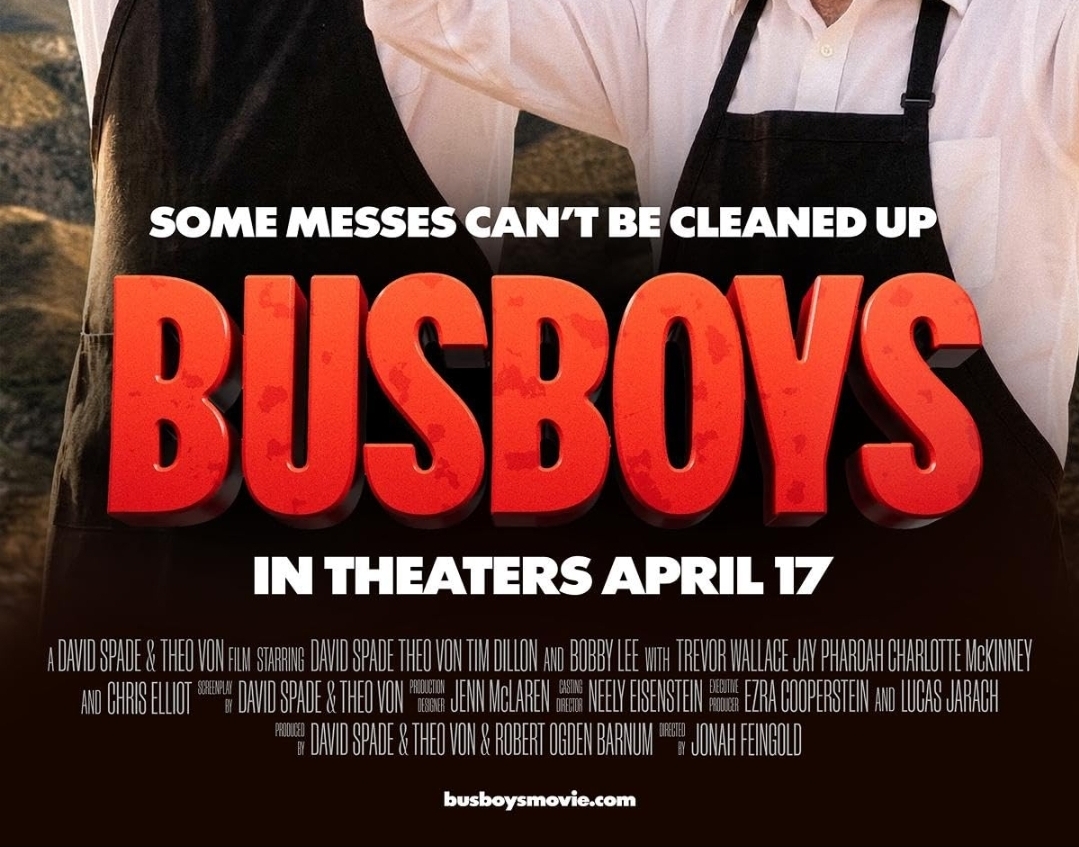
If you let your teenager watch Superbad and thought you had a reasonable benchmark for raunchy R-rated comedy, Busboys sits a clear notch harder on almost every axis that matters. Same letter rating. Meaningfully different material. Parents who assumed these films occupy the same territory have been messaging me all week — and they are right to ask the question before pressing play.
The Busboys parents guide below is built on a full watch, not a trailer skim. There are specific scenes here I want to flag before you decide whether this one belongs in your household — because the R rating alone does not tell you what you actually need to know.
Direct Answer: Is Busboys Safe for Kids?
No. Busboys is not appropriate for anyone under 17, and even then parental discretion is strongly advised. The film combines sustained crude humor, heavy language, drug and alcohol use played for laughs, and several scenes with sexual content that go further than the standard R-rated comedy playbook. The rating is accurate — it just does not capture how concentrated the content is.
Quick-Scan Safety Card
R — for pervasive crude and sexual humor, strong language, drug and alcohol use
17+ (older than official rating implies in practice)
Heavy — frequent f-words, sexual slang, crude insults throughout
Moderate-to-high — suggestive scenes, explicit verbal references, brief partial nudity
Significant — marijuana and alcohol used repeatedly, mostly played for comedy
Low-moderate — slapstick and comedic altercations, no serious injury
The density and specificity of the sexual humor — it goes further than most films wearing this rating
Genuine themes of working-class solidarity, loyalty between friends, finding dignity in unglamorous work
| Category | Detail |
|---|---|
| Official Rating | R — for pervasive crude and sexual humor, strong language, drug and alcohol use |
| Expert Recommended Age | 17+ (older than official rating implies in practice) |
| Language Level | Heavy — frequent f-words, sexual slang, crude insults throughout |
| Sexual Content | Moderate-to-high — suggestive scenes, explicit verbal references, brief partial nudity |
| Drug and Alcohol Use | Significant — marijuana and alcohol used repeatedly, mostly played for comedy |
| Violence Level | Low-moderate — slapstick and comedic altercations, no serious injury |
| What Will Surprise Parents Most | The density and specificity of the sexual humor — it goes further than most films wearing this rating |
| Positive Elements | Genuine themes of working-class solidarity, loyalty between friends, finding dignity in unglamorous work |
What Is Busboys About?
At its core, Busboys follows a group of restaurant workers — mostly young men in their late teens and early twenties — who spend a chaotic weekend shift navigating their jobs, their friendships, and their own ambitions. The emotional territory is genuinely relatable: feeling invisible, being underestimated, wanting more than the hand you were dealt.
There are real moments of camaraderie here. The film has something honest to say about working-class dignity. It is buried under a lot of crude comedy, but it is there.
Parents searching for Busboys trigger warnings should know the film touches on economic anxiety, workplace humiliation, substance use as escapism, and peer pressure — all handled with comedy rather than weight, but present throughout.
Why Is Busboys Rated R?
The MPAA landed on R for pervasive crude and sexual humor, strong language, and drug and alcohol use. That is accurate as far as it goes. What the certificate does not tell you is just how relentless the pacing of that content is.
Most R-rated comedies have identifiable peaks — a scene or two where the material spikes. Busboys operates at a sustained ceiling for most of its runtime. There is rarely a ten-minute stretch without at least one moment I would call genuinely adult in its specificity.
Honestly, if the MPAA rated on density rather than category, this might have pushed closer to the edge of what an R can contain. I do not think the rating is wrong. I just think parents who hear “R-rated comedy” and picture The Hangover territory should know this runs hotter than that benchmark in the language and sexual humor departments.
Content Breakdown
Language — Frequent and Specific
The f-word appears well over sixty times by my rough count. That alone does not bother me — I have reviewed hundreds of R-rated films and language volume is rarely the real issue. What is worth flagging here is the type of language: a significant portion of the crude dialogue is sexual in nature, specific, and played as punchlines.
There are also several slurs used in what the film frames as in-group comedy between characters. Some will find that acceptable in context. Others will not. I want you to know it is there before you decide.
If your teenager is watching this, be aware that much of the language is not just heavy — it is the kind that tends to migrate into real conversation. Worth a brief heads-up before the watch rather than a surprised conversation after.
Sexual Content — More Than the Rating Suggests
This is the area where I think the Busboys age rating gives parents the least useful information. The film does not contain explicit sex scenes — there is brief partial nudity and a few heavily implied moments — but the verbal sexual content is extensive and very specific.
There is a sequence in the second act involving a running gag about a kitchen staff member that kept escalating well past where I expected it to stop. I actually paused and rewound it because I wanted to be sure I had heard the dialogue correctly. I had.
My 18-year-old laughed. My 16-year-old, who caught a few minutes of it, asked me a question afterward that told me clearly she had understood every word.
Do not let the absence of explicit sex scenes reassure you completely. The verbal content in Busboys is more mature in its specificity than a lot of films that show more. If you have a 14 or 15-year-old who is technically allowed to watch R-rated films at your house, this one is worth previewing first.
Drug and Alcohol Use — Comedy Framing Throughout
Marijuana appears in multiple scenes and is framed consistently as funny and consequence-free. Alcohol features heavily during an after-shift party sequence that takes up a good portion of the third act. Nobody in the film ever experiences a meaningful negative consequence from either.
And look — I know some parents will disagree with me here — but I think consequence-free portrayals are often more worth discussing with teenagers than dramatic cautionary tales. When something is just funny and cool, that is when it settles into a young person’s assumptions without friction.
The drug and alcohol scenes are played for laughs, which makes them worth a conversation rather than a lecture. Asking your teenager what they noticed about how the characters felt the next morning — spoiler: the film barely shows it — can open a more honest discussion than a direct warning would.
Workplace Humiliation and Class Themes
Here is the area where Busboys surprised me in a better way. Underneath the crude comedy, there are genuinely felt scenes about what it is like to be treated as invisible by customers, managed condescendingly, and stuck in a role that does not reflect your actual intelligence or ambition.
One scene in the first act — where the lead character is berated by a customer in front of the entire dining room — is played partly for cringe comedy but has a real sting to it. I have spoken to parents who work in hospitality who said it hit them hard.
If your older teenager has worked a service job, or is about to, the workplace dynamics in this film will resonate with them — and probably more than you expect. It is worth watching that sequence together if you want an honest conversation about how people are treated in those roles.
Age-by-Age Viewing Guide
Not Appropriate
There is nothing here for this age group — not even accidentally. The humor, the language, the situations — all of it is built for adults. Not a film that younger children will stumble into and find something harmless to enjoy. Keep it well out of reach.
Not Appropriate
Absolutely not. The language alone makes this off-limits, but the sexual humor is the bigger issue — children in this age group would not have the context to process it, and early exposure to this kind of material is exactly the situation the R rating exists to prevent. Hard no.
Not Appropriate
I know tweens and young teens encounter R-rated content regularly. That does not mean this particular film is appropriate for them. The sexual content — especially the verbal specificity of it — is genuinely adult material. Regarding the question of whether Busboys is suitable for children in this range: it is not. This is a firm recommendation, not a hedge.
With Caution
This is where it gets genuinely complicated, and I want to be honest rather than falsely definitive. A mature 16-year-old with media-literate parents who watch alongside them? Possibly manageable — with conversation before and after. A 14-year-old watching unsupervised on a streaming platform? That is a different situation entirely. Know your child. Preview the film yourself first if you are seriously considering it.
Appropriate
At 17 and above, the content is manageable for most young adults — and there is genuine comedic craft here that older viewers will appreciate. The film has real heart when it stops trying so hard. For college-age viewers and adults, this is a solid R-rated comedy with more substance than the premise suggests.
Positive Messages and Educational Value
Put plainly: Busboys is not trying to teach anyone anything. It is a comedy built for laughs. But that does not mean there is nothing worth pulling from it — you just have to know where to look.
The film carries an honest current of working-class solidarity. The characters look out for each other in ways that feel earned rather than sentimental. There is a real message about how much effort goes unseen in service roles — and how that invisibility affects people’s sense of self-worth.
For older viewers, those themes are discussion opportunities more than lessons. The comedy wraps them loosely. But they are there, and a family with a teenager who has worked a first job will likely find more to talk about in this film than the crude surface suggests.
Five Family Discussion Questions
- When the lead character is humiliated by the customer in the dining room, he laughs it off. Do you think that was what he actually felt — or was he protecting himself? Have you ever done that?
- The drug and alcohol scenes are played as pure comedy with no real consequences shown. What do you think the film was saying — intentionally or not — about how normal that behavior is?
- Several characters in this film are clearly more capable and ambitious than their jobs suggest. What do you think holds them back — and is it only external pressure, or is some of it internal?
- The group’s loyalty to each other is one of the strongest things in the film. But there are moments where that loyalty means covering for behavior that causes real problems. Where do you draw that line in your own friendships?
- The humor in this film relies heavily on exaggeration and shock. Were there any moments where you laughed and then felt a bit uncertain about why you laughed? What does that reaction tell you?
Frequently Asked Questions
With significant caution. The sexual humor is more specific and adult than a typical R-rated comedy, and the drug content is framed without consequences. At 14, most kids are not ready for this unsupervised. If you are seriously considering it, watch it yourself first — and watch it together if you proceed.
Yes, clearly. The film was not made with preteens in mind and does nothing to soften that reality. The language, the sexual humor, and the drug content all go well beyond what a 12-year-old should be navigating without significant developmental and family context.
Yes — there is a brief comedic tag after the credits begin rolling. It is in keeping with the tone of the film and adds a punchline to one of the running gags from the second act. Nothing narratively significant, but worth staying for if you enjoyed the film.
There is a nightclub-adjacent party sequence in the third act with brief strobe-style lighting effects. It is not prolonged, but photosensitive viewers should be aware it is there. If strobing is a concern for someone in your household, that sequence runs for approximately two to three minutes.
Streaming availability varies by region and platform. Most major streaming services apply parental control settings that allow you to lock R-rated content behind a PIN. Check your platform’s parental controls before the film becomes available in your household — given the content here, that step is genuinely worth taking.
Quite a bit. Marijuana appears in at least four distinct scenes, and alcohol features heavily across the back half of the film. What makes it worth flagging is not the frequency alone — it is that the framing is consistently comedic and consequence-free, which is the version of substance use that tends to influence teenagers most.
Not visually explicit in the traditional sense — there is no graphic sex scene. The partial nudity is brief. But the verbal sexual content is extensive and very specific. Parents who assume “no sex scene” means manageable sexual content should know this film challenges that assumption fairly directly.
Yes — there are several scenes involving customer-to-staff humiliation and manager-to-employee condescension that are real enough to be genuinely uncomfortable. They are played with comedic framing, but the underlying dynamic is authentic. Viewers who have experienced workplace mistreatment may find those moments hit harder than expected.

Matthew Creith is a movie and TV critic based in Denver, Colorado. He’s a member of the Critics Choice Association and GALECA: The Society of LGBTQ Entertainment Critics. He can be found on Twitter: @matthew_creith or Instagram: matineewithmatt. He graduated with a BA in Media, Theory and Criticism from California State University, Northridge. Since then, he’s covered a wide range of movies and TV shows, as well as film festivals like SXSW and TIFF.