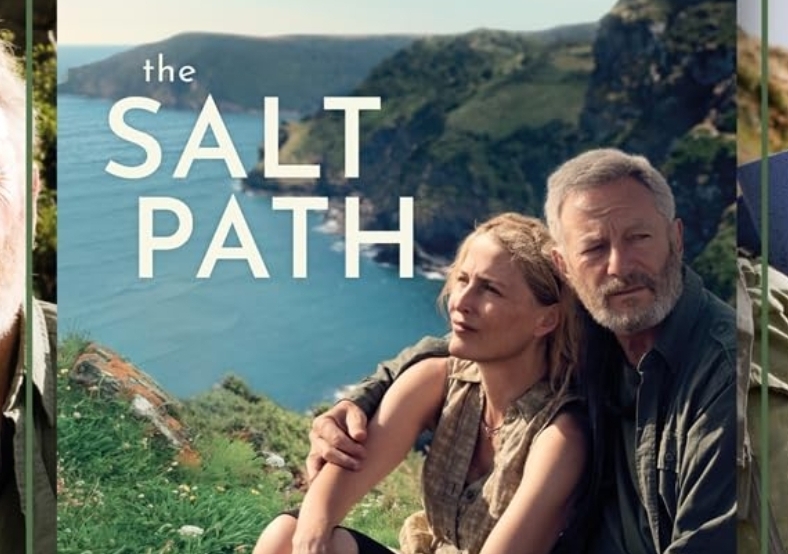
My 16-year-old asked me about The Salt Path on a Tuesday evening. She had seen the trailer, recognized the source material from her English class, and wanted to know if she could watch it that weekend. I told her I would get back to her. What followed was one of the more quietly affecting screening experiences I have had this year, and this is coming from someone who reviews films professionally and thought he had developed a reasonably thick skin about grief on screen.
This Salt Path parents guide is what I told her, and what I am now sharing with every parent who has landed here with the same question.
Is The Salt Path Safe for Kids? Direct Answer
With Caution. The Salt Path is an emotionally raw drama dealing with homelessness, terminal illness, grief, and financial collapse. There is nothing gratuitous here, but the emotional weight is genuinely heavy. Best suited for teens aged 14 and above, ideally watched with a parent nearby for younger viewers in that range.
Quick-Scan Safety Card
Not Yet Rated (NYR) — US theatrical release May 2026; expect PG-13 or R based on content
14 and above
Low — no action violence; some physical hardship and depictions of bodily deterioration tied to illness
Mild to moderate — occasional strong language in moments of distress; nothing gratuitous
Very High — themes of terminal illness, homelessness, and grief are sustained throughout
Minimal — brief, non-graphic moments of adult intimacy between a married couple
Minor — social drinking only; not a content concern
The sustained, unflinching portrayal of a couple losing everything — home, financial security, and health — with no tidy resolution offered
| Category | Detail |
|---|---|
| Official Rating | Not Yet Rated (NYR) — US theatrical release May 2026; expect PG-13 or R based on content |
| Expert Recommended Age | 14 and above |
| Violence | Low — no action violence; some physical hardship and depictions of bodily deterioration tied to illness |
| Language | Mild to moderate — occasional strong language in moments of distress; nothing gratuitous |
| Emotional Intensity | Very High — themes of terminal illness, homelessness, and grief are sustained throughout |
| Sexual Content | Minimal — brief, non-graphic moments of adult intimacy between a married couple |
| Substance Use | Minor — social drinking only; not a content concern |
| What Will Surprise Parents Most | The sustained, unflinching portrayal of a couple losing everything — home, financial security, and health — with no tidy resolution offered |
What Is The Salt Path About?
Based on Raynor Winn’s bestselling memoir, the film follows a couple in their fifties who, within a single devastating period, lose their home to financial ruin and receive a terminal diagnosis for one partner. Faced with nothing, they do the only thing left available to them: they walk. Specifically, they walk the South West Coast Path in England — over 600 miles.
That sounds almost peaceful written out like that. It is not. The emotional landscape here involves financial collapse, homelessness, chronic illness, physical exhaustion, and the particular grief of watching someone you love deteriorate in real time. There are also moments of unexpected warmth and human connection. But parents searching for The Salt Path trigger warnings should know the difficult material is not brief or peripheral. It is the whole film.
Why Is The Salt Path Not Yet Rated?
As of the time this guide was published, the MPAA has not issued a formal rating for the film’s US release. Based on the source material and what the film depicts, I would expect a PG-13 rating, though a soft R is possible depending on how the illness progression is handled on screen.
Here is the thing, though. Whatever rating it receives will almost certainly undersell the emotional intensity for younger viewers. PG-13 often reads to parents as “moderate caution.” For this film, that framing would be genuinely misleading. The content is not violent or sexually explicit in ways the rating system flags easily. But the emotional exposure — watching a couple face homelessness and death with no guaranteed safety net — hits hard in ways that a letter rating does not capture.
I want to be careful how I say this: the film is not inappropriate. It is honest. There is a difference. But honest portrayals of adult suffering carry their own weight, and that weight matters for younger viewers.
Content Breakdown
Illness and Physical Deterioration
This is the content area I found most affecting, and the one I think parents most need to know about. The terminal diagnosis at the centre of the story is not background detail. It is something the film returns to repeatedly, showing physical decline in an unflinching but non-exploitative way.
For children who have a family member with a serious illness, this could be genuinely difficult to sit with. I say that not to alarm you, but because this is exactly the kind of thing that catches families off guard when they have not been briefed.
If your household is currently navigating illness or bereavement, screen this before sharing it with younger teens. The film handles the subject with dignity, but the emotional proximity may be too much for some children to process without preparation.
Homelessness and Financial Crisis
The couple in this story lose their home not through negligence but through a legal betrayal involving a business partner. What the film portrays is sudden, catastrophic financial collapse. They sleep rough. They count coins for food. The precariousness is shown without drama or score manipulation, which actually makes it more disturbing, not less.
Older teenagers may find this more rattling than younger children, ironically, because teens are beginning to understand that financial security is not guaranteed. My 16-year-old was unusually quiet after this section of the film. That said, the story never feels hopeless, even when it feels bleak.
The depiction of homelessness here is honest and humanizing. For families who have experienced financial hardship, some scenes may resurface difficult memories. Worth knowing before you sit down together.
Grief, Loss, and Emotional Complexity
The Salt Path does not offer easy comfort. Grief is present throughout, not as a plot device but as a constant companion to the characters. There is mourning for the life they had, for the future they planned, and for what they may be losing in the present. Some of the most affecting moments are the quietest ones.
For emotionally sensitive children, this sustained emotional register is worth flagging. It is not that the film is without warmth. Genuinely, there are scenes that are almost tender. But the warmth does not cancel out the difficulty.
If your child has experienced bereavement, the film’s treatment of grief may prompt unexpected emotional responses. That is not necessarily a reason to avoid it — some children find this kind of honest storytelling validating. Gauge your child specifically, not the age group generally.
Language and Sexual Content
Language is occasional and contextual. You will hear some strong words in moments of distress or frustration, but this is not a film with wall-to-wall profanity. Sexual content is minimal. There are brief, tender moments of physical closeness between the couple that feel age-appropriate even for those in the PG-13 range.
Neither of these categories is the reason you are reading this guide. The emotional content is.
The Salt Path Age-by-Age Viewing Guide
Not Appropriate
There is nothing here for very young children. The emotional register, the pacing, and the thematic weight are entirely adult. A five-year-old will be confused at best and quietly disturbed at worst.
Not Appropriate
Children in this age group are still building their frameworks for understanding illness and death. Watching a character face a terminal diagnosis while simultaneously losing their home is too much sustained difficulty for this developmental stage. Even emotionally mature kids in this range should wait a few years.
Not Appropriate
I know some families will push back on this, and I understand why. The film is not gratuitously graphic. But early adolescence is a stage where children are already grappling with identity, security, and the new awareness that bad things happen to good people. Adding a film that confirms all of that without resolution, for viewers who may not have emotional scaffolding yet, gives me pause. At 12 or 13, I would say no for most kids and revisit at 14.
With Caution
This is the range where the film starts to become genuinely appropriate, but the word “caution” is doing real work here. Fourteen-year-olds who are emotionally grounded and have good support around them can handle this material. Sixteen-year-olds will likely find it impactful and discussion-worthy. Watch with them the first time. Don’t just hand them a streaming link.
Appropriate
Older teens and adults will likely respond to this film as the serious, humane drama it is. My eldest watched it independently and came to me afterward wanting to talk. That is exactly the response a film like this should produce. Strong recommendation for this age group, with the note that it is emotionally challenging rather than entertaining in the conventional sense.
Positive Messages and What Families Can Take From It
And look — I know some reviewers in my position default to manufacturing positives here. I am not going to do that. The Salt Path is not a feel-good film, and selling it as one would be a disservice to the parents reading this.
What it does offer is something rarer: an honest portrait of resilience that does not clean itself up for the audience. The couple at the centre of this story do not give up. They do not find easy answers. They keep walking. That is genuinely meaningful, even if it is not comforting in a tidy way.
For older teens, there are real conversations to be had about what it means to keep going when everything falls apart, about the dignity of people experiencing homelessness, and about how we face mortality in relationships we love. Those conversations are worth having. The film earns them.
Five Family Discussion Questions
- When the couple makes the decision to start walking instead of asking family or friends for help, what do you think drove that choice — and do you think you would make the same decision?
- There is a moment where a stranger offers the couple unexpected kindness. How did that scene change the way you were feeling about the film up to that point?
- The film shows homelessness through the eyes of people who never expected to experience it. Did that change how you think about people you might see sleeping rough in your own neighbourhood?
- If you were told you had a terminal illness, what would you want the people closest to you to know or do differently? How does the way the couple treat each other in this film affect your answer?
- By the end of the film, does it feel like the characters have found peace, or just endurance? Is there a difference? Which matters more to you?
Frequently Asked Questions
It is not scary in a horror sense, but the emotional content — serious illness, losing a home, financial ruin — is heavy and sustained. Children under 11 are not ready for this kind of prolonged adult distress on screen. The difficulty here is emotional, not frightening, but that does not make it suitable for younger viewers.
Based on available information, no post-credits scene is expected. The film is a serious literary drama adapted from a memoir and does not follow the conventions of franchise or genre films that typically include them. You are safe to leave when the credits roll.
No strobing or intense flashing sequences are expected in this film. It is a naturalistic outdoor drama in tone and visual style. Parents of children with photosensitive epilepsy should not have specific concerns related to this title, though confirming with your cinema before attending is always wise.
The Salt Path is scheduled for US theatrical release on May 22, 2026. Streaming availability has not been confirmed at time of publication. Check platforms like Amazon Prime Video, Apple TV+, or Netflix in the months following theatrical release, as distribution deals for films like this are often announced after the theatrical window closes.
Yes. It is adapted from Raynor Winn’s 2018 memoir of the same name. The events depicted — losing their home, the terminal diagnosis, walking the South West Coast Path — are drawn from real life. That real-world basis is part of what gives the film its emotional weight, and worth explaining to teens before they watch.
From what is known about the source material and the film’s approach, the illness is handled with restraint rather than clinical detail. Physical deterioration is present and honest, but this is not a medical drama focused on procedures or graphic decline. The difficulty is emotional rather than visual. Sensitive teens should be prepared, not shielded.
This requires careful individual judgment. The film deals with grief and anticipatory loss throughout. For some bereaved children, honest storytelling like this can feel validating and less isolating. For others, it may reopen wounds before they are ready. Screen it yourself first, and let your child’s current emotional state guide the decision.

Matthew Creith is a movie and TV critic based in Denver, Colorado. He’s a member of the Critics Choice Association and GALECA: The Society of LGBTQ Entertainment Critics. He can be found on Twitter: @matthew_creith or Instagram: matineewithmatt. He graduated with a BA in Media, Theory and Criticism from California State University, Northridge. Since then, he’s covered a wide range of movies and TV shows, as well as film festivals like SXSW and TIFF.