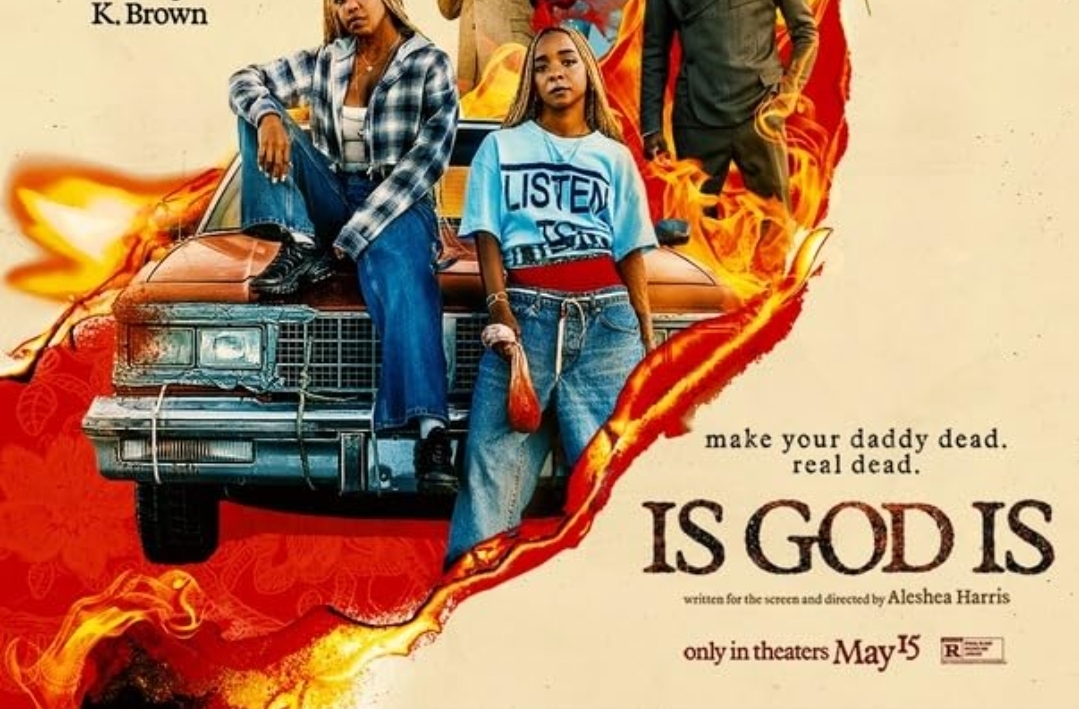
Is Is God Is appropriate for teenagers? That is the question I have been getting most since this film landed, and the honest answer is more specific than “probably not for younger kids” — the content here is genuinely adult in ways that deserve a careful look before you decide. Here is everything behind that answer.
With Caution — 17+ only. Is God Is is a raw, unsparing drama-thriller rooted in themes of trauma, vengeance, and fractured family bonds. The material is intense, the emotional violence is arguably harder than the physical, and it is not suitable for viewers under 17 without a thoughtful adult present and a real conversation ready to follow.
Quick-Scan Safety Card
Not Yet Rated — based on the source play and likely content, expect an R-equivalent classification
17 and above
High — includes threats, confrontation, and likely scenes of physical harm rooted in a revenge narrative
Strong — consistent use of profanity expected throughout, consistent with the stage production’s tone
Very High — child abuse, parental abandonment, and burn injury depicted or heavily referenced
Vengeance, family violence, identity, survival — not abstract, but visceral
The emotional intensity, not the physical content, is what lingers. The mother-daughter dynamic is genuinely harrowing.
| Category | Detail |
|---|---|
| Official Rating | Not Yet Rated — based on the source play and likely content, expect an R-equivalent classification |
| Expert Recommended Age | 17 and above |
| Violence | High — includes threats, confrontation, and likely scenes of physical harm rooted in a revenge narrative |
| Language | Strong — consistent use of profanity expected throughout, consistent with the stage production’s tone |
| Trauma Content | Very High — child abuse, parental abandonment, and burn injury depicted or heavily referenced |
| Themes | Vengeance, family violence, identity, survival — not abstract, but visceral |
| What Will Surprise Parents Most | The emotional intensity, not the physical content, is what lingers. The mother-daughter dynamic is genuinely harrowing. |
What Is Is God Is About — No Spoilers
Is God Is is adapted from Aleshea Harris’s acclaimed stage play. Two sisters are summoned by the mother who abandoned them — a woman carrying severe burn injuries — and sent on a mission rooted in rage and retribution.
Emotionally, this film operates in a register of grief, betrayal, and desperate need for meaning. The daughters are searching for something that looks like justice but feels far more complicated once the story is moving.
If you are thinking about watching with a teenager, know that the core wound here is parental — a mother who caused harm and then disappeared. That hits differently depending on your child’s own experience. The film does not soften that wound. It presses on it.
Why Is It Rated Not Yet Rated?
As of its May 2026 theatrical release, the film had not yet received an official MPAA rating. That happens with adult-oriented independent films, particularly those adapted from stage material. It does not mean the content is mild — it frequently means the opposite.
Based on Aleshea Harris’s original play, the source material earned its reputation for unflinching depictions of trauma, cyclical family violence, and a revenge framework that is morally complex rather than cathartic. I would expect an R rating when the classification comes through, and I would not be surprised if it came with specific advisories for violence and disturbing thematic content.
If anything, the “Not Yet Rated” status is a reason for parents to look more closely, not less. The absence of a rating is not a green light.
“Not Yet Rated” on a drama-thriller adapted from a challenging stage play almost always signals adult content. Treat it as R-equivalent until official guidance confirms otherwise, and apply the same viewing boundaries you would to any R-rated film.
Content Breakdown
Violence and Physical Threat
The violence in Is God Is is purposeful rather than gratuitous, but purposeful does not mean light. The revenge framework at the center of this story means confrontations carry real weight. Scenes involving physical threat between family members are among the most uncomfortable — not because of gore, but because of the intimacy of the conflict.
I have seen similar material play out with teenage audiences, and what tends to stay with them is not the action but the emotional permission structures around it. The film raises genuine questions about whether revenge is ever actually satisfying. It does not hand you an easy answer.
If your teenager has been exposed to domestic violence or family conflict in their own life, the confrontational scenes here could land harder than expected. This is worth considering before you watch together.
Trauma, Abuse, and Parental Abandonment
This is where the film is most demanding. The backstory involves a mother who not only abandoned her children but caused direct harm. The burn injuries carried by the mother figure are both literal and symbolic — the film is not shy about using physical damage as a mirror for emotional devastation.
Parental abandonment is handled with real specificity here, not as a vague background detail but as an active wound the characters are living inside. For any young viewer who has experienced something similar, that specificity matters. My own kids are not at an age where I would screen this for them, and that calculus is deliberate.
The depiction of a mother as the source of harm rather than safety is handled without redemptive framing. Viewers who have complicated relationships with their own parents may find this activating. Have that conversation before, not just after.
Language
Based on the stage production’s reputation and the tone of the film, strong language runs throughout. This is not the kind of film where profanity is occasional punctuation — it is woven into the characters’ anger and desperation in a way that feels authentic to the story.
For parents who are particularly sensitive to language, consider this a consistent presence rather than an occasional spike. It is unlikely to be the most challenging element of the film, but it is worth naming clearly.
Identity, Race, and Systemic Inequality
The play from which this film is adapted has a strong critical lens on race, Black womanhood, and what survival looks like when systems have already failed you. The film is likely to carry that lens forward. This is one area where older teenagers could actually find genuine substance worth discussing.
It is challenging material but not without value. The question is whether a given viewer has enough emotional grounding to engage with it critically rather than being overwhelmed by it.
For mature 16 or 17-year-olds with an interest in social justice or theater, the thematic content here could spark meaningful conversation. But that conversation needs an adult present who is willing to engage, not just observe.
Age-by-Age Viewing Guide
Not Appropriate
There is nothing here for young children. The themes, the tone, and the emotional register of this film are entirely adult. This is not a close call.
Not Appropriate
A story centered on parental abandonment, burn injuries, and a revenge mission is genuinely harmful viewing for this age group. No caveats here. Not appropriate at all.
Not Appropriate
Even curious, mature preteens should wait on this one. The emotional weight of the parental harm narrative is genuinely heavy, and the revenge framework does not resolve in a way that offers comfort or clarity. Middle schoolers are not equipped to process this without significant adult scaffolding that would be very hard to provide in real time.
With Caution
Honestly this one depends so much on your specific teenager. A 16-year-old who reads widely, engages with difficult material, and has a stable enough home life to hold the themes at arm’s length could potentially benefit from watching this with a trusted adult. A 14-year-old who is already navigating family instability or trauma? This is not the right film right now. Know your child before you make this call.
Appropriate
At 17 and above, the film becomes genuinely worthwhile for the right viewer. The questions it raises about justice, survival, identity, and what we owe the people who were supposed to protect us are exactly the kind of questions that deserve space in late adolescence. Still worth watching together if you can, and still worth a real conversation after.
Positive Messages and Educational Value
I want to be straight with you here: this film is not designed to leave you feeling uplifted. It is designed to make you feel the weight of what it depicts. That is a legitimate artistic intention, but it does affect how I frame the value for families.
What the film does offer, particularly for older teenagers and adults, is an unflinching look at how harm passes between generations. The sisters at the center are not passive victims — they are active agents trying to make meaning from damage. That matters.
The racial and gender dimensions of the story, drawn directly from Aleshea Harris’s original work, give viewers a specific framework for thinking about who gets to seek justice and on what terms. For students studying theater, Black American literature, or contemporary drama, this is genuinely rich source material. The educational value is real, but it requires a willing and equipped viewer to access it.
Five Family Discussion Questions
- The sisters are sent on a mission by a mother who harmed them. Do you think they were making a free choice, or were they still being controlled by her even at that moment?
- The film uses physical injury as a way of showing emotional damage. Did that feel honest to you, or did it feel like too much? Why?
- By the end, do you think the sisters found what they were actually looking for? What do you think they needed that the revenge mission could never give them?
- The title asks a question that the film never fully answers. After watching, what do you think the film is suggesting about whether there is any justice or order in the world?
- How did the film make you think about the difference between what a parent owes a child and what a child owes a parent, if anything?
Frequently Asked Questions
Yes, I would say so. The disturbing content here is not jump-scare scary — it is emotionally and thematically heavy in ways that 13-year-olds are not yet equipped to process. The parental harm narrative and revenge framework in particular are genuinely adult territory. Wait until 17 at the earliest.
Based on available information, there is no confirmed post-credits scene. Given the film’s theatrical drama origins and tone, a post-credits sequence would be unusual. That said, check back closer to your viewing date as final cut details may not be fully confirmed yet.
No strobe effects have been flagged in connection with this film based on what is currently known. It is a drama-thriller rather than an action-heavy production. If you or your child has photosensitivity concerns, I would recommend checking the official cinema listings closer to your viewing date for any formal advisories.
Is God Is releases theatrically on May 15, 2026. Streaming availability has not been confirmed at the time of writing. When it does reach a streaming platform, expect age-restriction settings consistent with an R-rated or adult drama title. Most platforms will require account-level parental controls to restrict access.
It is adapted from Aleshea Harris’s award-winning stage play of the same name. The story is not based on real events — it is an original work of dramatic fiction. The play earned significant critical attention for its bold theatrical style and unflinching subject matter before this film adaptation was made.
The primary trigger warnings are: parental abuse and abandonment, burn injuries depicted or referenced, themes of cyclical family violence, a revenge narrative with morally complex outcomes, and strong language throughout. Anyone with personal experience of childhood trauma or abusive family dynamics should approach this film carefully and with support available.
Sexual content is not understood to be a primary concern in this film based on the source material and available information. The challenging content centers on violence, trauma, and family harm rather than explicit sexual scenes. As always with a Not Yet Rated title, I would recommend confirming this once an official classification is issued.
For more context on how we rate films for families, the Common Sense Media database and the MPAA’s official ratings page are both reliable starting points for cross-referencing content concerns.
If you found this guide useful, you might also want to read our parents guide to Sinners (2025), which covers similar territory around adult dramatic content and age-appropriate viewing decisions. Our guide to Thunderbolts is also worth a look if you are navigating what older teens can handle across different genres.

Stephanie Heitman is a seasoned journalist and author dedicated to helping parents navigate the world of Hollywood entertainment through thoughtful, family-oriented film reviews. With over a decade of experience in writing and a passion for fostering safe, enriching viewing experiences, Stephanie launched Parentguiding.com to provide parents with the insights they need to make informed choices for their families.