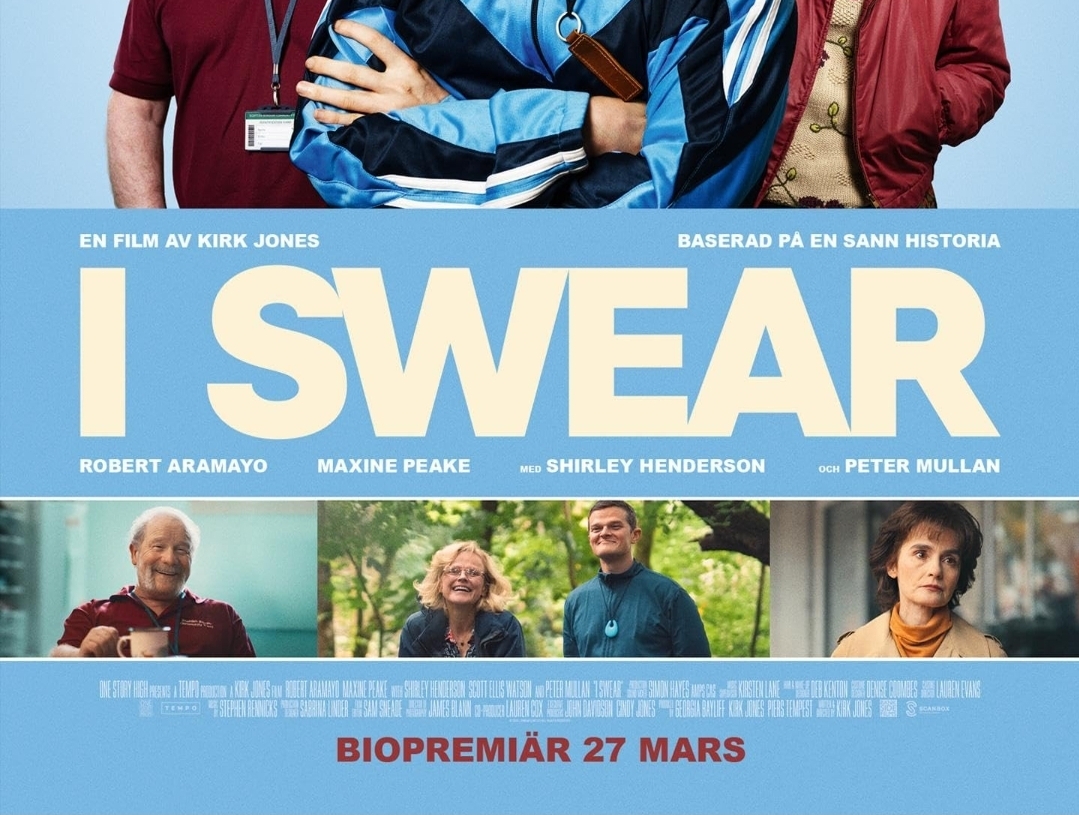
There is a moment roughly two-thirds into I Swear where the film stops being about what you thought it was about. A confrontation that begins quietly — two teenagers, a hallway, a phone screen — escalates into something that made me genuinely still. I had been taking notes the whole time. I stopped. When I started writing again, my note just said: parents need to be in the room for this conversation. That moment is where this I Swear parents guide begins, because everything that comes before it is buildup, and everything after it is consequence.
Direct Answer: Is I Swear Safe for Kids?
With Caution — for ages 16 and above. I Swear handles cyberbullying, social humiliation, and teen psychological cruelty with a level of emotional realism that is genuinely hard to watch. The content is not gratuitous, but it is relentless. Younger teens and children should not watch this unsupervised, and many should not watch it at all.
Quick-Scan Safety Card
Rated 15 (UK) — for strong language, bullying themes, and scenes of psychological distress
16+ — the 15 certificate feels slightly low given the sustained emotional intensity
Low physical violence — but one scene of sudden physical aggression that is jarring precisely because it comes out of nowhere
Strong — repeated use of the f-word, gendered slurs, and social-media-style targeted insults
Sustained and graphic — private images shared without consent, coordinated humiliation campaigns, screenshots used as weapons
Anxiety, social isolation, and one character who expresses suicidal ideation — handled carefully but directly
How recognisable the cruelty is — nothing in this film feels invented, which is exactly what makes it hard to shake
| Category | Detail |
|---|---|
| Official Rating | Rated 15 (UK) — for strong language, bullying themes, and scenes of psychological distress |
| Expert Recommended Age | 16+ — the 15 certificate feels slightly low given the sustained emotional intensity |
| Violence Level | Low physical violence — but one scene of sudden physical aggression that is jarring precisely because it comes out of nowhere |
| Language Level | Strong — repeated use of the f-word, gendered slurs, and social-media-style targeted insults |
| Cyberbullying Content | Sustained and graphic — private images shared without consent, coordinated humiliation campaigns, screenshots used as weapons |
| Mental Health Themes | Anxiety, social isolation, and one character who expresses suicidal ideation — handled carefully but directly |
| What Parents Will Be Most Surprised By | How recognisable the cruelty is — nothing in this film feels invented, which is exactly what makes it hard to shake |
What Is I Swear About?
I Swear follows a group of high school students in the aftermath of a social catastrophe — the kind that starts on a phone screen and spreads through a school like fire. Without giving away the specifics, it centres on a girl whose private life becomes public currency. The film tracks how that exposure reshapes every relationship around her.
Emotionally, it sits somewhere between dread and grief. You are watching someone lose control of her own story in real time. There is friendship here, and loyalty, but both are tested in ways that feel very current and very real.
Specific emotional triggers include public humiliation, betrayal by trusted peers, parental dismissal of a child’s pain, and one extended sequence that deals with suicidal thinking. This is not a light drama. It earned the I Swear age rating it carries.
Why Is I Swear Rated 15?
The official 15 certificate reflects strong language, a depiction of image-based abuse, and mental health themes including suicidal ideation. Those reasons are accurate. What the certificate does not quite capture is the emotional weight — this film is rated 15 the way a pressure cooker is rated for a certain temperature. Technically correct. Doesn’t prepare you for what it feels like when it goes off.
Honestly, I would push the I Swear parental guidance recommendation to 16 and above. Not because the content is more graphic than the certificate suggests, but because the psychological complexity of what it is asking viewers to sit with is significant. A 15-year-old can technically handle this film. Whether they should process it alone is a different question entirely.
The BBFC got the content categories right. What they cannot account for is that this particular combination — cyberbullying, shame, isolation, and suicidal ideation — lands differently on a teenager who is currently living inside a social world just like the one depicted.
Content Breakdown
Cyberbullying and Image-Based Abuse
This is the core of the film, and the film does not look away. Private images are shared without consent. We see the phone screens. We see the message threads. We see reactions from bystanders who choose to forward rather than stop.
I found this section the most technically accomplished and the hardest to watch simultaneously. The filmmakers clearly did their research — nothing about the mechanics of the humiliation felt invented or dramatised for effect. That realism is exactly what makes it useful as a conversation starter and difficult as a viewing experience.
If your teenager uses Snapchat, Instagram, or any platform where images can be shared, this film will make for a very specific and very productive conversation afterward. Pause it at the message-thread scene and ask what they would do. You will learn something.
Psychological Cruelty Among Peers
The physical violence in I Swear is brief and startling. The psychological violence runs the entire length of the film. There are scenes of coordinated social exclusion — the kind where a whole friend group simply stops acknowledging someone exists — that I found more disturbing than anything overtly aggressive on screen.
My oldest is 14. I kept thinking about what it would feel like to watch these scenes at her age, inside a school social world where this kind of thing happens all the time. It made me want to go home and check in with her.
The “silent treatment” sequences in particular may resonate deeply with any teenager who has experienced social exclusion. Be ready for this to surface some genuine feelings, not just reactions to the film.
Mental Health and Suicidal Ideation
There is one scene, in the final third, where the central character states clearly that she has been thinking about not being here anymore. It is not played for dramatic effect. It is quiet, almost matter-of-fact, and that restraint makes it land harder than a breakdown would have.
The film handles it with care. There is no depiction of self-harm. There is a response from another character that models what a supportive friend actually sounds like. But the content is real and direct, and parents should know it is coming.
If your child or teenager has any history with suicidal thinking or self-harm, preview this film alone first. The scene is handled responsibly, but responsible does not mean painless. Resources like Samaritans and YoungMinds are worth having to hand before watching.
Language and Social Media Content
The language is strong and consistent throughout. More notable than the individual words, though, is the way social-media language is used as a weapon — coded insults, dog-whistle terms, the particular cruelty of a comment that gives the writer plausible deniability while the target knows exactly what it means.
For parents wondering about the I Swear content warning in this area: yes, there are slurs. They are not used casually. They are used by characters who mean them, in contexts where they cause visible harm. The film is not endorsing them — but it is not softening them either.
Some of the coded language in the comment sections depicted on screen may not register as offensive to adults but will be immediately recognisable to teenagers. Worth asking your teen what they notice.
Age-by-Age Viewing Guide
Not Appropriate
There is nothing in I Swear that is suitable for young children. The themes, the language, the emotional register — all of it is aimed at an older audience. There is no version of this film that makes sense for a child under five to watch, even in passing.
Not Appropriate
The content here is not just too mature in terms of rating — it is actively the wrong emotional material for this age group. Children in this range are building their understanding of friendship, trust, and social belonging. Showing them this portrait of those things corrupted will not educate. It will just unsettle.
Not Appropriate
I feel fairly firm on this one. The cyberbullying content and the suicidal ideation scene are handled well — but handling something well does not make it right for every age. Children in early adolescence, particularly those already navigating complex social dynamics at school, do not need this added weight. Save it for later.
With Caution
This is where it gets genuinely nuanced. A confident, socially secure 16-year-old who has strong communication with a parent could watch this and have a productive, even important, conversation afterward. A 14-year-old going through social difficulties at school? I would hold off. Know your child before you press play. The film is suitable for older children in this bracket under the right conditions — not as general viewing.
Appropriate
At 17 and above, I Swear becomes genuinely valuable. The emotional literacy required to process it is more reliably present at this age. Older teenagers may recognise scenarios from their own lives and find the film gives language to experiences they have not been able to articulate. Worth watching. Worth talking about after.
Positive Messages and Educational Value
I will be honest: I Swear is not a feel-good film, and it does not deliver easy answers. The positive messages are embedded in the consequences rather than spelled out. Loyalty matters. Silence in the face of cruelty is a choice. Asking for help is not weakness.
The educational value is real, but it comes through friction, not resolution. If you are looking for a film that models healthy behavior and ends with a tidy lesson, this is not it. If you want a film that generates genuine conversation about digital ethics, consent, and what it means to be a good friend under pressure — this delivers that in spades.
For teens who are studying media literacy or PSHE-adjacent topics, the depiction of how misinformation and private content spreads through a school community is almost a case study. The Internet Matters organisation has published excellent guides on exactly this topic that pair well with a post-film discussion.
You might also find it useful to read through our guide on talking to teens about social media and our breakdown of films that tackle cyberbullying themes, both of which cover ground that connects directly to what I Swear raises.
Five Family Discussion Questions
- When the friend group goes quiet and stops responding to her messages, nobody does anything overtly cruel — they just disappear. Do you think that kind of silence counts as bullying? Why or why not?
- There is a character who clearly knows the image should not have been shared but forwards it anyway because they are afraid of what happens if they do not. What would you have done in that moment, and what do you think stops people from doing the right thing?
- The scene where she tells her mum what is happening and her mum minimises it — “kids are just like that” — is one of the hardest to watch. What would have been the right response? And what would make it easier for you to come to us if something like this happened to you?
- By the end of the film, the person who started the sharing chain has not faced any formal consequences. Does the film think that is fair? Do you?
- When she says she has been thinking about not being here anymore, the friend who hears it does not panic or immediately call an adult — she just stays. What do you think about how that was handled, and what would you actually do if a friend said something like that to you?
Frequently Asked Questions
The official rating is 15, but my honest recommendation is 16 and above. The combination of cyberbullying, image-based abuse, and suicidal ideation is handled carefully, but it is emotionally demanding in ways that younger teens may not be ready to process without significant parental support.
It is not frightening in the conventional sense — there are no jump scares, no horror elements. But it is deeply unsettling in a way that is arguably harder to shake. The social cruelty depicted is realistic enough that younger teens, particularly those already navigating difficult peer dynamics, may find it genuinely distressing.
No. The film ends cleanly with no post-credits content. The final scene carries significant emotional weight and is followed by credits with no additional footage.
There are no significant strobe effects or rapid flashing sequences. Some social media notification animations appear briefly on screen. Nothing that would typically trigger concerns for photosensitive viewers, but check with the platform you are using for any specific warnings attached to the release.
The I Swear streaming availability depends on your region and platform. In the UK, its 15 certificate applies across streaming platforms, which should have age verification in place. Check your streaming service directly for current availability and make use of parental controls to restrict access below your recommended viewing age.
No. The film handles this with restraint. We see reactions, screens, and message chains, but the private images themselves are never shown. The focus is entirely on the impact of the sharing, not the content of what was shared. That is a deliberate and responsible directorial choice.
Yes, broadly. The scene follows many of the safe messaging guidelines recommended by mental health organisations — it does not depict method, it shows a peer responding with presence rather than panic, and it leads toward help-seeking behavior. That said, parents of children with mental health vulnerabilities should preview it first.

Stephanie Heitman is a seasoned journalist and author dedicated to helping parents navigate the world of Hollywood entertainment through thoughtful, family-oriented film reviews. With over a decade of experience in writing and a passion for fostering safe, enriching viewing experiences, Stephanie launched Parentguiding.com to provide parents with the insights they need to make informed choices for their families.