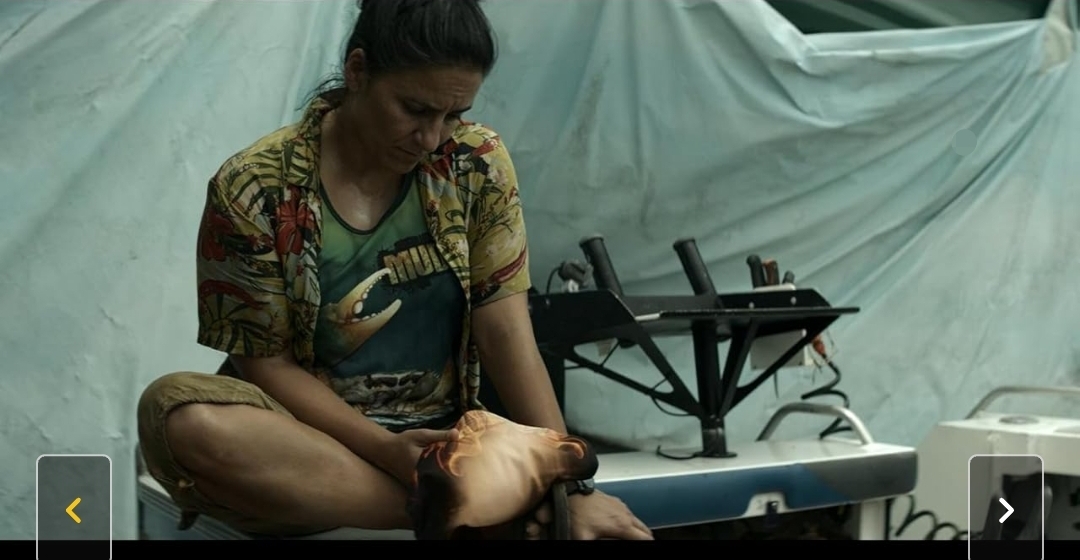
With caution — and here is exactly what I mean by that. Curlew’s Call parents guide starts here with a clear warning: this is a film that wraps genuinely dark crime content inside a comedic tone, and that combination is more disorienting for younger viewers than either genre would be on its own.
I screened it on a Tuesday evening with my notebook open, expecting a breezy whodunit. What I got was sharper, stranger, and at several points more unsettling than the marketing suggests. The laughs are real. But so is the darkness underneath them.
Before I break down every content category, let me be direct: this is not a film for children. It is probably fine for mature 14-year-olds and above, but I would want parents to go in knowing exactly what they are agreeing to.
With caution for ages 14 and under. Curlew’s Call blends crime investigation and dark comedy in ways that can normalize violence and disturbing scenarios through humor. Mature teens can handle it, but the tonal whiplash between laughs and genuine menace makes it a poor choice for younger or more sensitive viewers.
Quick-Scan Safety Card
Not Yet Rated — formal classification pending at time of writing
14+ — younger teens and children not advised
Moderate to strong — crime scenes, implied harm, one graphic discovery
Moderate — scattered strong language, crude humor throughout
Murder, deception, corruption — presented with comedic framing that may confuse younger viewers
Tense investigation sequences, one genuinely frightening reveal scene
How quickly the tone shifts from funny to disturbing — sometimes mid-scene
| Category | Detail |
|---|---|
| Official Rating | Not Yet Rated — formal classification pending at time of writing |
| Expert Recommended Age | 14+ — younger teens and children not advised |
| Violence Level | Moderate to strong — crime scenes, implied harm, one graphic discovery |
| Language Level | Moderate — scattered strong language, crude humor throughout |
| Dark Themes | Murder, deception, corruption — presented with comedic framing that may confuse younger viewers |
| Scary Content | Tense investigation sequences, one genuinely frightening reveal scene |
| What Will Surprise Parents Most | How quickly the tone shifts from funny to disturbing — sometimes mid-scene |
What Is Curlew’s Call About — No Spoilers
Think of it as a small-town mystery wrapped in awkward comedy — the kind where the jokes come out of nowhere, and then something genuinely grim happens before you have finished laughing. It follows an unlikely investigator drawn into a local crime that turns out to be far more layered than it first appears.
Emotionally, it covers deception, betrayal, and the unsettling feeling that the people you trust might be hiding something. There are moments of sharp wit and moments of real dread, sometimes back to back.
If you have a sensitive child who picks up on tonal inconsistency — the kind of kid who gets more anxious when things feel wrong rather than explicitly scary — this film will bother them. I would describe it to another parent at pickup as a dark comedy that forgot to warn you how dark.
Why Is Curlew’s Call Not Yet Rated?
At the time I screened this, no official MPAA classification had been assigned. That happens more often than you might expect with 2026 releases still moving through the festival and distribution pipeline. It does not mean the content is mild — it means the paperwork has not caught up yet.
Based on what I watched, I would anticipate a PG-13 rating, and I would argue that rating would be slightly too lenient. The crime content — particularly a discovery scene in the second act — feels closer to R-rated territory in impact, even if the overall film does not sustain that level throughout.
The comedic framing may actually work against a stricter rating because humor softens the surface read. But softening something visually does not soften how it lands emotionally, especially for younger teenagers.
Content Breakdown
Violence and Crime Content
The violence is not gratuitous in a cinematic gore sense. But there is a scene — roughly 40 minutes in — where investigators discover evidence of a crime in enough visual detail that I put my pen down and just watched. It is not gory. It is deeply unsettling in a way that is harder to shake than outright gore.
There are also physical confrontations across two or three scenes that feel genuine rather than stylized. One involves a threat that is played partly for laughs, which actually made it harder to process, not easier.
The crime scenes here are designed to feel real, even within a comedic story. If your teenager is sensitive to true crime content or has anxiety around themes of danger and harm, be aware that these scenes do not soften the way the rest of the film does.
Language
Language sits at a solid moderate level. There are strong words scattered through the script — not relentlessly, but enough that you will notice. The crude humor lands more frequently than the outright profanity, and some of it is genuinely clever.
A few of the jokes rely on adult irony — the kind that a 12-year-old will laugh at without fully understanding what they are laughing at, which is its own category of parental concern depending on your household.
Language alone would not disqualify this for most families with teenagers. It is the combination of language with the darker thematic content that shifts the calculus.
Tone and Psychological Content
This is the category that most official ratings miss entirely, and it is the one I want to spend the most time on. Curlew’s Call uses comedy as a delivery mechanism for ideas and images that would feel much more confronting in a straight drama.
There is a specific sequence near the end of the second act where the film pivots from a scene of broad physical comedy directly into a revelation about a character’s intentions. It happened so fast that I genuinely sat up straighter. My professional read is that this tonal whiplash is intentional and well-crafted — but that does not make it easier for younger viewers to metabolize.
Deception is a running theme, and the film asks viewers to sit with characters whose morality is genuinely ambiguous. That is good storytelling. It is also something a child under 13 is not developmentally ready to parse without adult support.
If you do watch this with a teenager, the most useful thing you can do is talk about the morally grey characters afterward. The film does not tell you how to feel about them, which is part of its appeal — and part of why it needs a conversation rather than just a viewing.
Scary and Tense Sequences
There are three or four genuinely tense sequences where the comedic register drops and the film just becomes a crime thriller for a few minutes. The sound design in these moments is doing heavy lifting — low tones, long silences, then sudden movement.
One reveal near the final act is the kind of moment that would land hard in a horror film. Here it is resolved relatively quickly, but the image lingers. I thought about it when I went to bed that night, which tells you something.
Children who already have anxiety around crime, danger, or the idea that trusted adults can deceive them will find specific moments here triggering regardless of the comedic framing around them.
Age-by-Age Viewing Guide
Not Appropriate
There is nothing here for this age group. The pacing, the tone, the thematic content — none of it is oriented toward young children, and the scary sequences would genuinely distress them. This is not a close call.
Not Appropriate
Some of the comedy will land for this age group on a surface level, and that is precisely the problem. Children aged 6 to 10 are not equipped to hold the dual register of comedy and genuine threat that this film operates in. The crime content, the morally ambiguous characters, and the scary sequences all make this a firm no for this age range.
Not Appropriate
My honest recommendation is still no for this age bracket, even though I know some parents will push back on that. Early adolescents are developmentally in a place where moral ambiguity and dark-comedy framing can be genuinely confusing rather than enriching. The content is too heavy, and the laughs do not offset that weight for this age group.
With Caution
This is the range where it becomes genuinely situational. A confident, media-literate 15-year-old who enjoys dark comedies and crime content will likely engage with this film thoughtfully. A more sensitive 14-year-old — or one dealing with anxiety, trust issues, or family instability — may not be the right audience right now. Know your kid. Watch it with them if you are unsure.
Appropriate
For older teenagers and adults, Curlew’s Call is a well-constructed dark comedy with genuine craft behind it. The moral complexity, the tonal risks, the unsettling sequences — all of these become interesting rather than troubling when the viewer has the emotional and cognitive tools to engage with them. I actually enjoyed it, which I was not expecting to say.
Positive Messages and Educational Value
I will be honest with you: Curlew’s Call is not reaching for educational value. It is not that kind of film. It wants to entertain, unsettle, and make you laugh uncomfortably — and it achieves all three.
That said, there are genuine discussion opportunities buried in the story. The film asks real questions about who we trust and why, about how communities protect their own secrets, and about whether good intentions excuse questionable methods. Those are not nothing.
There is also something worth discussing in how the film uses humor to approach dark subjects. That is a legitimate media literacy conversation — why do we laugh at things that frighten us, and what does that laughter do for us? Older teenagers can have that conversation productively.
Five Family Discussion Questions
- When the lead character starts bending the rules of the investigation to get results, where did you feel like they crossed a line — and did the film seem to agree with you?
- There are moments when the film plays a genuinely disturbing situation for laughs. Did that make you more or less comfortable with what was happening on screen — and why do you think the filmmakers made that choice?
- Several characters in this film present themselves as trustworthy and turn out not to be. How did you know before the reveal? What were the signals you were picking up on?
- The community in the film closes ranks to protect a secret. Do you think loyalty to a community ever justifies that? Where does that loyalty become something more troubling?
- By the end, the mystery is solved — but not everything feels resolved. What do you think the film is saying about justice, and did you find that satisfying or frustrating?
Frequently Asked Questions
No, not for children in the traditional sense. The film blends crime and dark comedy in ways that require emotional maturity to process. I would not recommend it for anyone under 14, and even at 14 it depends on the individual child’s sensitivity and media experience.
Curlew’s Call is not yet officially rated at the time of writing. Based on its content — crime scenes, moderate-to-strong violence, dark themes, and language — I expect it will receive a PG-13. My own expert recommendation is 14 and above, with the caveat that sensitive teens should wait until 16.
Yes, in specific ways. The tonal shifts from comedy to genuine menace are the most likely trigger. There is one scene in the second act and a reveal near the final act that I found genuinely unsettling as an adult. Anxiety-prone viewers or those sensitive to themes of deception and danger should be aware of that.
I stayed through the credits. There is a brief post-credits moment that is tonally light — more of a comedic coda than a plot development. It does not add significant content concerns, but it is worth staying for if your teenager enjoyed the film.
There are no sustained strobe sequences that I identified during my screening. There are some rapid-cut editing sequences in the investigation montages, but nothing that rises to the level of a formal photosensitivity warning in my assessment. If your child has a diagnosed photosensitive condition, check closer to the film’s wide release for an official advisory.
Curlew’s Call is a 2026 release still moving through distribution at the time of writing. Streaming platform and any associated age-gating will be confirmed closer to or at release. Check the film’s official channels for updates on where and when it becomes available to stream.
This is exactly the question I kept coming back to. The honest answer is: sometimes yes, sometimes no, and that unpredictability is itself the concern. When the film plays danger for laughs it can normalize what is happening on screen in ways that a straightforwardly serious film would not. That warrants a conversation, not just a viewing.
Yes. Key trigger warnings include crime scene discovery, themes of betrayal and deception by trusted adults, morally ambiguous characters whose actions go partially unresolved, and tonal whiplash between humor and genuine threat. Parents of children with anxiety around trust or safety should take these seriously before deciding.

Stephanie Heitman is a seasoned journalist and author dedicated to helping parents navigate the world of Hollywood entertainment through thoughtful, family-oriented film reviews. With over a decade of experience in writing and a passion for fostering safe, enriching viewing experiences, Stephanie launched Parentguiding.com to provide parents with the insights they need to make informed choices for their families.