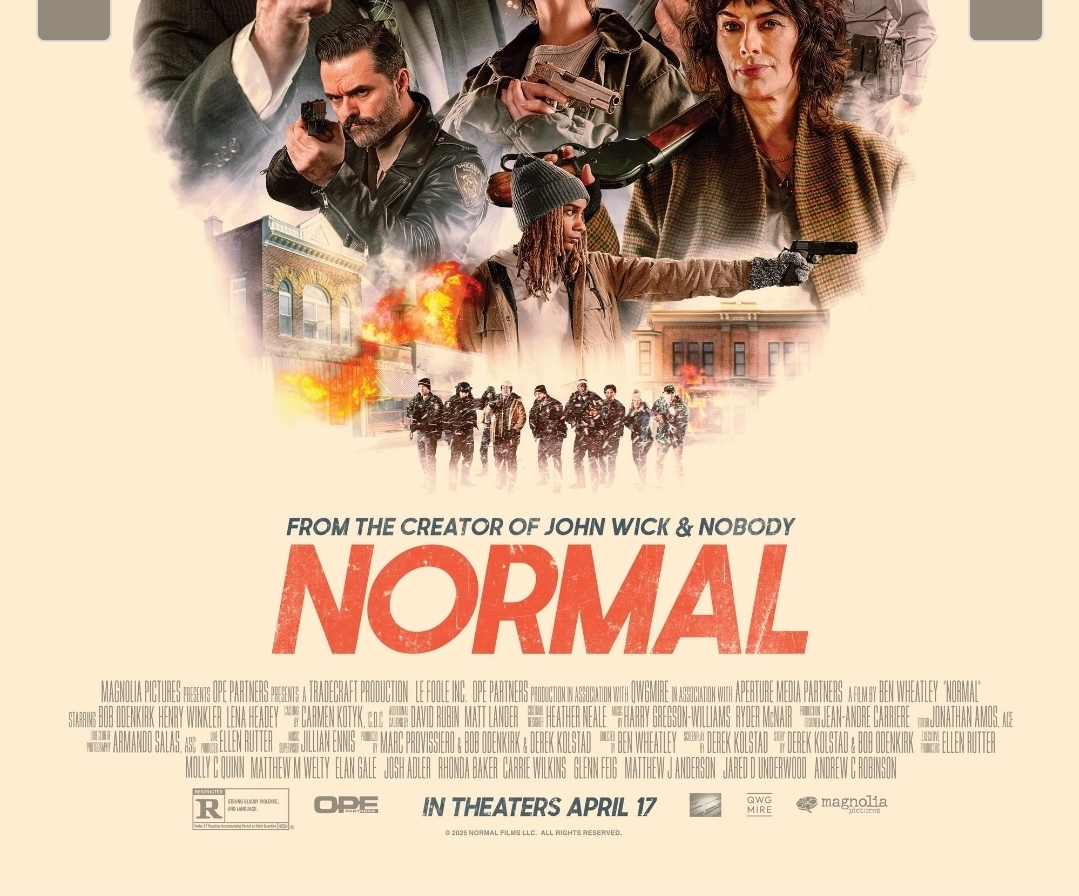
Is Normal appropriate for kids? That is the question I have been getting asked since this one landed, and my honest answer is no — not for most kids under 17, and the reasons go deeper than the R rating alone suggests. Here is everything behind that answer.
With Caution — 17+ only. Normal is a hard R for good reason. The violence is sustained and graphic, the crime content is unflinching, and there are tonal elements that will genuinely disturb younger or more sensitive viewers. This is not a film to bend the age guidance on.
Quick-Scan Safety Card
| Category | Detail |
|---|---|
| Official Rating | R — for strong violence, language, and disturbing content |
| Expert Recommended Age | 17 and above — no exceptions I would feel comfortable with |
| Violence Level | High — sustained gunfire, brutal physical confrontations, scenes of genuine menace |
| Language Level | Heavy — frequent f-words, uses of “s–t,” and some derogatory terms in criminal context |
| Drug and Criminal Content | Significant — crime organization activity, implied drug trade, morally complex characters |
| Thematic Weight | Heavy — loyalty, betrayal, and violence as consequence carry real emotional load |
| What Will Surprise Parents Most | The emotional coldness of certain scenes — it is not just violent, it is deliberately unfeeling in ways that linger |
What Is Normal About — No Spoilers
Imagine a thriller where the tension never really releases. Normal drops you into a world where the line between ordinary life and serious criminal danger is uncomfortably thin, and the characters navigating that line are not straightforwardly good or bad.
There is a persistent sense of dread running through this film. It is the kind of story where you keep waiting for something to go terribly wrong — and then it does. Emotional triggers include sudden loss, betrayal by trusted figures, and violence that arrives without warning.
What I kept thinking while watching was that it is less about action set pieces and more about pressure. The crime world here feels lived-in and credible. That realism is actually what makes it harder to watch, not easier.
Why Is Normal Rated R?
The R rating is for strong violence, pervasive language, and content that the MPAA correctly flagged as unsuitable for younger audiences. The violence alone is enough to justify it. Several sequences involve close-quarters combat and gunfire that is shot with real intent — this is not the sanitised action of a PG-13 thriller.
Honestly, I think the rating is accurate. If anything, I would push back slightly in the opposite direction — some parents of 17-year-olds may find the emotional manipulation of the violence more troubling than the rating suggests. The MPAA describes the violence accurately, but does not quite capture the mood of how it is deployed.
The language count is high. I stopped tracking f-words at around twelve in the first act. That is relevant for parents whose household rules around language are stricter than the average R.
Content Breakdown
Violence and Action
The violence in Normal is not decorative. There is a mid-film sequence involving a confrontation inside a confined space — I will not say more than that — where the camera does not look away. I found myself physically tense in a way I was not expecting from what I had read about the film beforehand.
There are also several moments of implied or off-screen violence that are arguably more disturbing than what is shown. The sound design does a lot of work here, and it is effective in a way that will stay with sensitive viewers.
The violence here is not the stylised kind that younger teens sometimes process as entertainment. It is grounded and consequential. That is a meaningful distinction if your teenager has anxiety or has been exposed to real-world trauma.
Language and Tone
The language is relentless in places. F-words are not used for emphasis — they are used as punctuation by several characters, which means the frequency is genuinely high. There is also criminal-context language that some families will find more objectionable than standard profanity.
The tone of the film matches the language — cold, direct, and occasionally contemptuous. Some scenes are written with a kind of moral emptiness that I found more unsettling than any individual word.
If your teenager is at a stage where they absorb and repeat the language patterns of media they consume, this is worth factoring in. The casual hardness of the dialogue is very easy to internalise.
Criminal Content and Moral Complexity
Normal does not glamorise crime in the flashy way some thrillers do. But it does something in some ways more complicated — it presents criminal characters with genuine depth and moments of sympathetic logic. The film asks you to understand, if not endorse, choices that are clearly destructive.
For mature viewers, this is the most interesting thing about it. For younger teens who are still forming their frameworks around right and wrong, I would approach with real caution.
The moral complexity here is the kind that needs an adult in the room — or at least a conversation afterward. It is not propaganda for crime, but it does ask harder questions than most films in this genre.
Emotional and Psychological Weight
There are at least two scenes involving loss — one sudden, one drawn out — that hit harder than the action sequences did for me. My eldest, who is 16, has a sensitivity to grief content that I have learned to factor in, and this film would have been genuinely difficult for her at 14 or 15.
The psychological pressure of several sequences lingers. I thought about one particular scene the following morning, which does not happen to me often. That is a sign of genuine craft, but also a sign of genuine weight.
If your child has experienced bereavement or has anxiety around sudden loss, the emotional content here warrants a proper heads-up before they watch — or a decision to wait.
Age-by-Age Viewing Guide
Completely unsuitable. There is nothing in Normal that belongs in front of a child under five. The violence, tone, and thematic darkness would be frightening and incomprehensible in equal measure.
Not appropriate at any point on this age range. The criminal world depicted, the sustained violence, and the emotional coldness of certain scenes are far beyond what this age group should be processing. Keep them well away from this one.
Still a clear no. I know 13-year-olds who consume a lot of action content and feel they can handle anything. That is not the issue here. The issue is the specific emotional manipulation of the violence and the moral ambiguity around criminal characters — that combination is genuinely not appropriate for early adolescence.
This is where parents will push back, and I understand why. There are mature 15 and 16-year-olds who could watch this and process it thoughtfully. But I would not make that call lightly. The language, the violence, and the grief content combine in ways that I think require real emotional maturity — and even then, a conversation afterward is not optional.
The official rating lines up with my recommendation here, with the caveat that sensitive 17-year-olds — particularly those with anxiety, grief history, or trauma backgrounds — may find specific scenes harder than the overall rating suggests. For most 17-plus viewers it is appropriate adult content.
Positive Messages and Educational Value
I am not going to manufacture positives here that the film does not earn. Normal is not designed to educate or uplift. But it does do something that better films in this genre do — it shows consequences.
The characters who make violent or criminal choices do not emerge unscathed. The cost of those choices is part of the fabric of the story. That is not a lesson delivered with a speech — it is baked into the plot.
For older teens watching with a parent, there are genuine discussion opportunities around loyalty, the cost of crossing moral lines, and what it means to operate in systems designed to harm people. None of that makes it a teaching film. But those conversations are available if you want them.
Five Family Discussion Questions
- At several points, characters make choices that keep them safe in the short term but cause serious harm later — why do you think people make those trades, and have you ever felt that pressure in a smaller way?
- The film presents certain criminal figures as understandable, even sympathetic at moments — did that make you more or less uncomfortable, and why do you think the filmmakers made that choice?
- There is a scene where a trusted relationship is completely broken — what do you think that character should have done differently, and is there a point at which loyalty becomes harmful?
- The title is Normal — what do you think that word means in the context of this story, and by the end did anything about these characters feel normal to you?
- The grief scenes in this film are handled very differently from how loss usually appears in action thrillers — what effect did that have on you, and did it change how you felt about any of the characters?
Frequently Asked Questions
No. Normal is rated R and contains sustained graphic violence, heavy language, criminal content, and emotionally disturbing scenes. It is not suitable for children or younger teenagers. My recommendation is 17 and above, and even then with awareness of the specific content involved.
Normal carries an R rating, which is accurate. The violence and language justify it clearly. My only addition is that the emotional weight of certain scenes — particularly around loss — is harder than a standard R suggests. The rating is right, but the reasoning behind it is slightly incomplete.
Very. The scariest element is not the action sequences but the sustained psychological dread and the emotional coldness of key scenes. Viewers with anxiety, grief sensitivity, or trauma history will find specific moments genuinely disturbing. This is not a film to underestimate on that front.
Based on my screening, there is no significant post-credits scene that would change the viewing experience or require families to stay seated. That said, streaming releases sometimes add or adjust content — worth checking when it hits your platform of choice.
There are some high-intensity action sequences with rapid cuts and muzzle-flash lighting. If your child has photosensitive epilepsy or migraine triggers related to flashing light, I would recommend checking advisory information on your streaming platform before watching and consulting with a medical professional if unsure.
Normal is available on major streaming platforms — check your current subscription services for availability as distribution varies by region. Any platform streaming an R-rated title will allow you to set content filters. I would strongly recommend activating parental controls for any household with children under 17.
Trigger warnings include: graphic and sustained violence, sudden depictions of loss and grief, criminal violence and implied drug activity, heavy profanity throughout, scenes of betrayal and psychological manipulation, and tonal content that some viewers will find emotionally cold and distressing. None of these are brief or incidental.
Honestly, this depends more on your specific child than I usually like to admit. The R rating exists for good reason here. A mature, emotionally grounded 16-year-old watching with a parent and space for conversation afterward is a different situation from a 15-year-old watching alone. I would not make the call casually.

Stephanie Heitman is a seasoned journalist and author dedicated to helping parents navigate the world of Hollywood entertainment through thoughtful, family-oriented film reviews. With over a decade of experience in writing and a passion for fostering safe, enriching viewing experiences, Stephanie launched Parentguiding.com to provide parents with the insights they need to make informed choices for their families.