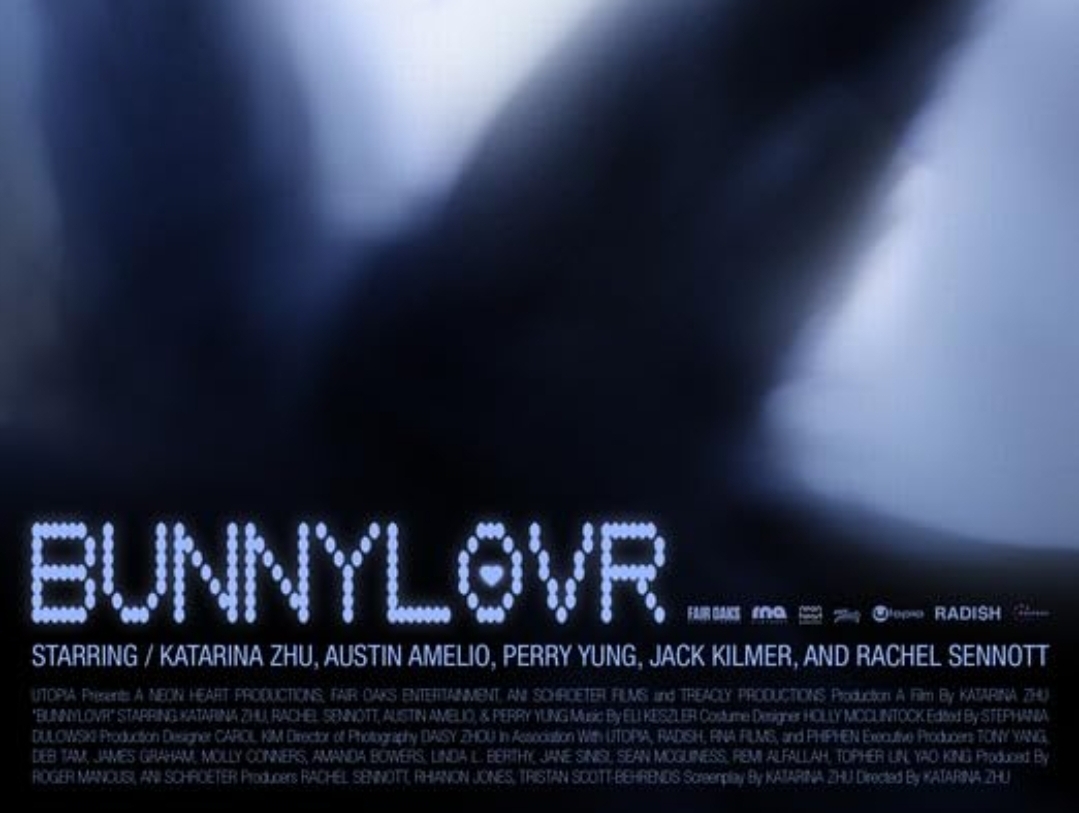
Bunnylovr (2025) Parents Guide — Bunnylovr Age Rating, Content Warnings & What Parents Need to Know
My 16-year-old asked me about Bunnylovr on a Tuesday evening. A friend had sent her a clip — nothing alarming on the surface, just two young women talking intensely — but something in my daughter’s voice when she described it told me she already sensed this one was heavier than it looked. I told her I’d screen it first. That’s what this guide is built on.
This is the Bunnylovr parents guide you’re looking for. I’ve laid out everything that actually matters for your household — content, emotional weight, age suitability, and the conversations worth having after.
With Caution. Bunnylovr is an emotionally raw drama about online intimacy, identity, and self-destruction that is genuinely not suitable for younger teens. The content is less about explicit material and more about psychological intensity that requires real emotional maturity to process. Best for ages 16 and above, ideally with a conversation ready.
Quick-Scan Safety Card
Not Yet Rated — no MPAA classification assigned at time of publication
16+ — emotional content requires significant maturity
Low-moderate — brief self-harm references; no graphic physical violence
Moderate — includes strong language used in emotional contexts; some sexual slang
Moderate — online sexual roleplay referenced and partially depicted; no nudity
Mild — alcohol present in social scenes; not glorified
High — isolation, dissociation, and emotional dependency are central themes
The psychological intensity — this film gets inside the mechanics of online emotional dependency in a way that feels uncomfortably real
| Category | Detail |
|---|---|
| Official Rating | Not Yet Rated — no MPAA classification assigned at time of publication |
| Expert Recommended Age | 16+ — emotional content requires significant maturity |
| Violence | Low-moderate — brief self-harm references; no graphic physical violence |
| Language | Moderate — includes strong language used in emotional contexts; some sexual slang |
| Sexual Content | Moderate — online sexual roleplay referenced and partially depicted; no nudity |
| Substance Use | Mild — alcohol present in social scenes; not glorified |
| Mental Health Content | High — isolation, dissociation, and emotional dependency are central themes |
| What Will Surprise Parents Most | The psychological intensity — this film gets inside the mechanics of online emotional dependency in a way that feels uncomfortably real |
What Is Bunnylovr About?
Bunnylovr follows a young woman whose closest emotional relationship exists almost entirely through a screen. The film examines what happens when the boundary between online persona and real self starts to dissolve — and how that fracture plays out in the physical world around her.
Parents searching for Bunnylovr trigger warnings should know this film engages directly with emotional isolation, compulsive digital behavior, identity confusion, and the particular loneliness that can grow even when someone appears constantly connected. There are threads involving self-worth, romantic fixation, and the way online dynamics can replicate — and sometimes replace — real intimacy.
It is quiet more than it is loud. The tension is internal. That is precisely what makes it heavy going for younger audiences who may not yet have the framework to process what they’re watching.
Why Is Bunnylovr Not Yet Rated?
As of this writing, Bunnylovr has not received a formal MPAA classification. Films often circulate in festival and early release windows before official rating decisions are finalized, and that appears to be the case here.
Here is my honest assessment: if and when a rating comes through, I would expect a strong PG-13 or a soft R. The sexual content stops short of explicit, the violence is minimal, but the psychological and emotional weight of this film — particularly around self-harm adjacency and sexual online dynamics — would push most classification boards toward the higher end.
The Bunnylovr age rating question is one I’d answer independently of whatever the MPAA eventually assigns. Official ratings measure content categories. They do not measure emotional impact. This film’s challenge for younger viewers is less what happens on screen and more what it quietly asks you to sit with.
Content Breakdown
Online Intimacy and Sexual Roleplay
This is the element parents will most want to understand before deciding on Bunnylovr parental guidance. The film depicts its central character engaged in online sexual roleplay — we see fragments of text exchanges and hear partial audio in a way that makes the content clear without being graphic.
What struck me professionally wasn’t the explicitness — it isn’t — but the film’s unflinching look at how these interactions function emotionally. There is a sequence where the protagonist performs a kind of scripted intimacy online while clearly feeling nothing. It is deliberately unsettling. That contrast is the film’s sharpest edge.
If your teenager is active in any online community where parasocial or romantic dynamics exist — streaming, fan communities, anonymous platforms — this film will feel uncomfortably specific to them. That may actually make it worth watching together, but go in prepared for a real conversation afterward.
Mental Health, Isolation, and Emotional Dependency
Bunnylovr is, at its core, a film about loneliness. Not the dramatic, movie-ready kind — the kind that hides behind a lit screen and a full notification tray. My 16-year-old watched a portion of this with me, and she went quiet in a way that told me it was landing somewhere real for her.
The protagonist’s emotional dependency on her online relationship is shown with real specificity. There are moments of dissociation — scenes where she seems physically present but entirely absent — that are handled with care but also with genuine psychological accuracy. As someone with a background in child development, I found that accuracy both admirable and a reason for caution with younger viewers.
Self-harm is referenced, not shown. But it is referenced in the context of emotional crisis, not as a passing detail. Parents of children with any history of mental health difficulties should know that before pressing play.
If your child has any personal history with self-harm, eating disorders, or serious depression, I would recommend watching this yourself first and making a considered call. The film handles the subject with more care than most, but care is not the same as safe for everyone.
Identity, Performance, and the Online Self
One of the threads I found most interesting — and most worth discussing with teenagers — is the film’s examination of performance. The protagonist maintains a persona online that feels increasingly disconnected from who she appears to be in her daily life. The film doesn’t explain this gap so much as sit inside it.
For teenagers who are themselves navigating the performance of identity on social media, this will resonate. Whether that resonance is productive or destabilizing depends a lot on the individual young person watching it. Honestly, this one depends so much on your specific child’s current emotional place.
The identity theme is actually the film’s most discussable element for older teens. Questions about who we are online versus offline, and whether those selves are equally real, are conversations teenagers are already having internally. This film gives them vocabulary for it.
Language
Language in Bunnylovr is moderate and contextual. Strong language appears — including some sexual slang that fits within the online communication the film depicts. It is not decorative or gratuitous. It sounds like how people actually speak in these spaces, which is its own kind of purposeful choice by the filmmakers.
Nothing here should be the deciding factor for most parents, but it is worth knowing if you have a younger teenager in the room.
Age-by-Age Viewing Guide
Not Appropriate
Not a close call. There is nothing in Bunnylovr designed for or remotely suitable for very young children. The emotional register alone would be confusing and distressing.
Not Appropriate
Absolutely not suitable. The themes of online intimacy, emotional dissociation, and identity fragmentation exist entirely outside the developmental frame of this age group. There is no version of this that makes sense for a primary-school-aged child.
Not Appropriate
I feel strongly about this age band. Kids aged 11 to 13 are actively forming their relationship with online spaces and social identity — that is precisely what makes this film risky rather than instructive for them. The content around sexual roleplay and self-harm, even handled with restraint, is not appropriate for this group. I would not show this to my 11-year-old under any circumstances.
With Caution
This is where it gets genuinely complicated. A mature 15 or 16-year-old who is emotionally grounded could take real things from this film, particularly the identity and online-self themes. But the same content that’s productive for one teenager could be triggering or normalizing for another. I screened this alongside my 16-year-old and we watched the whole thing together. I would not have sent her to watch it alone. That is my practical answer for this age group — together, with the conversation built in.
Appropriate
For 17-and-above viewers, Bunnylovr is genuinely worthwhile. My eldest has watched far heavier material and this is well within appropriate territory for that age. The film is asking real questions about digital life and emotional health that older teens and young adults are living through. It earns its difficulty.
Positive Messages and Educational Value
I want to be careful how I say this — because the film is not a comfortable watch, and I would not want to manufacture warmth it does not contain. But Bunnylovr does have genuine substance underneath its darkness.
The film is a serious, non-judgmental look at how young people build emotional lives in digital spaces — and what gets lost or distorted in that process. It does not lecture. It does not offer easy resolutions. What it does is show, with real specificity, what emotional disconnection looks like from the inside.
For older teens and parents willing to sit with it together, the discussion potential is high. Questions about authenticity, connection, performance, and self-worth are all embedded in the film’s quieter moments. These are conversations worth having — and Bunnylovr gives you something concrete to build them around.
Five Family Discussion Questions
- When the protagonist is performing her online persona, she seems disconnected from her own feelings. Have you ever felt like you were playing a character online rather than being yourself — and does that feel okay, or does it feel like a cost?
- There is a moment where she receives what looks like genuine care from someone she has never met in person, and it clearly means more to her than what she gets from people physically around her. What do you think that says about what she needs — and do you think online connection can actually meet that need?
- The film never tells us what the “right” choice is at several key points. Did you find that frustrating, or did it feel honest? What do you think the filmmaker wanted you to feel?
- How much of who you are online do you think reflects who you actually are — and does that question feel strange or completely normal to you?
- The title itself — Bunnylovr — is a username, an identity that belongs to the character’s online self. By the end of the film, do you think she sees that identity as a prison, an escape, or something more complicated than either?
Frequently Asked Questions
Not for younger children or early teens. Bunnylovr deals with online sexual dynamics, emotional dependency, and self-harm references in ways that require genuine emotional maturity. The recommended age is 16 and above. For ages 14 to 15, I’d suggest watching together rather than independently.
It is not scary in a horror sense — there are no jump scares or monsters. But the psychological atmosphere is heavy and the emotional themes would be genuinely distressing for this age group. “Too intense” is a more accurate description than “too scary.” I would not show this to any child under 14.
Bunnylovr is currently Not Yet Rated by the MPAA. Based on the content — sexual roleplay references, self-harm mentions, and sustained psychological intensity — my expert assessment is that it would likely receive a PG-13 or R when officially classified. My personal recommendation is 16 and above.
There is no post-credits scene in Bunnylovr. The film ends on a quiet, deliberately open note that fits the tone of the rest of the story. You do not need to stay through the credits for additional content.
No significant strobe effects or rapid flashing sequences were present. Screen-based visuals — phones, computer monitors — are used throughout, but at a steady pace. Parents of children with photosensitive epilepsy should not face any specific concern based on the content I reviewed, though individual sensitivity varies.
Bunnylovr is available through select streaming platforms and limited release windows as of 2025. Streaming age gates depend on the specific platform — most will apply their default adult-content settings given the subject matter. Check the platform’s parental controls and apply them deliberately before younger family members have access.
Self-harm is referenced in an emotional crisis context but is not depicted visually and is not glamourized. The film treats it as a symptom of the protagonist’s distress, not as a behaviour the audience is invited to identify with. That said, for young people with personal experience in this area, the references may still land with real weight.
For mature teenagers aged 16 and above, possibly yes — and it could be genuinely useful as a conversation starter. For younger teens, that same relevance makes it riskier rather than more appropriate. The closer the film’s world feels to a young person’s daily life, the more emotionally prepared they need to be before watching it.

Matthew Creith is a movie and TV critic based in Denver, Colorado. He’s a member of the Critics Choice Association and GALECA: The Society of LGBTQ Entertainment Critics. He can be found on Twitter: @matthew_creith or Instagram: matineewithmatt. He graduated with a BA in Media, Theory and Criticism from California State University, Northridge. Since then, he’s covered a wide range of movies and TV shows, as well as film festivals like SXSW and TIFF.