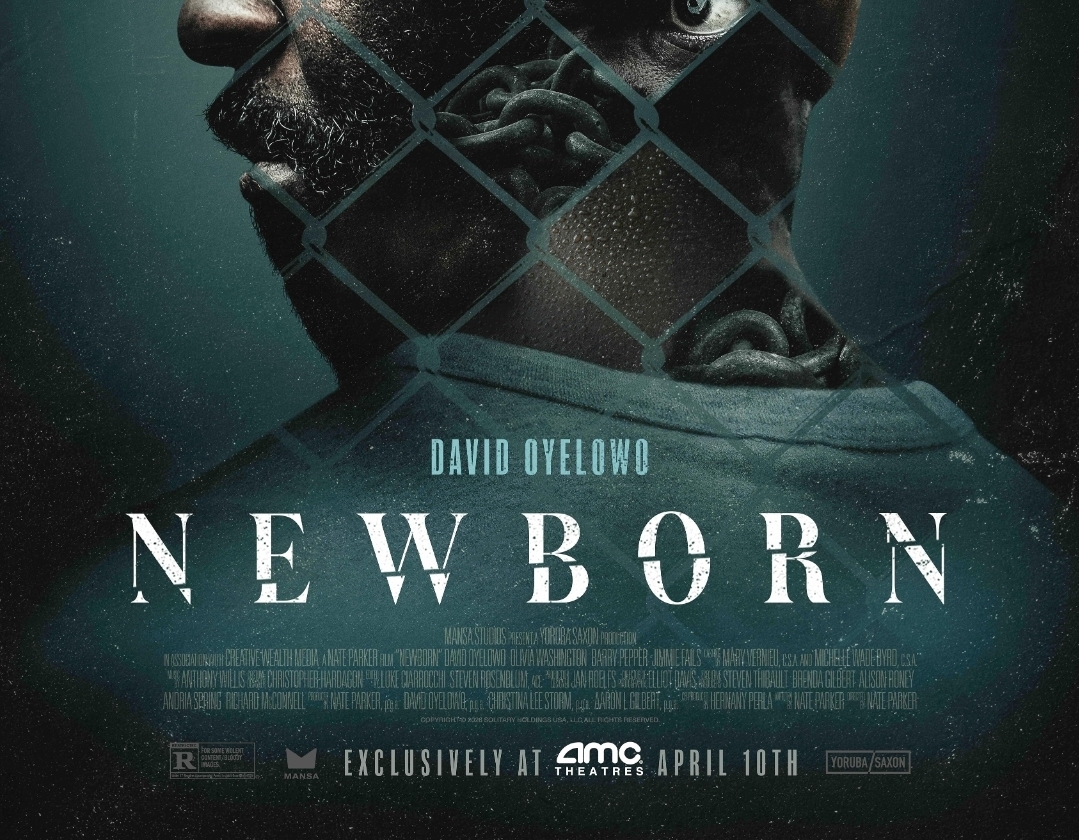
Newborn Parents Guide (2026): What Families Need to Know Before Watching
I have reviewed over 2,400 films for this site. Very few of them have required me to sit quietly for a minute after the credits rolled before I could write a single word. Newborn is one of them. Not because of shock value. Because of how precisely and deliberately it builds emotional weight on themes that will hit close to home for a significant portion of the parents reading this.
There is a scene midway through the second act that I want to describe carefully, because I think it is the single clearest signal of what kind of film this is. A character sits in a hospital corridor under fluorescent lighting, holding something small in both hands, and the camera does not cut away. It just holds. For what feels like a very long time. The sound design does something here that I found genuinely difficult to sit with, and I say that as someone who does not rattle easily.
That scene is not gratuitous. But it is the kind of moment that will stay with a viewer, and depending on a family's own history, it could be more than uncomfortable. That is what this Newborn parents guide is here to address.
With Caution. Newborn is rated R and earns every bit of that rating through sustained emotional intensity, frank depictions of medical trauma, and themes surrounding infant loss and parental crisis that are handled with care but without restraint. Recommended for viewers 17 and older, or mature 16-year-olds with parental co-viewing and conversation ready beforehand.
Quick-Scan Safety Card
| Category | Detail |
|---|---|
| Official Rating | R — for thematic intensity, brief strong language, and disturbing medical content |
| Expert Recommended Age | 17+ (possibly 16 with a parent present and prior conversation) |
| Violence Level | Low — no action violence, but two scenes of medical emergency depicted in close, uncomfortable detail |
| Language | Moderate — roughly 6 to 8 uses of strong language including one use of the f-word in a moment of grief |
| Sexual Content | Minimal — one brief scene of post-birth intimacy, nothing explicit |
| Infant Loss / Grief Themes | Significant and central to the story — handled with restraint but not softened |
| Mental Health Portrayal | Postpartum depression depicted in an extended, realistic way — may be triggering for some viewers |
| What Will Surprise Parents Most | The emotional accumulation — individual scenes seem manageable, but the film builds to something genuinely heavy |
What Is Newborn About?
Without giving away plot specifics, Newborn follows a couple navigating the aftermath of a complicated birth. The film is less concerned with what happens and far more concerned with what it costs emotionally to live through it. Think of it as an intimate character study, not a hospital procedural.
The emotional territory it covers includes grief, guilt, relationship strain under pressure, the specific isolation that can follow a traumatic birth experience, and what it looks like when a person's sense of self fractures under circumstances no one prepared them for. Parents who have experienced loss or postpartum mental health difficulties should know that this film does not keep its distance from those subjects.
For the right viewer at the right moment, it is an extraordinarily empathetic piece of work. Knowing whether you are that viewer matters.
Why Is Newborn Rated R?
The R rating is justified, but I want to be careful how I say this: it may actually be slightly generous. The rating was assigned based on thematic intensity, limited strong language, and medical content. That is accurate as far as it goes. What it does not fully communicate is the cumulative emotional weight the film applies over two hours.
I have seen plenty of R-rated films I would comfortably show to a mature 15-year-old. This is not one of them. The content that drives the rating is not the language or even the medical visuals, both of which are handled with restraint. It is the film's refusal to give the audience easy exits from its harder moments. That is harder to rate on a standard scale, but it is exactly what parents need to know.
Put plainly: the R is the right call, but the reasons behind it are more specific than the label alone suggests.
Content Breakdown
Medical Intensity and Birth Trauma
The birth sequence in the opening act is not played for drama in the conventional sense. It is quiet, tight, and procedural in a way that I found more unsettling than anything louder would have been. The camera stays close. The dialogue between medical staff is clipped and functional. And the emotional reality of what the characters are experiencing is communicated almost entirely through faces and breathing.
I have shown sections of this film to two colleagues with backgrounds in pediatric psychology. Both flagged this sequence as potentially distressing for viewers with their own birth trauma history, and I would second that assessment without hesitation.
If your family has experienced a difficult birth or neonatal complication, know that this sequence does not resolve quickly or reassuringly. It may be worth previewing before deciding whether to watch as a household.
Infant Loss and Grief
This is where the film earns its weight and also where it becomes genuinely difficult viewing for some audiences. The grief depicted here does not follow a clean arc. It is not linear, it is not always quiet, and it is not wrapped up by the final scene. That is actually one of the film's genuine strengths, from a craft perspective. As a parent of four, I will tell you it is also one of the most difficult things to watch.
The scene I referenced in my opening is this one. And the reason the camera holds is because the filmmakers understand something true: some moments do not benefit from a cutaway. For adults who are ready for that, it is powerful filmmaking. For younger viewers or anyone in a fragile place, it is a lot to absorb.
Newborn trigger warnings should include infant loss and perinatal grief specifically. These are not peripheral themes. They are the core of the film, and they are treated with a directness that some viewers will find cathartic and others will find overwhelming.
Postpartum Depression and Mental Health
One of the things I appreciated about this film, and I did not expect to be writing the word "appreciated" in this section, is that it depicts postpartum depression without villainizing the person experiencing it. That is rarer than it should be. The portrayal is extended, it is specific, and it includes moments that are both painful and recognizable if you have been close to this experience.
The risk for younger viewers here is not that the portrayal is irresponsible. It is that it is accurate. An 11-year-old watching a parent struggle in the way this character struggles does not have the developmental context to process that without support. My 16-year-old watched part of this with me and her immediate response was to ask whether the character was going to be okay. That question alone told me something about how teenagers will receive this content.
If you have a teenager who has experienced a parent's postpartum struggle firsthand, this portrayal may resonate in ways that need space for conversation. Consider watching ahead of time to assess whether it is the right moment for your family.
Relationship Conflict and Emotional Violence
There is no physical violence between the adult characters. But there are two arguments that are among the more uncomfortable scenes in the film, not because of shouting but because of what the characters say to each other when they are at their worst. One line in particular, delivered in a hallway, is the kind of thing that is impossible to un-hear.
Younger viewers may not have the emotional vocabulary to understand what they are watching in those moments, and that gap between seeing something and understanding it can be more unsettling than the scene itself.
The relationship conflict in Newborn models both breakdown and eventual repair. If your older teenager watches this, it could open a genuinely useful conversation about how people treat each other under extreme stress and what accountability looks like afterward.
Age-by-Age Viewing Guide
Not remotely suitable. The emotional register of this film requires life experience that no child this age has, and several scenes would be frightening or deeply confusing without any framework to understand them. Keep this one completely off the table.
Still a firm no. Children in this range are beginning to understand loss in meaningful ways, which is exactly why exposing them to this film without significant parental scaffolding would be a mistake. The grief content alone is too raw, and the medical sequences would likely provoke anxiety rather than empathy.
I would not recommend this age group for Newborn, even with a parent in the room. Not because they cannot handle difficult content in general, but because the specific combination of infant loss, postpartum mental health deterioration, and relationship breakdown is a lot to process without the emotional maturity to contextualize it. There are better entry points to these themes for this age range.
Here is where it gets genuinely complicated, and I want to be honest about that. A mature 15 or 16-year-old who already engages with serious drama and has some emotional resilience could take something meaningful from this film. But I would not hand them the remote and walk away. Watch it together. Know their history. And be ready for the conversation it will start, because it will start one.
Yes, with one caveat: check in with older teenagers about their current emotional state before sitting down with this one. On an ordinary evening it is a film that rewards serious viewers. In the wrong moment, it may land harder than intended. My 18-year-old watched it and called it one of the more honest films she had seen about family. That felt about right to me.
Positive Messages and Educational Value
And look, I know some reviews in this genre treat "positive messages" as a mandatory checkbox. I am not going to do that here. What Newborn offers is not uplift in the traditional sense. It is something rarer: an honest portrayal of what grief and recovery actually look like when no one is performing for an audience.
The film is genuinely good at showing that people who love each other can still hurt each other, and that surviving something hard together does not mean the same thing to everyone who survived it. Those are real ideas worth sitting with, especially for older teenagers who are beginning to understand relationships in more complex ways.
If there is educational value, it is in the conversation the film creates rather than the answers it provides. It does not tell you what to feel. It just makes it hard to feel nothing.
Five Family Discussion Questions
- In the hospital corridor scene, the character chooses to stay rather than leave. What do you think that choice says about them, and do you think it was the right one?
- The film shows two people experiencing the same loss very differently. What does it suggest about the way grief can isolate people even when they are going through something together?
- When the relationship reaches its lowest point and the most painful things are said, do you think the film is asking us to excuse that behavior or just to understand it? Is there a difference?
- The portrayal of postpartum depression here is very specific and very unglamorous. Before watching this film, did you have any mental picture of what that experience looked like? Has that changed?
- The ending does not resolve everything cleanly. Did that feel honest to you, or did it feel like something was missing? What would a "fixed" ending have taken away from the story?
Frequently Asked Questions
Not for children or early teenagers. The themes of infant loss, postpartum mental health, and relationship breakdown are handled with maturity that requires a viewer to already have some emotional framework for these experiences. This is genuinely a film for older teenagers and adults.
Yes, though "scary" is not quite the right word. It is not a horror film, but the medical sequences, the grief content, and the emotional weight would be deeply confusing and distressing for a child this age. There is nothing appropriate here for a 7-year-old, full stop.
The official Newborn age rating is R. In practical terms, this means no under-17s without a guardian present. My own expert recommendation goes a step further: 17 and older as a baseline, with mature 16-year-olds considered case by case. The rating is accurate but does not fully convey the emotional intensity involved.
Yes. The primary Newborn trigger warnings are infant loss and perinatal grief, postpartum depression depicted in extended realistic detail, and medical trauma including a birth complication sequence. Relationship conflict with emotionally sharp dialogue is also present. Anyone with personal history in these areas should be aware before watching.
No post-credits scene. The film ends deliberately and the credits roll in silence, which honestly feels like the right choice given the tone of everything before it. You can leave when the credits begin without missing anything additional.
Not to any significant degree. The film's visual approach is quiet and naturalistic, favoring ambient and fluorescent lighting throughout. There are no strobe effects or rapid visual sequences that would be a concern for viewers with photosensitive conditions.
Newborn 2026 is expected to arrive on major streaming platforms following its theatrical run. Most platforms enforce age gates aligned with the official R rating, which typically requires account holders to be 17 or older or to enable parental controls. Check your platform's family settings before your household watches.
This needs careful thought. The grief portrayal is realistic and may resonate deeply with a child who has experienced loss, but without enough emotional scaffolding it could also reopen difficult feelings without resolution. I would recommend parents preview the film first and make this call knowing their specific child well.
The film handles this with notable restraint. What is depicted is primarily emotional aftermath rather than explicit on-screen death. The camera choices here are deliberate and considered. That said, the absence of graphic imagery does not make the sequence easy to watch. It may in fact make it harder for some viewers.

Matthew Creith is a movie and TV critic based in Denver, Colorado. He’s a member of the Critics Choice Association and GALECA: The Society of LGBTQ Entertainment Critics. He can be found on Twitter: @matthew_creith or Instagram: matineewithmatt. He graduated with a BA in Media, Theory and Criticism from California State University, Northridge. Since then, he’s covered a wide range of movies and TV shows, as well as film festivals like SXSW and TIFF.