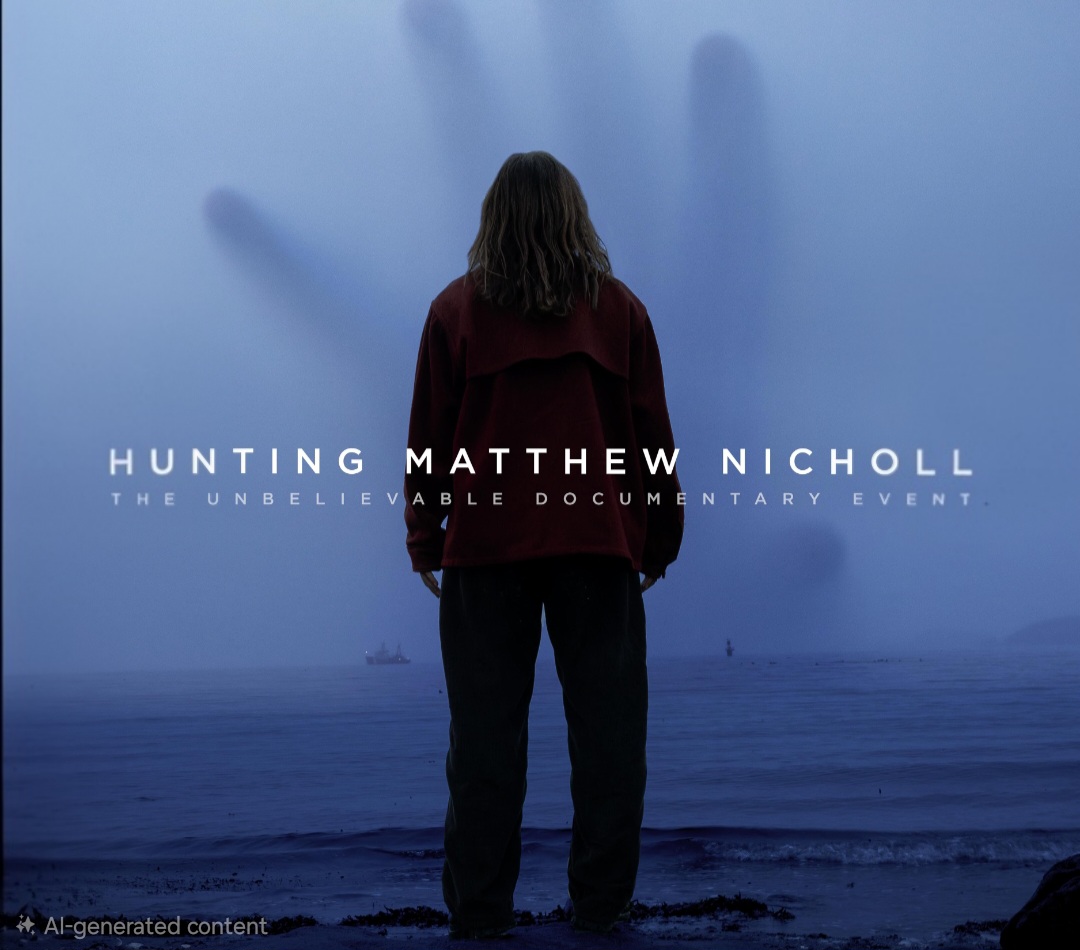
I've reviewed close to a thousand horror films for this site over the years. Most of them I can watch with a certain professional detachment — cataloguing the content, measuring it against the rating, filing my notes. Hunting Matthew Nichols did not allow me that distance. There was a sequence in the second act where the camera holds on something long enough that I genuinely had to decide whether to keep watching or step away. That doesn't happen to me often. It happened here.
The following morning, my 16-year-old saw the film listed in my viewing queue and asked what it was about. I gave her a vague answer. That in itself told me something about how I'd processed the night before.
Is Hunting Matthew Nichols Safe for Kids? The Direct Answer
Quick-Scan Safety Card
| Category | Detail |
|---|---|
| Official Rating | R — for strong bloody violence, disturbing content, and language |
| Expert Recommended Age | 17+ (and even that depends on your teen's sensitivity to psychological horror) |
| Violence Level | High — prolonged, graphic, and in several scenes deliberately drawn out |
| Language | Strong — frequent use of f-word, occasional use of other profanity throughout |
| Psychological Intensity | Very high — themes of predation, paranoia, and isolation are sustained across the full runtime |
| What Will Surprise Parents Most | The film is far more psychologically relentless than the marketing suggests — this is not a jump-scare horror film |
| Trigger Warnings | Hunting, pursuit, captivity, graphic injury, implied torture, paranoia, and themes of being watched |
What Is Hunting Matthew Nichols About?
Hunting Matthew Nichols centers on a man being systematically stalked and pursued by unknown figures across isolated terrain. The premise sounds like a familiar cat-and-mouse setup. What makes it different — and significantly heavier — is how deliberately it places the audience inside the emotional experience of being hunted rather than outside it watching from safety.
Parents searching for specific emotional triggers should know this film leans hard into helplessness, isolation, and the terror of being watched without knowing why. There are also strong undercurrents of distrust — the line between who can be trusted and who is part of the threat is kept deliberately unclear for long stretches.
It is not a film about gore for its own sake. It is a film about psychological collapse under sustained threat. That distinction matters — but it does not make it easier to watch.
Why Is Hunting Matthew Nichols Rated R?
The MPAA rating of R is accurate on the surface — this film absolutely earns it for bloody violence and disturbing content. But here is where I'd push back slightly on what that rating communicates to parents: the R designation undersells the psychological weight of what's on screen.
A standard R-rated thriller might have a couple of tense sequences and some blood. This film builds and sustains an atmosphere of dread across virtually its entire runtime. Three sequences in particular — a trap-discovery scene, a confrontation in a confined space, and the film's climactic act — cross into territory I'd describe as genuinely harrowing rather than merely intense.
The violence is not cartoonish. It is the kind of violence that stays with you because it is presented with weight and consequence. I've reviewed films rated R that I'd comfortably recommend to a mature 15-year-old. This is not one of them.
Content Breakdown
Violence and Physical Threat
The violence in this film is sustained in a way that separates it from most horror entries. This is not a film that delivers shock in short bursts — it builds and holds. The trap-discovery sequence I mentioned earlier is graphic in both image and implication, and the camera does not look away when it probably should.
There are scenes of physical pursuit that are shot with an almost clinical intensity — no music, no editing tricks, just the raw mechanics of one person trying to escape another. I found that choice more disturbing than any sound-effect sting could have been.
The violence in Hunting Matthew Nichols is not gratuitous in a mindless way — it is purposeful and therefore harder to dismiss. Teens who have a lower tolerance for sustained physical threat rather than brief action sequences will likely find this particularly difficult.
Psychological Horror and Fear of Being Watched
This is, frankly, where the film is most effective and most potentially damaging for younger or more sensitive viewers. The central terror is not a monster or a supernatural force — it is other people, with apparent intent, and apparent resources, and no clear motive explained for most of the runtime.
That ambiguity is what the film weaponizes. Matthew Nichols doesn't know why he's being hunted, and for a long stretch, neither does the audience. For viewers who already carry anxiety around safety, privacy, or being surveilled, this premise will hit significantly harder than a conventional horror setup.
And look — I know some parents will feel that's a reason to recommend it as a conversation starter. I'd gently disagree. The execution here is designed to unsettle, not to illuminate.
If your teenager already experiences anxiety related to personal safety or paranoia, this film's specific brand of psychological pressure warrants serious consideration before you let them watch it — regardless of their age.
Language
Language is not the primary concern here, but it is present and consistent. The f-word appears frequently, predominantly in moments of high stress, which — given the film's premise — means it appears a lot. Additional strong language is scattered throughout.
In the context of everything else this film contains, language is genuinely the least of a parent's concerns. But if you have a household rule about strong language in media, this film breaks it repeatedly.
Themes of Captivity and Loss of Control
There are sequences in the second half of the film involving implied captivity and restraint that I want to flag specifically, because they represent the content most likely to disturb viewers who have any personal history with trauma related to control and autonomy. The film does not depict these scenes gratuitously, but it does depict them clearly.
Put plainly: if someone in your household has trauma history in this area, this is not the film to watch without preparation, and possibly not the film to watch at all.
The captivity sequences occur primarily in the third act. They are not played for shock value but they are not softened either. This is one of the specific Hunting Matthew Nichols trigger warnings I'd encourage you to share with any older teen before they watch independently.
Age-by-Age Viewing Guide
Completely off the table. There is nothing in this film — not a frame of it — that is remotely appropriate for a young child. The sustained atmosphere of threat alone would be distressing. The violence would be traumatizing. This is not a close call.
Still a firm no. Children in this age range are exactly at the developmental stage where fear of strangers, fear of being taken, and loss of parental protection are already live anxieties. This film would pour accelerant on all of them. My 7-year-old has no idea this film exists, and I intend to keep it that way for a long time.
My 11-year-old watches age-appropriate thrillers with me fairly regularly. I would not show him this for another four years at minimum. Early adolescence is a period of heightened sensitivity to social threat and peer danger. A film built entirely around the idea that strangers are hunting you — with graphic proof that they mean it — is not something this age group should process without significant emotional scaffolding that the film itself does not provide.
Here's where it gets genuinely complicated. Some mature 15 or 16-year-olds will handle this film without lasting distress. My 16-year-old is reasonably well-calibrated around horror content — she can watch something disturbing and process it cleanly. I still would not put this specific film in front of her without a conversation first about exactly what it contains. The combination of psychological relentlessness and graphic violence is a specific formula that lands differently for different teens. Know your kid.
Older teens and adults who are genre fans will find a competently made, intentionally disturbing thriller here. The content is not gratuitous for its own sake — there is craft behind the choices. But "appropriate for adults" is not the same as "without consequence." I'd still recommend anyone with anxiety around personal safety, surveillance, or being hunted approach this with some awareness of what they're walking into. My eldest watched it separately and texted me afterward — her message was two words: "That was a lot." That tracks.
Positive Messages and Educational Value
I want to be careful how I say this, because I think manufacturing positives that aren't there is a disservice to the parents who rely on these guides. The honest answer is that Hunting Matthew Nichols is not a film with significant educational value for younger audiences.
For older viewers — 17 and above — there are genuine discussion threads worth pulling on. The film raises uncomfortable questions about systemic power, about who gets hunted and why, and about the way institutions can be weaponized against individuals. Those threads are present, but they are embedded in content that most teenagers aren't ready to receive them through.
The short version is this: the film has more to say than its genre packaging suggests, but getting to those ideas requires sitting through material that is legitimately difficult. Whether that trade-off is worth it depends entirely on the viewer.
Five Family Discussion Questions
- When Matthew realizes early on that the threat is organized rather than random, he makes a specific choice not to go to authorities. What does that choice say about his relationship with systems meant to protect people — and do you think it was the right call?
- The film withholds the hunters' motive for most of its runtime. How did that uncertainty affect the way you watched it — and did knowing eventually change how frightening it felt?
- There's a moment where Matthew has the opportunity to help another person in danger and chooses self-preservation instead. Was that a failure of character, or a completely rational survival response?
- The film suggests that being watched — even without immediate physical threat — is its own form of violence. Do you think that idea holds up in the context of how we actually live now, with phones and cameras and data tracking?
- If you were telling a friend whether to watch this film, what would you actually say — and what would that tell you about which parts stayed with you most?
Frequently Asked Questions
Yes — without significant reservation. The psychological intensity and graphic violence are well beyond what I'd recommend for a 13-year-old. This isn't a spooky haunted-house film. It's a sustained, relentless horror-thriller that earns its R rating fully. I'd hold this until at least 17 for most kids.
Key trigger warnings include graphic violence, blood and injury detail, themes of pursuit and captivity, implied torture, sustained psychological dread, paranoia, and themes of being surveilled or watched without consent. Anyone with trauma history related to control or captivity should be especially careful.
Based on my viewing, there is no significant post-credits scene that changes or extends the story. The film ends on its final narrative beat without an additional sequence. That said, staying through the credits does no harm — the closing imagery is part of the film's tonal resolution.
Yes. Several sequences — particularly during the nighttime pursuit scenes — involve rapid light changes and disorienting visual effects that could affect viewers with photosensitive epilepsy or related conditions. If this applies to someone in your household, please check with your doctor before viewing.
Streaming availability shifts regularly, so check current platforms directly. Most major streaming services apply their own content filters for R-rated material — typically requiring account holders to unlock R-rated content for profiles. Parental control settings on most platforms can restrict access below a set age threshold.
It's a fair question and the answer is mixed. Most of the violent content serves the film's intent — it's meant to feel real and consequential. But two or three sequences push longer than necessary. It's not torture-porn territory, but there are moments that cross from purposeful into uncomfortable for discomfort's sake.
Bloody violence and disturbing imagery are the primary drivers. The film's depiction of physical harm is specific and sustained in a way that clearly separates it from PG-13 territory. The language alone — frequent strong profanity — would make a PG-13 difficult, but the violence is the decisive factor.
Possibly — but horror experience alone isn't the right measure here. The psychological relentlessness of this film hits differently than a conventional horror entry. If your 16-year-old handles slow-burn psychological suspense well and has no specific sensitivities around captivity or surveillance themes, they may manage it. Know your kid first.

Matthew Creith is a movie and TV critic based in Denver, Colorado. He’s a member of the Critics Choice Association and GALECA: The Society of LGBTQ Entertainment Critics. He can be found on Twitter: @matthew_creith or Instagram: matineewithmatt. He graduated with a BA in Media, Theory and Criticism from California State University, Northridge. Since then, he’s covered a wide range of movies and TV shows, as well as film festivals like SXSW and TIFF.