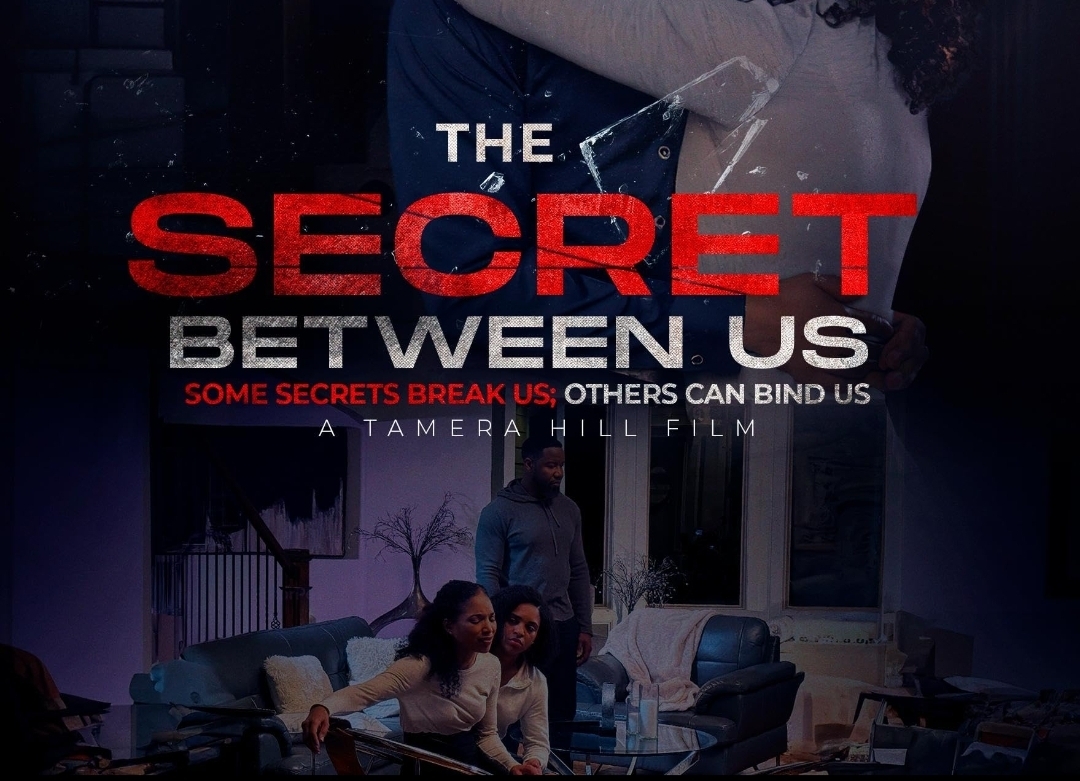
The Secret Between Us Parents Guide – Is It Safe for Kids?
About forty minutes into The Secret Between Us, there is a scene where a mother sits across from her teenage daughter at a kitchen table and says absolutely nothing. The silence is the point. What has just been revealed hangs in the air between them, and I caught myself holding my breath — not because anything violent was happening, but because the emotional weight of that moment is genuinely suffocating. I made a note in my notebook: this will wreck some kids and completely pass over others, and you won't know which until it happens.
That is, honestly, the challenge with a film like this. The Secret Between Us parents guide question isn't really about content checkboxes. It's about emotional readiness. Let me walk you through everything I found.
The Secret Between Us is a heavy, emotionally complex drama that handles deception, fractured family trust, and grief with unusual intensity. It is not suitable for children under 13, and even teenagers should watch alongside a parent who is ready to talk afterward. There is little graphic content, but the emotional impact lands hard.
Quick-Scan Safety Card
| Category | Detail |
|---|---|
| Official Rating | Not Yet Rated — no MPAA classification as of publication. Based on content, I'd expect PG-13 at minimum. |
| Expert Recommended Age | 14 and above. Mature 13-year-olds with parental co-viewing. |
| Violence Level | Low — one brief physical altercation, no gore. Emotional confrontations are intense but not graphic. |
| Language Level | Mild to moderate — "damn," "hell," and two instances of stronger profanity. |
| Emotional Intensity | High. Betrayal, family breakdown, and grief run throughout. Several scenes are designed to be distressing. |
| Romantic / Sexual Content | Minimal — one brief kiss, one implied past affair discussed in dialogue only. Nothing explicit. |
| Substance Use | Social drinking in several scenes. One character's alcohol use is shown critically as a coping mechanism. |
| What Will Surprise Parents Most | The emotional devastation of the third act. The ending is designed to be overwhelming and it succeeds. |
What Is The Secret Between Us About — No Spoilers
Imagine sitting down to what feels like a quiet family drama and realizing, gradually, that the ground beneath every character is less stable than it looks. That's the experience of this film. At its center is a long-held secret that begins to surface, pulling apart the relationships around it in slow, aching ways.
The emotional register is one of dread mixed with recognition. Parents will feel that. The film asks what we owe the people we love — and what happens when honesty and protection sit on opposite sides of the same decision. Guilt, loyalty, and grief all get serious screen time.
If you're describing it at school pickup, think: the kind of film that leaves the room quiet for a few minutes when the credits roll. Not because it's horrifying, but because it's true in the way that makes you want to call your own mother.
Why Is It Rated Not Yet Rated?
The film hasn't gone through a formal MPAA submission yet — that's common for independent dramas that release in limited windows before a wider platform drop. But the absence of a rating is not the same as the absence of content concerns, and that's exactly where parents can get caught off guard.
Based on everything in the film, I'd expect this to land at PG-13 when rated. The language is relatively restrained. There's no significant violence. The sexual content is minimal. But PG-13 would, in my view, underserve parents who need to know how emotionally demanding this film is for younger or more sensitive viewers.
The MPAA doesn't rate for emotional intensity the way it rates for profanity, and that gap matters here more than usual. I've seen PG films that are harder to watch than most R-rated thrillers, and The Secret Between Us sits in that same complicated category. My recommendation is stricter than any likely official rating, and I think that's the right call.
Content Breakdown
Emotional Themes and Family Conflict
This is the film's core content concern, and I want to be direct about it. The central secret — which I won't reveal — involves a fundamental breach of trust between family members. When it surfaces in the second act, the confrontation scene runs nearly eight minutes without cutting away. It is exhausting in the best and most demanding cinematic sense.
What struck me professionally is how the film refuses to assign clean blame. Every character has a reason. That moral ambiguity is valuable for adult viewers and a lot to process for anyone under 15 who is still building their own framework for how trust and loyalty work.
Practical note for parents: If your child has experienced family breakdown — divorce, estrangement, a parent's secret of any kind — this film will likely hit closer to home than they'll admit. Have the conversation before you press play, not just after.
Grief and Loss
A secondary but persistent thread involves a character processing the death of a loved one. It isn't a grief film in the traditional sense, but loss flavors nearly every significant scene. One late sequence — a visit to a gravesite that turns into something much more emotionally complicated — is the scene I think about most when I consider how young is too young for this.
The film handles grief honestly rather than sentimentally, which I actually appreciate. But honest grief is also harder to sit with than the cleaned-up version we often see in family dramas. There is no tidy resolution. The sadness doesn't lift by the final scene.
Practical note for parents: Children who have experienced recent loss should approach with caution. The grief content here isn't graphic, but it is persistent and unresolved, and that can be more difficult than a single big emotional scene.
Deception and Moral Complexity
The film is, at its roots, about lying — and more specifically about the kind of lying people do because they believe they are protecting someone they love. That distinction is handled with real care by the writers, and it's also what makes this complicated content for younger audiences.
Children between ten and thirteen often see deception in binary terms. A lie is a lie. The Secret Between Us actively argues against that simplicity, and it earns the argument. But I'd want a parent present when a young teenager encounters that argument for the first time, because it deserves discussion rather than quiet digestion.
Practical note for parents: This is actually a genuine conversation-starter about ethics, intention, and consequence. More on that in the discussion questions below — but flag it as an opportunity rather than just a concern.
Substance Use
Alcohol appears throughout the film in a way that's realistic rather than glamorized. One character's drinking escalates visibly across the second act, and the film makes clear this is a problem without belaboring the point. It's the kind of understated portrayal that actually communicates more than an after-school-special version would.
I noticed this more as a parent than as a critic. My youngest has started asking questions about why adults drink, and seeing it used as a coping mechanism — even in a film that critiques that use — felt like something worth flagging. It's not graphic or glorified. But it is present.
Practical note for parents: Worth a brief conversation with older kids about what they noticed. The film's treatment is actually responsible, but younger viewers may need help connecting the dots on why the character's drinking is framed the way it is.
Mild Physical Confrontation
There is one scene involving a brief physical altercation — a shove and raised voices that ends quickly without injury. It's less than thirty seconds and feels like the least of the film's concerns. But I'm flagging it because parents searching for The Secret Between Us trigger warnings deserve a complete picture, and that moment does carry some weight in context even if it's brief.
The emotional confrontations throughout the film are far more intense than this single physical moment. If your child is sensitive to conflict — the shouting, the silences, the slammed doors — those scenes register much harder than the brief physical beat.
Practical note for parents: The physical content here is not the concern. What you're managing is the sustained interpersonal tension that surrounds it.
Age-by-Age Viewing Guide
Not appropriate in any sense. There is nothing here for young children — no animation, no light moments, no story structure designed for their developmental stage. The emotional tension would be confusing and potentially frightening, even without graphic content. Keep this one firmly off-limits.
Still a clear no. Children at this age are developing their understanding of trust, honesty, and family relationships in ways that this film could genuinely distort rather than inform. The moral complexity of the central secret isn't something this age group has the emotional scaffolding to process safely. The grief thread adds another layer that could linger in ways that aren't helpful. Skip it entirely until they're older.
Here is where it gets genuinely complicated and I won't pretend otherwise. Some eleven and twelve-year-olds are emotionally ready for material like this — particularly those who already read widely or have navigated real family difficulty. Most are not. The sustained emotional intensity and the unresolved ending are the specific concerns at this age, not the language or the brief physical scene. If you do allow it, watch together and plan the conversation ahead of time. Don't just press play and see what happens.
This is the range where the film starts to become genuinely valuable alongside appropriate. Teens at this stage are actively negotiating loyalty, honesty, and identity within their own families and friendships, and the film speaks directly to that experience. The deception at the center of the story is the kind they may recognize from real life. Co-viewing is still worth it — not to police the experience, but because the discussion afterward is where the real value lives. My recommendation for The Secret Between Us parental guidance at this age: watch it with them if you can.
Appropriate without reservation. Older teenagers and adults will find this a rewarding and emotionally honest film. The performances are strong, the writing respects the audience's intelligence, and the themes are ones that older viewers will sit with long after the final scene. For seventeen and eighteen-year-olds especially — who are beginning to understand their parents as full, flawed human beings — this film may hit in a particularly resonant way. Let them watch. Let them feel it.
Positive Messages and Educational Value
I'll be honest: this film is not trying to teach you anything tidy. It doesn't end with a lesson. The characters do not all find peace. If you're looking for something that wraps up with affirmation and a clear moral, this isn't it.
What it does offer is something more durable. It takes seriously the question of why good people make choices that hurt the people they love — and it does that without excusing anyone. That is genuinely rare in mainstream drama, and it's worth something.
For families who engage with it as a conversation-starter rather than a passive watch, there is real material here around ethics, communication, and what it means to protect someone versus respect them. Those aren't small topics. The film just refuses to answer them for you, which is either frustrating or valuable depending on what you're looking for.
Five Family Discussion Questions
- The mother in the film kept the secret for years believing she was protecting her daughter. At what point, if any, does that protection become something else?
- There's a moment where the daughter says she wishes she'd never found out the truth. Do you think she means that — and is there such a thing as a truth that costs more than it's worth?
- The film shows the gravesite scene as a turning point rather than a resolution. What do you think that choice says about how grief actually works in real families?
- One character uses alcohol visibly throughout the second act without anyone directly calling it out. Why do you think the film made that choice — and what did you notice about the people around him?
- By the final scene, who in the film do you trust — and did that change from how you felt at the beginning? What shifted it?
Frequently Asked Questions
Is The Secret Between Us too scary for a 10-year-old?
Not scary in the traditional sense — there's no horror, no jump scares, no monsters. But the emotional intensity is significant. The conflict between family members is sustained and unresolved, and the grief content could distress sensitive younger children. I'd hold off until at least 13, and even then with co-viewing.
Is there a post-credits scene in The Secret Between Us?
No. The film ends cleanly with no post-credits sequence. The final scene is the final scene — which, given the emotional register of this film's ending, is probably the right call. No need to stay seated through the credits unless you need the time to decompress.
Does The Secret Between Us have any strobe lighting or flashing effects?
Nothing I flagged during my screening. The film is lit in a muted, naturalistic style throughout. There are no party sequences, no rapid-cut action scenes, and no visual effects that would trigger photosensitivity concerns. Viewers with epilepsy or light sensitivity should be fine.
Where can I watch The Secret Between Us — what streaming service is it on?
As of publication, The Secret Between Us is in limited theatrical release. A streaming platform has not been officially confirmed yet. Check JustWatch for the most current availability in your region, as distribution deals for independent dramas often move quickly after the theatrical window closes.
Does The Secret Between Us deal with suicide or self-harm?
No. Grief is a persistent theme and some characters are clearly struggling emotionally, but there is no depiction of or reference to suicide or self-harm in the film. Parents concerned about that specific content area can proceed without that worry — though the broader grief content is still worth being aware of.
How bad is the language in The Secret Between Us — is it appropriate for teens?
The language is mild to moderate overall. There are a handful of uses of "damn" and "hell," and two instances of stronger profanity — neither in a particularly gratuitous context. For most teens 13 and above, language is not the content concern here. The emotional intensity is a far bigger consideration than the words used.
Is The Secret Between Us suitable for children who've experienced family trauma or parental separation?
This is where I'd urge real caution. The central themes of fractured trust, parental deception, and unresolved family conflict could feel very close to home for children with that background. It's not that they shouldn't ever see it — but timing and parental presence matter significantly. I wouldn't screen this cold for a child navigating an active family crisis.

Stephanie Heitman is a seasoned journalist and author dedicated to helping parents navigate the world of Hollywood entertainment through thoughtful, family-oriented film reviews. With over a decade of experience in writing and a passion for fostering safe, enriching viewing experiences, Stephanie launched Parentguiding.com to provide parents with the insights they need to make informed choices for their families.