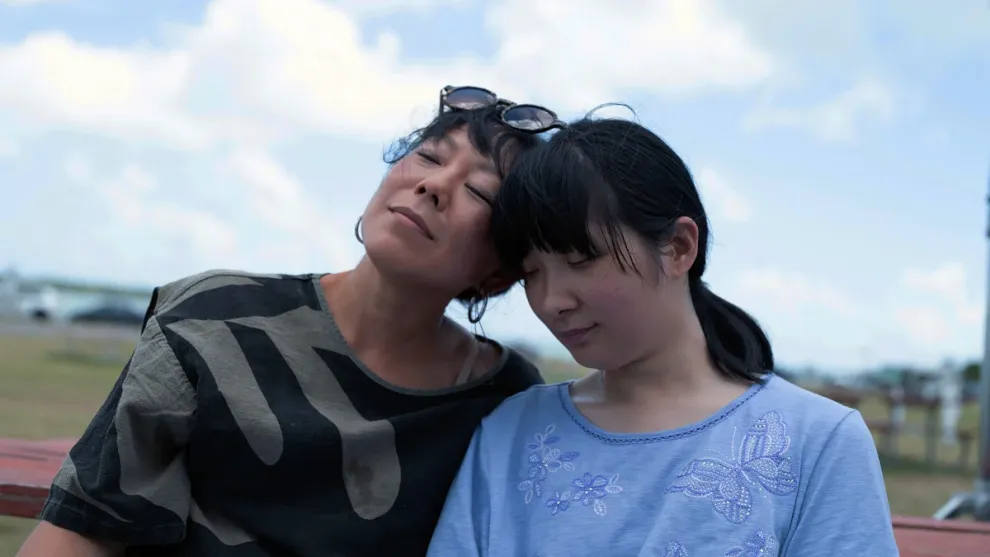
Take Me Home is not rated R by the Motion Picture Association (MPA), and functions more like an unrated indie drama than a conventional studio release. What follows is a practical content guide for parents, grounded in the film’s emotional tone and subject matter rather than sensationalism.
“Take Me Home” personal first feature from director Liz Sargent. Expanding her acclaimed 2023 short into a full-length film, Sargent deepens the canvas but not quite the emotional architecture; what was once concise and piercing now feels stretched thinner than the material can comfortably support, leaving the feature a touch less potent than its predecessor.
The story centers on Anna (played with striking vulnerability by Sargent’s real-life sister, Anna Sargent), a 38-year-old Korean adoptee living with her aging parents in Florida. Anna is bright and expressive but lives with significant cognitive disabilities, and the rhythms of the household are dictated almost entirely by her needs, her moods, and her routines. Joan, her mother (Marceline Hugot), manages the day-to-day with fierce attentiveness tracking medications, anticipating emotional shifts, adjusting life around Anna’s capacities. Bob, her father (Victor Slezak), clearly loves his daughter just as deeply, but when circumstances leave him alone with Anna, the strain becomes painfully evident.
Into this fragile ecosystem steps Emily (Ali Ahn), Anna’s high-achieving sister who flies in from New York, expecting to help stabilize things. Instead, she’s quickly overwhelmed by the relentless, exhausting demands of caregiving. Her arrival exposes not only how much labor has been silently carried by Joan, but also how ill-prepared the family is for what’s coming. Bob, meanwhile, is grappling with the early stages of dementia, fully conscious that his own decline is eroding his ability to support the daughter he adores. The film’s emotional tension grows from this collision of love, guilt, exhaustion, and fear of the future.
Highly Recommended: The Moment (2026) Parents Guide
Sargent’s original short film also a Sundance premiere was widely celebrated, earning multiple awards and even a screening at the White House. It worked because it was disciplined and razor-focused, delivering its emotional impact with precision. In feature form, the narrative begins to circle itself. Scenes and ideas recur without accumulating enough new insight, and while the ending still provokes thought, the overall shape lacks the sharp clarity that made the short so memorable. It’s difficult not to ask whether a story that felt so complete in its brief version truly needed to be expanded this way.
Sargent has framed the film as “a call to action to create a world where everyone’s needs are met,” and that intention is deeply admirable. The compassion driving the project is undeniable. But artistically, the film’s sturdy emotional core is asked to carry more weight than the script has fully built around it, resulting in a structure that feels more earnest than rigorous.
Even so, the performances nearly rescue the film on their own. Every actor brings authenticity and care, and Anna Sargent, in particular, delivers a quietly extraordinary turn in her first leading role never sentimentalized, never reduced to a symbol, always fully human. The visual storytelling also deserves praise: cinematographer Farhad Ahmed Dehlvi captures Florida with a nuanced eye, finding beauty in its brightness while also revealing how often that sunshine masks loneliness, fatigue, and emotional shadow.
Recommended: Gail Daughtry and the Celebrity Sex Pass Parents Guide
With a stronger, more layered script, “Take Me Home” might have achieved something truly exceptional. As it stands, it remains deeply affecting thanks to its performances and its unwavering empathy. Imperfect but heartfelt, it plays less like a polished masterpiece and more like an open wound offered with sincerity a compassionate, lingering cry for a more humane world.
Take Me Home (2026) Parents Guide
Violence & Intensity: There is no physical violence in the traditional sense, but the film carries a steady emotional weight that can feel intense, especially for younger viewers. The distress comes from realism: caregiving burnout, family arguments, moments of emotional collapse, and the discomfort of watching characters reach their limits. Scenes involving cognitive disability, dementia, and exhaustion are portrayed honestly and may be upsetting for sensitive viewers, not because they are graphic, but because they are deeply human and unfiltered.
Language: Some mild to moderate swearing appears, primarily during moments of frustration or emotional overwhelm, reflecting the characters’ stress rather than aiming for shock value. There are no slurs used for provocation, but the tone can be raw and strained during arguments, which may feel emotionally harsh even when the words themselves are not extreme.
Sexual Content / Nudity: The film is entirely focused on family dynamics, caregiving, and emotional relationships rather than romance or sexuality. Parents concerned about sexual material will find this aspect largely absent.
Drugs, Alcohol & Smoking: There is no depiction of drug abuse.
Age Recommendations: This film is best suited for older teens and adults. Viewers aged 15+ are likely to have the emotional maturity to engage with its subject matter.

Stephanie Heitman is a seasoned journalist and author dedicated to helping parents navigate the world of Hollywood entertainment through thoughtful, family-oriented film reviews. With over a decade of experience in writing and a passion for fostering safe, enriching viewing experiences, Stephanie launched Parentguiding.com to provide parents with the insights they need to make informed choices for their families.