You can trace this particular lineage all the way back to 1977, to SEGA’s Canyon Bomber an arcade side-scroller where you piloted a tiny plane and dropped bombs into a canyon, chasing high scores and the simple thrill of destruction. By modern standards, it’s almost aggressively minimal. Yet it’s hard to deny how much joy games like that delivered in their time. Even today, there’s something quietly moving about how such a stripped-back idea could captivate an entire generation of kids clustered around glowing cabinets.
That’s partly why I’m so drawn to contemporary games that deliberately echo those roots instead of chasing hyper-realistic 3D spectacle. Not purely out of nostalgia, but because they offer a bridge between eras. For those of us who grew up in the early 2000s, these games let us brush against a feeling we never quite had firsthand: the ritual of booting up an Atari or a Mega Drive, settling into a 2D world, and letting mechanical clarity carry the experience. They can’t fully recreate the texture of gaming in the ’70s, ’80s, or ’90s that context is gone forever but when they’re done well, they offer flashes of it. Brief, evocative, and strangely powerful.
Highly Recommended: Street Racer Collection (QUByte Classics) Parents Guide
There’s a reason this style refuses to die even in 2026. These games persist because they’re still fun, still resonant, and still built on a kind of meticulous craft that rewards close attention. You can feel the care in their systems, the intentionality in their constraints.
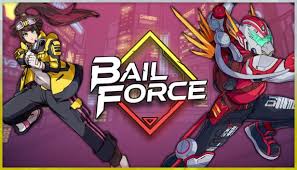
Bail Force Cyberpunk Bounty Hunters, the latest project from [Creator Name], lands squarely in that tradition. It unfolds in a bleak cyberpunk world where you step into the role of one of two bounty hunters, Angel or Lea. Each character carries their own motivations, their own emotional baggage, and inevitably their stories intersect as they carve through cybernetic police forces and high-level criminals in a society coming apart at the seams. If you’ve followed [Creator Name]’s previous games, you’ll recognize some familiar thematic interests here: outsiders navigating hostile systems, violence framed as survival rather than heroism, and a world that feels hostile by design.
Still, it’s hard to pretend this is one of the stronger entries in the retro-inspired space. I enjoyed myself moment to moment, and I don’t regret the time I spent with it, but the experience rarely rose above “pleasantly diverting.” The levels are strictly linear, the structure predictable, and while that simplicity can be comforting, here it sometimes felt limiting rather than deliberate.
In fact, simplicity ends up being both the game’s identity and its biggest weakness.
There’s absolutely nothing inherently wrong with straightforward design. Games that avoid bloated tutorials, endless exposition, or overcomplicated systems can feel like a relief. You boot them up, you understand what they want from you, and you’re playing within minutes. Bail Force fits neatly into that category. It’s concise I finished it in roughly six hours and mechanically easy to parse. The narrative, though, feels undercooked. It gestures toward themes and character motivations without really committing to them, leaving the story feeling serviceable but thin.
That doesn’t automatically doom a game. Plenty of excellent titles thrive on simplicity. But Bail Force never quite transforms that simplicity into something memorable. The core of the experience is combat, and to its credit, the fighting is genuinely enjoyable. There’s a satisfying rhythm to movement, attacks, and enemy encounters, and you can feel that the entire game has been constructed around making those moments feel good.
The problem is how quickly that feeling starts to fade. You only have two playable characters. The weapon selection is limited. And over time, the encounters begin to blur together. When variety is this restricted, games usually compensate with clever encounter design or escalating mechanical depth something to keep you engaged even when the tools remain the same. Bail Force never fully finds that hook. A week after finishing it, I struggled to recall specific standout moments, and that’s rarely a good sign.
Where the game genuinely surprised me, though, was its enemy AI.
For all its missed opportunities elsewhere, this is one area where Bail Force feels more thoughtful than expected. Enemies don’t just exist to be shot; they observe you. They respond. Over time, they begin to counter the way you play.
I spent most of the game controlling Lea, whose kit naturally encourages long-range combat. My approach was cautious: keep my distance, pick enemies off, avoid getting boxed in. Early on, that strategy worked almost too well. But eventually, enemies started pushing aggressively toward me, closing gaps, attempting to overwhelm rather than letting me control space. It was subtle, but noticeable and refreshing.
Of course, systems like this are only as strong as the surrounding design. The dash ability grants brief invincibility, which meant I could often simply phase through enemies, reposition, and resume my preferred strategy. Most encounters remained manageable, but there were moments where the pressure genuinely spiked, where I found myself cornered or even killed because I’d grown too comfortable.
Unfortunately, bosses don’t benefit from this same intelligence. They stick rigidly to predetermined patterns, repeating the same sequences regardless of how you play. That contrast is disappointing you can feel how much more dynamic those fights could have been if the adaptive AI extended to them too.
Still, even with its limitations, the system adds texture to combat that the game badly needs. It injects tension. It forces you to stay alert. And in a title that often feels overly predictable, that unpredictability matters.
It’s also worth mentioning that my time with the game was during early access, and a few technical issues surfaced as a result. The most notable was a bug that caused me to fall through the map on several occasions, trapping me out of bounds and forcing a restart from the last checkpoint. Thankfully, it happened rarely enough that it didn’t meaningfully sour the experience, but it’s the kind of issue that can quickly erode patience if left unresolved.
In the end, Bail Force Cyberpunk Bounty Hunters feels like a game that knows exactly what it wants to be but not quite how to elevate itself beyond that. If you’re someone who gravitates toward smaller-scale roguelites and lighter indie experiences, you’ll likely find something to enjoy here. At £8, it’s not egregiously priced, especially given that replaying with both characters stretches the runtime. That said, it’s much easier to recommend at the sale price of around £6. At that cost, the combat, the art direction, and the flashes of smart design feel like fair value for your time.
It’s a game with appealing 2D visuals, combat that’s genuinely engaging in short bursts, and a surprisingly thoughtful approach to enemy behavior. But it’s also held back by a thin narrative, limited variety, and a loop that grows repetitive far too quickly.
Played on PC. Available exclusively on Steam.
Bail Force: Cyberpunk Bounty Hunters Parent’s Guide
Violence & Intensity: You spend nearly all of your time fighting: shooting, slashing, dashing through enemies, and eliminating waves of cybernetic enforcers and criminals. That said, the presentation softens the impact considerably.
The visuals are stylized, pixel-based, and arcade-like rather than realistic. Enemies flash, fall apart, or disappear when defeated rather than showing explicit gore. There’s no lingering suffering, no graphic depictions of injury, and no attempt to make the violence feel disturbing. It’s closer in tone to classic action arcade games than to anything gritty or hyper-realistic.
Still, the sheer frequency of combat means the game is relentlessly aggressive in rhythm. You’re always under attack, always attacking back. For some children, that constant intensity may feel overstimulating even if the content itself isn’t graphic.
Language: The story and dialogue are relatively sparse, and when language appears, it tends to lean toward mild maturity rather than explicit profanity. Characters exist in a harsh cyberpunk world, so the tone can be bleak and emotionally cold, but it doesn’t lean heavily on swearing to convey that.
Sexual Content / Nudity: There is no meaningful sexual content in the game. Character designs lean into stylized cyberpunk aesthetics sleek outfits, strong silhouettes but nothing crosses into sexualized framing or nudity. Angel and Lea are portrayed as capable fighters first and foremost, not as objects for the camera.
Drugs, Alcohol & Smoking: Despite the dystopian cyberpunk setting, the game does not meaningfully depict drug use, alcohol consumption, or smoking. The world implies societal decay and corruption in broad strokes, but those themes are not explored through substance use mechanics or visuals.
Age Recommendations: Ages 10–12+: Likely fine for most children in this range, especially those already familiar with action games.

Stephanie Heitman is a seasoned journalist and author dedicated to helping parents navigate the world of Hollywood entertainment through thoughtful, family-oriented film reviews. With over a decade of experience in writing and a passion for fostering safe, enriching viewing experiences, Stephanie launched Parentguiding.com to provide parents with the insights they need to make informed choices for their families.