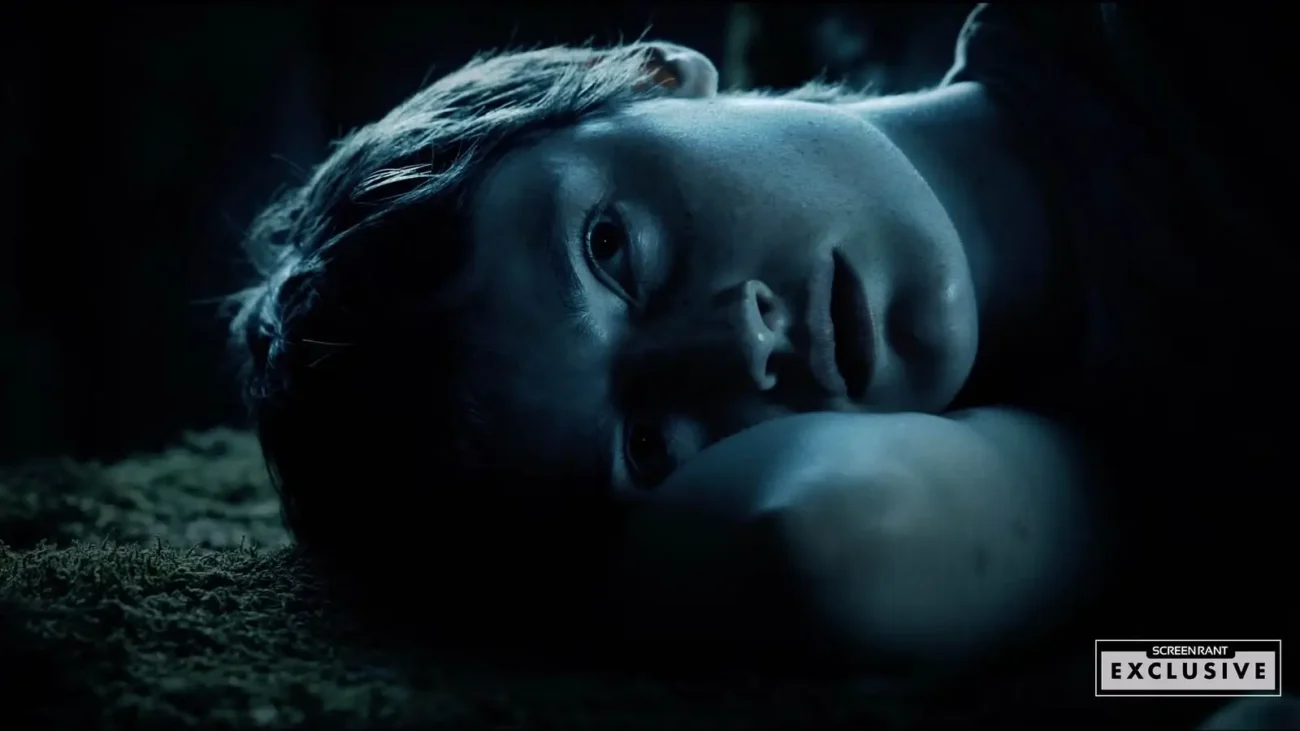
The Adams family Toby Poser, John Adams, and their daughters Lulu and Zelda have quietly become something like the Bee Gees of American microbudget horror: a homegrown unit whose voices are distinct yet inseparable, whose limitations have somehow become their signature strength. There’s a scrappiness to their work, yes, but also an intelligence and a stubborn ingenuity that keeps confounding assumptions about what “no-budget” cinema is supposed to look like. Mother of Flies, which claimed the top prize at Fantasia after its summer 2025 premiere, feels like the purest expression yet of their collective identity. Nearly everyone in the family writes and directs here (Lulu sits out those duties but still appears onscreen), and the film’s emotional DNA is deeply entangled with John and Toby’s real-life experiences with cancer. You can sense that history pulsing beneath almost every frame.
It’s frankly impressive how assured the film is, given that it was shot quickly during Zelda’s summer break from university and with virtually no financial cushion to fall back on. The family’s long, intimate acquaintance with mortality seeps through in ways that feel raw and unguarded, especially in the scenes where Mickey (played by Zelda) and her father Jake (John) finally allow themselves to articulate their private fears about her diagnosis. The mood is thick with unease; the emotional beats often land with real force. And yet, for all that sincerity, the film can also feel stubbornly repetitive, its energy oddly flattened. That’s a puzzling shortcoming when the subject matter is so personal. Too often, the drama is smothered beneath a strange blanket of affectless calm, as though everyone has agreed to underplay even when the moment begs for sharper intensity.
Mickey is introduced as a college student who has already survived one brutal encounter with cancer. At fifteen, she was given even odds of living or dying; she beat the tumor then, only to learn years later that it has returned. Now she’s been told she may have just six months left. It’s a devastating setup, but Mickey herself isn’t portrayed as brittle or melodramatic. She comes across as resilient, sharpened by experience, possessed of that prematurely wise demeanor you sometimes see in people who’ve been forced to grow up too fast. Still, she keeps the truth about her condition from her friends at school. When she eventually explains herself to her father, she says she isn’t afraid of death itself. Instead, she describes a kind of philosophical acceptance, a belief in life as a cycle where death might offer its own strange pleasures. That doesn’t mean she’s given up, though. Far from it. Her plan is to seek out a reclusive “death witch” rumored to live deep in the Catskills.
Mickey is evasive about how she learned of this woman, but Jake, at least at first, does something quietly admirable: he lets his daughter take the lead. He respects her autonomy, allowing her to decide how she wants to navigate the final, terrifying chapter of her life. It’s a refreshingly trusting depiction of parenthood. At the same time, you can’t help noticing how odd it is that he asks virtually no questions until they’re already standing at the witch’s door.
That door belongs to Solveig (played by Poser), an alternative healer living in an eerie, otherworldly house constructed around the base of an enormous tree. The place looks like something out of a Frank Lloyd Wright dream filtered through pagan folklore. Solveig herself is immediately striking: solemn, awkward, not exactly warm but not hostile either. Her long black curls frame her face like a mantle, her dark gray garments hang with ritualistic gravity, and she is perpetually surrounded by flies. She doesn’t just resemble a witch she practically announces herself as one. Jake, ever the rationalist, is skeptical, but he gamely tries to participate.
What follows is… opaque. Solveig’s methods are never clearly explained, perhaps intentionally so. Much of the time, we watch her close her eyes, murmur incantations, and appear to call forth something invisible. When we do hear her words, they arrive via relentless voiceover that sounds like a blend of occult liturgy and abstract poetry. The result is atmospheric, certainly, but also occasionally exhausting. There’s only so long you can watch an alluringly strange woman brush her fingers over objects and speak in riddles before the mystery starts to feel less like tension and more like inertia.
To be fair, the film does deliver some truly unsettling imagery. There are fragmented flashbacks to Solveig’s past, including a grotesque, hard-to-shake birth sequence that earns its discomfort honestly. And the ambiguity around Solveig is she savior, fraud, predator, or something in between? keeps us in a productive state of unease. That uncertainty is one of the film’s strengths. Still, the insistence on suggestion over clarity sometimes tips into frustration, as though the film is so committed to withholding that it forgets to deepen.
Equally wearing is Jake’s ceaseless skepticism. You’d think, given how well these characters supposedly know each other, that we’d gain more insight into their inner lives beyond their most basic will to survive. Instead, Jake’s role calcifies into that of the naysayer, endlessly pushing back against the process. Mickey has to plead with him again and again to stop undermining her choices. Eventually, you find yourself pleading with him too. By the time she finally voices what we’ve been thinking that he should either commit or walk away the film has already lingered far too long on his resistance.
And yet, the most haunting aspects of Mother of Flies don’t lie in its overt drama but in its quieter edges. In its clearest moments, the film suggests that life, death, and healing are all forms of magic whether practiced through hospitals or through ritual. It gestures toward a reverence for the natural world, for the ancient systems that existed long before modern medicine claimed dominion. There’s a gentle argument here that the earth’s processes, so often dismissed as primitive, deserve awe rather than condescension. For the Adams family, everything seems charged with meaning: the body, the soil, the simple fact of existing. The film doesn’t always articulate this vision cleanly, but you can feel it hovering there, subtle and persistent, like the soft, unsettling buzz of wings just out of sight.
Mother of Flies (2025) Parents Guide
Violence & Intensity: There are moments of disturbing imagery, including unsettling flashbacks tied to the witch’s past and one particularly graphic, nauseating childbirth sequence that may be difficult to watch. The emotional intensity around terminal illness is constant and heavy; conversations about death, dying, and fear of loss form the film’s emotional core. The atmosphere is persistently bleak, with sustained dread rather than shocks.
Language (Profanity, Slurs, Tone): The tone of the dialogue is serious and intimate rather than aggressive. There are no slurs used, and language is not employed for shock value.
Sexual Content / Nudity: There is no sexualized nudity or explicit sexual content. Any physical intimacy is minimal and non-erotic. The disturbing birth imagery is biological rather than sexual in nature, but may still be upsetting for some viewers.
Drugs, Alcohol & Smoking: There is no significant depiction of drug use, intoxication, or recreational substance abuse. The film’s focus remains on illness, healing rituals, and emotional experience rather than substances.
Recommended for mature teens (16+) and adults, particularly viewers comfortable with slow-burn horror and heavy subject matter.
Mother of Flies premieres exclusively on Shudder on January 23, 2026.
Highly Recommended:

Stephanie Heitman is a seasoned journalist and author dedicated to helping parents navigate the world of Hollywood entertainment through thoughtful, family-oriented film reviews. With over a decade of experience in writing and a passion for fostering safe, enriching viewing experiences, Stephanie launched Parentguiding.com to provide parents with the insights they need to make informed choices for their families.