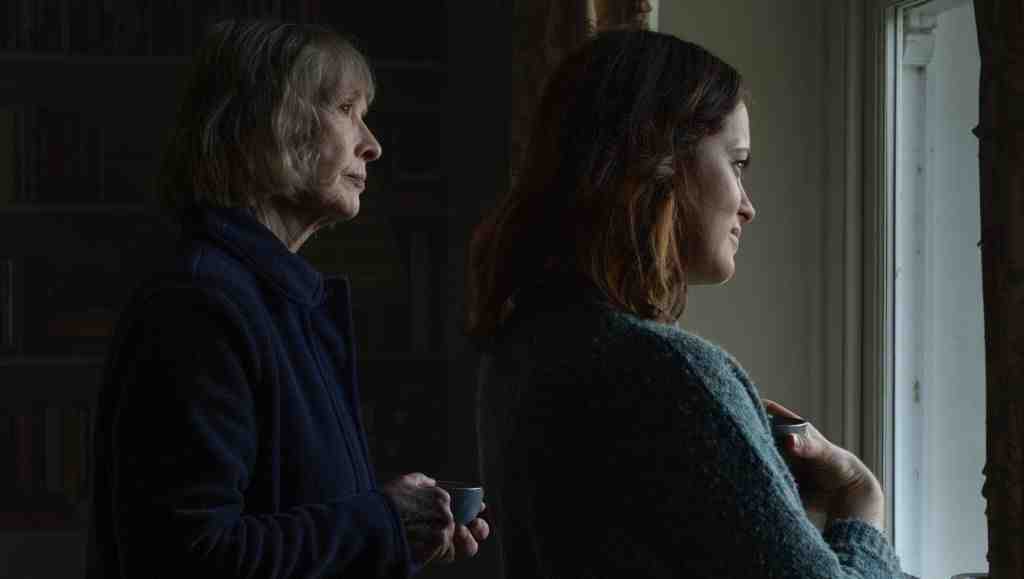
H Is for Hawk is rated PG-13 by Motion Picture Rating (MPA) for Smoking Some Strong Language.
Helen Macdonald’s 2014 memoir, H Is for Hawk, chronicled a year of raw grief and strange solace, tracing how she tried to survive the sudden death of her father by throwing herself into the ancient, unforgiving discipline of falconry. It was a book that felt less like a tidy narrative and more like a mind exposed on the page fractured, searching, stubbornly alive. Screenwriter Emma Donoghue and director/screenwriter Philippa Lowthorpe translate that experience to the screen with an understanding that this story can’t be “fixed” into something neat. Instead, they lean into the discomfort. They dramatize Helen’s jagged emotional state and the peculiar, absorbing intimacy she forms with a Eurasian goshawk, shaping a film that could have easily slipped into the rhythms of a prestige TV movie but instead reaches sometimes tentatively, sometimes boldly for something more psychologically attentive. You can feel the care in the way the film gives Claire Foy space to inhabit a shaken interior world, letting the writing linger on relationships, silences, and the slow seduction of isolation.
The bond between woman and bird is unusual enough to be risky material, yet most of the emotional beat’s land honestly, deepening our understanding of the central wound. The narrative frequently folds back into memory, not as a gimmick but as a necessity, using the past to sharpen its meditation on loss.
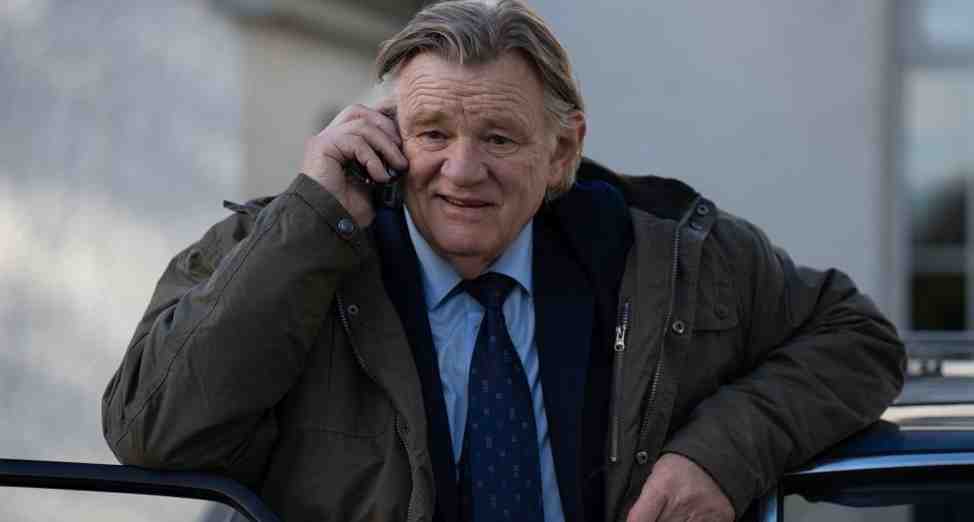
We meet Helen in 2007, played by Foy with a quiet tension that suggests exhaustion even when she’s standing still. She teaches at Cambridge, trying to summon genuine enthusiasm for a career that seems to be slipping into routine. Her father, Alisdair (a beautifully restrained Brenden Gleeson), is a celebrated photojournalist approaching retirement, taking stock of a life’s work while still animated by curiosity and creative hunger. Then, without warning, Helen receives the news that he has died.
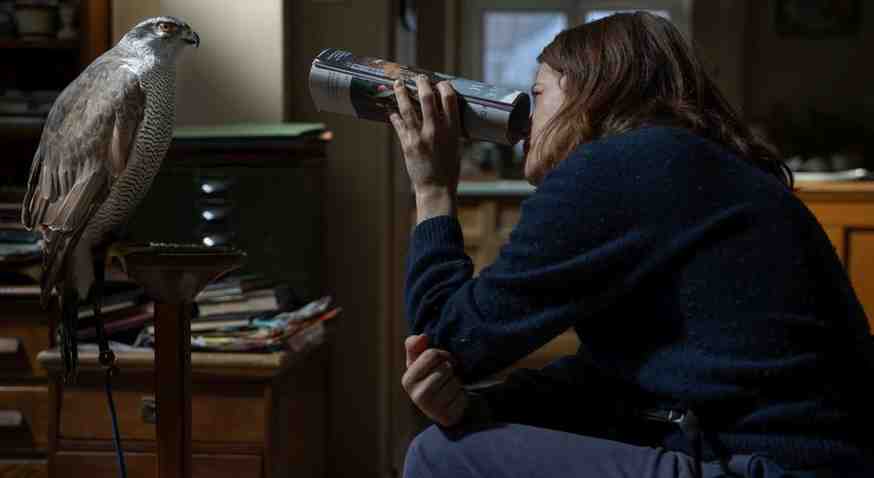
The film doesn’t dress this moment up; it lets the shock sit there, heavy and unadorned. Helen flounders in the aftermath. Her mother (Lindsay Duncan) and brother James (Josh Dylan) are present but distant, their family dynamics marked by old frost that grief only sharpens. Time with her closest friend, Christina (Denise Gough), offers no real rescue social life feels like noise rather than comfort. Gradually, almost instinctively, Helen returns to something that once grounded her as a child: falconry. She chooses a Eurasian goshawk the species often described as the most ferocious, the most untamable and commits herself to training what she calls the “wildest and maddest of raptors.” With practical guidance from her friend Stuart (Sam Spruell), she begins the long, consuming process of bonding with the bird she names Mabel, focusing so completely on this relationship that everything else in her life starts to erode.
The film’s opening stretches are almost deceptively calm. Helen’s academic life appears stable enough; her bond with her father is warm, textured, full of affection and mutual respect. Alisdair, nearing the end of his career, is portrayed as thoughtful and humane, a man who carries wisdom lightly and treats his daughter with genuine gentleness. His death comes early, and its impact is devastating. There are unresolved family tensions simmering with her mother and brother, but the story’s real focus is more interior: watching Helen retreat inward without fully understanding what is happening to her. Christina’s concern grows as Helen drifts further away, and H Is for Hawk allows us to witness this withdrawal without overexplaining it. Two months later, Helen is going through the motions of normality she keeps up appearances, even experiments with sex in what feels less like desire than obligation but nothing sticks. The idea of falconry emerges not as a grand epiphany but as a quiet, almost desperate grasp for something that might dull the ache.
Mabel, when she arrives, is no sentimental companion. She is untamed, unfamiliar with humans, and demands patience that borders on obsession. This is exactly the kind of trial Helen seems to crave. The film follows the painstaking process of earning the bird’s trust: the misread signals, the anxiety when Mabel refuses food, the fragile triumphs when small progress is made. Stuart’s presence as a seasoned falconer becomes essential, not just practically but emotionally, as he helps Helen decipher Mabel’s behavior and respect her powerful hunting instincts the very instincts that could, at any moment, pull bird and handler apart. Trust accumulates slowly, almost imperceptibly. At the same time, Helen’s human world continues to darken. She’s pressured by academic responsibilities she no longer wants, and she must write a eulogy for her father’s memorial, a task that forces her back into memories she’s been avoiding.
Those memories of Alisdair form the emotional core of the film. Through them, we see not just a loving father but a complicated man generous, yes, but also carrying unspoken pain. The flashbacks don’t feel like exposition; they feel like the way memory actually works, surfacing unexpectedly, incomplete, emotionally charged. We’re shown his artistry, the scope of his photographic career, and the private struggles that Helen only begins to understand once he’s gone. The weight of unresolved grief drags her into a depressive spiral, yet the film resists melodrama. That restraint is crucial. Foy’s performance is key here: she internalizes Helen’s emotions with such precision that we often read the character’s state of mind in the smallest flicker of her expression. It becomes less a story of breakdown than a study of someone inching, almost imperceptibly, toward reawakening.
Lowthorpe, whose work on Three Girls and episodes of The Crown has already demonstrated a sensitivity to interior lives and social undercurrents, brings the same discipline here. She avoids smoothing over the uglier edges of Helen’s experience. There’s no glossy comfort in the way the darkness is portrayed, no easy catharsis offered on cue. That refusal to sentimentalize is what ultimately gives the film its integrity. The search for light through grief, through isolation, through the fierce, demanding presence of a bird who owes Helen nothing feels earned rather than manufactured. There is a textured humanity in this central journey that keeps you invested, not because the film promises easy healing, but because it honors the messy, halting way acceptance often arrives. You don’t just watch Helen’s story unfold; you feel yourself quietly pulled into her orbit, sharing the silence, the frustration, the rare moments of fragile grace.
H Is for Hawk Parents Guide
MPA Rating: PG-13 for smoking and some strong language.
Violence & Intensity:
There is no traditional violence, but several scenes depict the realities of falconry. The goshawk hunts and kills prey in moments that are brief yet authentic, which may be unsettling for animal-sensitive viewers. These sequences are not sensationalized, but they are honest about nature. More significantly, the film deals deeply with death and mourning. The sudden loss of a parent, prolonged depression, emotional withdrawal, and psychological fragility are central to the story. You can feel the weight of Helen’s grief in nearly every scene, which may be difficult for younger audiences to process.
Language: Moderate strong language appears throughout the film, including words such as “f**k” and “sh*t,” usually spoken during moments of distress rather than casually. There are no slurs, and the tone is never cruel for its own sake. The language reflects emotional strain more than aggression, giving it a grounded, realistic quality.
Sexual Content / Nudity: Sexual content is minimal. There is one brief, non-graphic moment of adult intimacy, presented more as an expression of loneliness than desire. No nudity is shown, and the scene carries emotional awkwardness rather than sensuality.
Drugs, Alcohol & Smoking: Smoking appears in several scenes, often framed as a coping habit during periods of grief. There is occasional alcohol consumption in social and emotionally reflective contexts. No drug use is depicted.
Age Recommendations:
This film is best suited for viewers aged 14 and up, though emotional maturity is more important than age alone. It is slow, introspective, and somber. Younger teens may find it distant or confusing, while older teens and adults who appreciate thoughtful dramas may find it meaningful and quietly moving.
Highly Recommended:
Agatha Christie’s Seven Dials (2026) Parents Guide

Stephanie Heitman is a seasoned journalist and author dedicated to helping parents navigate the world of Hollywood entertainment through thoughtful, family-oriented film reviews. With over a decade of experience in writing and a passion for fostering safe, enriching viewing experiences, Stephanie launched Parentguiding.com to provide parents with the insights they need to make informed choices for their families.