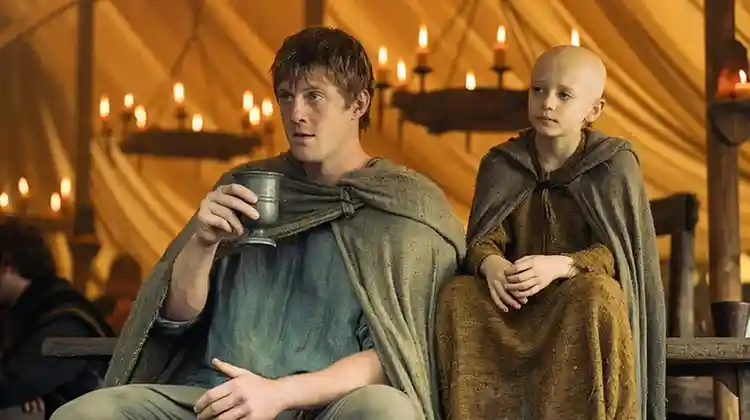
A Knight of the Seven Kingdoms is Rated TV-MA by Motion Picture Rating (MPA). Reason for rating: Violence, language, thematic intensity, and brief mature elements.
Okay, let discuss, HBO spins the wheel back to Westeros once more, but this time the journey feels gentler, stranger, and in many ways more intimate. A Knight of the Seven Kingdoms returns us to the world of dragons and dynasties through the mud-splattered boots of a green hedge knight and the sharp eyes of his too-clever squire and in doing so, it dares to explore emotional terrain that this franchise has only flirted with before. The surprise is not just that it works, but that the heart, humor, and quiet charm that once flickered at the edges of Game of Thrones now take center stage, glowing brighter than they ever have.
The six-episode first season adapts George R.R. Martin’s novella The Hedge Knight, unfolding in the historical gap between House of the Dragon and Game of Thrones. But don’t expect the familiar rhythms of courtly power plays or globe-spanning political dread. This Westeros feels smaller, more personal, and curiously unfamiliar precisely because it isn’t dominated by maps, armies, or iron thrones. The world here is not carved up by kings it’s experienced from the ground.
The story follows Dunk (Peter Claffey), later known as Ser Duncan the Tall, a broad-shouldered young man from Flea Bottom who becomes a knight in the loosest, most precarious sense of the word after the death of his mentor, Ser Arlan of Pennytree. With little more than borrowed armor and a fragile sense of honor, he heads toward the Tourney of Ashford in search of employment. Along the road, he encounters Egg (Dexter Sol Ansell), a sharp-tongued, self-possessed boy who all but appoints himself Dunk’s squire. Their journey and the lessons they absorb along the way gradually reveals a truth that Westeros has always known but rarely lingers on: not every knight believes in honor, and not every noble life deserves admiration.
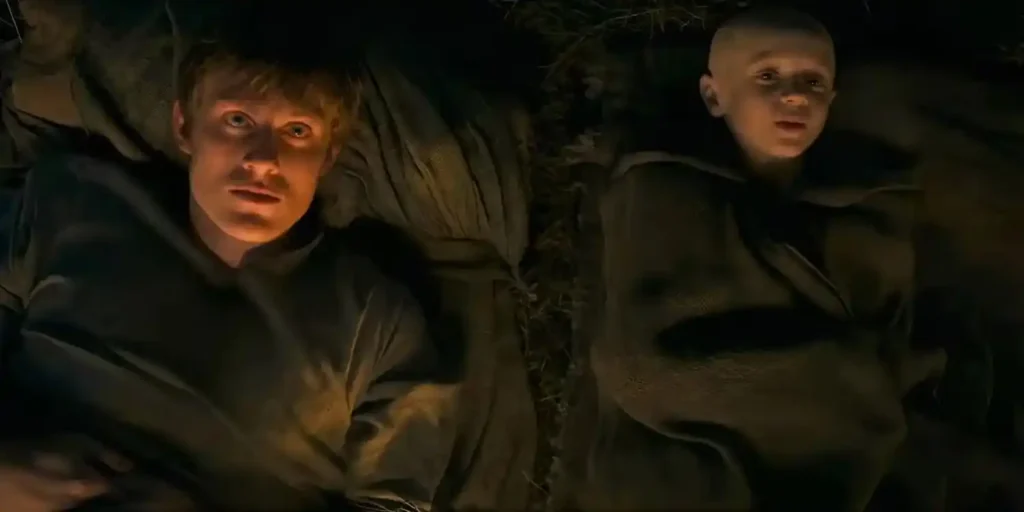
Almost immediately, the series signals that it has no interest in delivering yet another grim rise-to-power saga. Within minutes of meeting Dunk, you can feel the tone shift. This is not the story of a ruthless striver clawing his way toward greatness. It’s the story of a man simply trying to prove he’s good enough to be hired by a lord, terrified that the only thing he truly owns his sense of honor might slip through his fingers if he’s not careful. The stakes are smaller, yes, but they’re also more piercing because they feel painfully human.
Highly Recommended: New Arrivals on HBO Max January 2026: 10 Best Shows and Movies to Stream
That intimacy becomes the show’s defining strength. By centering the lives of smallfolk, eccentric minor lords, struggling laborers, and the often unglamorous realities of life outside the castles, the series breathes new life into a franchise that had begun to suffocate under its own spectacle. There’s something quietly radical about seeing Westeros through these eyes, and it’s in that shift of perspective that the show’s fresh appeal truly takes hold.
Even more impressive is how deftly the series walks its tonal tightrope. The humor lands without undermining the drama, and the emotional beats deepen rather than cheapen the comedy. The show is not trying to replicate the operatic darkness of Game of Thrones, and at times it even seems to gently poke fun at the parent series’ excesses. Those moments of mockery can be broad, occasionally too obvious but the lighter tone is also what allows the series to carve out its own identity. And when it leans into sincerity, it earns it.
There’s something quietly radical, too, about how hopeful this story feels. Westeros has long been a landscape of betrayal and bloodshed, a place where decency is punished and cruelty rewarded. Here, cruelty still exists, deceit still festers but through Dunk and Egg’s evolving bond, through their almost buddy-comedy rhythm at Ashford, you begin to sense something different: the possibility that goodness might still matter. That “good men” might still be worth fighting for. It’s hard not to feel a little disarmed by that.
By the end of the season, it’s difficult to deny that this may be the most genuinely uplifting tale the franchise has ever put on screen. The pacing is steady, the tourney’s twists and turns unfold with satisfying rhythm, and instead of the usual dread or shock, you find yourself smiling sometimes laughing far more often than expected. Much of that warmth comes from the immediate, believable chemistry between Claffey and Ansell. Their connection feels lived-in almost instantly, as though these two have always belonged in each other’s orbit.
Highly Recommended: 28 Years Later: The Bone Temple (2026) Parents Guide
For actors still relatively new to the screen, both deliver astonishingly confident performances. Across all six episodes, they capture the fragile balance of their characters: the awkward pride of a hedge knight barely holding onto his dignity, the concealed intelligence of a boy who knows more than he says. As their relationship deepens and the narrative pushes them into heavier emotional territory, they navigate each shift with nuance rather than melodrama. You can see the characters changing not because the script tells you they have, but because the performances quietly insist on it.
What’s remarkable is that they don’t just embody Martin’s characters they expand them. Through original scenes and thoughtful deviations from the source material, Claffey and Ansell infuse Dunk and Egg with layers of vulnerability and emotional complexity that give the story an even stronger pulse. They don’t feel like adaptations; they feel like living, breathing people who happen to have wandered out of the page.
The supporting cast rises to meet that standard. Daniel Ings is a standout as Lord Lyonel Baratheon, delivering a performance so strange and magnetic it’s hard to look away; fan-favorite status feels inevitable. Bertie Carvel brings a composed, noble gravity to Baelor Targaryen, while Shaun Thomas adds a delightful mix of innocence and humor to Raymun Fossoway. Finn Bennett, meanwhile, injects Aerion Targaryen with such cold arrogance that every scene he appears in tightens with tension. Each performance deepens the world rather than merely decorating it.
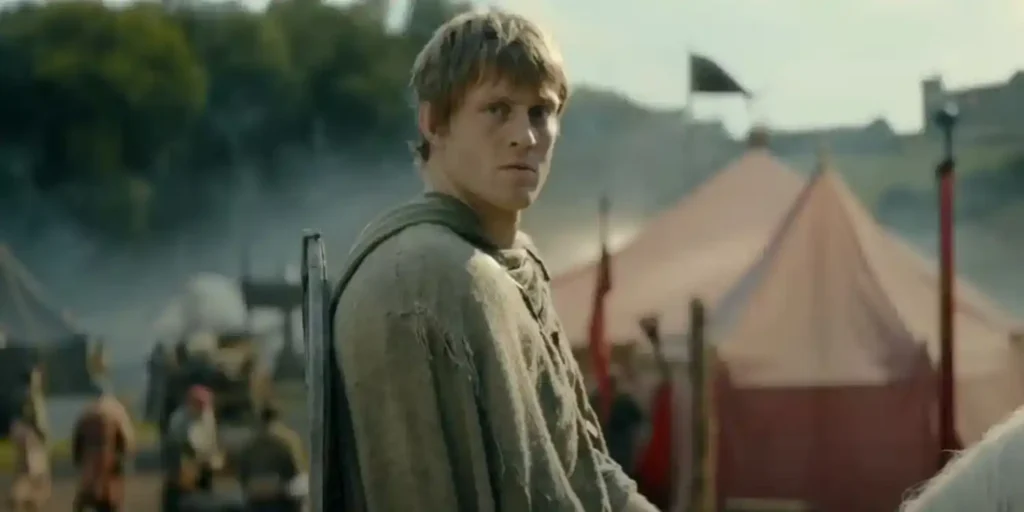
The broader political backdrop is also intriguingly unfamiliar. Westeros is technically at peace following a devastating rebellion, but the calm is uneasy. The dragonless Targaryens—still shaken, still clinging to authority, still haunted by Blackfyre dissent find themselves attending the tourneys of minor houses like the Ashfords, a quiet humiliation for a dynasty that once commanded fear. It’s a humbler era, stripped of spectacle, and the contrast with both House of the Dragon’s fiery grandeur and Daenerys’ later mythic ascent is striking.
Yet even without dragons, the Targaryens remain complicated. Pride, duty, jealousy, honor, expectation those familiar emotional fault lines persist across every timeline in this franchise. Here, those internal tensions build toward some of the season’s most gripping moments, proving that you don’t need armies or apocalyptic stakes to generate real dramatic weight.
The action follows suit. The absence of war means no massive battlefield set pieces, but the tourney sequences are staged with care, intensity, and surprising grit. Through precise framing, muscular direction, and a score that underscores every clash of steel, the show transforms these personal duels into moments of genuine suspense. The scale is smaller, but the emotional investment is sharper. Each blow feels earned because each one matters deeply to the characters involved.
Highly Recommended: Baahubali: The Epic Parents Guide
As the franchise prepares to return to large-scale devastation with House of the Dragon season 3, A Knight of the Seven Kingdoms feels like a deliberate counterpoint: a quieter, more humane exploration of Westerosi life. The decision to step away from spectacle in favor of humble underdog storytelling was a gamble but it’s one that pays off beautifully. By emphasizing decency, resilience, and small acts of courage, the series doesn’t just refresh the franchise. It reorients it.
That’s not to say the season is flawless. There are moments where tonal shifts feel slightly uneven, and a few character motivations could benefit from clearer grounding. But as a first chapter in Dunk and Egg’s journey, it’s deeply promising. With a second season already underway, the groundwork has been laid for even richer emotional conflict especially as Egg’s commitment to Dunk deepens and their bond is tested in new ways.
If the series continues to trust in its characters as fully as it does here, it may well become the most endearing and emotionally resonant story the Game of Thrones universe has yet told.
A Knight of the Seven Kingdoms Parents Guide
Violence & Intensity: Violence is present throughout the season, mostly centered on tourney combat jousting, sword fights, and hand-to-hand clashes. Blood is shown and injuries occur, though the series avoids extreme gore. What lingers more than the physical violence is the emotional intensity: grief, betrayal, cruelty, and moments of humiliation can feel heavy. Some characters behave with disturbing arrogance and malice, which can be unsettling even when the camera doesn’t linger on brutality.
Language (Profanity, Slurs, Tone): Moderate profanity appears consistently, including words like “shit,” “bastard,” and “damn.” Characters frequently use insults and harsh language, especially when power, class, or pride are involved. The tone can be cutting and emotionally sharp, reflecting the cruelty of the world even when explicit language is limited.
Sexual Content / Nudity: Unlike earlier Westeros series, sexual content is minimal. There is little to no nudity, and romance is handled with restraint. References to sex exist but are brief and not graphic. This is one of the most family-considerate entries in the franchise when it comes to sexual content.
Drugs, Alcohol & Smoking: Alcohol use is common and shown as part of everyday medieval life characters drink wine or ale in taverns, feasts, and social settings. There is no drug use, and the drinking is not glamorized beyond being culturally normal for the world.
Age Recommendations
Best suited for viewers 16+, and more comfortably for 18+. While it is lighter in tone than Game of Thrones, the themes of cruelty, moral struggle, and emotional hardship still require maturity. Younger teens may find the emotional content and violence difficult to process.
A Knight of the Seven Kingdoms season 1 premieres on HBO on Sunday, January 18 at 10 p.m. ET.

Stephanie Heitman is a seasoned journalist and author dedicated to helping parents navigate the world of Hollywood entertainment through thoughtful, family-oriented film reviews. With over a decade of experience in writing and a passion for fostering safe, enriching viewing experiences, Stephanie launched Parentguiding.com to provide parents with the insights they need to make informed choices for their families.