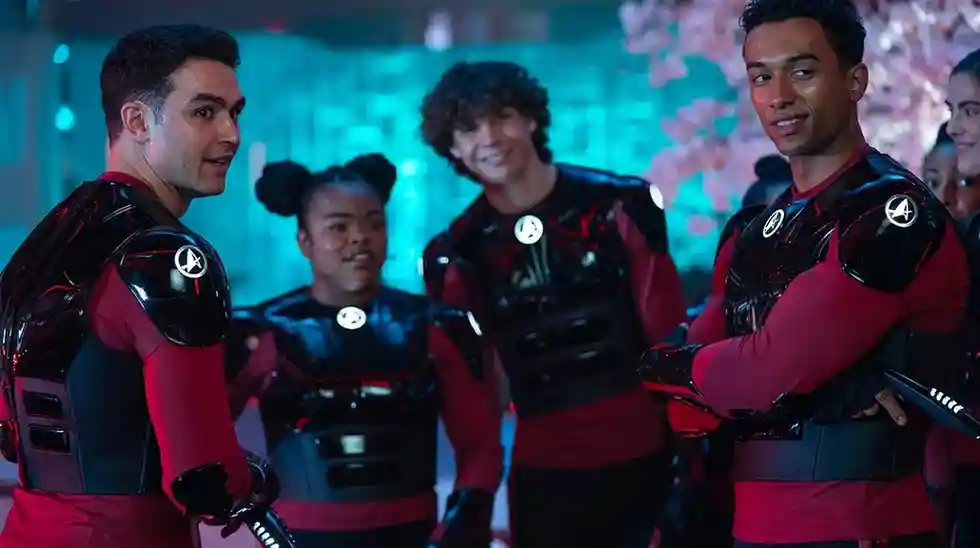
In the first six installments of this ten-episode debut season, we spend a lot of time in the weeds of adolescent drama: bruised egos, romantic longing that veers toward the saccharine, and earnest team-building exercises where even the most self-absorbed cadet inevitably discovers the magic of cooperation. You can feel the show sometimes straining to be inspirational in ways that feel a little too neat, a little too rehearsed.
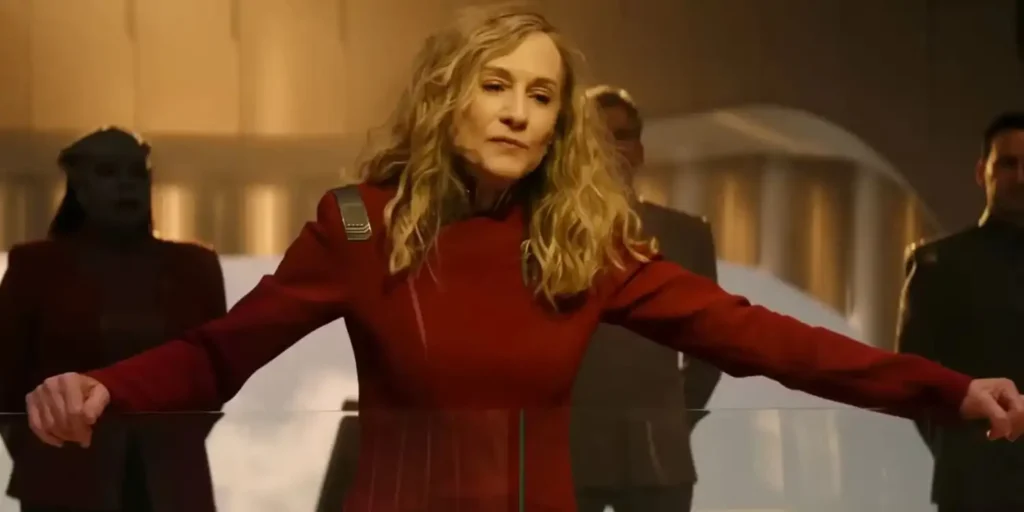
Yet when it leans into what Star Trek has historically done best using optimism as a lens to explore politics, identity, and coexistence it suddenly clicks. Several episodes offer thoughtful, cross-cultural and cross-species debates that feel like they could have aired during the franchise’s strongest eras. Those moments are a reminder of why Trek endures. And presiding over it all is Academy Chancellor Nahla Aké, played by the perpetually magnetic Holly Hunter, who feels instantly worthy of joining the lineage of captains and commanders that define this universe. Her presence alone gives the show a sense of gravitas. There is, genuinely, a lot here to admire.
Interestingly, the narrative scaffolding echoes Star Trek: Discovery in ways that are impossible to ignore. Caleb Mir, played by Sandro Rosta, is very much cut from the Michael Burnham mold: brilliant, volatile, wounded, and perpetually on the run from his past. Torn away from his mother, Anisha (Tatiana Maslany, bringing her usual intensity), Caleb has grown into a volatile mix of arrogance and raw intelligence. He’s essentially a bulked-up, future-set version of Matt Damon’s Good Will Hunting persona gifted, defensive, and emotionally shut down, except with much larger biceps.
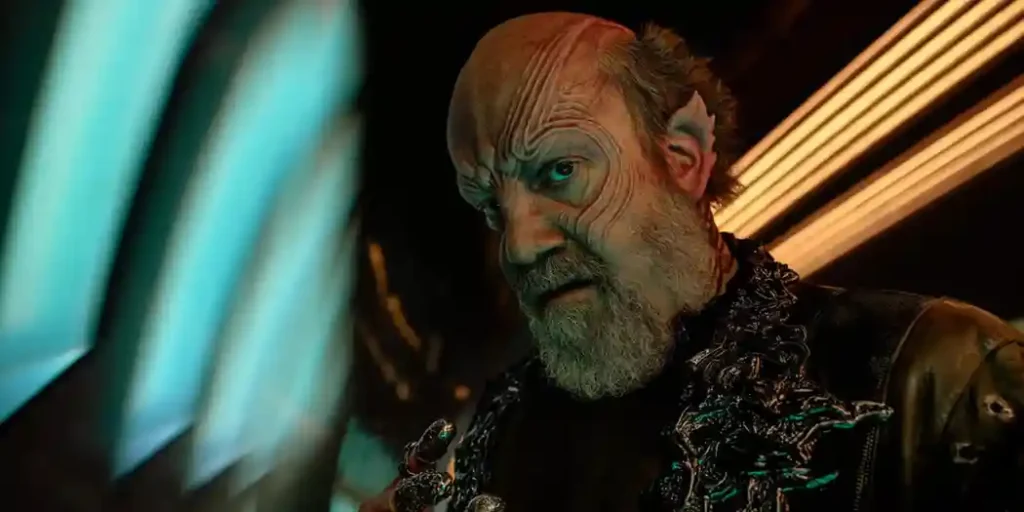
Aké’s connection to him deepens that dynamic. Burdened by guilt over her role in the separation between Caleb and Anisha fifteen years earlier, she offers him a bargain: freedom from a harsh sentence on the planet Toroth in exchange for enrollment in the Academy. More than that, she dangles the promise of helping him find his mother, who has long since vanished without a trace. It’s an offer he doesn’t fully trust, but he takes it anyway, following Aké to San Francisco, where the Academy has just been rebuilt and reopened after more than a century of dormancy a gap caused by the long-term fallout of “The Burn” introduced in Discovery. The setting itself carries a sense of historical weight, even if the show sometimes forgets to fully explore it.
Highly Recommended: Industry Season 4 Parents Guide
Aké’s own arrival is tinged with ambivalence. She returns only after being pressured by Admiral Vance (Oded Fehr, again stepping comfortably back into his Discovery role), having previously resigned in disgrace. But once she’s on campus, Hunter’s Aké feels utterly at home. She may not be the narrative’s central protagonist that role belongs to Caleb but she dominates every scene she’s in. This is not your standard Starfleet authority figure. Aké pads around barefoot, reclines with the ease of someone who has outgrown rigid protocol, and carries herself like a bohemian philosopher rather than a polished bureaucrat. There’s a dry wit reminiscent of Voyager’s Janeway, but also a warmth that feels uniquely her own. Her affection for tactile pleasures actual books, vinyl records adds texture, as does the knowledge that she is part Lanthanite and over 300 years old. Hunter plays her not as weary, but as someone who has lived deeply and chosen joy anyway.
The Academy’s structure is also intriguingly dual: instruction happens both on Earth and aboard the U.S.S. Athena, a beautifully designed training vessel where cadets can test themselves in real mission conditions. Aké’s first officer, Lura Thok (played with bracing energy by Gina Yashere), is a Klingon–Jem’Hadar hybrid and partner to Jett Reno (Tig Notaro, back again). Kurtzman’s fondness for casting comedians continues to pay off here. Yashere brings sharp humor and grounded authority, playing Thok as a no-nonsense disciplinarian with a surprising vulnerability and self-awareness. She’s one of the show’s most consistent pleasures.
The return of Robert Picardo as The Doctor is another genuine gift. The acerbic hologram from Voyager now wears several hats at the Academy: Chief Medical Officer, debate instructor, even head of the Opera Club. Watching Picardo sink his teeth into dialogue again arch eyebrow, razor-tongued wit and all is a reminder of how indelible that character remains. He doesn’t just provide nostalgia; he provides energy.
Highly Recommended: The Pitt Season 2 Parents Guide
Where the show stumbles most is with the central cadet ensemble the very group the series is asking us to emotionally invest in over the long haul. That’s not a small problem. Rosta’s Caleb is engaging enough, but many of the others feel underdeveloped in these early episodes. Karim Diané’s Jay-Den Kraag, a Klingon who prefers healing and scientific inquiry over honor-bound aggression, is conceptually interesting but unevenly performed, with line deliveries that feel awkward rather than restrained. George Hawkins’ Darem Reymi, Caleb’s rival from the new Khionian species, is physically imposing and positioned as an alpha foil, but in practice he doesn’t feel distinct enough from the lead to generate real dramatic tension.
For a series that proudly foregrounds queer identities and ethnic diversity, it’s disappointing that the storytelling itself doesn’t take more risks. Representation is visible, yes, but the narratives often play it safe, avoiding the kind of ethically thorny or philosophically provocative material Trek once excelled at.
Bella Shepard’s Genesis, a flirtatious and driven cadet from the Dar-Sha species and daughter of an admiral, feels similarly underwritten defined more by attitude than complexity. The more intriguing presence is Kerrice Brooks as SAM (Series Acclimation Mil), the first hologram cadet in Starfleet history. Brooks brings charm and curiosity, even if her performance leans a little too heavily into the socially awkward energy Mary Wiseman used so effectively as Tilly in Discovery. Still, watching a photonic being navigate life as a student opens up fascinating possibilities possibilities the show hasn’t fully seized yet. And with all due respect to Stephen Colbert, whose voice appears as the Academy’s computer system, the cutesy, summer-camp PA announcements feel like a tonal misfire that the show would survive just fine without.
You can sense Kurtzman and Landau wrestling with competing impulses: honoring Trek’s philosophical legacy while also trying to craft a breezy, character-driven campus dramedy in the mold of something like The Sex Lives of College Girls. The concept of a neighboring War College, housing more militaristic cadets, is promising. But too often, the rivalry between the two institutions feels less like political commentary and more like a Hogwarts knockoff, complete with color-coded tribalism and juvenile one-upmanship. Even so, there’s undeniable pleasure in finally exploring this long-theorized corner of the Trek universe. As world-building, it’s often genuinely enjoyable.
Highly Recommended: Land of Sin Parents Guide
At its strongest, the show remembers that Star Trek truly comes alive in moments of pressure when characters are pushed into situations that test not just their skills, but their empathy and moral imagination. In those sequences, whether set aboard the Athena or in the field, the series feels closest to the spirit it’s trying to honor. This is undeniably Star Trek. But it’s also a version of Trek that feels comparatively muted, lacking the political sharpness and daring ambition of its predecessors. The visuals are slick, the effects impressive, yet the thematic territory often feels familiar and, frankly, better explored elsewhere, including with sharper comedy on Lower Decks.
If Violo, Kurtzman, and Landau truly want to chart unexplored space, they may need to dig deeper into who these cadets really are beneath the archetypes. Nostalgia no matter how pleasurable it is to see The Doctor again can only carry a show so far. The future of Starfleet Academy will depend on whether it can evolve from a pleasant extension of the franchise into something that feels as bold and specific as the universe it hopes to expand.
Star Trek: Starfleet Academy — Parents Guide
Rating: TV-PG (Motion Picture Rating / MPA)
Violence & Intensity: Despite its glossy, youth-oriented presentation, Starfleet Academy doesn’t entirely abandon the peril baked into Star Trek’s DNA. Most of the first six episodes lean more toward emotional scuffles than physical ones arguments between cadets, bruised egos, competitive tensions, and the occasional sharp betrayal. You can feel the show straining to keep the stakes accessible rather than frightening.
That said, when the series ventures aboard the U.S.S. Athena for training missions, there are moments of sci-fi danger: simulated combat scenarios, alien threats, tense moral dilemmas, and peril that could frighten very young viewers. The danger rarely feels brutal, but it does occasionally feel urgent. Nothing graphic, nothing lingering, but not entirely toothless either.
Language: The dialogue largely keeps within broadcast-friendly boundaries. There’s some mild profanity (“hell,” “damn,” occasional sharper sarcasm), but nothing that would likely raise eyebrows in most households. The tone, however, can veer into snippy territory. Characters trade barbs, engage in petty conflict, and occasionally speak with the kind of wounded sharpness you’d expect from emotionally immature teenagers trying to figure out who they are.
Sexual Content / Nudity: This is where the CW comparisons begin to feel most accurate. Romantic subplots are plentiful, sometimes saccharine, sometimes clumsy, often foregrounded. Characters flirt. They crush. They pine. They get tangled up in interpersonal drama that will feel very familiar to anyone who’s ever watched a teen ensemble show.
Drugs, Alcohol & Smoking: There is little to no emphasis on substance use. The environment is Starfleet disciplined, aspirational, idealistic. You might see the occasional social drink in an adult setting, but there’s no glamorization of drugs, smoking, or reckless behavior. The show’s moral universe still believes, at least on the surface, in self-betterment.
Age Recommendations: While rated TV-PG, the show feels best suited for viewers 12 and up, and arguably more satisfying for teens 14+ who can engage with the emotional dynamics and interpersonal conflicts.
Parents who grew up with Trek may feel conflicted: this is recognizably part of the franchise, yes, but filtered through a youthful, glossy lens that prioritizes emotion over philosophy more often than not.

Stephanie Heitman is a seasoned journalist and author dedicated to helping parents navigate the world of Hollywood entertainment through thoughtful, family-oriented film reviews. With over a decade of experience in writing and a passion for fostering safe, enriching viewing experiences, Stephanie launched Parentguiding.com to provide parents with the insights they need to make informed choices for their families.