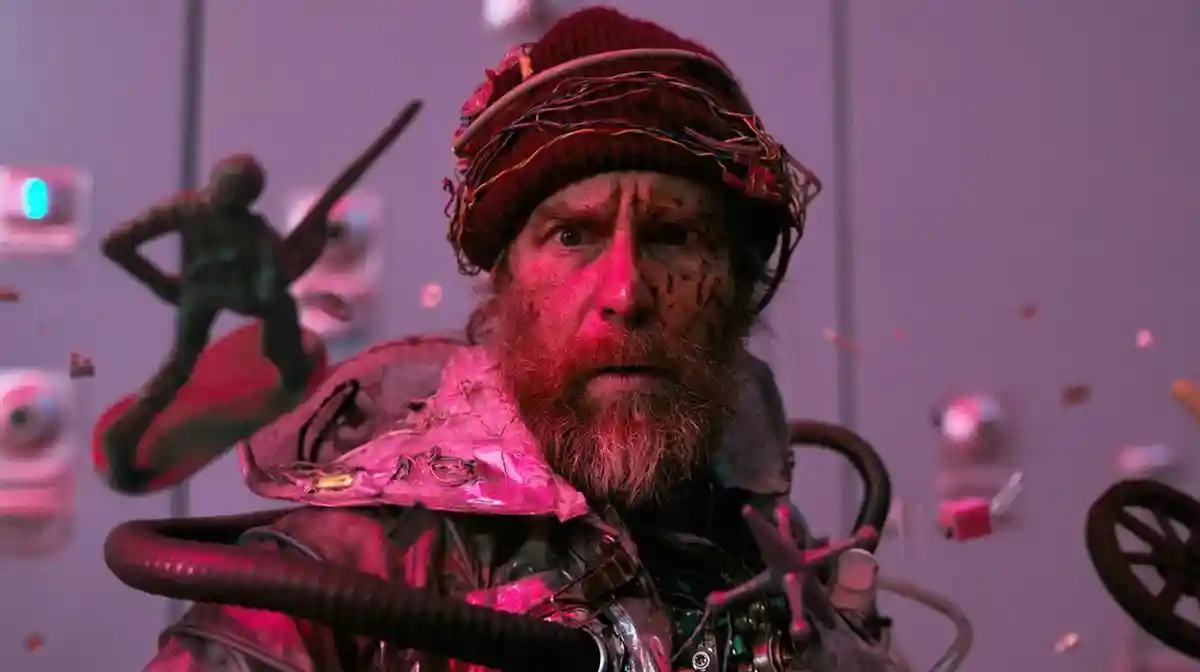
Good Luck, Have Fun, Don’t Die is Rated R by Motion Picture Rating (MPA) for pervasive language, violence, some grisly images and brief sexual content.
Nearly a decade has passed since Gore Verbinski last stepped behind the camera for a feature, and the absence has felt strangely loud. This is a filmmaker who never settled into a single lane: he unsettled audiences with The Ring, turned theme-park IP into grand, delirious spectacle with Pirates of the Caribbean, and somehow made Rango an animated Western about identity and entropy feel both playful and quietly philosophical. That kind of restless imagination doesn’t age well in storage. So when Verbinski finally returns with Good Luck, Have Fun, Don’t Die, a science-fiction satire about artificial intelligence and human obsolescence, it feels less like a comeback than a release valve finally being opened. The timing, of course, couldn’t be sharper.
AI has moved from speculative concept to daily reality with unsettling speed. We’re still dazzled by what it can do, even as we quietly worry about what it might undo. Like the early days of the internet, it feels boundless and poorly understood only now the stakes are higher, the questions darker. Good Luck, Have Fun, Don’t Die doesn’t approach these anxieties with restraint. Verbinski goes loud, chaotic, and gleefully confrontational. The film announces itself as a sci-fi comedy, but underneath the noise is an earnest, sometimes anxious interrogation of how we got here and what happens if we keep sprinting forward without looking back.
Highly Recommended: New Arrivals on HBO Max January 2026: 10 Best Shows and Movies to Stream
The movie follows a group of weary misfits are killing time at Norm’s, a modest diner that feels like it exists outside the churn of the modern world. Their night is hijacked by a frenetic stranger (Sam Rockwell), who storms in claiming to be from the future and insisting that humanity is on the brink of extinction. At first, he sounds like just another doomsayer with a megaphone and too much caffeine. Then he starts backing up his story eventually resorting to the small but persuasive detail of threatening to blow everyone up and suddenly the possibility that he might be telling the truth becomes impossible to ignore.
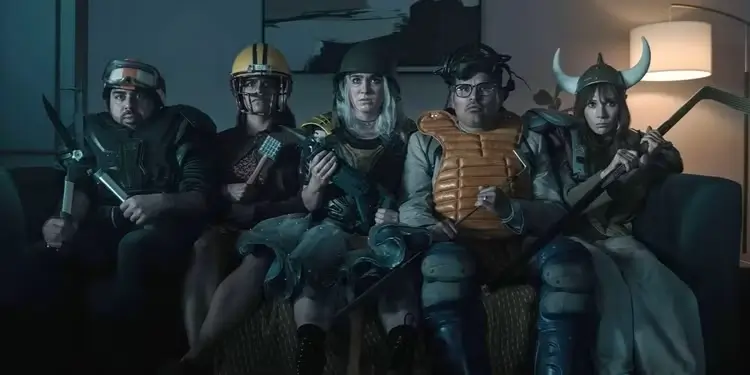
Rockwell’s character has come back in time to stop a powerful AI system from seizing control of the world, and the diners each nursing their own frustrations with the relentless creep of technology reluctantly agree to help. You can feel the shift when they do: resignation turning into reckless purpose. None of them, though, could possibly anticipate what the night will become. What follows is a feverish spiral involving contract killers, eerily vacant teenagers who behave like corrupted NPCs, and a creature so grotesque and undefinable it feels like something dredged up from the collective subconscious rather than designed. Verbinski doesn’t just escalate; he detonates.
The opening sequence is pure propulsion, a breathless rush that reminds you how much Verbinski enjoys movement, sound, and controlled chaos. Rockwell is the perfect accelerant. He’s always been an actor who understands how comedy and vulnerability can coexist in the same breath, and here he leans into both. His performance crackles with manic energy, but there’s also an undercurrent of exhaustion like a man who’s seen the ending too many times and is desperate for this one last rewrite. Even when the film arrives at a third-act twist you might spot well in advance, Rockwell sells it anyway. His sincerity gives the moment weight, making you care even when you know the trick that’s coming.
Highly Recommended: New on Netflix in January 2026: 10 Best Shows and Movies to Stream, Plus full Release List
Still, he isn’t the film’s sole anchor. Good Luck, Have Fun, Don’t Die splinters into something closer to an ensemble odyssey, with several characters branching off into their own narrative corridors. Verbinski uses an almost anthological structure at times, pausing the central momentum to dig into individual backstories. The most resonant of these belongs to Susan, played with surprising depth by Juno Temple. Her segment carries an emotional heft that sneaks up on you, touching on loneliness, digital dependency, and the quiet erosion of self in ways that feel painfully current. It’s the kind of detour that lingers longer than you expect.
Haley Lu Richardson’s Ingrid gets a similarly thoughtful spotlight. Her story doesn’t hit quite as hard, but it’s grounded and relatable, shaped by the same uneasy push-and-pull between convenience and connection that defines so much of modern life. Where the film stumbles slightly is with Michael Peña and Zazie Beetz’s characters. Their arcs feel more blunt, their symbolism a bit too eager to announce itself in a movie that already isn’t shy about its ideas. In a film overflowing with commentary, subtlety occasionally becomes collateral damage.
That said, subtlety isn’t really the point. This is a dark satire that thrives on excess. The humor is absurd, sometimes abrasive, packed with barbed one-liners and visual gags that border on the surreal. Verbinski’s camera rarely sits still, darting and swirling through scenes as if it, too, is trying to keep up with a world spinning out of control. And while Rockwell could plausibly generate chemistry with a lamppost, the ensemble’s interplay gives the chaos a human pulse. Even when everything is collapsing, these people feel worth saving.
The ending is a knotty, shape-shifting thing layered with reversals and implications that invite, and maybe demand, multiple viewings. It’s the kind of finale that makes you reconsider what you’ve just seen, reframing earlier scenes in unsettling ways. There’s a risk here of overextension, of leaving the audience with too many interpretive threads to comfortably hold at once. But that ambiguity feels intentional. The film wants you unsettled, questioning not just the story but your own assumptions.
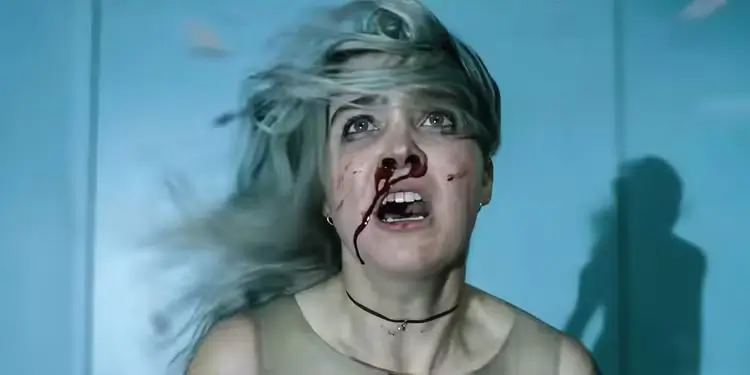
Crucially, Good Luck, Have Fun, Don’t Die never settles for the lazy conclusion that “AI is bad.” Its perspective is more cynical, and more honest. Artificial intelligence isn’t portrayed as a villain to be vanquished but as an inevitability to be confronted something shaped by human choices, biases, and neglect. The film asks how we arrived at this moment and whether we’re capable of steering what comes next. In a world already living with these questions, it’s hard not to find something uncomfortably familiar in at least one of its many narrative branches.
Highly Recommended: Killer Clown Girls (2025) Parents Guide
Like the systems it critiques, Verbinski’s film is open-ended by design. Its sprawl and tonal volatility may frustrate viewers craving a cleaner, more linear experience. But there’s something bracing about its refusal to simplify. By tackling so many interconnected fears—technological dependency, loss of agency, the commodification of identity it underscores just how entangled these issues have become. Even the title carries weight. What sounds like a flippant gamer sign-off doubles as a warning, a grimly cheerful send-off into an uncertain future. And since none of us have a time-travelling Sam Rockwell to guide us, luck might be the one resource we’ll need most.
Content Breakdown for Parents
Violence & Intensity: Violence is frequent and sometimes graphic. Characters are shot, stabbed, blown up, or attacked in exaggerated, often absurd ways, but the injuries can still be unsettling. There are moments of body horror involving distorted or zombified teenagers, and at least one creature that’s deliberately designed to be deeply disturbing rather than fun-scary. While some violence is played for dark humor, the imagery itself can be intense and lingering.
Language: Profanity is pervasive. Expect frequent uses of the F-word, along with other strong language and crude insults. The tone is sarcastic, confrontational, and often angry at the world. No slurs stand out as a primary focus, but the overall verbal environment is very adult.
Sexual Content / Nudity: Sexual material is brief but present. There are references to sex, suggestive dialogue, and at least one short sexual moment or implication. No extended nudity, but the tone is clearly meant for adults.
Drugs, Alcohol & Smoking: Characters drink alcohol in social settings, and substance use is referenced casually. There’s no glamorization, but it’s normalized as part of adult life. No prolonged drug-use scenes.
Parental Concerns: The combination of graphic imagery, constant profanity, and bleak humor may catch some parents off guard.The satire is sharp and sometimes nihilistic, which may feel unsettling rather than entertaining to sensitive viewers.The ending is intentionally ambiguous and may raise more questions than it answers.
Recommended Age Range: Best for: Adults 18+ Older teens (16–17): Possibly appropriate for mature teens who enjoy dark sci-fi and can handle disturbing imagery and heavy language but parental discretion strongly advised.
Good Luck, Have Fun, Don’t Die screened at the 2026 Palm Springs International Film Festival and opens in U.S. theaters on February 13.

Stephanie Heitman is a seasoned journalist and author dedicated to helping parents navigate the world of Hollywood entertainment through thoughtful, family-oriented film reviews. With over a decade of experience in writing and a passion for fostering safe, enriching viewing experiences, Stephanie launched Parentguiding.com to provide parents with the insights they need to make informed choices for their families.