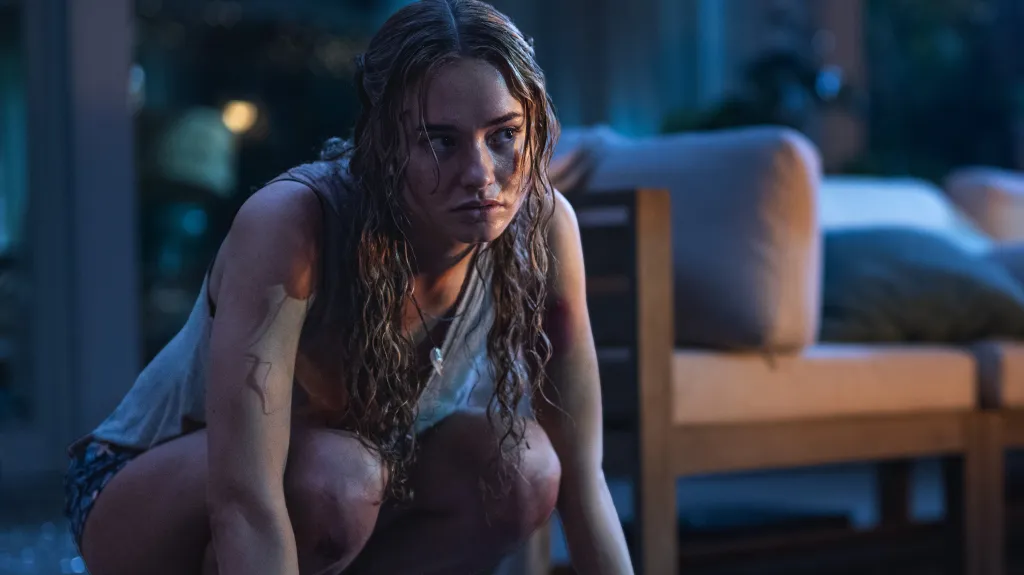
Primate Rated R by Motion Picture Rating (MPA) for strong bloody violent content, gore, language, and some drug use.
The story in Primate wastes no time easing you in. A handful of friends arrive at a tropical retreat expecting the kind of carefree escape that exists mostly in vacation ads sunlit afternoons, loose laughter, the comforting illusion that nothing truly bad can happen in a place this beautiful. That illusion doesn’t just crack; it shatters. The danger comes not from some mythic beast or supernatural force, but from something unsettlingly familiar: a pet chimpanzee named Ben, whose sudden, violent turn transforms the trip into a desperate fight for survival.
Director Johannes Roberts understands exactly why that premise lands with such force. There’s something uniquely disturbing about watching domestic intimacy curdle into terror. Ben isn’t introduced as a monster; he’s part of the scenery, almost background texture. And that’s what makes the shift so unnerving. When the violence erupts, it feels less like a plot twist than a violation. You can feel the film leaning into that discomfort, daring you to sit with it rather than reassuring you with irony or distance.
Lucy, our protagonist, returns to her parents’ breathtaking cliffside mansion in the Hawaiian mountains, accompanied by a couple of girlfriends, eager for sisterly bonding, a touch of rebellion, and the inevitable party interludes. Her recently deceased mother, a celebrated ecologist reminiscent of Jane Goodall, left behind Ben: a chimpanzee who has, over time, become less a research subject and more a family member.
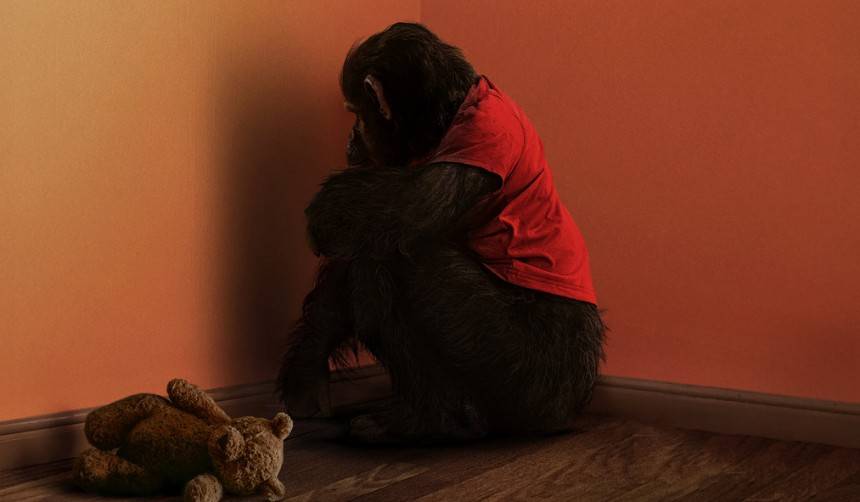
Ben’s presence is at once extraordinary and innocuous sleeping in a Jurassic Park–style enclosure but otherwise enjoying near-total freedom. He communicates with gentle handshakes, obeys a piercing whistle, and occasionally taps out words on a retro, slightly sinister speak-and-spell device. All of this domestic order collapses the moment Ben is bitten by a rabid animal. Civilized boundaries crumble; instinct takes over. And suddenly, the chimp who once hugged and obeyed is driven by raw, merciless primal urges, setting the stage for chaos that is as horrifying as it is irresistible.
Highly Recommended: The Dutchman (2025) Parents Guide
Roberts wears his influences proudly. The film pulses with 1980s John Carpenter tension and siege dynamics, while nods to Stephen King’s “animal attack” classics Cujo, Sleepwalkers, Pet Sematary echo through every sequence. In its lean ninety-minute runtime, the movie crams in tropes, surprises, and set pieces with giddy efficiency.
Lucy’s father, a deaf man played with earthy charm by Troy Kotsur (linen-clad, delightfully textured), brings both a touch of warmth and a narrative quirk: the world is filtered through his partial absence, his hands signing where his ears do not hear. The sibling bond between Lucy and her sister gets some narrative mileage, though not exhaustive, while a rotating cast of visitors—veterinarians, medical technicians, and a few shirtless teenage boys—become the fodder for Ben’s inventive rampage. And yes, the film does not shy from face-ripping or the darkly clever inventive kills that follow.
Having cut his teeth on 47 Meters Down, Roberts clearly relishes what Ben, as a creature, can accomplish. Even though the story ostensibly follows the girls’ survival, Ben steals every scene. His design a careful mix of man-in-suit, puppetry, and animatronics—carries a tactile weight that digital motion-capture cannot replicate. Unlike Toby Kebbell or Andy Serkis in CGI-heavy performances, Ben feels tangible: you sense the animal’s presence, his weight in the frame, the subtle menace behind his gaze. The film delights in shadowy glimpses behind frosted glass, slatted doors, sheer curtains and in moments when he drifts through the background or moves underwater, every bit of cinematography amplifying tension.
The mansion itself, though constructed on a London soundstage, is convincingly Hawaiian, and nearly every frame unfolds within its walls. It is simultaneously magnificent, mundane, and absurd: a hyper-real Zillow-meets-VRBO fantasy, with infinity pools teetering over dizzying drops, gleaming modern interiors, and Survivor-style subterranean fire-lit spaces, all of which become playgrounds for Ben’s havoc. The pool, particularly, serves as the film’s pulsating epicenter—a clever narrative device, given chimpanzees’ inability to swim. Not every idea lands perfectly, but the sheer ambition is intoxicating; Roberts, here, is swinging for the fences.
Highly Recommended: Ikkis (2026) Parents Guide
Why Ben’s rabid logic manifests in such theatrically curated ways rather than sheer instinct? Best not to ask. You’ll remember the lesson from the opening sequence: curiosity kills, quite literally.
Within this chaos, Primate also allows the fractured family to knit itself back together, albeit in ways both savage and emotionally resonant. Survival scenes provoke genuine dread, and when the story surprises you on who survives and who doesn’t, it’s a reminder that Roberts can wield suspense with a generous, almost nostalgic hand. One hopes the surviving characters find some semblance of reunion after the carnage, a small wish for the audience’s emotional satisfaction.
Highly Recommended: We Bury the Dead Parents Guide
Ultimately, Primate is fan service in the most joyous sense a gore-splattered, carefully crafted spectacle from Paramount that refuses to dilute its edges. Roberts’ glee is palpable; it’s rare to see a mainstream film embrace such lean, mean creature-feature instincts today, outside the safe confines of franchise sequels or “elevated horror” fare from Neon or A24. Here, nostalgia is alive, but refreshed with contemporary technique and bravura filmmaking. For those longing for the thrill of a tightly wound, viciously clever animal-attack horror, Primate delivers, with both the bite and the finesse you might have forgotten you missed.
Content Breakdown for Parents
Violence & Intensity: The violence is frequent, graphic, and unflinching, with attacks shown in close, uncomfortable detail. Blood is visible, injuries are severe, and the camera often lingers long enough for the damage to register emotionally. What makes the violence especially disturbing is how grounded it feels the chimpanzee is portrayed not as a fantasy creature but as a powerful, intelligent animal capable of sudden brutality. As the film progresses, the intensity escalates and rarely lets up, creating a sense of relentless danger that may overwhelm younger or sensitive viewers.
Language: Strong language is used consistently throughout the film, particularly during moments of fear, conflict, and panic. Expect frequent use of the F-word along with other common profanity. The dialogue doesn’t feel exaggerated or comedic; instead, it reflects how people might realistically react under extreme stress. Still, the volume and tone of the language are worth noting for parents considering this for teens.
Sexual Content / Nudity: Sexual content is minimal and not a focal point of the film. There are a few suggestive comments and moments of flirtation early on, along with implied intimacy between characters, but nothing explicit is shown. There is no nudity, and once the horror elements take over, sexuality all but disappears from the story.
Drugs, Alcohol & Smoking: Alcohol use appears during the film’s opening stretch, mostly as part of the vacation atmosphere. There are also brief references to drug use, though these moments are fleeting and not glamorized. Substance use functions more as background realism than as a major theme, and it quickly becomes irrelevant once the survival plot takes hold.
Scary or Disturbing Scenes: Beyond the gore, Primate is deeply unsettling in a psychological sense. Much of the tension comes from prolonged sequences of hiding, pursuit, and anticipation, where characters are stalked or trapped with little hope of escape. The animal-based horror taps into a primal fear, especially because the threat feels plausible rather than supernatural. The constant sense of danger, paired with sudden, violent outbursts, makes this a stressful and often harrowing watch.
Recommended for: Adults, and Mature older teens (17+) who are experienced with intense horror.

Stephanie Heitman is a seasoned journalist and author dedicated to helping parents navigate the world of Hollywood entertainment through thoughtful, family-oriented film reviews. With over a decade of experience in writing and a passion for fostering safe, enriching viewing experiences, Stephanie launched Parentguiding.com to provide parents with the insights they need to make informed choices for their families.