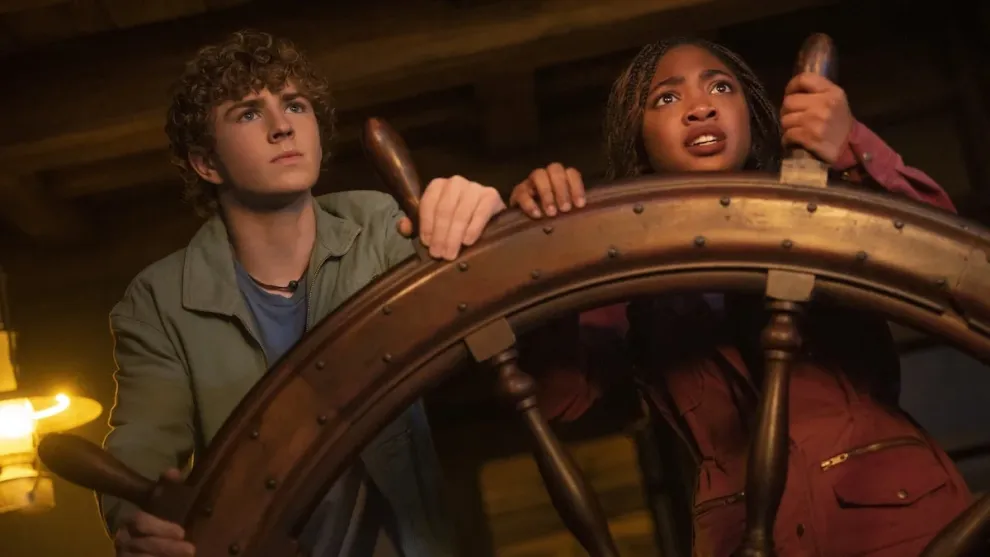
The series is officially rated TV-PG, meaning parental guidance is suggested. The content is designed to be accessible for kids but includes fantasy violence, peril, and emotionally heavy themes that may be intense for younger viewers.
At first glance, Percy Jackson and the Olympians looks like it’s cut from the same cloth as a long line of young adult fantasies that followed in the wake of Harry Potter: a kid learns he’s special, discovers a noble even divine lineage, finds refuge in a hidden world, and is swept into a foretold battle between good and evil. You’ve seen this scaffolding before. What gives Percy Jackson its distinct pulse, both as a Disney+ series and as Rick Riordan’s enduring book saga, is the way it threads Greek mythology into a contemporary coming-of-age story. These are modern kids navigating homework, friendships, and fractured families they just happen to be the children of Olympian gods. It works as an inviting gateway for viewers new to mythological lore, and as a clever, self-aware remix for those who already know their Titans from their demigods.
With the groundwork firmly laid in Season 1 the world defined, the rules established, and Kronos (Nick Boraine), the fallen King of the Titans, looming ominously in the background Season 2 narrows its focus. The story turns inward. Percy (Walker Scobell) embarks on a dangerous journey to the Sea of Monsters, driven not by abstract prophecy but by something more intimate: rescuing his best friend Grover (Aryan Simhadri). Along the way, he’s also chasing the Golden Fleece, a mythic artifact capable of restoring the magical barrier protecting Camp Half-Blood from Kronos’ encroaching forces and from Luke (Charlie Bushnell), the demigod traitor whose betrayal still stings. Across the first four episodes provided for review, Kronos’ apocalyptic ambitions the destruction of Olympus itself drift into the background. In fact, Percy’s decision to warn the Olympian gods barely seems to ripple outward, its most tangible consequence being a reshuffling of camp leadership.
Instead, this opening stretch plays like a detour not filler, exactly, but something closer to a character-driven side quest. The urgency cools. The emphasis shifts. Rather than discovering the world, these characters are discovering themselves, and whether they truly believe in the roles fate has assigned them.
That doesn’t mean the season thinks small. Far from it. Drawing liberally from The Odyssey you can practically hear Homer chuckling somewhere, and yes, Christopher Nolan fans might want to brace themselves Season 2 sends Percy and company into unfamiliar territories brimming with peril, spectacle, and combat. This is where the show makes its clearest leap forward from its inaugural season. The visuals are more confident, more refined.
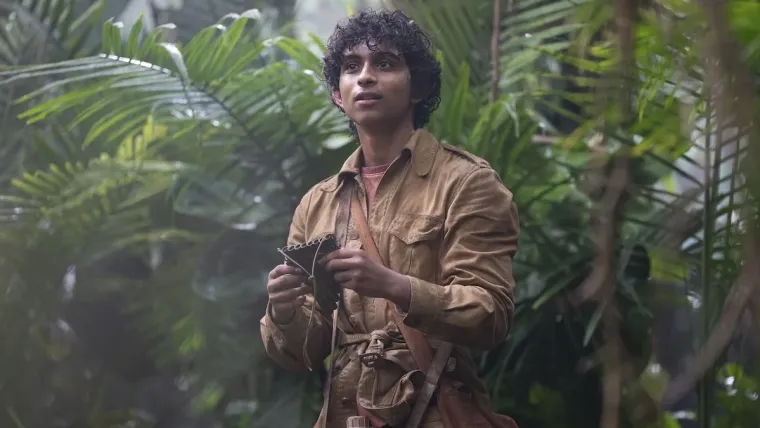
The world feels larger, more tactile. Practical sets blend smoothly with StageCraft technology (the same immersive system used on The Mandalorian), grounding the fantasy in something you can almost touch. A chariot race in Episode 2 stands out as an early high point fast, muscular, and shot with a sense of physical momentum that finally lets the camera cut loose. Even the more effects-heavy elements hold their weight. Tyson the cyclops appears episode after episode without breaking the illusion, and a sprawling seaside confrontation with Charybdis and Scylla reimagined here as a monstrous whirlpool kraken and a six-headed terror lands with real visual authority. You can feel the budget on the screen, but more importantly, you can feel the ambition.
Much of Season 2’s early energy is devoted to deepening relationships. Percy and Annabeth (Leah Sava Jeffries) inch closer, their bond gaining texture and emotional specificity. Percy’s connection with Tyson (Daniel Diemer), a cyclops living with him and his mother, becomes another emotional axis awkward, tender, and complicated in ways that feel truer to adolescence than to myth. The overarching plot may lack immediacy, but the personal stakes compensate, giving the characters room to breathe. On the antagonistic side, the show also sharpens its villains. Luke isn’t content to lurk in shadows anymore; he actively tries to recruit Percy and the others, and disturbingly, he makes his case with a kind of wounded logic that’s hard to dismiss outright. One of Season 1’s most pointed ideas that the Olympian gods are neglectful, even cruel parents returns with more force here. Season 2 leans into the moral chaos of the gods, suggesting that rebellion might not be born of evil so much as exhaustion. It’s an unsettling argument, and the show is wise to let it linger.
Still, the season isn’t without its frustrations. The dialogue, in particular, often buckles under the weight of its own explanations. Too much is spelled out, too often, and the conversations can sound stiff, as if the characters are delivering footnotes instead of speaking from instinct. There’s also a persistent tonal dissonance. The series seems eager to embrace a darker, more serious mood than the books, yet undercuts itself with constant, Marvel-style quips. Jokes fly even when the emotional temperature suggests they shouldn’t, and the result is a strange push-and-pull that never fully settles. Compounding this is a lingering reluctance to engage honestly with the story’s more uncomfortable themes. As in Season 1, certain mature elements from the source material are sanded down parental abuse softened, Percy’s resentment toward Tyson muted as if the show fears challenging its younger audience. The irony, of course, is that this caution clashes with the show’s own desire to be taken more seriously. It wants to grow up, but hesitates to trust that its viewers are ready to do the same, even though many of them encountered these stories as kids and handled far more complexity on the page.
As Percy Jackson and the Olympians moves forward with Season 3 already on the horizon there’s hope that the series will allow itself to mature alongside its characters. The foundation is strong. The emotional questions are there. It just needs the confidence to follow them wherever they lead.
Detailed Content Breakdown for Parents
Violence & Intensity: This is an action-driven fantasy series, and danger is a constant presence. Characters fight monsters using swords, shields, magic, and quick thinking. Creatures from Greek mythology including Minotaurs, Furies, and other threatening beings appear frequently.Violence is stylized and bloodless. When monsters are defeated, they typically dissolve rather than linger in pain. Still, the stakes feel real: characters are chased, injured, captured, and placed in mortal danger. The tone is more serious than many family shows, and younger or sensitive kids may feel the tension.
Language: Language is mild throughout. Expect occasional insults, sarcasm, and frustrated outbursts (“shut up,” “idiot,” “jerk”), but no strong profanity or slurs. The dialogue often leans into humor and snark, especially during stressful moments.
Sexual Content / Nudity: There is no sexual content or nudity. Relationships are limited to light crushes, emotional bonds, and brief, innocent moments of affection.
Drugs, Alcohol & Smoking: None. No substance use is shown or encouraged.
Scary or Disturbing Scenes: Some scenes may be unsettling for younger viewers, particularly monster attacks, chase sequences, and moments where children are threatened or separated from caregivers. There are also emotionally disturbing ideas — including neglectful parents, abandonment, and adults who fail to protect children — that may resonate deeply, especially with kids who are sensitive to family dynamics.
Parental Concerns to Keep in Mind
Some parents may be surprised by how emotionally heavy the series can feel. While the action is kid-friendly, the themes of abandonment, betrayal, and parental neglect run deep. The gods are flawed, sometimes cruel, and often indifferent, which may spark difficult but worthwhile conversations.
The pacing can also be intense, with little downtime between threats, which may overwhelm younger viewers.
Recommended Age Range: Best for ages 9–14, depending on a child’s tolerance for suspense and emotional complexity. Kids familiar with the books or similar fantasy series (Harry Potter, Avatar: The Last Airbender) will likely feel right at home. Younger viewers may enjoy it with parental co-viewing.
Percy Jackson and the Olympians Season 2 premieres Wednesday, Dec. 10, on Disney+.
Highly Recommended for Parents:

Stephanie Heitman is a seasoned journalist and author dedicated to helping parents navigate the world of Hollywood entertainment through thoughtful, family-oriented film reviews. With over a decade of experience in writing and a passion for fostering safe, enriching viewing experiences, Stephanie launched Parentguiding.com to provide parents with the insights they need to make informed choices for their families.