Father Mother Sister Brother Rated R by Motion Picture Rating (MPA) for language
Jim Jarmusch has always been drawn to the moments most screenwriting manuals warn you to cut. He lingers where others rush. He’ll sit with a man behind the wheel, letting the road roll by while music fills the car, as in Broken Flowers. He’ll follow people wandering through a city, exchanging nothing but glances and footsteps, a rhythm he’s returned to again and again. He’ll allow someone to remain alone in a room, doing nothing more urgent than reading or thinking. Sometimes he goes even further, holding on two people sharing silence until the only action is a newspaper page being turned (Stranger Than Paradise) or a fly slapped off a kitchen counter (Mystery Train). These are not narrative “beats” in the traditional sense. They’re pauses, breaths, invitations to notice.
For a lot of viewers, that patience doesn’t register as meditative it lands as infuriating. “Nothing happens,” they’ll say, and for them, that’s not just a critique but a verdict. Taste is personal, and there’s no point pretending otherwise. Still, it feels worth nudging those viewers to look again, or maybe look differently. Jarmusch is interested in things cinema almost never slows down enough to observe, and he frames them in a way that quietly reorients how you see everyday life.
Father Mother Sister Brother, an anthology made up of three short films centered on adult children and their parents, belongs squarely in that tradition. This is Jarmusch pared down to essentials. The film circles conversations about long-past family events that are never shown, never reenacted, never clarified. The screenplay demands imagination and intuition. You’re dropped into each story midstream, without exposition or emotional signposts. When characters talk about people who aren’t present sometimes emotionally, sometimes literally you realize their words reveal feelings more than facts, and even those feelings feel provisional. Difficult truths are approached obliquely, through detours and evasions.
The opening segment follows Jeff (Adam Driver) and his sister Emily (Mayim Bialik) as they drive through snow-covered hills toward their widowed father’s home somewhere on the East Coast. Their father is played by Tom Waits, one of Jarmusch’s most trusted collaborators. Nearly the first ten minutes unfold inside the car as they finish the drive. It’s an uncomfortably precise portrait of what it feels like for adult siblings to brace themselves for time with a parent who isn’t overtly cruel or hostile, just quietly resistant to connection. There’s a moment before they go inside where you can feel them gathering courage, like swimmers about to enter cold water. Once they’re in the house, Jarmusch nails those stiff, polite exchanges that happen between family members who aren’t fully estranged but aren’t close either. Every attempt to move past small talk hangs awkwardly in the air, flopping between speaker and listener until it collapses under its own weight.
Afterward, Emily reflects, “He’s always been a character,” calling him “really mysterious.” Nothing we’ve seen quite supports that description, which is part of the point. Still, the segment has its dry, sideways humor. When Jeff and Emily, concerned about their father’s health, ask whether he’s taking any drugs meaning prescriptions he responds by carefully listing illegal substances he’s never tried, including fentanyl and horse tranquilizers. The ending lands quickly, almost offhandedly, but it subtly rearranges your understanding of him. Like the conclusions of the other two segments, it leaves you imagining a larger film Jarmusch could have made about these people, and deliberately didn’t.
Highly Recommended: Marty Supreme (2025) Parents Guide
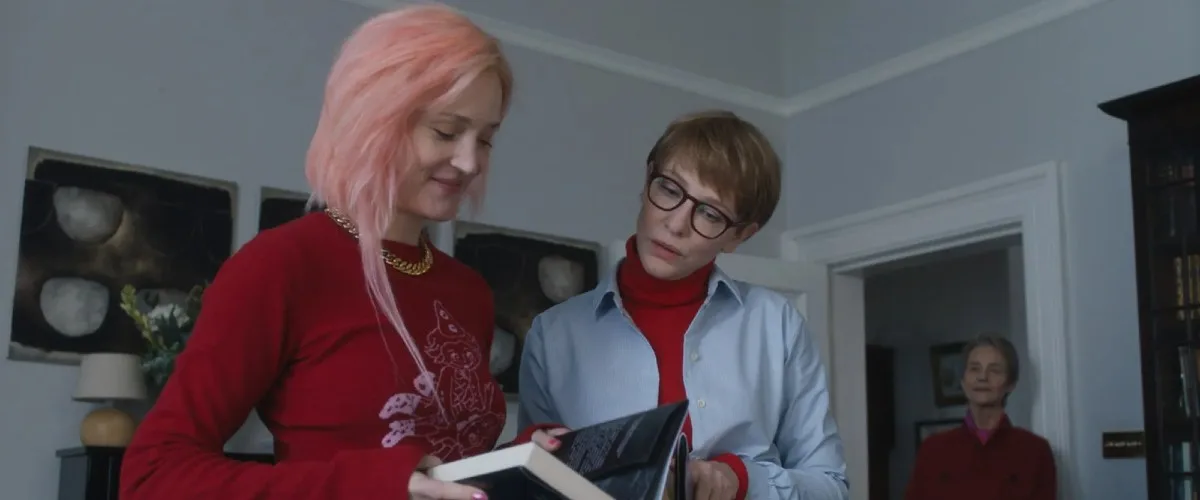
The second story moves to Dublin. A mother (Charlotte Rampling) hosts her two adult daughters, Timothea called Tim played by Cate Blanchett, and Lilith, played by Vicky Krieps, for what turns out to be an annual visit. The film never spells out why the visits are so infrequent, but behavior fills in the blanks. The mother is a respected novelist, controlled and commanding without ever raising her voice. Lilith presents herself as a successful influencer on the verge of marrying a wealthy, attractive man. But the segment opens with her car breaking down, forcing her to rely on a friend for a ride after which she casually lies to her mother and sister about how she arrived. You can feel the performance she’s been perfecting.
Tim remains harder to read. We never quite get inside her, but it’s obvious she’s spent her life competing with Lilith for their mother’s attention, a contest she likely lost before she knew she was playing. When Tim begins to share news of a promotion, Lilith interrupts with an enthusiastic rundown of her own latest accomplishments, which may or may not be real.
The mother’s questions cut sharply, bordering on cross-examination. But are they intentionally cruel? Or is this simply her mode of engagement? One of the film’s quiet throughlines is that the parents are always more complicated than their children are able or willing to perceive.
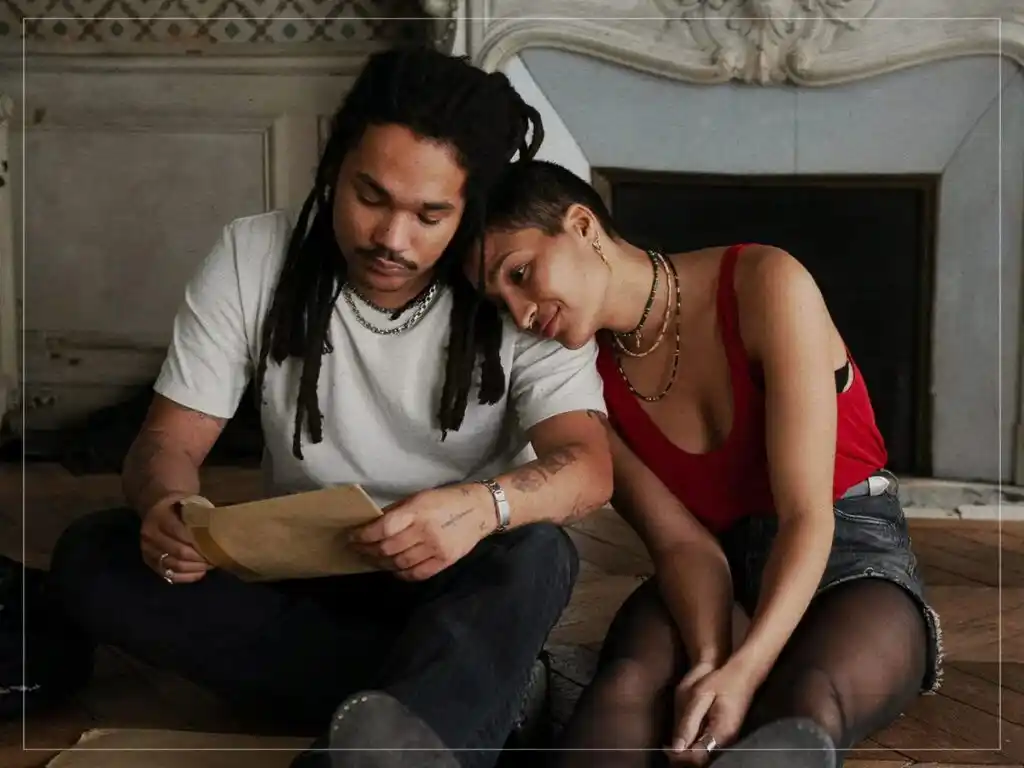
The final segment takes place in Paris. Skye and Billy, twins played by Indya Moore and Luka Sabbat, are mourning their parents, former New Yorkers who died recently in a plane crash. They’re in the city to settle affairs, empty the apartment where they grew up, and move their parents’ belongings into storage. Much of the story unfolds in motion, with the twins driving through Paris, talking about their family, their parents’ quirks, and the history they carry with them. In the emptied apartment, they flip through photographs, rediscovering memories and uncovering details that subtly reshape how they see themselves and the people who raised them. Moore and Sabbat share an easy, unforced chemistry that will feel instantly recognizable if you’ve ever loved spending time with a sibling. Like the other characters in the film, they aren’t verbose or poetic. They speak plainly. And yet a few simple lines hit with unexpected force Billy’s offhand reflection, “Each moment is each moment,” or Skye murmuring, almost to herself, “Life is so fragile.”
This segment, even more than the others, asks you to actively imagine what’s being described rather than shown. Watching Father Mother Sister Brother starts to feel less like conventional moviegoing and more like listening to a song that sketches a story, or reading a novel that trusts you to fill in gaps, or sitting through a piece of minimalist theater. Screenwriting orthodoxy insists that showing is always superior to telling, despite the long history of dialogue-driven masterpieces. Jarmusch offers a gentle rebuttal. Here, the film shows by letting people tell.
Highly Recommended: Oh. What. Fun. Parents Guide
Some readers may take all of this as a warning rather than an endorsement, and that’s fine. Jarmusch has never seemed interested in winning over skeptics. He’s an iconoclast in the truest sense, following his own internal compass without much concern for external approval. It helps, though, to understand his perspective. There’s a distinctly Zen quality to how he approaches both life and art. He’s also a musician, and his collaboration with Annika Henderson on the film’s drifting, hypnotic blend of drone rock and synthesizer textures reinforces the sense that his films could just as easily be albums variations on a shared mood. In interviews, Jarmusch often insists he isn’t executing a blueprint or pushing an agenda. He’s listening, responding, staying open, hoping something singular emerges.
A spiritual current runs through all of his work, blending theology, quantum theory, sorrow over human limitations, and a genuine fondness for our delusions and small absurdities. That undercurrent is unmistakable here. The film doesn’t instruct or declare. And yet it can feel, strangely, as if something quietly revelatory is being passed along, available if you’re willing to stay tuned to its frequency.
Visually, the film communicates as much as it does through dialogue. Mark Friedberg’s production design, the cinematography by Frederick Elmes and Yorick Le Soux, and Catherine George’s costumes supported by Yves Saint Laurent as a production partner offer constant, wordless commentary. In the Dublin segment, you might notice how the mother and Lilith both wear the same deep red, while Tim’s matching blouse is partially hidden beneath a pale blue shirt. When the mother sends her daughters off with gifts in colored paper bags, Lilith’s harmonizes with what she’s wearing. Tim’s does not. These are not accidents.
Highly Recommended: Madame Web 2024 Parents Guide
Between the three stories are brief interludes scored with Jarmusch and Henderson’s music and filled with abstract imagery: film stock seeming to bleach away at the end of a reel, VHS tracking lines, visual and sonic distortions. They feel ritualistic rather than logical, as if they’re transporting you not through space but between states of mind. They resonate with other unexplained motifs the skateboarders who glide through each segment, suddenly slipping into slow motion, or details that echo across stories, like the Rolex watches that appear in the first and third chapters.

So what does it all add up to? What’s the message, the resolution, the point? Jarmusch offers no answers. He leaves you alone with the fragments, to decide how or whether they connect, and what they stir in you. That’s always been his quiet provocation: an attention to narrative and image that most filmmakers either avoid or never consider. It can feel disorienting, even unsettling, like the familiar grammar of movies has been inverted. You might walk away feeling you’ve witnessed a conceptual exercise that refused to explain itself. Or you might have an experience closer to mine. I filled pages with notes, trying to grasp the film as a complete object, something to sit with and contemplate. When the credits rolled, I shut my notebook. And then, unexpectedly, I cried.
Content Breakdown for Parents
Violence & Intensity: There are no fights, threats, or physical danger. Emotional tension exists especially in strained family conversations but it’s subdued and realistic rather than explosive.
Language: Characters use profanity naturally and casually, including multiple uses of the F-word and other adult language. There are no slurs, but the tone is very much adult conversation, not filtered or softened. This is the primary reason for the R rating.
Sexual Content / Nudity: There is no sexual activity, nudity, or explicit sexual discussion. Relationships are referenced in passing, but nothing graphic or provocative appears on screen.
Drugs, Alcohol & Smoking: Some characters mention drugs or alcohol, often humorously or in passing. There’s no glamorization or depiction of drug use. Smoking may appear briefly, consistent with Jarmusch’s naturalistic style.
Parental Concerns
- The film is slow, quiet, and intentionally unresolved
- There’s no clear moral wrap-up or emotional payoff
- Younger viewers may find it boring or confusing
- The R-rated language is frequent, even if not aggressive
This is very much an adult movie in rhythm and sensibility.
Recommended Age Range: Best for ages 16+, and really more appropriate for older teens and adults who enjoy reflective, dialogue-driven films. Younger teens are unlikely to connect with the pacing or themes, even aside from the language.

Stephanie Heitman is a seasoned journalist and author dedicated to helping parents navigate the world of Hollywood entertainment through thoughtful, family-oriented film reviews. With over a decade of experience in writing and a passion for fostering safe, enriching viewing experiences, Stephanie launched Parentguiding.com to provide parents with the insights they need to make informed choices for their families.