The Testament of Ann Lee is Rated R by Motion Picture Rating (MPA) for sexual content, graphic nudity, violence and bloody images.
The Shakers don’t exactly announce themselves as natural movie material, much less the foundation for something that drifts into the territory of a musical biopic. The Testament of Ann Lee sounds like a project destined for niche curiosity rather than cinematic urgency.
I’m also not, by instinct or habit, the ideal audience for films rooted so deeply in religious history. And yet there’s something disarming about the way this film leans into music, movement, and ritual that makes it difficult to ignore. Add to that the fact that it comes from the same creative partnership behind The Brutalist, and you feel a certain obligation to lean forward, even if cautiously. Did it ultimately win me over? Not entirely. But is Amanda Seyfried extraordinary here, in a way that alone justifies sitting through the experience? Without question.
This is a film that moves at its own stubborn, almost ascetic rhythm, and it never compromises to make itself easier to digest. That will be a dealbreaker for many viewers, and if I’m honest, it tested my patience as well. Still, there’s no denying the sheer audacity of Mona Fastvold’s vision, nor the force of Seyfried’s performance, which pulses with conviction and vulnerability.
I often wished the film would find a steadier pace or a firmer narrative spine. Yet by the time the credits roll, you can’t shake the sense that you’ve encountered something genuinely unfamiliar an increasingly rare feeling in contemporary cinema, and one that deserves a measure of respect.
The story centers on the Shakers, a religious sect now teetering on the edge of extinction. After an opening that plunges us into song, the film introduces its framing voice: Mary Partington, played with quiet attentiveness by Thomasin McKenzie. She guides us through the life of Ann Lee, embodied by Seyfried in adulthood and by Esmee Hewett and Millie Rose Crossley in her early years. Ann grows up in grinding poverty in mid-18th-century Manchester, England, enduring abuse and the lasting psychological damage of witnessing her parents’ raw, animalistic intimacy. Her younger brother William first played by Benjamin Bagota and Harry Conway becomes her emotional anchor, but it’s religion that ultimately gives her a sense of order and meaning.
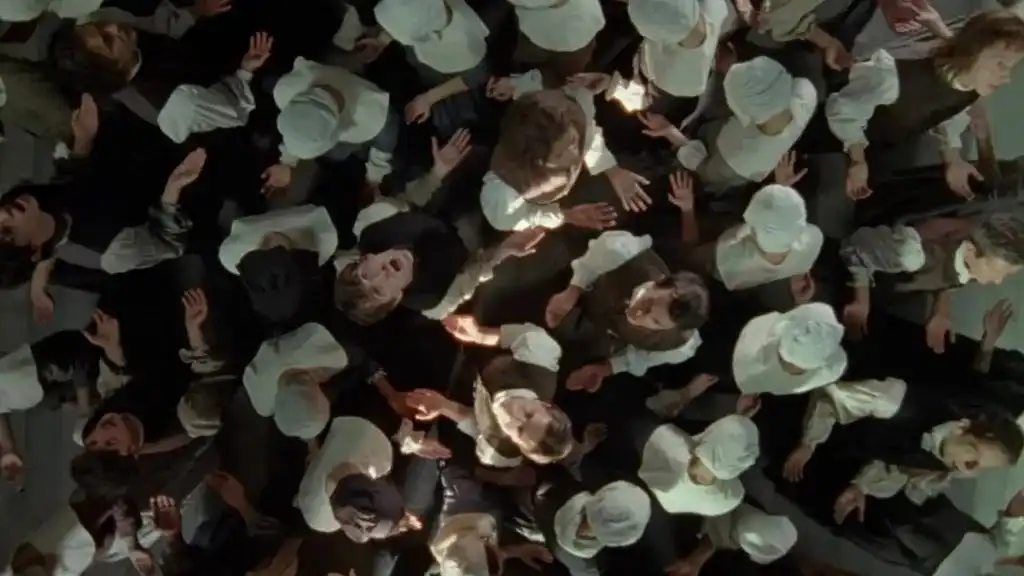
That search leads her to Jane Wardley and her husband James, portrayed by Stacy Martin and Scott Handy, leaders of a sect known as the “Shaking Quakers.” Their worship takes the form of violent, convulsive dancing bodies thrashing as if overtaken by seizures believed to purge sin through physical surrender. You can almost feel the desperation and release in these scenes, the way faith becomes something enacted rather than spoken. Ann commits fully to this belief system and marries Abraham, a laborer played by Christopher Abbott with simmering frustration and sorrow. But tragedy defines their union: all four of their children die in infancy. For Ann, the losses calcify into a conviction that celibacy is the only path that will spare her further grief.
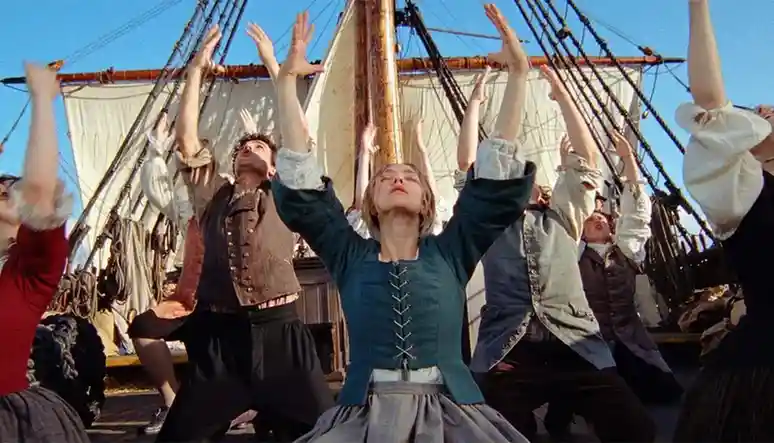
Abraham recoils from this decision, but Ann presses on, forming her own offshoot of the Shaking Quakers alongside her now-adult brother William, played by Lewis Pullman. Convinced that their surroundings are irredeemably sinful, the group uproots themselves and heads for America. The ocean crossing becomes the first real test of Ann’s role as both spiritual leader and missionary, as she begins to spread her teachings and assert her authority. What follows is a familiar but no less painful story of religious persecution: skepticism, hostility, and outright cruelty from fellow settlers. Ann Lee’s life resolves as a kind of spiritual tragedy. She becomes a Christ-like figure to her followers, revered even as her earthly existence is marked by suffering a legacy that endures today among only a handful of remaining believers.
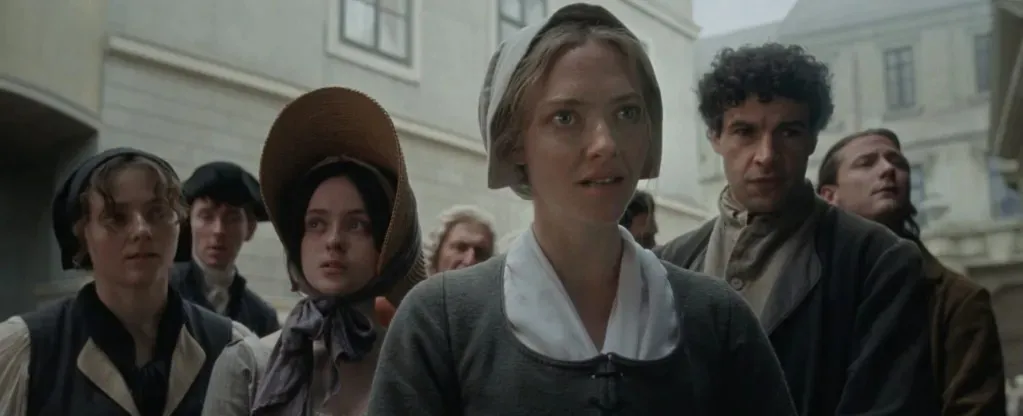
Seyfried towers over the film. That isn’t meant to diminish the strong work from Abbott, Pullman, or the reliably grounded McKenzie, but rather to underscore just how fully Seyfried inhabits this role. Her performance is intensely physical her body trembling, contorting, surrendering and just as emotionally precise. Fastvold’s refusal to judge Ann Lee, to explain her away or pathologize her faith, is a risky narrative stance, but it’s one that pays dividends by allowing Seyfried complete freedom to explore Ann on her own terms. If another Academy Award nomination comes her way, it will feel earned.
There are moments particularly during the shaking rituals where the ferocity of her commitment is almost overwhelming. Few performances this year reach that level of raw intensity. The supporting cast is deep and capable, including the young actors playing Ann’s children, along with Handy, Martin, Tim Blake Nelson, and others who flesh out the world around her.
Fastvold, who co-wrote the film with Brady Corbet (reversing their roles from The Brutalist), clearly had something singular in mind. Her direction of the musical sequences those convulsive dances paired with Daniel Blumberg’s haunting, abrasive compositions is where the film truly comes alive. Cinematographer William Rexer captures these moments with an intimacy that feels almost invasive, as if the camera itself is caught in the throes of belief. The music is hypnotic, unsettling, and deeply felt. By contrast, the screenplay never quite seized me. It’s not ineffective, but it lacks the immediacy and power of the film’s sonic and physical expression. When words take over from movement and song, the film loses some of its grip. Blumberg’s score, on the other hand, is a triumph arguably the film’s most consistently compelling element.
In the end, The Testament of Ann Lee stands as a sturdy, often fascinating indie film carried largely by Seyfried’s astonishing work and the boldness of its musical passages. For some viewers, that will be more than sufficient reason to recommend it wholeheartedly. For others, the uneven pacing and restrained narrative may feel like missed opportunities. As for me, I land somewhere in between. I’m giving it a cautious, modest endorsement, driven almost entirely by Seyfried’s presence. She and Blumberg’s music do the heavy lifting, elevating a film that otherwise lingers just shy of greatness, hovering frustratingly close to where you want it to be.
Detailed Content Breakdown for Parents
Violence & Intensity: While not an action-heavy film, The Testament of Ann Lee contains disturbing and emotionally intense moments. There are scenes depicting abuse, childbirth complications, infant death, and physical suffering tied to religious ritual. Some images include blood and bodily distress. The violence is more psychological and existential than overt, but it can be deeply upsetting.
Language: The film contains infrequent strong language, appropriate to its historical setting. Profanity is not constant but appears during moments of anger or distress.
Sexual Content / Nudity: This is one of the most significant content areas. The film includes graphic nudity and sexual imagery, including scenes meant to be disturbing rather than erotic. Sexual activity is shown in ways that reflect trauma, lack of consent, and emotional harm. These moments are integral to Ann Lee’s psychological development but may be shocking or uncomfortable.
Drugs, Alcohol & Smoking: Characters are shown consuming alcohol and tobacco, consistent with the historical period. Substance use is not glamorized or central to the plot.
Scary or Disturbing Scenes: Several scenes may be unsettling, including violent religious rituals involving shaking, convulsions, and physical collapse. The film’s sound design and music heighten this intensity, creating moments that border on frightening not in a horror sense, but in their emotional rawness.
Parental Concerns
Parents should be aware that this film:
- Contains graphic nudity and sexual imagery
- Depicts child death and emotional trauma
- Uses religious extremism as a central theme without clear moral guidance
- Is intentionally slow, abstract, and emotionally demanding
Recommended for ages 17+ only. Even older teens may struggle with the film’s content and pacing. This is best suited for mature adults comfortable with challenging material.
US Release Date: December 25, 2025 (Limited) and UK Release Date: February 20, 2026 (Limited)
Highly Recommended:

Stephanie Heitman is a seasoned journalist and author dedicated to helping parents navigate the world of Hollywood entertainment through thoughtful, family-oriented film reviews. With over a decade of experience in writing and a passion for fostering safe, enriching viewing experiences, Stephanie launched Parentguiding.com to provide parents with the insights they need to make informed choices for their families.