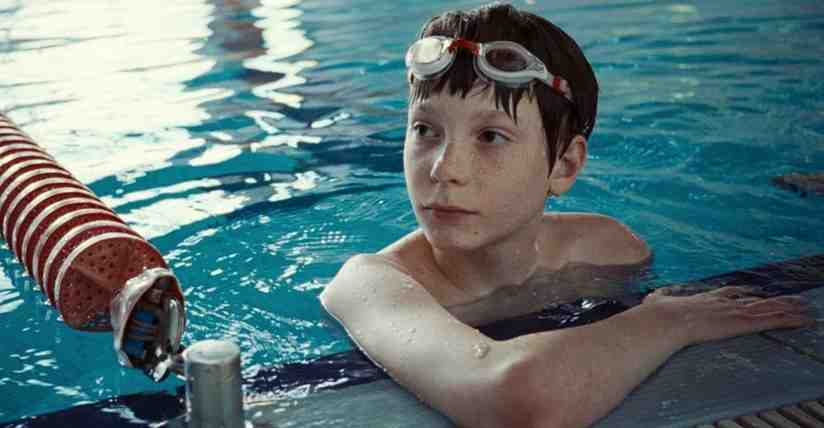
The Plague is Rated R by Motion Picture Rating (MPA) for language, sexual material, selfharm/bloody images, and some drug and alcohol use – all involving children.
Cinema has trained us to fear all kinds of things: masked killers, haunted hotels, faceless mobs whipped into hysteria. But there’s a particular, almost primal dread that sets in when a film turns its attention to children left to their own devices. Few things are as unsettling as a pack of 12-year-old boys with no adults watching closely enough. That’s the quiet horror writer-director Charlie Polinger taps into with The Plague, a film that peers unflinchingly at the rot that bullying introduces into a closed ecosystem, here a summer water polo camp. At its center is a boy forced to endure a kind of cruelty that doesn’t announce itself as evil, but seeps in through jokes, silences, and glances. You can feel Polinger reaching for something elevated and ambitious, not just a social issue drama but a mood piece one that openly courts comparisons to Stanley Kubrick, blending the slow-burn dread of The Shining with the corrosive group psychology of Full Metal Jacket. The result is heavy, often oppressive, and not always fully coherent, yet there are stretches where the film feels alarmingly real, the kind of realism that leaves you uneasy long after a scene ends.
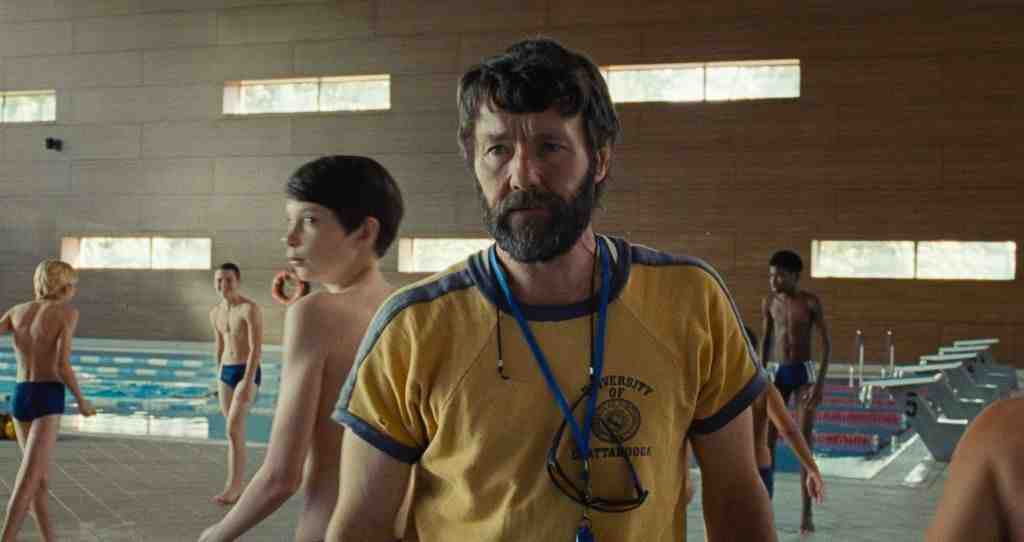
The story unfolds during the second session of the Tom Lerner Water Polo Camp, where Ben, played with fragile attentiveness by Everett Blunck, arrives as the new kid. He’s just moved from Boston, displaced emotionally as much as geographically, while his mother immerses herself in a new romantic relationship. Ben is essentially dropped off and told to adapt, handed over to Daddy Wags (Joel Edgerton), a weary, threadbare coach who seems to have long since spent whatever patience he once had. Ben tries to find a way in with the other boys, but his tentative efforts barely register with Jake (Kayo Martin), the unquestioned leader of the group. It doesn’t take long before Ben notices Eli (Kenny Rasmussen), an autistic boy with a skin condition the others cruelly nickname “The Plague.” The rules around Eli are clear and brutal: don’t touch him, don’t acknowledge him, or risk being exiled yourself. One wrong move, one brush of the hand, and you’re marked. Watching Ben clock this social reality, you can almost feel the calculations forming behind his eyes how much of himself he’s willing to give up just to belong.
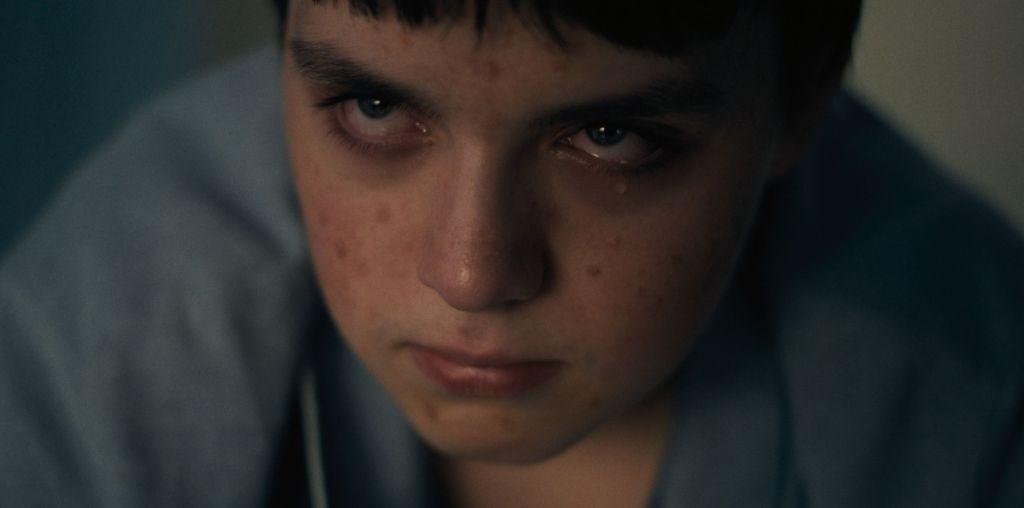
Set in 2003, the film smartly avoids the digital minefield of modern bullying. There are no phones, no social media, no escape. The camp becomes a sealed world, a temporary home where these boys live together for months, under the nominal supervision of Daddy Wags, whose job is to teach them water polo fundamentals and keep the peace, though he seems barely capable of doing either. Ben enters this environment already on shaky footing, cut loose from his home life and made someone else’s responsibility for the summer. Polinger watches him carefully as he navigates the camp hesitating in doorways, choosing when to speak, learning when silence is safer. The other boys share a hierarchy that’s already been cemented, united less by friendship than by their shared power to reject. Eli is the glue that binds them, the outsider whose presence gives the group a target. The bunk room becomes a pressure cooker, a space Polinger films with a suffocating intimacy, where Jake rules through casual humiliation and learned cruelty.
For a brief moment, Ben manages to break through. He earns a measure of acceptance from the group and, more quietly, begins to understand Eli, who exists largely inside his own mind, wrestling with both neurological differences and a body that feels like it’s betraying him. Eli is strange, unpredictable at one point even staging an elaborate prank for Ben by pretending one of his fingers has been amputated but there’s something about him that Ben can’t ignore. Maybe it’s empathy, maybe it’s stubborn decency, but Ben’s instinct is to look closer rather than look away. The Plague places him in an increasingly dangerous position because of that choice. His attempts to connect with Eli have to be hidden, conducted in secret, because discovery would mean becoming the next target. The other boys feed on degradation; humiliation gives them a jolt of energy, a sense of control. Polinger doesn’t flinch from discomfort, writing scenes that wade into the murky waters of early adolescence self-harm, sexual confusion, the embarrassment of involuntary erections all of it folded into the gauntlet Ben is trying desperately to survive. Adding another layer of torment is the presence of a synchronized swimming camp sharing the pool, turning the boys’ already scrambled hormones into a constant, buzzing distraction.
Polinger clearly intends The Plague to be a punishing experience, and he leans into that intention. Johan Lenox’s score pulses with a tribal intensity, transforming moments of cruelty into something almost ritualistic, pounding dread into the soundtrack. Adults barely exist in this world, and when they do, they’re checked out, uninterested, or simply exhausted. The film seems to argue perhaps a little too pointedly that neglect doesn’t have to be malicious to be devastating. Even Daddy Wags, who might have intervened, looks like a man who’s already surrendered. As Ben’s situation deteriorates, the psychological lines sharpen. Eli remains an enigma, sympathetic but unknowable, while Jake emerges as the story’s antagonist, though Polinger gives him just enough background a broken home, hints of his own pain to complicate the portrait.
The film excels at depicting the invisible forces that trap kids in these dynamics, the fear of exclusion, the desire for power, the instinct to survive at someone else’s expense. Where it stumbles is in its devotion to Kubrickian excess: the long, deliberate pacing, the drawn-out sequences that begin to feel self-indulgent. Over time, that approach dulls the impact. Ironically, The Plague is at its most frightening when it’s simplest when it shows, without adornment, how casually children can destroy one another, and how submission becomes a language you learn just to make it through the day.
Content Breakdown for Parents
Violence & Intensity: There’s little traditional “violence,” but the psychological cruelty is relentless. Bullying, humiliation, social exclusion, intimidation, and implied self-harm play a central role. A few scenes include bloody imagery related to self-harm (not graphic in a horror sense, but deeply disturbing). The emotional intensity may be overwhelming for younger viewers.
Language: Strong and frequent profanity, including harsh insults and demeaning language used by children toward other children. The language reflects cruelty rather than humor, which makes it hit harder. Slurs are not the point, but verbal abuse absolutely is.
Sexual Content / Nudity: No explicit sexual activity, but very uncomfortable sexual material tied to puberty: involuntary erections, sexual embarrassment, voyeuristic tension, and confusion. These moments are handled realistically, not playfully, and may be especially awkward or upsetting for teens watching with parents.
Drugs, Alcohol & Smoking: Some background drug and alcohol use, mostly involving adults, though it’s present in a world where kids are clearly absorbing neglectful behavior. Not a dominant theme, but noticeable.
Scary or Disturbing Scenes: This is where The Plague earns its reputation. The fear doesn’t come from jump scares it comes from recognition. If you’ve ever been bullied, watched bullying, or worried about your child navigating group cruelty, this movie may feel uncomfortably close to home. The isolation, the silence, and the slow escalation are genuinely unsettling.
Parental Concerns
This movie may surprise parents with how far it goes emotionally. The fact that nearly all the disturbing content involves children not adults make it especially heavy. Conversations about self-harm, sexual development, peer pressure, and neglect may be unavoidable after watching. This is not a film to put on casually or assume teens will “just get.”
Not recommended for: Children or younger teens. Even mature teens should ideally watch with parental awareness or follow-up discussion.
Release date: September 2025 (United States)
Highly Recommended:

Stephanie Heitman is a seasoned journalist and author dedicated to helping parents navigate the world of Hollywood entertainment through thoughtful, family-oriented film reviews. With over a decade of experience in writing and a passion for fostering safe, enriching viewing experiences, Stephanie launched Parentguiding.com to provide parents with the insights they need to make informed choices for their families.