
When Emily in Paris glides back onto Netflix for its fifth season, there’s an immediate, almost palpable sense that the show has finally loosened its grip on the past. You can feel it in the first moments, in the way the camera settles into Italy and in the way Emily herself seems to breathe a little differently. She’s no longer perched in Paris playing tourist with a ring light and a hashtag. She’s living in Italy now really living sharing space with her charming Italian boyfriend Marcello (Eugenio Franceschini) and overseeing a new Italian branch of Agence Grateau after her Season 4 departure. More than a change of address, the move signals something deeper. Italy suits Emily, not just aesthetically but emotionally, as she begins to “adult” in earnest and look at her life with a clearer, steadier gaze.
Highly Recommended: Reflection in a Dead Diamond Parents Guide
For a series that spent four seasons circling the same romantic drain, this reset feels overdue and quietly refreshing. The Darren Star creation had long been tethered to the exhausting love triangle between Emily, her brooding chef neighbor Gabriel (Lucas Bravo), and Camille (Camille Razat), who was both his former fiancée and Emily’s closest friend. It’s unfortunate to lose Razat entirely she had the fan goodwill and the potential to evolve into a compelling supporting presence with the right material but after last season’s fake pregnancy fiasco, the show had backed itself into a narrative corner. Even in a world this glossy and self-aware, there’s only so much soap a character can survive before losing all emotional credibility.
Gabriel, too, is finally nudged off center stage, and the series is better for it. Yes, he and Emily still feel like the inevitable endgame much the way Carrie Bradshaw was always destined for Big, no matter how many Aidan detours we took but Season 5 allows him to recognize that living in emotional stasis isn’t growth. He appears occasionally, wounded and wistful, like a romantic ghost hovering at the edge of Emily’s new life. But instead of clinging, he steps back. He lets her be happy with Marcello, at least for now, and eventually pursues an opportunity that gives him room to evolve rather than waiting for his life to resume. It’s a surprisingly mature beat for a character long defined by indecision.

What emerges from all this is one of the show’s most confident seasons yet richer, more focused, and finally willing to dig beneath Emily’s professional persona. Season 5 doesn’t forget its ensemble, but it recenters Emily in a way that feels earned rather than obligatory. For the first time, the series invites us into her past: her family, her parents, the emotional baggage she’s been carrying beneath the couture. There’s an unspoken thematic clarity here. If your twenties are about exploration and excess, your thirties are about reckoning understanding who you are and where you fit. That’s the journey Emily is finally allowed to take, balancing workplace chaos, romantic complications, and genuine self-discovery along the way.
Highly Recommended: Five Nights at Freddy’s 2 Parents Guide
None of this means the show has abandoned its breezy, escapist DNA. Emily in Paris still delights in contrivances, quickly finding reasons for its cast to descend upon Italy and crowd into Emily’s new life. Sylvie (Philippine Leroy-Beaulieu) and Luc (Bruno Gouery) get fresh romantic entanglements, the Italian branch of the agency struggles hilariously with cultural misunderstandings, and marketing disasters abound. The most flamboyant new addition arrives in the form of Minnie Driver as Princess Jane, a friend of Sophie’s who barrels into the season with maximal chaos. Jane is gloriously unrestrained aggressively wealthy, brutally candid, and absurdly invested in brand deals and Driver plays her with a kind of gleeful abandon that suggests she knows exactly what show she’s on. Watching her relish the madness is half the fun.
Mindy (Ashley Park), meanwhile, is finally given an arc that extends beyond being the show’s reliable source of wit, wisdom, and vocal fireworks though she continues to deliver all three. Season 5 places her in a love triangle of her own involving Alfie (Lucien Laviscount), and the emotional fallout reverberates through her friendship with Emily. The parallels to Emily and Camille’s rupture are hard to miss, and intentionally so. The show lands on a quietly resonant truth: real friendship isn’t performative. It’s messy, uncomfortable, and sometimes unflattering. Being yourself doesn’t always mean being your best self and the people who love you stay anyway.
The most transformative force this season, however, isn’t a character at all. It’s the setting. Uprooting a series so deeply tied to its location is always a gamble, especially one that built its identity on postcard Paris. But Italy proves to be more than a stand-in backdrop. The landscapes are lush, the cities seductive, and the shift injects fresh energy into the show’s visual language. (If you’re going to spend less time in France, Italy is hardly a consolation prize.) More importantly, the change sparks real growth for Emily, personally and professionally.
Highly Recommended: Little Trouble Girls Parents Guide
It’s impossible not to reflect on how far she’s come since Season 1, when her social media presence felt tone-deaf a glossy, shallow engagement with culture designed for likes rather than understanding. Back then, it worked as satire and aspiration, but over time, Emily’s relationship with social media has faded into the background. By Season 5, that feels intentional. She’s no longer hiding behind filters and faceless followers. She’s present, engaged, and grounded in the people and places around her. Not every moment needs to be content. The show never spells this out, but you sense Emily has made that decision for herself a small but meaningful evolution.
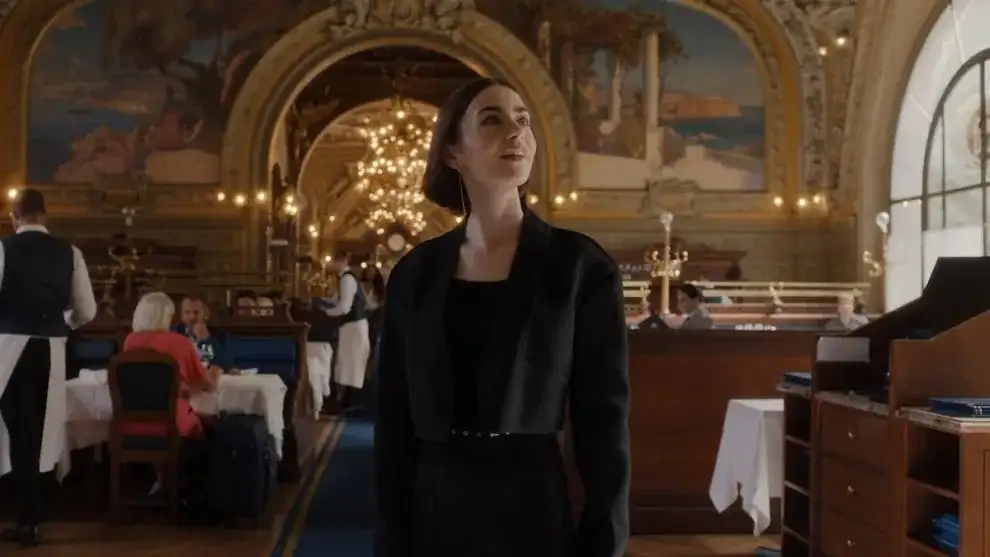
That realization crystallizes after a marketing stunt backfires midway through the season, offering a sly commentary on the consequences of chasing perfection for the sake of optics. True to form, the fallout is played with the series’ signature humor, but the lesson lingers, nudging Emily yet again toward change.
By the time the finale arrives, there’s a gentle sense of closure not finality, but understanding. Emily has gained something from Italy, and in doing so, she’s rediscovered her complicated affection for Paris. It’s a fitting bookend to what may be the show’s strongest season, one that reconnects viewers with why Emily in Paris charmed them in the first place.
Highly Recommended: Kill Bill: The Whole Bloody Affair Parents Guide
Is it the sharpest writing on television? The most nuanced acting? The most realistic portrayal of expatriate life? Of course not and it’s never pretended to be. What Season 5 does exceptionally well is lean into what the series has always promised: a fashion-soaked, romantic escape filled with absurdity, warmth, and characters you genuinely enjoy spending time with. Not all television needs to be prestige to matter. Sometimes it just needs to make you feel lighter when the credits roll, and Emily in Paris continues to do exactly that.
Content Breakdown for Parents
Violence & Intensity: There’s no physical violence to speak of. Conflict is strictly emotional and situational awkward work moments, relationship misunderstandings, and occasional raised voices. Nothing intense or threatening.
Language: Language remains light and conversational, with occasional mild profanity (think “damn,” “hell,” and flirtatious banter). No slurs. The tone leans playful rather than aggressive.
Sexual Content / Nudity: Kissing and implied sexual relationships. Some characters share beds or wake up together. Flirtatious dialogue and innuendo. Brief, non-graphic scenes implying intimacy. No explicit nudity or sexual acts are shown, and scenes fade out before becoming graphic.
Drugs, Alcohol & Smoking: Frequent social drinking, especially wine and cocktails, tied to European settings and work events. Alcohol is portrayed casually and socially, not abusively. No drug use. Occasional smoking in background settings, not glamorized
Parental Concerns: Romantic entanglements may feel adult for younger viewers. Casual attitude toward alcohol. Some relationship drama could prompt questions about boundaries and commitment. Nothing is extreme, but the show assumes a certain emotional maturity.

Stephanie Heitman is a seasoned journalist and author dedicated to helping parents navigate the world of Hollywood entertainment through thoughtful, family-oriented film reviews. With over a decade of experience in writing and a passion for fostering safe, enriching viewing experiences, Stephanie launched Parentguiding.com to provide parents with the insights they need to make informed choices for their families.