Blue Moon is Rated R by Motion Picture Rating (MPA) for language and sexual references.
Ever wonder what really happens to the people who write the songs everyone else gets to fall in love to? The breezy charm, the smooth melodies, the lyrics that sound like they were plucked straight from the human heart none of it tells you a damn thing about who actually put pen to paper. Rodgers and Hart, one of the great songwriting duos of the 20th century, certainly made it look effortless. For more than two decades they turned out standards like “The Lady Is a Tramp,” “Manhattan,” “My Funny Valentine,” and the ever-haunting “Blue Moon.” Their songs stuck; their partnership, ultimately, didn’t.
Richard Linklater’s latest film zooms in on that unraveling not with a sweeping biographical arc, but in the tight, whiskey-tinged frame of a single night. And not just any night: the opening of Oklahoma! the Rodgers and Hammerstein juggernaut that would reshape American musical theatre and leave Lorenz “Larry” Hart standing in a kind of emotional no-man’s-land. It’s the night Rodgers steps into a new creative marriage, and Hart, already frayed at the edges, feels the ground shift beneath him.
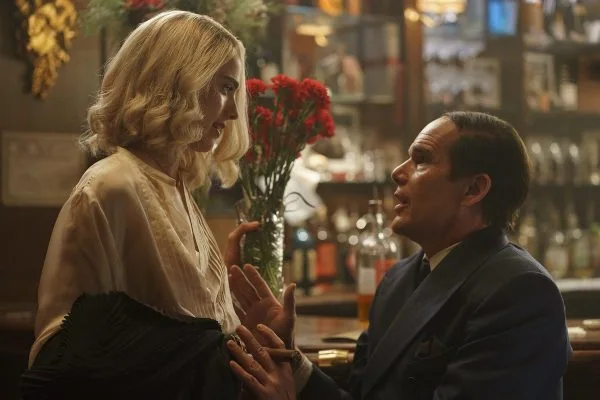
Ethan Hawke, a Linklater accomplice of many years, disappears into Hart so completely that you sometimes forget you’re watching someone famous inhabit a role. He’s small, wiry, darting around the Manhattan bar where the film is mostly set, tossing off jokes like party favors but never quite hiding the growing ache underneath. The first twenty minutes crackle they’re funny, fast, and tinged with desperation. Hart bounces from memory to memory, reenacting the slow collapse of his partnership with Rodgers (played with exquisite restraint by Andrew Scott) and the heartbreak of his unreturned affection for Elizabeth (Margaret Qualley).
Highly Recommended: Champagne Problems Parents Guide
What could’ve felt static a man monologuing his regrets between drinks never does. Linklater’s camera sits with Hart, but never traps him. And Hawke is astonishing here: one moment he’s the life of the bar, sparkling with wit and mischief; the next, he’s a man hollowed out by loneliness, clinging to strangers because he can’t cling to much else. The conversations between Larry and Eddie the barman might be the most deceptively tender scenes Linklater has filmed in years. There’s real affection there, real frustration too. Eddie sees Hart more clearly than Hart sees himself.
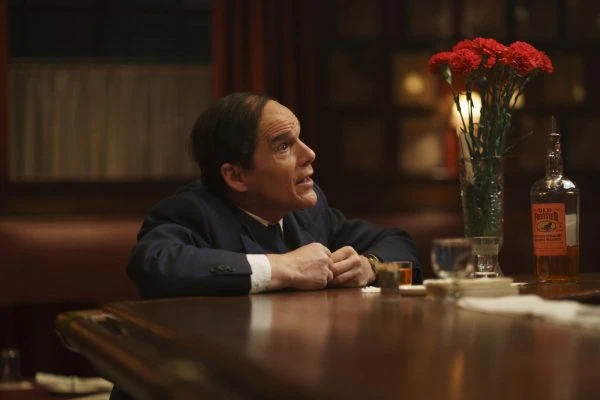
And then there’s Andrew Scott as Richard Rodgers quiet, steady, and simmering. Scott won Best Supporting Actor at Berlin, and it’s not hard to see why. He isn’t in the film nearly as much as Hawke, but when they share the frame, sparks fly. Rodgers hovers throughout the night like a ghost of future success someone who loves Hart, admires him, but also needs stability, discipline, and calm. Hart, with his chaos, his addictions, his impulsive brilliance, represents the life Rodgers can no longer afford. Their scenes together have the crackling energy of a long marriage on its last legs: tenderness tangled with frustration, love curdled by disappointment.
The decision to confine the film to essentially one location gives it a stage-play rhythm intentional, and effective. It feels like Linklater is allowing us to watch Hart unravel in real time, without the distractions of traditional biopic time-hopping. The bar becomes a kind of limbo, filled with people who float in and out, all while Rodgers and Hart’s own music drifts through the air. Sometimes it’s gentle background piano; sometimes it feels like a ghost humming along.
Highly Recommended: Zootopia 2 Parents Guide
When Blue Moon slips into the film, it’s almost too perfect. It’s a reminder of how much beauty Hart poured into the world beauty he never fully felt for himself. And in moments like those, Hawke and Linklater’s collaboration feels downright alchemical. They’ve made magic together before the philosophical drifting of the Before trilogy, the time-lapse wonder of Boyhood but this is something else. A darker, sadder, more fragile magic.
Hawke delivers one of the finest performances of his career raw, aching, occasionally vicious, often very funny. Awards bodies love a tortured-artist narrative, but this isn’t just the cliché of a tragic genius self-destructing. Hawke makes Hart messy, lovable, infuriating, and deeply human.
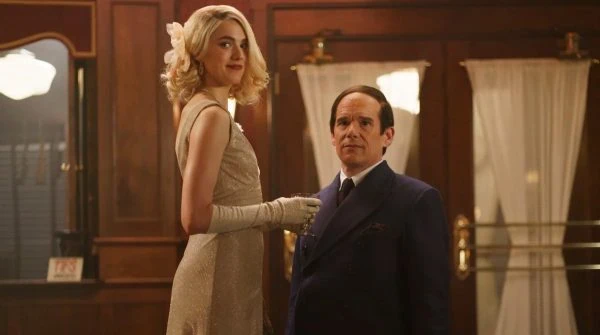
Even if you don’t care about 1940s musical theatre and let’s be honest, plenty of people don’t there’s a pulse in this film that pulls you in. It’s about longing, about being the person who writes the world’s love songs but can’t find a way to star in one. It’s about what happens when your art outlives your joy.
Linklater has made one of his best films here quietly devastating, unexpectedly funny, and full of the kind of emotional specificity that lingers long after the credits roll. It does justice not only to Lorenz Hart the songwriter, but to Larry the human being: brilliant, broken, and still singing.
Detailed Content Breakdown
Violence & Intensity: There’s no physical violence in “Blue Moon,” and nothing visually disturbing. The intensity is emotional simmering regret, unspoken longing, and the heavy ache of watching a once-famous artist grapple with the sense that his career has passed him by. Sensitive viewers, especially younger teens, might find the emotional weight heavy.
Language: Expect some adult language throughout, mostly tied to frustration, self-loathing, or raw honesty. It’s not constant, but it’s noticeable and very much part of Hart’s downward spiral. Nothing wildly excessive, but definitely not kid-friendly.
Sexual Content / Nudity: No explicit sexual content or nudity. Instead, the film deals with adult emotional and romantic longing, including themes of unrequited affection and identity. It’s mature in tone rather than graphic.
Drugs, Alcohol & Smoking: Alcohol plays a major role Hart is almost always drinking, and his dependency is shown plainly. Smoking is also present, consistent with the 1940s setting. The film doesn’t glamorize these habits; it depicts them as symptoms of deep sadness and avoidance.
Parental Concerns: The biggest concerns here are the emotional heaviness and the alcohol use. The film’s tone is melancholic and introspective; it doesn’t shy away from despair. Kids expecting a light historical musical throwback will be surprised this story digs much deeper, and at times, much darker.

Matthew Creith is a movie and TV critic based in Denver, Colorado. He’s a member of the Critics Choice Association and GALECA: The Society of LGBTQ Entertainment Critics. He can be found on Twitter: @matthew_creith or Instagram: matineewithmatt. He graduated with a BA in Media, Theory and Criticism from California State University, Northridge. Since then, he’s covered a wide range of movies and TV shows, as well as film festivals like SXSW and TIFF.