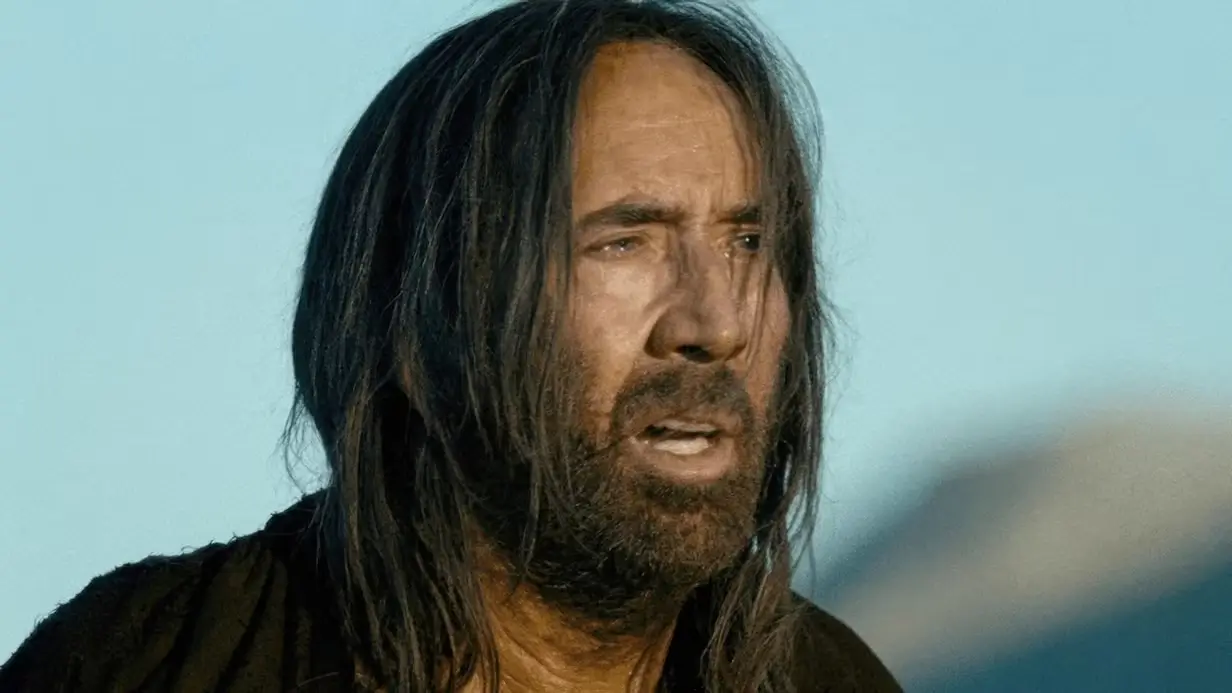
The Carpenter’s Son is Rated R by Motion Picture Rating (MPA) for strong/bloody violent content, and brief nudity. This film is best suited for older teens (16+) and adults.
In The Carpenter’s Son, a small village in Roman-era Egypt becomes the stage for something both intimate and apocalyptic. A carpenter, his wife, and their young son find themselves caught in the crosshairs of forces that are far from human. Lotfy Nathan, working from the Infancy Gospel of Thomas, imagines Jesus Christ not as the accomplished miracle-worker history celebrates, but as a boy on the cusp of discovering his own destiny a child who is at once ordinary and, terrifyingly, extraordinary.
Noah Jupe plays “The Boy” with quiet, tentative intensity. He is a child straddling the line between the mundane and the miraculous, fumbling with powers that are as subtle as reviving a crushed insect in his hand, and yet ominously portentous. You can see the weight of expectation pressing down on him, even if he doesn’t fully understand it himself. It’s a performance of restraint, one that anchors the film’s strange, slow rhythm.
And yet, the film’s rhythm is often frustrating. It clocks in at a modest 94 minutes, but stretches endlessly, as if time itself is conspiring to test the viewer’s patience. The first hour lumbers through domestic routines, moral instruction, and the boy’s schooling all the while telling us what we already know: these are holy figures, and something extraordinary is coming. Even without biblical knowledge, the narrative is transparent, yet Nathan seems determined to linger on every moment.
Recommending: The Running Man (2025) Parents Guide
Then there’s Nicolas Cage as Joseph, delivering the kind of eccentric energy that only he can. He flares up at odd, distracting moments, reminding us that we’re watching a Cage performance more than a coherent character study. And FKA twigs as Mary… well. Her portrayal feels uncertain, almost awkward, and it’s hard not to notice the casting misfire. These flaws could have derailed the film entirely, but Jupe and Isla Johnston, as the enigmatic Stranger keep us invested. Johnston, in particular, exudes a quiet menace, a child who sees suffering differently, and whose very presence complicates The Boy’s understanding of the world. She is magnetic in a way that makes the film’s late horrors feel inevitable, rather than arbitrary.
Ah, the late horrors. Here, Nathan finally unleashes a delirium of visual imagination: snakes pulled from throats, mass hallucinations, bodies clinging to ledges that seem to open into Hell itself. The imagery is grotesque, ambitious, and, at times, breathtaking. It’s hard not to admire the audacity the film finally earns its place in the realm of nightmarish biblical horror, even if it arrives there in a slog. You can feel Nathan’s fascination with the monstrous, the spiritual, the uncanny; it’s just buried beneath a lot of narrative sediment.
Recommending: Trap House (2025) Parents Guide
Thematically, the film asks a provocative question: what if Jesus Christ himself were unsure of who he was meant to be? What if he wrestled with the same doubts, fears, and confusions we all face, amplified by powers he barely understands? It’s a compelling notion, though one that the movie explores unevenly. The story often hesitates where it should soar, and lingers where it should strike. And yet, in Jupe and Johnston, and in those fevered finale images, there is a spark a reminder that cinema can still unsettle, surprise, and even terrify.
By the end, you can’t help but feel admiration for what the film tries to do, even if the journey there is tedious. It’s almost heretical to say, given the subject matter, but Sunday school would be more compelling than much of the first hour. And yet, when the film finally lets go when it dives fully into the nightmarish, the miraculous, and the grotesque you remember why you came: to witness the strange, uneasy magic of a world where divinity is still learning to be.
Also Read: The Things You Kill (2025) Parents Guide
The Carpenter’s Son is a film of contradictions: ponderous yet occasionally electric, frustrating yet audacious, flawed yet strangely affecting. It doesn’t always work, but when it does, it lingers in a way that makes you think about faith, fear, and the unknowable nature of potential. And that, for a film about the boy who would become Jesus, is no small feat.
Detailed Content Breakdown for Parents
Violence & Intensity: Expect strong, disturbing supernatural horror: bloody imagery, grotesque events, moments of terror (e.g., snakes from throats, bodies clinging to ledges). The intensity is high, especially in the climax.
Language: While full details on profanity are limited, given the horror genre and R‑rating, language may include harsh words and intense tones. No major indication of slurs, but the tone is dark and adult.
Sexual Content / Nudity: Brief nudity is mentioned in the rating description. Sexual content appears minimal but the presence of nudity (even if brief) means parents should be aware.
Drugs, Alcohol & Smoking: There is no strong evidence or mention of drug use, heavy alcohol, or smoking as central to the story though the environment is grim and adult‑oriented.
Parental Concerns
The horror content is strong: younger children may find the imagery deeply disturbing. Nightmares, fear, and unsettling visuals are likely.
Brief nudity and the adult tone make it unsuited for children.
The religious re‑imagining may be controversial in some households: the portrayal of Christ‑figures in a horror setting could raise questions or discomfort depending on one’s faith background.
The pacing is slow (“slow‑burn”) for the first two acts, meaning younger viewers might lose interest or become restless before the payoff.
Release date: November 14, 2025 (United States)

Stephanie Heitman is a seasoned journalist and author dedicated to helping parents navigate the world of Hollywood entertainment through thoughtful, family-oriented film reviews. With over a decade of experience in writing and a passion for fostering safe, enriching viewing experiences, Stephanie launched Parentguiding.com to provide parents with the insights they need to make informed choices for their families.