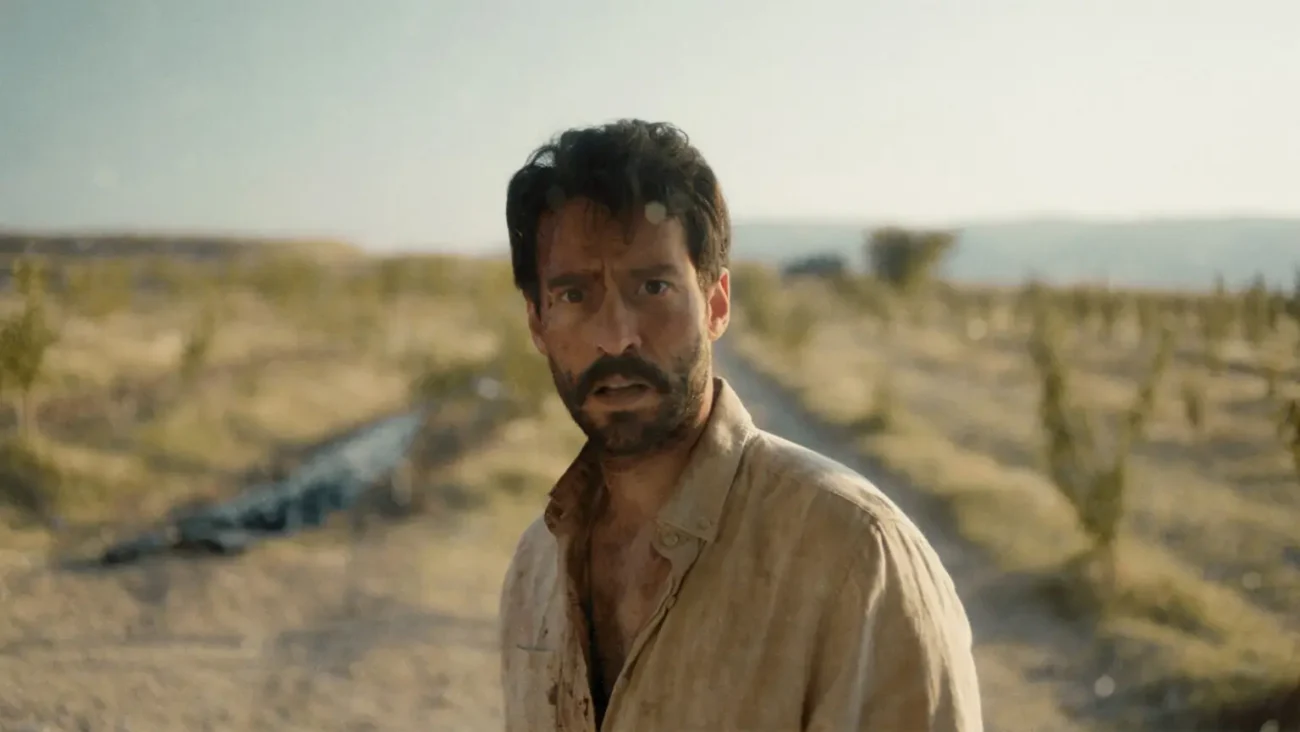
Things You Kill is not rated because it has not undergone the official rating process by the Motion Picture Rating (MPA)
The Things You Kill (2025) Review
The World Cinema Dramatic section at Sundance has always been a curious creature ambitious in spirit, yet often a reminder that the festival’s soul remains firmly North American. Year after year, it seems the most daring international voices hold their best work for Berlin, Rotterdam, or Cannes, which hover just over the horizon in the first half of the year. That’s not to say Sundance’s global selections are without merit there’s usually something worth discovering but the festival’s heart, no matter what city it calls home next, beats to a distinctly American rhythm.
That said, every so often, something breaks through the noise a film that feels urgent, assured, and alive. This year, that film was Alireza Khatami’s haunting and ambitious “The Things You Kill,” a deserved winner of Sundance’s World Cinema Dramatic Directing Award. Khatami, who previously co-directed “Terrestrial Verses,” has made something altogether stranger and more piercing here a work that, yes, people have described as Lynchian. The term made me skeptical at first; too often, it’s shorthand for “weird for weird’s sake.” But as the film unfolds, it becomes clear that Khatami’s sensibility owes more to his mentor Asghar Farhadi than to the late American dreamer of dark subconsciouses. Still, there’s a twist midway through an identity fracture that echoes “Lost Highway” and from there, the film spirals into a meditation on violence that’s as riveting as it is devastating.
Also Read: Death by Lightning Parents Guide
Khatami, a Canadian filmmaker telling a story set in Turkey, builds his world with the quiet specificity of someone exorcising ghosts from a distance. You can feel his Iranian roots pulsing beneath the surface the moral unease, the social hierarchies, the burden of unspoken guilt. His protagonist, Ali (Ekin Koç), is a schoolteacher in an unnamed Turkish city, living what seems to be a modest, almost uneventful life with his veterinarian wife (Hazar Ergüçlü). But Khatami laces that domestic calm with a creeping sense of foreboding. The water pipes groan. The well on their farmland isn’t deep enough. Ali’s class might be canceled next year. These are small things, but you can feel the air tightening around him the way life sometimes gives you warnings you don’t recognize until it’s too late.
Then the storm hits. Ali’s mother dies, and grief cracks open the quiet surface of his life. Suspicion creeps in: his father, Hamit (Ercan Kesal), a man of infidelities and evasions, might have had a hand through negligence, or worse in her death. When a gardener presents Ali with the means to avenge her, he takes it. And in that single act, both the man and the film seem to fracture, slipping into something surreal and haunted. It’s here that those “Lynch comparisons” start to make sense not because of style, but because of mood. Like Lynch, Khatami understands that violence doesn’t just destroy; it rearranges reality.
“The Things You Kill” becomes a mesmerizing hybrid part psychological thriller, part metaphysical lament. It carries traces of Farhadi’s moral intricacy and Nuri Bilge Ceylan’s stark naturalism, yet moves with its own unpredictable rhythm. Beneath its layers of mystery and genre lies something elemental: a film about how we narrate violence, how we repress our ugliest impulses, and how we construct stories to survive what we’ve done. In the end, it’s less about what happens than what we can’t bring ourselves to admit even when we’re staring straight into the mirror.
Recommended: The Choral (2025) Parents Guide
By contrast, the other two entries I caught in this program left me cold and I mean cold.
First was Vladimir de Fontenay’s “Sukkwan Island,” a survival drama that starts slow and ends with a thud. It follows Roy (Woody Norman), a 13-year-old boy living off the land with his father (Swann Arlaud, fresh off “Anatomy of a Fall”). The setup isolation, hardship, a father-son bond under duress has potential. But as the film trudges through its two-hour runtime, alternating between bleak endurance tests and forced emotional lessons, you can feel the director tugging the strings. The landscape shot among the stark beauty of Norway’s fjords does much of the emotional heavy lifting. By the time the big “twist” arrives, the movie transforms from dull to downright insulting. It turns out the whole journey was a kind of cinematic trick, and not the clever kind. I can’t remember the last time I felt so cheated by an ending. The film wants to reveal something profound about pain and illusion; instead, it collapses into a self-satisfied gimmick.
For two hours, father and son battle frostbite, illness, and each other, and yet none of it feels lived in. Every gesture feels preordained, as though the film itself doesn’t trust its characters to breathe. When the final narrative card is played, the whole island might as well sink into the sea.
Also Read: All That We Love Parents Guide
And then there’s “LUZ,” a film that should’ve been more interesting than it is especially with Isabelle Huppert on the poster. She’s one of the finest actors alive, capable of turning even the flimsiest writing into something fascinating. But here, she’s stranded in a film that can’t decide what it’s about. Director Flora Lau begins with promise neon hues and sensual energy that recall Nicolas Winding Refn or Gaspar Noé but the pulse fades fast. The script tangles itself in disconnected parent-child dramas, circling ideas about connection, technology, and identity that never cohere.
There are, technically, two stories: in one, a father tries to reconnect with his estranged daughter, who now works as a cam girl; in the other, a young woman tends to her ailing stepmother, played by Huppert. They’re linked by a virtual reality world that promises escape but delivers only confusion. It’s the sort of conceptual structure that could have been intriguing could have been if the writing had any emotional anchor. Instead, it plays like a first draft that mistook mood for meaning.
Visually, “LUZ” has moments the haze of Chongqing, the cool elegance of Paris but all the beauty in the world can’t disguise its emptiness. By the end, the movie feels as shallow as the digital mirages its characters inhabit. You leave not angry, just numb, wishing the film had given Huppert and us something real to hold onto.
If “The Things You Kill” proves anything, it’s that Sundance’s international slate still has the potential to surprise, to cut deep when the right filmmaker is behind the camera. The rest, well they serve as reminders that beauty and ambition alone don’t make a film sing. Sometimes it takes a director like Khatami, unafraid to stare into the darkness and tell you what he sees, to remind you why we go to festivals in the first place.
Detailed Content Breakdown for Parents
Violence & Intensity: The film delves into revenge and the consequences of violence. There is an atmosphere of menace, psychological threat, and possibly physical confrontation. The tone is intense and may include scenes that unsettle younger viewers.
Language: While I did not locate a full word-for-word breakdown, given the film’s adult themes and thriller genre, it’s reasonable to expect moderate to strong language in certain scenes.
Sexual Content / Nudity: Though the film does not appear to focus on explicit sexual content, it may include intimate adult relationships or suggestive moments (e.g., between Ali and his wife) given its psychological, adult nature. Parents should be prepared for more mature relationship dynamics.
Drugs, Alcohol & Smoking: I didn’t find a specific mention of substance abuse as a major theme. However the gritty, realistic tone suggests there may be scenes involving alcohol or smoking. One viewer commented on a “terrace… smoking cigarettes” moment.
Parental Concerns
- The film’s slow pace and dark subject matter may be challenging for younger viewers or those expecting straightforward entertainment.
- The violence is more psychological and existential than overt, but still heavy and potentially disturbing.
- There may be scenes that are ambiguous or surreal, which can be confusing or unsettling for some teens. Comments from viewers indicate the narrative requires active attention and can leave one uneasy.
- Because the film has not yet been widely rated and is foreign-language (Turkish with subtitles likely) in parts, it may be less accessible for younger viewers.

Stephanie Heitman is a seasoned journalist and author dedicated to helping parents navigate the world of Hollywood entertainment through thoughtful, family-oriented film reviews. With over a decade of experience in writing and a passion for fostering safe, enriching viewing experiences, Stephanie launched Parentguiding.com to provide parents with the insights they need to make informed choices for their families.