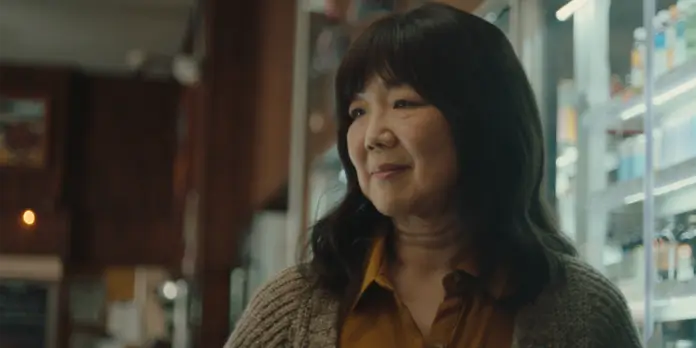
All That We Love is not rated because it has not undergone the official rating process by the Motion Picture Rating (MPA). Best suited for teens and adults who can handle subtle emotional themes, quiet storytelling, and nuanced performances.
All That We Love Movie Review
Tan’s film arrives like a gentle balm at the end of a bruising year one of those small, humane stories that doesn’t demand your attention so much as quietly invite it. There are no sweeping gestures or melodramatic crescendos here, only the steady pulse of real life and the kind of subdued sorrow that sneaks into the corners of ordinary days. Sometimes, that’s all you need a film that makes space for silence, for tears that don’t have to be justified.
Emma (Cho) is an empty nester whose beloved dog dies quietly in her home, a loss that sets off ripples she can’t quite contain. She’s still reeling when her daughter, Maggie (Alice Lee), announces she’s moving to Australia with her boyfriend a choice that feels less like a betrayal than a reminder that life keeps moving, even when we’re not ready. The timing couldn’t be worse: Emma’s ex-husband Andy (Kenneth Choi) suddenly returns from Singapore, newly sober and tentatively hoping to mend what he broke years ago with his drinking.
Recommended: Put Your Soul on Your Hand and Walk Parents Guide
Against the better judgment of her best friend Stan (Jesse Tyler Ferguson) and Andy’s sister Raven (Atsuko Okatsuka), Emma lets Andy back into her life. Maybe it’s habit, maybe it’s loneliness, maybe it’s the hope that something broken might still be repaired. Whatever the reason, that decision sends ripples through her already fragile relationship with Maggie, who sees in her mother’s forgiveness an old wound being reopened.
Tan, co-writing with Clay Liford, orchestrates all this emotional movement with a light but confident touch. The film understands that grief doesn’t arrive in waves so much as in echoes unpredictable, sometimes absurd, often inarticulate. At work, Emma’s exacting nature her insistence on control alienates her coworkers, mirroring the quiet chaos of her inner life. And when she’s alone, she wanders her apartment in a trance of absence, waiting for her dog’s ghostly return. Others mention that they’ve dreamt of their lost pets visiting them; you can almost see Emma hoping for that miracle.
Jon Keng’s cinematography leans into that silence. His camera listens attuned to the nervous glances, the aborted confessions, the long pauses that reveal more than dialogue ever could. You notice the way someone clears their throat instead of crying, or how a slightly heavier pour of whiskey becomes a form of confession. It’s a film about what goes unsaid, and Keng captures that eloquently.
Cho, meanwhile, gives one of those career-pivot performances that feel like rediscovery. She’s almost too quiet at times, as if afraid that speaking too loudly might shatter something fragile within her. When she pushes away Stan’s warnings about Andy, you feel her denial it’s a form of self-preservation masquerading as stubbornness. Around Maggie, she moves carefully, measuring every word, terrified that honesty might make the rift between them irreversible. Her grief is recognizable the kind that seeps into the rhythms of daily life until you barely notice it’s there, even as it shapes everything.
Also Read: I Wish You All the Best Parents Guide
Still, there are moments when Emma unravels. A few too many drinks, a poorly timed remark, a truth she shouldn’t have said aloud. These aren’t grand meltdowns; they’re small human stumbles, the kind we’ve all had when we’re trying to appear okay but aren’t. That’s what makes the film sting in such a tender way you see yourself in her restraint, her missteps, her longing for connection that’s no longer simple.
Her dynamic with Andy is perhaps the film’s most delicate thread. After years of battling alcoholism, he returns trying to make amends, uncertain whether redemption is even possible. Their scenes together are quietly devastating filled with the weight of lost years and the awkward tenderness of people who once knew each other too well. Cho plays these moments with a kind of wary empathy; she wants to forgive him, but she also knows that forgiveness doesn’t erase the past. Watching her navigate that emotional terrain feels honest, messy, and deeply human.
All That We Love isn’t a film that offers catharsis. Instead, it lingers in the small, uncomfortable truths of being alive the way grief blurs into love, and love into regret. You might find it hard to watch, especially if you’ve recently lost something or someone dear. Yet that difficulty is what gives it resonance. Emma’s missteps, her loneliness, her hesitant attempts at grace they’re not cinematic flaws but emotional reflections of the rest of us.
You May Also Read: One Battle After Another 2025 Parents Guide
By the end, you realize Tan’s title isn’t just sentimental. It’s a quiet admission of life’s messiness: that everything we cherish eventually changes shape, that forgiveness is both gift and burden, and that sometimes the best we can do is keep showing up, even when we’re unsure how. You leave the film not with resolution, but with a kind of recognition a sense that healing, in its own awkward way, might simply mean learning to live with all that we love, and all that we’ve lost.
Content Breakdown for Parents
Violence & Intensity: No physical violence. Emotional tension drives the story instead—heated conversations, grief, and a few moments of emotional breakdown. Some scenes may feel heavy for younger viewers who are sensitive to topics like death or divorce.
Language: A handful of mild to moderate swear words (occasional use of “damn,” “hell,” and one or two stronger expletives). No slurs or hateful language. Tone leans more sad or frustrated than angry.
Sexual Content / Nudity: Very minimal. There’s gentle romantic tension between Emma and her ex-husband, a brief kiss, and an implied overnight stay, but no nudity or explicit sexual scenes.
Drugs, Alcohol & Smoking: Alcohol use appears throughout. Emma occasionally drinks to cope with stress, and her ex-husband’s past alcoholism is a key plot point. No illegal drug use or smoking shown on screen.
Scary or Disturbing Scenes: Nothing frightening, but the emotional realism might be tough for children especially scenes of grief, loneliness, and strained family relationships.
Positive Messages / Role Models: The film gently explores forgiveness, empathy, and emotional honesty. It encourages conversation about grief, recovery, and the messy process of healing. Emma’s journey shows that strength can look quiet, and that rebuilding trust takes patience and humility.
Parental Concerns: The film’s slow pacing and mature tone may bore younger kids expecting something light or fast-moving. Its emotional realism especially around death and divorce could hit hard for anyone going through similar experiences. Parents might want to preview it before showing it to teens under 13.

Stephanie Heitman is a seasoned journalist and author dedicated to helping parents navigate the world of Hollywood entertainment through thoughtful, family-oriented film reviews. With over a decade of experience in writing and a passion for fostering safe, enriching viewing experiences, Stephanie launched Parentguiding.com to provide parents with the insights they need to make informed choices for their families.