Peter Hujar’s Day is not rated because it has not undergone the official rating process by the Motion Picture Rating (MPA)
Peter Hujar’s Day Movie Review
In 1974, writer Linda Rosenkrantz did something intimate and deceptively simple: she set a tape recorder between herself and her friend, photographer Peter Hujar, and asked him to describe his previous day. What followed wasn’t an interview in the usual sense it was an unguarded, meandering confession. Rosenkrantz nudged him along with questions, and Hujar responded with a stream of recollections that drifted between errands, creative frustrations, and stray flashes of vulnerability. The recording was meant for a book about artists and their daily rituals, a project that never came to fruition. Decades later, the tape is all that survived of that fleeting afternoon until filmmaker Ira Sachs resurrected it, piece by piece, in Peter Hujar’s Day.
Sachs’ film, written and directed with his trademark sensitivity, takes Rosenkrantz’s original transcript and breathes it back to life. The movie doesn’t bother with exposition; it drops us directly into the conversation between Rosenkrantz (Rebecca Hall) and Hujar (Ben Whishaw), and lets it unfold as though time itself had never passed. Hujar recalls the events of his previous day the routine negotiations over photography gigs, the endless domestic to-do list, the casual propositions of sex and invitations to parties. Rosenkrantz presses gently, her curiosity both practical and affectionate, urging him to keep talking, to expand, to confess. What she’s after isn’t just the facts of his day but the texture of his consciousness the way memory pools around unremarkable details before receding into the background again.
Also Read: All Her Fault 2025 Parents Guide
For a working photographer like Hujar, even the smallest details reveal something about a life in motion. He remembers to water his plants before heading to Allen Ginsberg’s apartment in the East Village, just a few blocks away. He folds laundry while mulling over the gulf between himself and a commercial giant like Richard Avedon. He negotiates plans for dinner, placates Ginsberg’s hesitations about being photographed in portrait, and, somewhere amid the clatter of the city, measures himself against his heroes and peers. Through it all, Rosenkrantz listens sometimes teasing, sometimes probing, always attuned to the pulse of his restlessness. Together they build a portrait of the artist not through his images, but through his unguarded chatter, the lived rhythm of a single New York day.
Sachs treats that day as a kind of cinematic séance, summoning the spirit of 1970s downtown New York. Hujar’s casual name-dropping Susan Sontag, Fran Lebowitz, William Burroughs, Ginsberg himself becomes both boast and elegy, a roll call of brilliance orbiting the same few square miles of Manhattan. Whishaw, one of the most quietly expressive actors working today, embodies Hujar with astonishing fluidity. His line deliveries feel improvised, half-forgotten, revised mid-thought, as though we’re watching him remember in real time. Hall, adopting a Bronx accent that occasionally wobbles but never distracts, makes a perfect counterpoint amused, engaged, subtly in control of the conversation. You can see in her eyes the delight of coaxing a friend to articulate what he didn’t know he felt.
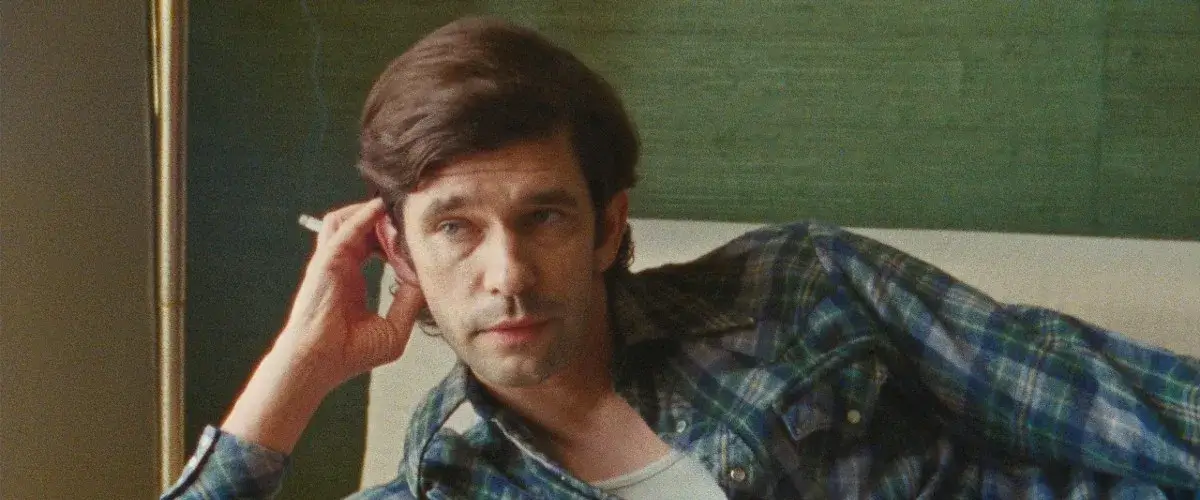
Sachs and cinematographer Alex Ashe shoot on 16mm, the film grain flickering like memory itself. The choice isn’t just aesthetic it’s tactile, grounding us in an era when cigarettes cost fifty-six cents, a hot dog eighty-nine, and dinner for two from a Chinese takeout joint came to just $7.43. These specifics do more than evoke nostalgia; they remind us that history lives in the price of things, in the ordinary scaffolding of everyday life. Occasionally, Sachs lets the film reel stutter or run out entirely, as if to underline the impermanence of what’s being captured.
Highly Recommended: Batman: Revolution 2025 Parents Guide
From the opening frames of Rosenkrantz’s apartment, the film’s vintage sensibility is unmistakable. But Sachs resists the temptation to turn it into a museum piece. Instead of adhering to the tidy rhythms of a biopic, he interrupts the conversation with still moments Hujar sitting for portraits, shifting under the camera’s gaze. These interludes become something quietly transcendent, a meditation on what it means to see and be seen.
For a movie set almost entirely within one apartment, Peter Hujar’s Day feels surprisingly kinetic. Sachs composes each frame with painterly care, finding movement in the smallest gestures. It’s My Dinner with Andre reimagined with bodies in motion. The conversation drifts from the living room to the kitchen; soon, Whishaw joins Hall at the table, then wanders to the roof for a cigarette, lies on the floor to think, and finally dances as the sunlight fades. You can sense the hours stretching and softening, their companionship deepening even as the day slips away.
By the time dusk arrives, a faint melancholy has settled in. You can feel the inevitability of endings the tape will stop, the conversation will fade, the stories and parties they recount will pass into memory. There’s a tenderness in that awareness, an ache for everything that can’t be preserved.
You May Also Read: Put Your Soul on Your Hand and Walk Parents Guide
A decade after that conversation, Peter Hujar would die, less than a year after being diagnosed with AIDS. His photographs, once marginal, would later become central to our understanding of queer New York’s creative ferment. But Sachs’ film doesn’t place his art at the center it looks, instead, at the man himself, caught in a moment before history claimed him.
With its soft light, 16mm texture, and Whishaw’s mesmerizing performance, Peter Hujar’s Day becomes more than a recreation; it’s a love letter to the fragile beauty of an artist’s everyday existence. Sachs doesn’t just chronicle a life he honors the delicate balance between art and survival, between what we remember and what inevitably slips away.
Content Breakdown for Parents
Violence & Intensity: None. The film is entirely dialogue-driven, with no physical violence or threats. Emotional intensity arises from the characters’ discussions of creative pressure and fleeting life moments, not from any on-screen conflict.
Language: Frequent adult language, including some mild profanity and sexual slang typical of candid adult conversation in 1970s New York. No hate speech or slurs.
Sexual Content / Nudity: No explicit nudity or sexual scenes. However, sex is discussed openly and frankly sometimes humorously, sometimes casually reflecting adult attitudes toward intimacy and relationships in the era.
Drugs, Alcohol & Smoking: Cigarette smoking is frequent, portrayed as a normal part of daily life in the 1970s. Occasional references to drinking and the creative nightlife scene, but no glamorization of heavy use.
Scary or Disturbing Scenes: None. The only emotional weight comes from the knowledge (shared in the film’s closing context) that Hujar would die of AIDS years later a fact treated respectfully, not sensationally.
Positive Messages / Role Models: The film celebrates honesty, artistic vulnerability, and friendship. It portrays the value of listening of holding space for another person’s daily struggles and reflections. While the characters are imperfect, they’re deeply human, reminding viewers how conversation itself can be an act of care.
Diversity & Inclusion: The story highlights the queer art scene of 1970s New York, offering representation through a sensitive and authentic lens. Peter Hujar’s sexuality is an essential but understated part of his identity, handled with dignity and nuance.
Positive Takeaways: Peter Hujar’s Day is about connection how we make sense of our lives through the act of being seen and heard. Parents and teens interested in art and history may find inspiration in Hujar’s creative honesty and Sachs’ reverence for the small, meaningful details that define an artist’s day.
It’s a reminder that even “ordinary” moments buying groceries, chatting with friends, feeling restless can be profound when looked at closely.
Parental Concerns: The film’s mature tone, slow pace, and talk-heavy structure might lose younger viewers. Its open discussions about sex and creative frustration are candid but not prurient. The emotional undercurrent of mortality (Hujar’s later AIDS-related death) may feel heavy for some audiences, though it’s handled with great restraint and empathy.
Filed from the New York Film Festival premiere on October 8. Opens November 7.

Stephanie Heitman is a seasoned journalist and author dedicated to helping parents navigate the world of Hollywood entertainment through thoughtful, family-oriented film reviews. With over a decade of experience in writing and a passion for fostering safe, enriching viewing experiences, Stephanie launched Parentguiding.com to provide parents with the insights they need to make informed choices for their families.