Frankenstein 2025 is Rated R by Motion Picture Rating (MPA) for bloody violence and grisly images.
FRANKENSTEIN 2025 – MOVIE REVIEW
Guillermo del Toro’s Frankenstein is a cinematic resurrection in every sense a film that feels unearthed from the brittle pages of Mary Shelley’s novel, as if it had been buried in a crypt for two centuries, waiting for del Toro to breathe it back to life. The Oscar-winning maestro of the macabre once again spins darkness into poetry, much like he did with Pinocchio, turning a well-worn myth into something startlingly personal and new.
Split neatly into three movements the Prologue, Frankenstein’s tale, and the Creature’s tale del Toro’s script might appear straightforward on the surface, but it pulses with emotion and existential dread. The first half belongs to Oscar Isaac’s Victor Frankenstein, who narrates from the edge of death, plucked half-frozen from the Arctic wasteland by Lars Mikkelsen’s stoic ship captain.
Also Read: Christy 2025 Parents Guide
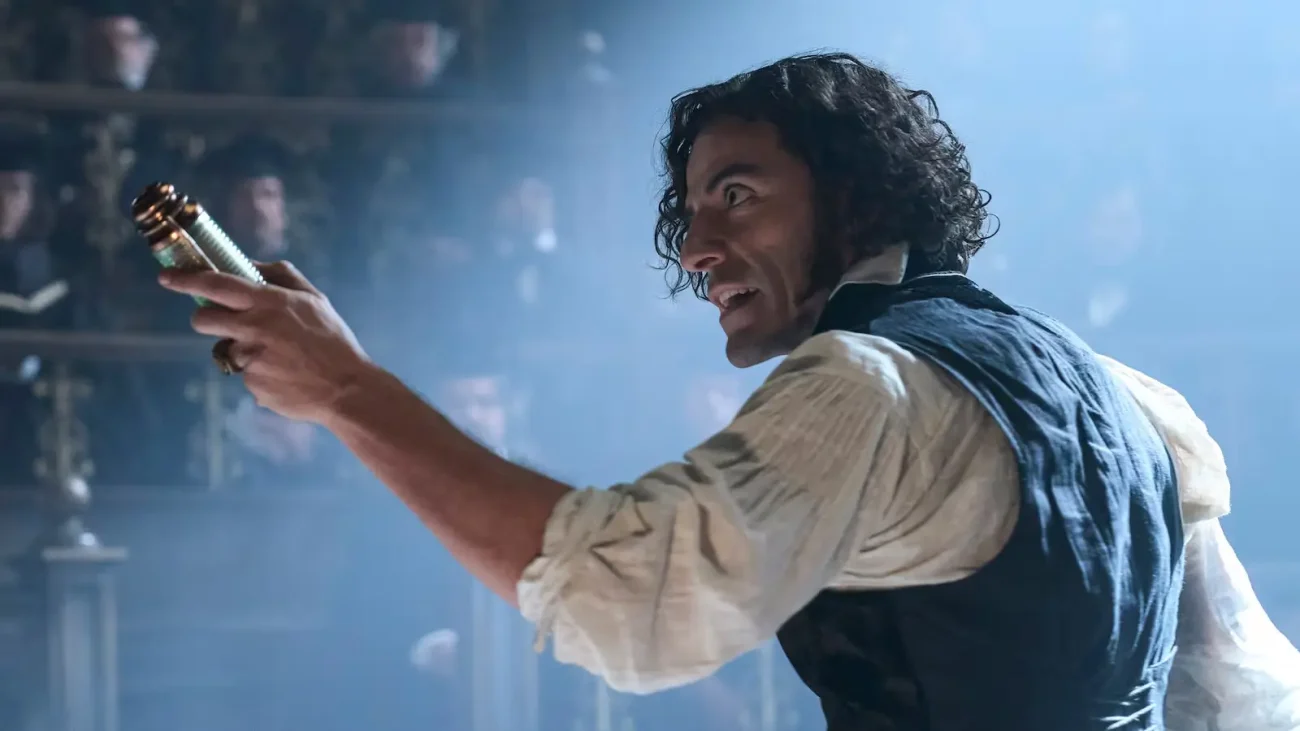
From there, we watch Victor’s unsettling evolution: the bright, sheltered boy who becomes a brilliant London surgeon brilliant enough to think he can fix the one flaw he sees in God’s design: mortality. His arrogance isn’t entirely unjustified; Isaac plays him with an intoxicating mix of intellect and mania. One of the film’s most haunting sequences unfolds during a public hearing, where Victor reanimates a corpse just long enough for it to twitch, grasp an apple, and collapse again a grotesquely tender moment that lands like a prayer gone wrong.
Enter Christoph Waltz as Herr Harlander, a mysterious patron who sees in Victor both a prophet and a fool. When the medical establishment condemns Victor’s work as blasphemy, Harlander quietly offers him the tools and the funding to push beyond the limits of morality. Along the way comes Harlander’s niece, Elizabeth (Mia Goth), engaged to Victor’s brother William (Felix Kammerer). Her arrival complicates everything, stirring emotions that will ultimately fuel the birth of del Toro’s reimagined monster.
When the Monster Speaks
At the midpoint, the perspective shifts and so does the film’s heartbeat. The creature steps into the light, and Frankenstein transforms into something more intimate, almost spiritual. In the prologue we’d glimpsed him as a hulking terror, flinging sailors like an MCU villain, but when the camera finally lingers, del Toro reveals something far more fragile: a patchwork giant of aching vulnerability.
Jacob Elordi delivers a performance that’s both physically commanding and heartbreakingly tender the kind of movement-driven work Doug Jones might applaud. His creature lurches and trembles with the awkward grace of a newborn deer, a being discovering sensation, pain, and wonder all at once. He’s not just stitched together from corpses; he’s assembled from confusion, loneliness, and yearning.
The Awakening
The final act, “The Creature’s Awakening,” follows the familiar contours of Shelley’s story, but Elordi infuses it with devastating humanity. You feel every ounce of the creature’s torment, every flicker of his fleeting hope. His relationship with Victor becomes a grim pas de deux — creator and creation bound by shared guilt and mutual disgust.
Also Read: Good Fortune 2025 Parents Guide
Mia Goth, however, quietly steals scenes as Elizabeth. She’s the only one who truly sees both men the brilliance and the rot, the beauty and the horror. Goth has that uncanny del Toro magnetism; she looks like she was born to exist in his shadowy universes. Her scenes with Elordi their fragile connection echoing Beauty and the Beast radiate something pure and tragic. And her rejection of Victor’s advances? A sharp, almost cruel mirror held up to his fragile ego.
A Monster Brought to Life
Building a film like Frankenstein isn’t unlike Victor’s own experiment: you can gather all the right parts cast, craft, design but without that electric spark, the thing just lies there, lifeless. Thankfully, this is del Toro’s passion project, and it lives. The film is lush, deliberate, and free of excess a work of obsession that never feels indulgent.
Every frame carries his signature: the red headdress fluttering against a grey staircase, the mournful symmetry of his parents’ coffins, the tactile detail in every stitch of clothing and slab of laboratory machinery. You can practically feel the texture of the film’s world damp stone, decaying lace, chilled flesh.
Even the horror is handled with restraint. Del Toro isn’t out to shock you with gore; he wants to make you feel the ache behind every atrocity. The cadavers that litter Victor’s lab are posed like relics of grief, and when they twitch back to life, the emotion that hits isn’t disgust but pity.
Sound, Soul, and Subtext
Alexandre Desplat’s score ties the whole creature together brittle piano motifs swelling into thunderous crescendos, themes that haunt long after the credits. It’s the perfect companion to del Toro’s visual storytelling: grand yet heartbreakingly intimate.
At its core, Frankenstein still wrestles with timeless questions gods and monsters, creation and consequence, the endless tug-of-war between nature and nurture. But in del Toro’s hands, these ideas hit harder than ever. In an age starved for empathy, when cruelty can feel like the default setting, his retelling feels not just relevant but urgent.
Content Breakdown for Parents
Violence & Intensity: This isn’t a slasher, but the violence hits hard when it happens. The film includes moments of body horror corpses, stitched flesh, surgical scenes, and a few shocking reanimation sequences that are disturbing rather than gory. One early experiment involves a reanimated body moving just enough to grasp an apple both sad and horrifying. Some deaths are shown with emotional weight rather than spectacle, and there are tense, occasionally frightening confrontations between Victor and his creation.
Language: Language is infrequent but mature. Expect a few uses of strong profanity (possibly “s—” and “bastard”) and some harsh, emotional dialogue particularly during Victor’s breakdowns. No slurs or overtly offensive language.
Sexual Content / Nudity: There’s some sensual tension, especially involving Victor’s unreciprocated attraction to Elizabeth (Mia Goth). A few scenes suggest intimacy or desire, but they’re handled with restraint. Partial nudity appears briefly in the context of the creature’s creation (medical/scientific nudity rather than sexual). No explicit sex scenes.
Drugs, Alcohol & Smoking: Characters drink wine or brandy during social scenes, and some use of opium or laudanum (period-appropriate painkillers) is implied. Nothing glamorized.

Stephanie Heitman is a seasoned journalist and author dedicated to helping parents navigate the world of Hollywood entertainment through thoughtful, family-oriented film reviews. With over a decade of experience in writing and a passion for fostering safe, enriching viewing experiences, Stephanie launched Parentguiding.com to provide parents with the insights they need to make informed choices for their families.