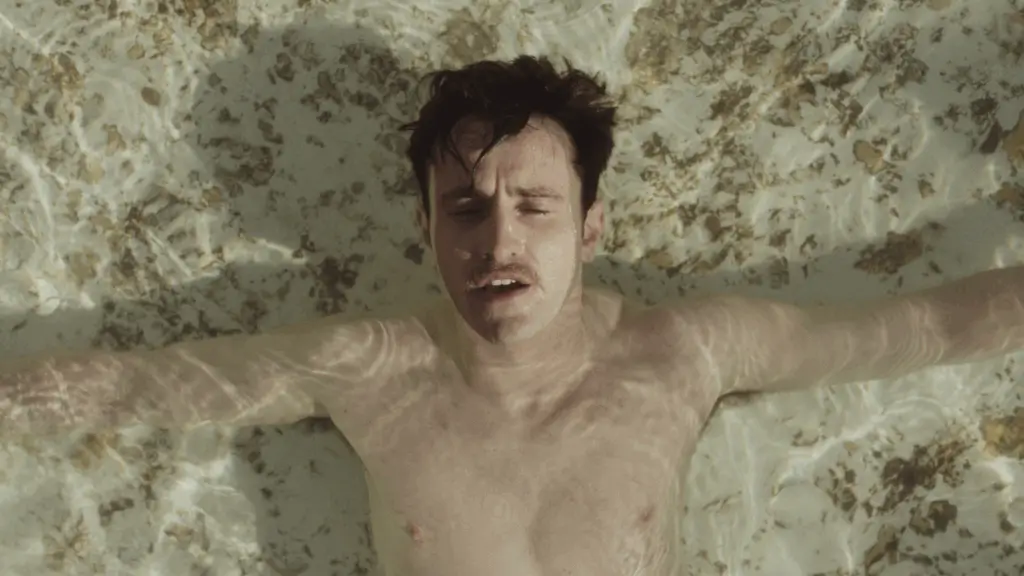
The History of Sound is Rated R by Motion Picture Rating (MPA) for some sexuality.
The History of Sound 2025 Movie Review
A film about silence that confuses restraint for depth, The History of Sound stars Paul Mescal and Josh O’Connor as music lovers whose brief 1910s romance is meant to sear into your soul but instead barely leaves a smudge. Critics have been quick to liken it to Brokeback Mountain (2005), though the resemblance is mostly cosmetic. Yes, both stories involve men forced to hide their love in a less tolerant age, and yes, both relationships haunt them forever. But Ang Lee gave us aching grandeur; Oliver Hermanus offers us a handsome period drama so well-behaved it might as well be wearing white gloves. The result is tasteful to the point of embalming.
In some ways, Hermanus has been building to this. His apartheid drama Moffie (2019) examined closeted soldiers crushed by state-sanctioned bigotry, and Living (2022) remade Kurosawa’s Ikiru as a polite chamber piece about a bureaucrat rediscovering purpose in the face of death. The History of Sound checks the same boxes: period repression, feelings confessed too late, and lives diminished by silence. Unfortunately, what once felt urgent now plays like a director working from muscle memory.
The film opens with Chris Cooper, playing an older Lionel (Mescal), reminiscing about his Kentucky boyhood. His father, convinced his son has a “gift from God,” insists Lionel can “see music.” What an idea! A character who literally visualizes sound except Hermanus never shows us this miracle. After it’s mentioned, Lionel’s big gift is reduced to… singing nicely. The supposed angelic voice is fine, but hardly the otherworldly marvel the film keeps insisting upon. The movie practically begs us to swoon, yet the sound we hear is more karaoke night than divine revelation.
Things briefly spark when Lionel meets David (O’Connor) in a Boston bar. They bond over a Kentucky folk song, and after a night of crooning, end up in David’s shabby apartment. There, in a moment of erotic symbolism as subtle as a neon sign, Lionel drinks water straight from David’s mouth. Then the war arrives to ruin everything. David gets shipped off to fight, Lionel’s eyesight exempts him, and when David returns, they plan a bohemian road trip recording rural voices on wax cylinders. The trouble is David has brought back baggage heavier than his phonograph: PTSD, caution, and a reluctance to embrace the future Lionel craves.
Once David vanishes at the film’s midpoint, so does its heartbeat. That may be intentional yes, we’re supposed to feel Lionel’s emptiness but intention doesn’t make the experience any less of a slog. The back half finds Lionel drifting aimlessly: singing in Italian choirs, taking lovers who barely qualify as footnotes, dabbling with a wealthy woman in London, returning home to a decayed Kentucky farm. None of this matters because all the life, charm, and emotional firepower walked out the door with O’Connor. Mescal, who dazzled in Aftersun and All of Us Strangers, turns in a surprisingly wooden performance, unable to fill the vacuum. Next to O’Connor’s soulful, haunted David whose smile alone could carry a film Lionel feels less like a tragic figure and more like a blank page waiting for someone else to write on it.
By the time the story drags itself to a protracted 1980 epilogue, with Cooper reappearing as Lionel in old age, the damage is done. The hour of listless wandering that precedes it has drained away whatever emotional involvement might have survived. Hermanus clearly wants us to grasp the devastation of a life lived half in shadow, but all I felt was my enthusiasm evaporating scene by scene. Lionel may be defined by what he’s lost, but that doesn’t make his company any less dull. Even the supposed musical genius we were promised never materializes unless one counts his favorite pastime of watching scraps of burning paper float into the night sky.
The film’s only true false note comes early, when a CGI moth flutters into a jar in a 1910 flashback. In another movie, this would be an insignificant nitpick. Here, once the film’s spell broke, that silly digital bug became symbolic of the whole problem: a single crack in the illusion that widens into a canyon once the story runs out of conviction.
And yet, Hermanus delivers the surface details beautifully. Alexander Dynan’s cinematography has the sepia richness of antique photographs, the love scenes are staged with delicacy, and the dialogue never overplays its hand. It’s all very tasteful, very elegant, very… inert. The History of Sound wants to be music for the soul, but plays like background noise pleasant enough, instantly forgettable, and far too timid to resonate.
The History of Sound Parents Guide
Violence: There’s basically none no fistfights, no explosions, not even a scuffle. World War I casts a shadow over the characters’ lives, but it never translates into on-screen conflict or battle scenes.
Language: There’s virtually zero profanity here no gnarly expletives, no dropped f-bombs. Conversations stay civil, with the emotional weight lodged in gestures and expressions rather than harsh words.
Sexual Content: Here’s where the R rating comes into play but let’s get real, it’s not rated for steamy indulgences. Director Oliver Hermanus deliberately reined in explicit scenes, aiming instead to highlight emotional intimacy over physical display. There’s a standout water-spitting moment (yes, that sounds weirder than it is, and yes, it’s the one scene that tends to stick in your memory) ThemVogue. Otherwise, the romantic connection is subtle leaning into longing glances, aching silences, and soulful chemistry rather than graphic content. Mescal himself pointed out that physical touch isn’t the headline of their relationship it’s all about friendship, intellectual bonding, music, and emotional resonance.
Substance Use / Drugs: No one’s lighting up cigars, nursing cocktails, or sneaking whiskey in the back row. Alcohol or drug usage doesn’t factor into the story, so there’s nothing to flag there.
Overall Tone for Teens Best for mature teens who appreciate nuance, mood, and emotional depth.
Director: Oliver Hermanus
Cast: Paul Mescal, Josh O’Connor, Chris Cooper, Molly Price, Alison Bartlett, Hadley Robinson
Release Date 09/12/2025

Stephanie Heitman is a seasoned journalist and author dedicated to helping parents navigate the world of Hollywood entertainment through thoughtful, family-oriented film reviews. With over a decade of experience in writing and a passion for fostering safe, enriching viewing experiences, Stephanie launched Parentguiding.com to provide parents with the insights they need to make informed choices for their families.