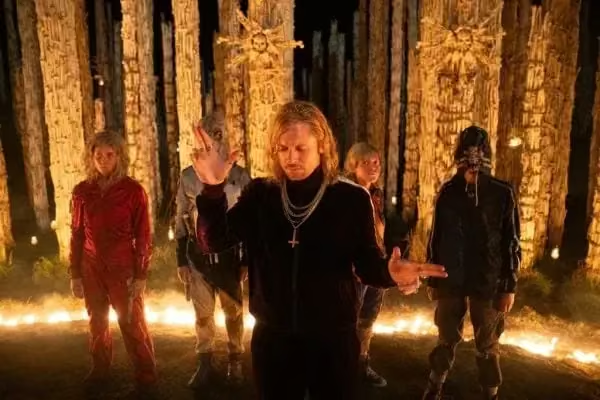
28 Years Later: The Bone Temple Rated R by Motion Picture Rating (MPA) for strong bloody violence, gore, graphic nudity, language throughout, and brief drug use.
For more than twenty years, the 28 Days Later franchise has carved its own path through the landscape of zombie cinema. This has never been simply about infection or the mechanics of survival. It’s always been a meditation on collapse of systems, of morality, of what it means to remain human when the structures that define civilization crumble. With 28 Years Later: The Bone Temple, the series seems ready to push that meditation even further, probing perhaps its most audacious question yet: what becomes of humanity when the apocalypse is no longer immediate, but history? When terror is inherited rather than freshly inflicted?
Unlike its predecessors, which traced the first shocks of the Rage Virus and the fraught months or years that followed, The Bone Temple is set in a world that has lived with devastation for nearly a generation. That temporal shift alters everything. Survival, once the heartbeat of the story, takes a backseat. Instead, the film appears to ask a more uncomfortable, philosophical question: when fear, loss, and violence have become a legacy, what kind of society will humans choose to build? And perhaps, more chillingly, will they choose at all?
28 Years Later, released earlier this year, already signaled this new emotional terrain. The film retained the franchise’s kinetic DNA sprinting infected, a Britain long decayed nearly three decades into the outbreak, terrifying viral mutations yet it also allowed moments of quiet reflection, even poetry. It carried a streak of unruliness, too, a sense that the apocalypse is as absurd as it is horrifying. And then there was that ending yes, the one where the acrobatic, wig-wearing youth cult, the Jimmies, burst onto the scene in the film’s final moments, slicing through the infected with a terrifying, gleeful abandon. They were dressed like… well, Jimmy Savile. The moment is jarring, grotesque, and oddly mesmerizing a reminder that this world’s horrors can be strangely theatrical.
Highly Recommended: 28 Years Later 2025 Parents Guide
And yet, if that felt audacious, The Bone Temple promises to go even further. Shot back-to-back with 28 Years Later and again scripted by Alex Garland, the sequel brings Nia DaCosta (Candyman) into the director’s chair, her sensibility pulling the story into darker, stranger, more unpredictable territory. “My movie is quite… weird,” DaCosta tells Empire, with a laugh that hints at delight in the film’s unclassifiable chaos. “There were multiple moments reading the script where my jaw literally dropped.”
Jack O’Connell, who embodies Sir Lord Jimmy Crystal the sadistic, self-fashioned ruler of the Jimmies, forged in the fires of the apocalypse after witnessing the brutal deaths of his parents describes the film as the “weird, demented, relative cousin of what we’ve seen before. In a way I’m really fucking proud of. Because it’s rooted in soul, and in the what-ifs. Massive what-ifs. And it’s fucking shocking.” That combination of perversity and pathos feels central to the film’s identity.
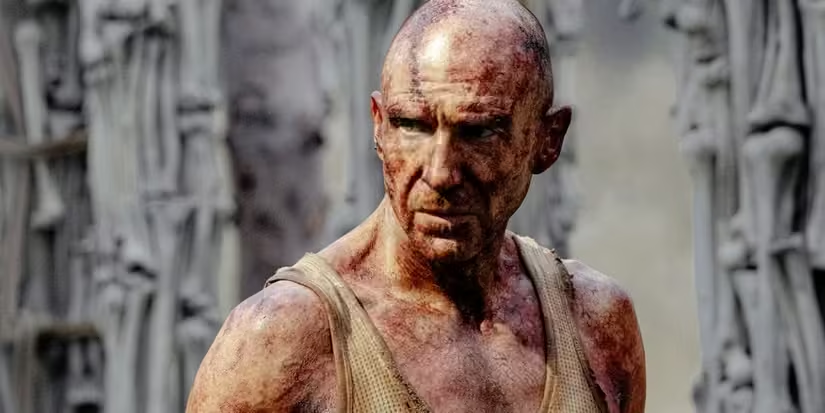
The story itself promises to push the boundaries of the franchise’s moral and emotional landscapes. Young hero Spike (Alfie Williams) finds himself drawn into the Jimmies’ violent orbit, while Ralph Fiennes’ Dr. Kelson forms an unlikely kinship with Samson, a marauding Alpha infected. And throughout it all, Sir Lord Jimmy’s worldview a bizarre, twisted mythology built from pop culture relics of his childhood, from Teletubbies to Power Rangers, cricket to Jimmy Savile is gradually revealed.
Highly Recommended: Zombies 4: Dawn of the Vampires (2025) Parent Guide
O’Connell is careful to note the dual lens the audience brings: “The reality of the viewer and the proposed reality of these characters we’re playing are two very different perspectives,” he says. “What I hope it does is invite people to consider that time, the zeitgeist of that period, when the world in which we’re portraying just fucking went to shit.” It’s a reminder that horror doesn’t exist in a vacuum; it is always refracted through memory, through culture, through what we inherit from the world that came before.
DaCosta, for her part, is clear that the film is not an exploration of Savile himself. Instead, she emphasizes the deliberate perversion of innocence in her villain: “This character of Jimmy Crystal, he perverts things,” she says. “He takes something that’s innocent and great like the Teletubbies and he makes it horrific.” It’s a precise, unsettling lens, one that transforms childhood nostalgia into menace, blurring the line between playful memory and moral corruption.
If you thought 28 Years Later could surprise you, brace yourself for The Bone Temple. It promises a journey deeper into the heart of the rage apocalypse, one that is stranger, darker, and more morally convoluted than anything the franchise has dared before. And in that darkness, it asks questions that linger long after the credits roll: about society, about inherited trauma, about what we choose to rebuild when the world we knew has ended. You can feel it in the film’s DNA thrilling, unnerving, and profoundly alive.
28 Years Later: The Bone Temple Parents Guide
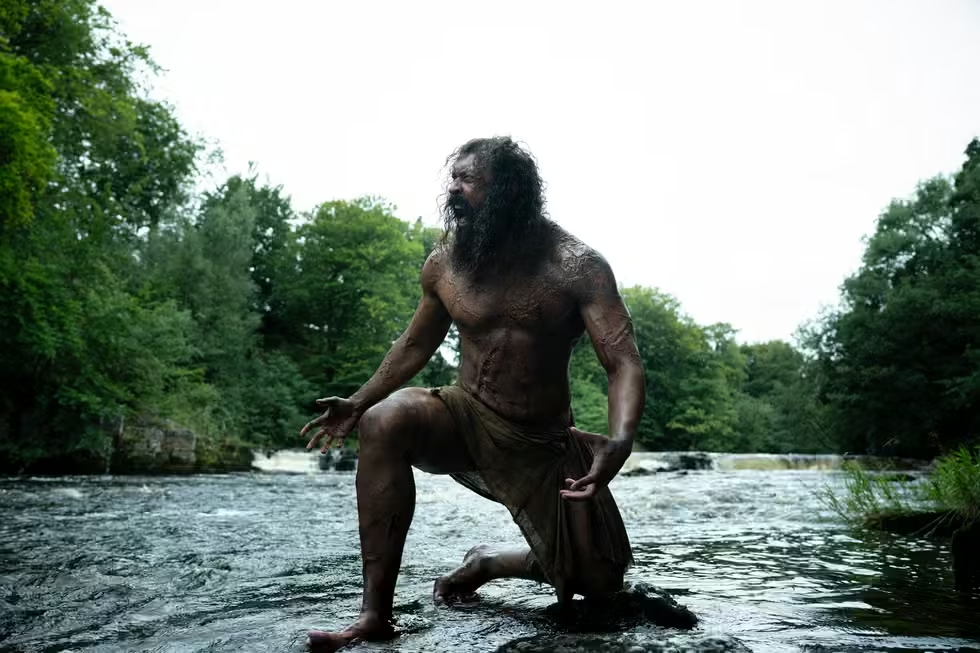
Violence & Intensity: Violence in The Bone Temple is relentless, visceral, and often horrifyingly imaginative. The film presents both the brutal chaos of the infected and the sadistic creativity of the Jimmies, particularly their leader, Sir Lord Jimmy Crystal. Scenes of gore are frequent and graphic: bodies are mutilated, limbs torn, and blood sprays liberally. The film’s intensity is amplified by sudden attacks, claustrophobic chases, and moments of shocking, almost surrealized carnage. There are sequences of sustained tension where danger feels immediate, and the moral cruelty of certain human characters can be as unsettling as the viral threat itself. Younger or sensitive viewers will likely find these scenes deeply disturbing.
Language (Profanity, Slurs, Tone): The film’s dialogue is frequently peppered with strong profanity and harsh insults. Swearing is naturalistic, often serving to heighten tension or define the brutal, anarchic world the characters inhabit. There are moments of biting sarcasm, cruelty, and dark humor, reflecting a world where societal norms have fractured. Occasional slurs or offensive remarks appear in character-driven contexts, underscoring the moral decay and distorted worldview of some characters, especially the Jimmies.
Sexual Content / Nudity: Graphic nudity appears briefly, often in contexts of vulnerability or as part of the film’s raw exploration of human desire and collapse. While sexual activity is not a central focus, its depiction is explicit enough that younger viewers would find it inappropriate. The nudity is unflinching, designed to confront the audience rather than titillate, and fits into the film’s broader tone of a world stripped of innocence.
Drugs, Alcohol & Smoking: Instances of drug use are minimal but present. There are fleeting moments of characters consuming alcohol or other substances, primarily contextualized as coping mechanisms in a harsh, post-apocalyptic environment. These moments are neither glorified nor central to the plot, but they contribute to the depiction of a society living on the edges of moral and social collapse.
Age Recommendations
28 Years Later: The Bone Temple is firmly intended for mature audiences. Its combination of sustained, graphic violence, disturbing imagery, strong language, and sexual content makes it inappropriate for children and early teens. The R rating is fully justified. For viewers under 17, parental discretion is strongly advised, as the film challenges not only comfort levels but ethical and emotional boundaries.
Highly Recommended: There Is No Sanctuary Parents Guide

Stephanie Heitman is a seasoned journalist and author dedicated to helping parents navigate the world of Hollywood entertainment through thoughtful, family-oriented film reviews. With over a decade of experience in writing and a passion for fostering safe, enriching viewing experiences, Stephanie launched Parentguiding.com to provide parents with the insights they need to make informed choices for their families.