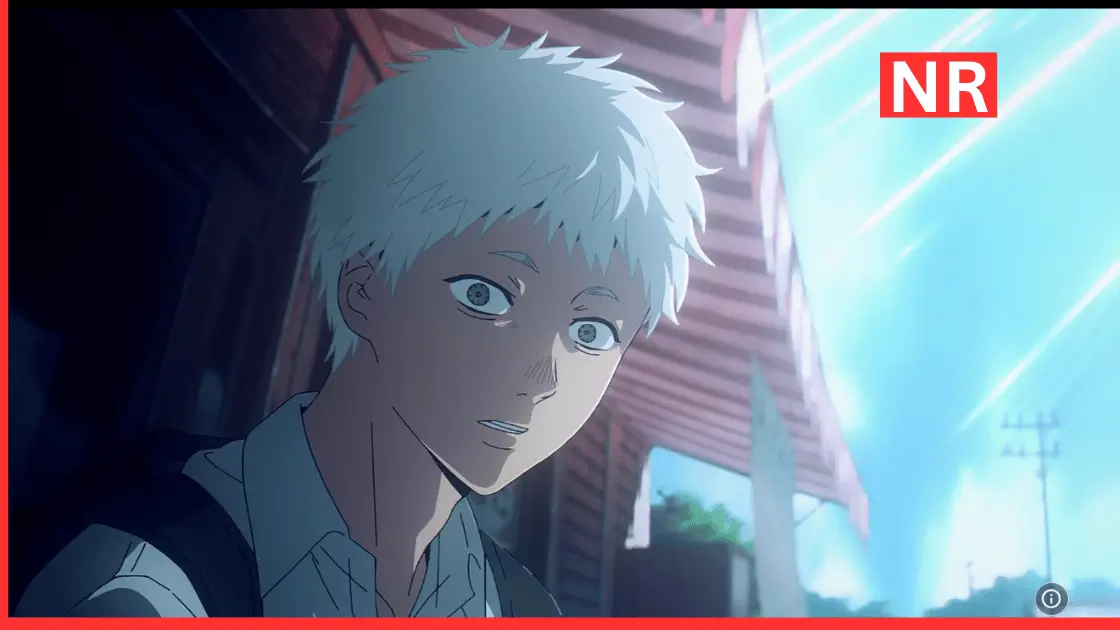
There’s a particular kind of horror that doesn’t scream or slash it just lingers. It seeps in like fog, quiet and bone-deep. The Summer Hikaru Died is that kind of horror. Watching it felt like remembering a dream you didn’t want to have.
Adapted from Mokumokuren’s haunting manga and directed with a light but unnerving touch by Ryōhei Takeshita, the anime enters the crowded world of supernatural horror with an unexpected stillness. No jump scares, no blood-soaked spectacle. Instead, it delivers something quieter… and honestly, far more unsettling.
The Story & What It Tries to Say
The story follows Yoshiki, a soft-spoken teen living in a sleepy rural village tucked away in the Japanese mountains. His world is small school, a few neighbors, empty roads framed by forests and at the center of it all is Hikaru, his childhood best friend. Their bond is deep, familiar, effortless. That kind of friendship where entire conversations can be carried with a glance.
But one day, Hikaru goes hiking alone… and when he comes back, something’s wrong.
It’s subtle at first. Maybe he’s quieter. Maybe he looks at Yoshiki a little too long. Maybe he just feels different. But Yoshiki notices. And as the days pass, he begins to realize: this person who returned isn’t quite Hikaru. He looks the same. Talks the same. But there’s a hollow space behind his eyes. A strange rhythm in the way he moves. He remembers being Hikaru but he’s not him.
And yet… he still wants to be.
That’s the terrifying and beautiful part. The impostor isn’t hostile. He doesn’t try to hurt Yoshiki. He just wants to be close to him. He mimics Hikaru’s warmth, his jokes, even his habits. As Yoshiki struggles with grief and confusion, he also begins to question his own feelings. What do you do when someone you loved dies… but something wearing their face refuses to leave?
This isn’t just a ghost story. It’s a meditation on loss, denial, and how far we’ll go to keep our memories intact even if it means lying to ourselves. It’s about the things we know in our gut but choose not to say out loud. The ache of missing someone so much that you’d rather pretend they’re still with you even if they aren’t.
And in that way, it’s not just supernatural horror. It’s human horror.
Performances & Characters
Chiaki Kobayashi (Yoshiki) and Shuichiro Umeda (Hikaru) completely make this anime horror production and their acts are much more gritty and natural than in any horror series ever. that fragile self-doubt that Kobayashi nails, his voice shaking on the edges, not knowing whether he is addressing his best friend or a person he has just met. It is possible to hear the indecisiveness in every line, as he is walking on the edge between love and dread.
Umeda, in its turn, is a pure masterclass in strangely cheerful sincerity. His interpretation of the other Hikaru is so accurate that it is creepy. There is a beat of his laugh. He looks at the wrong place a millisecond longer. His voice changes with the speed of a heartbeat, transforming itself between soft and playful and eerily detached. And yet…he is nevertheless lovable. Still familiar. It is that duality that makes the character so frightening.
The worst thing is that you desperately want it to be alright. You desire that Yoshiki believe. You wish this fake of Hikaru to be true. And it is that conflict between what your heart says and what you know in your gut where the show really has it.
The relationship between the two protagonists is not only supported by fear, though. It strikes at longing, regret and the grey zones of affection. It is in a place between friendship and something closer, yet it does not overdo it. Their relationship is silent, inhabited and heartbreakingly melancholic.
Direction, Visuals & Pacing
Ryoh Takeshita exercises his directorial muscles as an artist playing around in low light and dead silence. The shots, pastel sunsets, deep forests, sun streaming through old windows would give you the impression that they are breezy, yet all of them have a Gothic touch. Each silence is pregnant, each editing seems to be intentional.
The tempo is slow-burn and so, in case you want chases dripping with gore, it may make you impatient. Wait a bit and you will get the payoff. The scenes linger just a little bit too long and it is that small additional beat that leaves you off when nothing is supposedly going on. It turns what is familiar into a creepy thing.
The movie sound-wise shuns large scores or loud cues. Rather, it soaks you in the mundane rural tones: cicadas, wind, creaking floors, and that noise is what accompanies you in your discomfort. Horror goosebump style.
There is one particularly vivid shot: Hikaru smiling under a blood-red sunset. There is nothing to scream horror! regarding it but the combination of expression, lighting and timing, makes your skin creep. It is horror that goes into your ear and not grips your throat.
The Summer Hikaru Died Parents Guide
Overall Suitability & Age Recommendation
This series is pegged around a 13+ (Teen) rating but honestly, I’d edge it closer to 15+. The emotional themes are dense, and the horror is more psychological than gore-splattered, but it can still unsettle sensitive teens.
Violence, Gore & Tension: Graphic gore is minimal, but what you get is intense: body dysmorphia, unnerving possession, and tension that keeps you off balance. There are moments where ‘Hikaru’ physically transforms or melts in disturbing ways. Again, it’s mostly implied rather than explicit, so there’s no blood fountains—but the tension still bites.
Romantic & LGBTQ+ Themes: The relationship between Yoshiki and Hikaru carries gay subtext, including feelings that may hint at teens exploring their sexuality. It’s not a full-blown romance or “BL” in the traditional sense, but those undercurrents are essential to the emotional layers. This adds another layer of complexity something to talk about rather than worry over. reddit.com
Language & Dialogue: There’s little in the way of profanity. The dialogue is natural and rooted in quiet tension rather than harsh language—meaning the emotional weight carries the show, not shock value.
Alcohol, Drugs & Sexual Content: No alcohol or drugs are featured prominently. The only potentially sensitive moment is a slightly ambiguous scene where Yoshiki’s hand interacts with “Hikaru” in a way that flirted with body horror and faint erotic undertones. While not explicit, it’s enough to give pause.
Final Thoughts & Recommendation
The Summer Hikaru Died is a show you sit through, not a show you binge. A show you imbibe. It is not about what is going on but how it feels. And the way it feels is truly disturbing, pathetically gorgeous, and despairingly sad.
Not all people will like this horror series. Unless you want monsters, gore, or high-stakes action, you may be disappointed. However, in the event you are the kind of person who enjoys the slow-burn psychological thriller with an emotional heft, and you like your horror laced with a heavy dollop of sadness and introspection, this can easily become a new favorite.
It is not only about what occurs when a person dies. It is about what becomes of the ones left behind. What we clutch. What we relinquish. And what we admit when sorrow opens the door.
Directed by: Ryōhei Takeshita
Starring: Chiaki Kobayashi, Shūichirō Umeda
Released Date: July 5, 2025
Rating: 8.5/10
Highly Recommended:
Best New Movies & Shows Coming to Netflix (July 2025)
Jurassic World: Rebirth 2025 Parents Guide

Stephanie Heitman is a seasoned journalist and author dedicated to helping parents navigate the world of Hollywood entertainment through thoughtful, family-oriented film reviews. With over a decade of experience in writing and a passion for fostering safe, enriching viewing experiences, Stephanie launched Parentguiding.com to provide parents with the insights they need to make informed choices for their families.